Sacred Monuments in Spain
A guide to 2038 Sacred Monuments in Spain — with descriptions, photos and traveler visits from the NextOnTrip community. Locations spread across 1060 cities and towns. Most visited by the community: Basilica of the Most Holy True Cross, Sant Salvador d’Artà, Iglesia y muralla del Tozal del Muro.
-
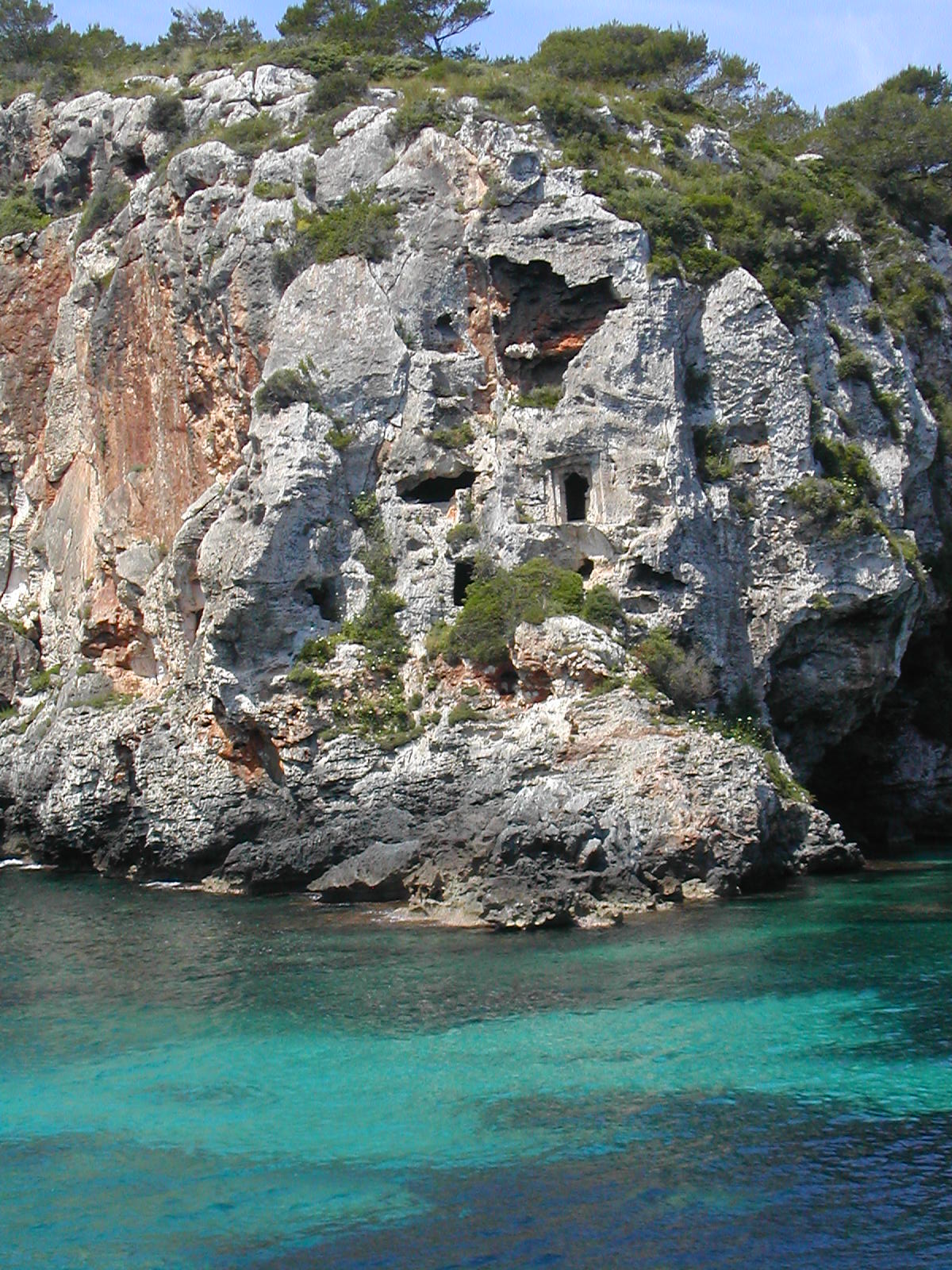
Cova dels Jurats
Alaior
Cova dels Jurats is a cave at Calescoves cove, on the coast of the municipality of Alaior in Menorca, recognised as one of the island's most significant archaeological sites linked to Talayotic culture. Unlike most of the neighbouring caves at Calescoves, which served as tombs, this one functioned as a sanctuary. What does the inside of the cave look like? The interior stretches roughly 20 metres and ends in an apse-shaped chamber. Research has shown the site was already in ritual use from the 3rd century BC, during the final phase of Talayotic culture. That early date is what makes Cova dels Jurats stand out — it is the first rock sanctuary documented for Talayotic culture anywhere, whether on Menorca or on neighbouring Mallorca. Why did the cave remain important in Roman times? The site's significance did not end with the Talayotic period. Under Roman rule the cave continued to serve a religious purpose, though the character of the cult changed. The proof lies in 29 epigraphic panels — inscriptions carved into the rock at the entrance — dated to the 2nd and 3rd centuries AD. This continuity of use across two very different cultures, on the exact same spot, is unusual in the Balearics and gives Cova dels Jurats real research value. How do we know so much about the cave's history? Most of what is known comes from excavations carried out between 2010 and 2012. That fieldwork established the two distinct phases of use — Talayotic and Roman — and set Cova dels Jurats apart from the surrounding caves at Calescoves, most of which were burial sites rather than places of worship. Where exactly is Cova dels Jurats located? The cave sits within Calescoves, a small cove on Menorca's southern coast, in the municipality of Alaior. Calescoves is best known for its extensive complex of caves cut into the limestone cliffs around the inlet, forming one of the island's largest Talayotic necropolises. Within that complex, Cova dels Jurats is the exception: a sanctuary rather than a burial chamber. What should visitors know before heading there? Calescoves combines natural scenery with archaeology — a cliff-lined cove with clear water, reached most comfortably by boat or along the coastal footpath. Because this is a protected archaeological site, visitors should treat the location with care, particularly the inscriptions on the cave walls, which are an irreplaceable source of information about Menorca's history. Frequently Asked Questions What sets Cova dels Jurats apart from the other caves at Calescoves? Most caves in the cove were used as tombs, while Cova dels Jurats served as a sanctuary — first for Talayotic ritual, later for Roman worship. How far back does its use as a place of worship go? Ritual use dates back to the 3rd century BC, and the site's religious role continued into Roman times, as shown by inscriptions from the 2nd and 3rd centuries AD. What did archaeologists find during excavation? Fieldwork carried out between 2010 and 2012 confirmed the two phases of use and identified 29 epigraphic panels near the cave entrance. Is the cave easy to find on your own? It lies within Calescoves cove in the municipality of Alaior. Since the area is fairly remote, it's worth planning access in advance, either by boat or via the coastal footpath.
-
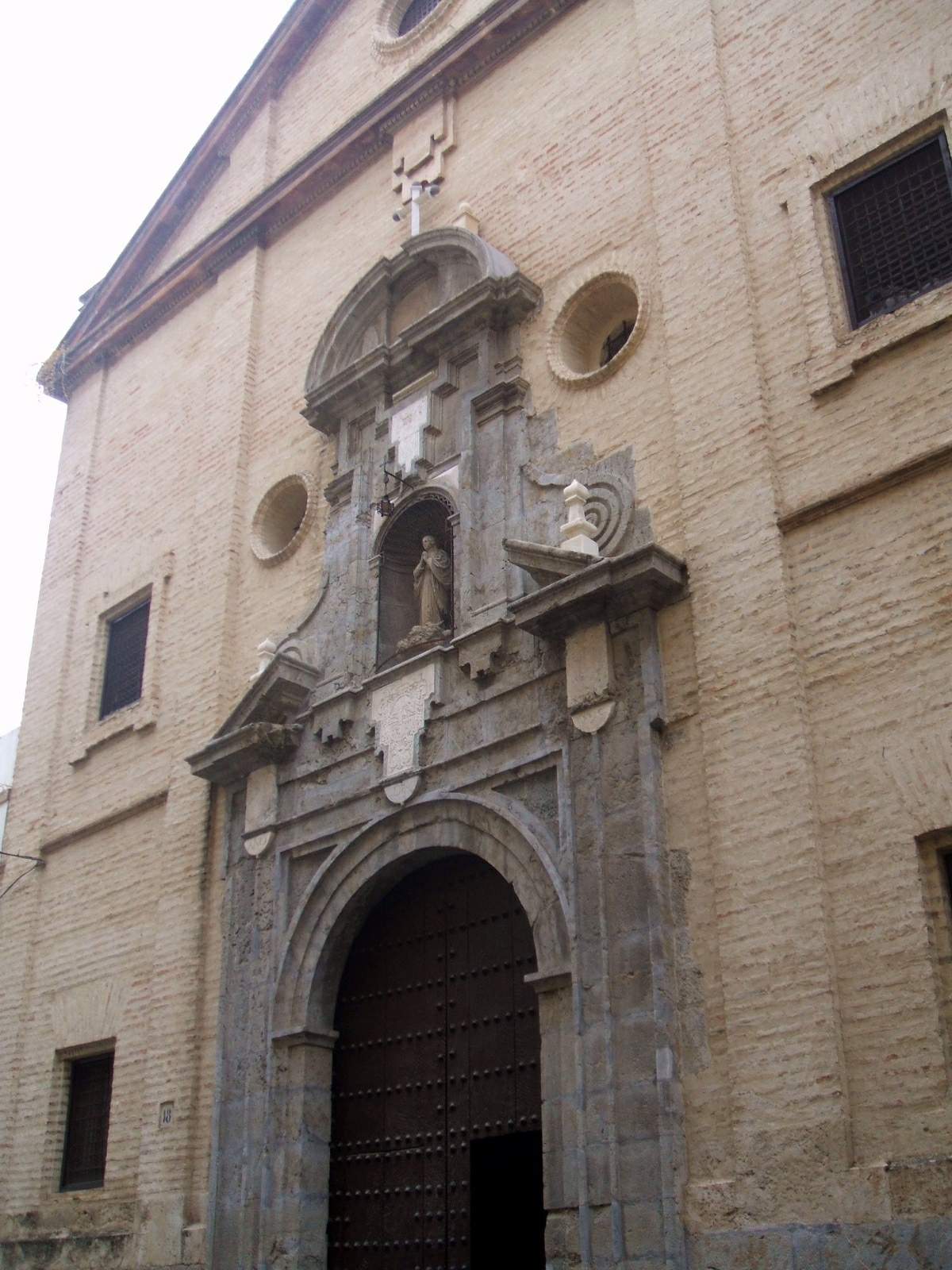
Monasterio Cisterciense de la Inmaculada Concepción
Kordoba
Monasterio Cisterciense de la Inmaculada Concepción is an 18th-century Cistercian monastery on Calle Carbonell y Morand in Córdoba, also known as the Convento del Císter. The building pairs a modest Baroque design with a long institutional history that spans nearly three centuries of contemplative religious life. How did the monastery come to be? The Cistercian community that eventually settled in Córdoba did not start there. The nuns first established themselves in 1650 in Guadalcázar, a small town in the province, but economic hardship and health concerns forced a move into the city of Córdoba itself within just three years. The building visitors see today was constructed in 1725, commissioned by Luis Fernández de Córdoba, dean of Córdoba Cathedral and later Archbishop of Seville. The first abbess of the new community was Mother Sor María de la Santísima Trinidad. What is there to see? The church represents a restrained but distinctive strand of Andalusian Baroque. Its stone façade is arranged in two tiers and capped with a curved pediment holding a niche with a sculpture of the Immaculate Conception, the church's patroness. Inside, the layout is simple: a single nave with a transept, a common plan for small women's convents of the period. The standout feature is an 18th-century gilded wooden altarpiece, with a painting of the Virgin of the Immaculate Conception at its center. Can you visit the inside? In 2017, the aging Cistercian community relocated to convents in Toledo and elsewhere, ending the order's presence at this site. The building was handed over to a new religious community, the Esclavos de la Eucaristía y Santa María Virgen (Slaves of the Eucharist and the Blessed Virgin Mary), who maintain it today. A nearby brotherhood, the Hermandad de la Sangre, one of Córdoba's Holy Week confraternities, also has its headquarters close by. The site is listed as a Bien de Interés Cultural, confirming its heritage status, but as an active religious house it is not set up for casual sightseeing — the exterior can be admired freely, while access inside depends on service times and the current residents. How do you get there? The monastery sits in Córdoba's historic centre, on Calle Carbonell y Morand, within walking distance of the city's main landmarks, including the Mezquita-Catedral and the old Jewish quarter (Judería). Walking is by far the easiest way to reach it, since this is a narrow old-town street with limited vehicle access. There is no dedicated parking nearby, so it makes sense to park on the outskirts and continue on foot, taking in the surrounding lanes and patios typical of this part of the city along the way. Frequently asked questions Can you go inside the Monasterio Cisterciense de la Inmaculada Concepción? It is not run as a regular tourist attraction with set opening hours. The exterior is visible year-round, and entry to the church is sometimes possible during services held by the current religious community. Who lives there now? Since 2017, when the last Cistercian nuns left, the building has been cared for by the Esclavos de la Eucaristía y Santa María Virgen community. What architectural style is the church? It is an example of restrained 18th-century Andalusian Baroque, with a two-tiered stone façade and a richly gilded altarpiece inside. How can you combine a visit with other Córdoba sights? Given its location in the historic centre, the monastery fits naturally into a walking route through the old town, close to the Mezquita-Catedral and the Judería.
-
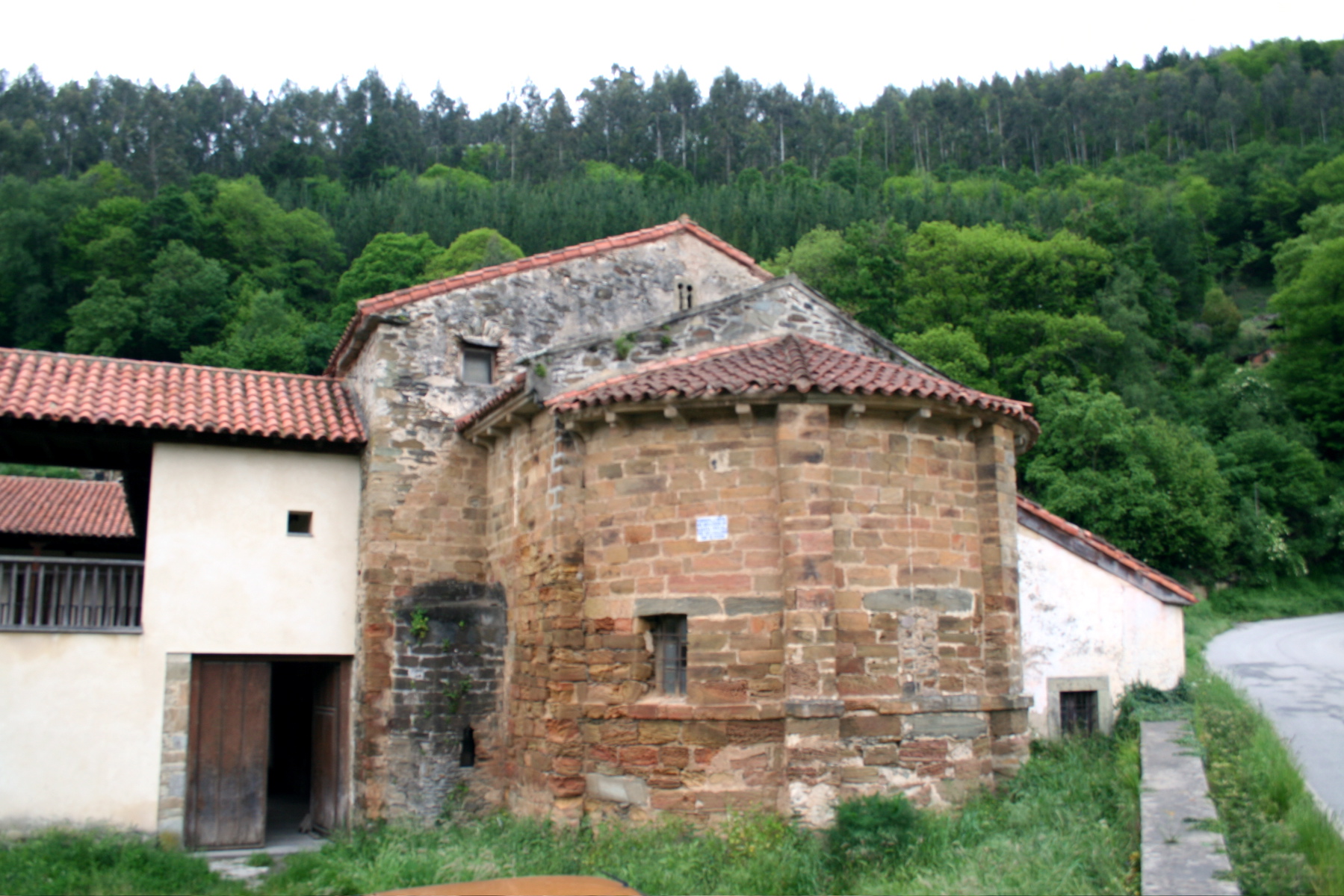
Church of the Monastery of San Miguel de Bárcena
Tineo
The Church of the Monastery of San Miguel de Bárcena stands in the village of Bárcena del Monasterio, deep within the municipality of Tineo, in western Asturias. It's a small, quiet religious landmark, listed as a cultural property of the region — a worthwhile stop for anyone exploring the rural corners of Tineo, one of Asturias's largest municipalities by land area. Where exactly is it located? The church sits in the village of Bárcena del Monasterio (coordinates: 43.365295, -6.518143), within the municipality of Tineo. The village's own name — "del Monasterio" — points to a historical monastic settlement once connected to the church. The surrounding area has the typical character of inland Asturias: scattered hamlets, rolling terrain, and light tourist traffic, which makes for an unhurried, crowd-free visit. How do you get there? The most convenient starting point is the town of Tineo, the municipal capital, from which local roads branch out into the surrounding rural parishes, including Bárcena del Monasterio. Driving is practically the only realistic way in — public transport in this part of Asturias is sparse and doesn't reach small villages directly. It's worth planning the route in advance, since roads in the area can be narrow and wind through hilly terrain. What should you know before visiting? The church holds cultural property status ("bien cultural") within the municipality of Tineo, meaning it has formal heritage protection from local and regional authorities. That's a clear sign the site carries historical weight beyond the size of the village itself — even though Bárcena del Monasterio is tiny, its religious heritage is taken seriously by conservation bodies. For visitors interested in the history of monastic settlement in Asturias, it makes a solid addition to a broader regional itinerary. What else is worth seeing nearby? The municipality of Tineo has an extensive network of rural roads and paths connecting dozens of small parishes, each with its own church, chapel, or other trace of local history. It's a good destination for travelers looking for a more authentic, less crowded side of Asturias — green landscapes, traditional rural architecture, and a slower pace of life that contrasts with the region's busier coastline. When is the best time to visit? Spring and early autumn are the best seasons for exploring inland Asturias — mild temperatures and a lower risk of the heavy rain common in winter make driving the local roads easier. Summer brings longer daylight hours, giving more time to combine several stops around Tineo in a single trip. Frequently asked questions Can you go inside the church? Access depends on opening hours set locally by the parish — it's worth checking on-site or with the Tineo municipal office beforehand, since small rural churches in Asturias often don't keep fixed visiting hours. Are there other attractions nearby? Yes, the municipality of Tineo has dozens of rural parishes with their own local religious landmarks, and the town of Tineo itself offers accommodation and dining options for anyone exploring the area. Is it hard to get there without a car? Yes, public transport in this part of Asturias is limited, so driving is practically the only convenient way to reach Bárcena del Monasterio. Where does the village's name come from? "Bárcena del Monasterio" refers to the historical presence of monastery buildings at the site, to which the church was originally connected.
-
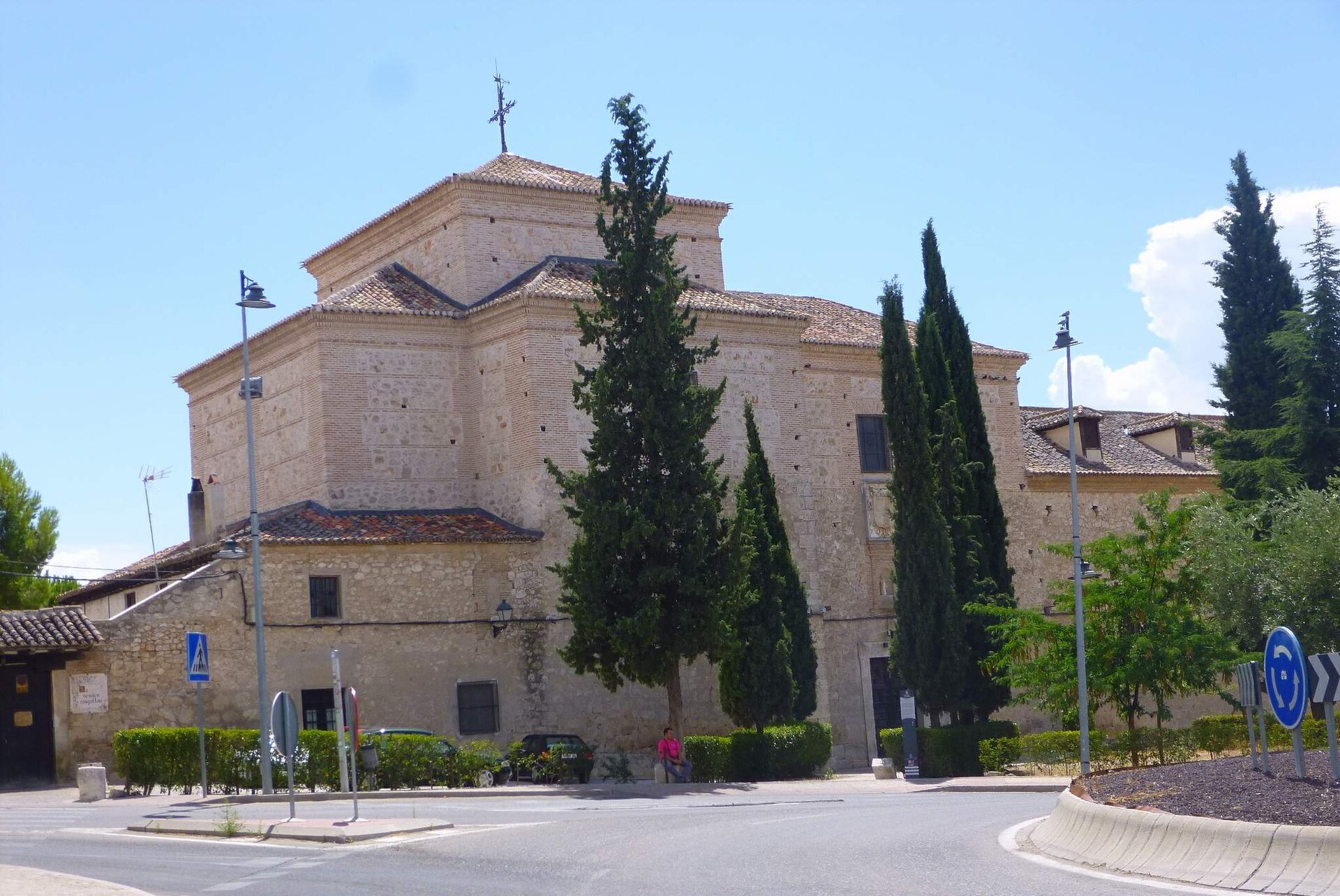
Convent of the Poor Clares
Chinchón
Convent of the Poor Clares is an enclosed monastery in Chinchón, one of the best-preserved small towns in the Madrid region. The building stands in a quiet corner of the historic centre, just a short walk from the town's famous oval Plaza Mayor, and still functions today as a living community of Poor Clare nuns. Where did this convent come from? The foundation is tied to the noble House of Chinchón. Construction began in 1597 at the initiative of the 3rd Count of Chinchón, Don Diego Fernández de Cabrera y Bobadilla, and his wife Doña Inés Pacheco, who wanted to link their lineage to a cloistered convent. The work dragged on for decades, and it was ultimately the 5th Count, Don Francisco Faustino Fernández de Cabrera y Bobadilla, who completed the foundation in 1653. The architectural design came from Nicolás de Vergara el Mozo, a master builder connected to the cathedral and archdiocese of Toledo — which explains the clear Toledan influence in the building's overall shape. What will you actually see? The complex follows a sober Herrerian Baroque style: restrained, disciplined lines with little ornamentation, typical of Castilian religious architecture at the turn of the 16th and 17th centuries. The church has a single nave, while the convent itself is arranged around a two-storey cloister supported by semicircular arches. Inside the church lies the mausoleum of the 5th Count of Chinchón, placed in the choir area — a fitting spot, since he was the one who finally brought the project to completion. Look out too for the painting "The Divine Shepherd" by Alonso del Arco and an artistically valuable silver urn-tabernacle. The convent remains active, home to Poor Clare nuns living in enclosure, so access to the interior is limited and parts of the complex stay off-limits to visitors. How do you get there, and when's best to go? Chinchón sits roughly 45 km southeast of Madrid, making it a popular day-trip destination from the capital — expect a 45 to 60 minute drive or bus ride. The convent is located within the historic centre, so the easiest way to reach it is on foot from Plaza Mayor. Spring and autumn are the best times to visit, avoiding the intense heat of the Castilian summer. It's worth pairing a stop at the convent with a walk through the old town and a taste of the local specialities. Sweets straight from the cloister One of the most distinctive things about this place is the nuns' tradition of baking. The convent is known for its homemade rosquillas, muffins, pastries, and a local treat known as "tetas de novicia" (novice's sweets). These are sold directly through a rotating window, or torno, set into the convent wall — a centuries-old method used in enclosed convents that lets the nuns interact with the outside world while preserving their seclusion. Frequently asked questions Can you visit the inside of the convent? Partially. Since it's an active cloistered convent, access to the interior is restricted, though the church is often open to visitors during set hours. Who founded it, and when? The convent was founded by the Counts of Chinchón — construction began under the 3rd Count in 1597 and was finally completed in 1653 by the 5th Count, Don Francisco Faustino Fernández de Cabrera y Bobadilla. What should you buy while you're there? The nuns' traditional baked goods — rosquillas, muffins, and pastries — sold through the convent's rotating window. How long does a visit take? Seeing the exterior and part of the church takes about 20-30 minutes, but it's worth combining it with a longer stroll through Chinchón's historic centre.
-
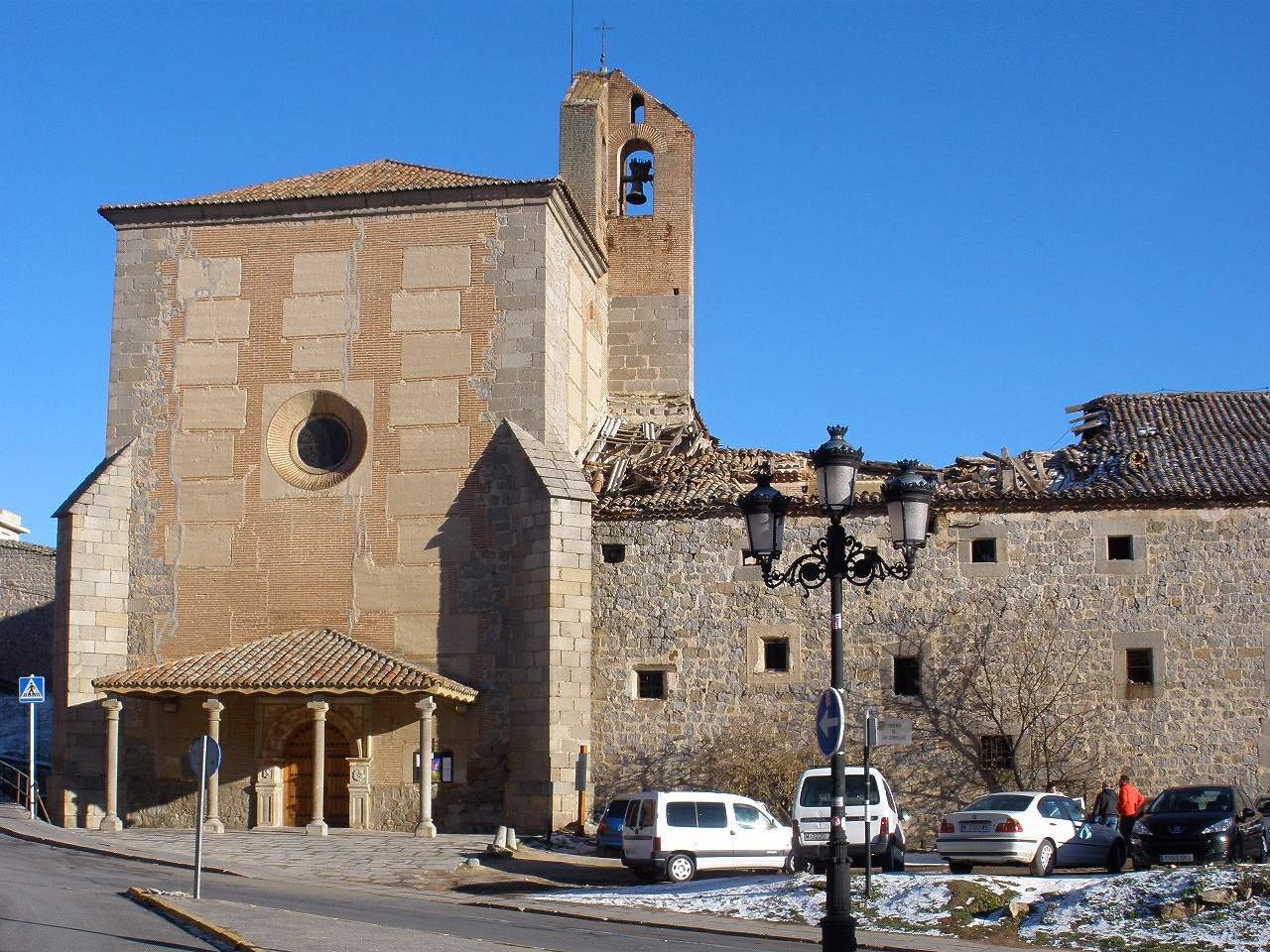
Church of Santa María de Jesús, Ávila
Ávila
The Church of Santa María de Jesús in Ávila, also known as the Convent of the Poor Clares or "Las Gordillas," is one of those quiet corners of the city that's easy to walk past yet holds a surprisingly layered history. The building stands on Calle de la Luna, right against the eastern wall of the Santo Tomás monastery, in a calm part of Ávila far from the crowds along the city walls. Where does the name "Las Gordillas" come from? The nickname has nothing to do with the size of the building. It comes from a grove of oak trees that once grew near the convent's original site. The Poor Clares nuns moved several times before settling here — first to the palace of the Marquis of Sofraga near the San Vicente gate, then to a house between Plaza de Santa Ana and Paseo de San Roque, and only later to the current spot on Calle de la Luna. Who founded the convent? The founder was María Dávila, wife of Fernando de Acuña, Viceroy of Sicily. The convent was established in 1502, and the Poor Clares reached Ávila in the second half of the 16th century. It's a familiar pattern for the period — a wealthy, influential family endowing a convent to secure a place of burial and prayer for generations. What's worth seeing inside? The standout feature is the cenotaph of the founder, María Dávila, carved in alabaster by Vasco de la Zarza, one of the most important Renaissance sculptors active in Ávila. The piece is worth the visit on its own, regardless of the building's religious context. The church itself is a 16th-century Renaissance structure that has survived in good condition, unlike the adjoining convent, which gradually fell into ruin. What happened to the convent? The nuns left the convent in 1973 and moved to the outskirts of Ávila. Since then, the convent building has stood abandoned and deteriorated, while the church itself has held up far better and still stands as a witness to that era. Given its historical and architectural value, the site was declared a Bien de Interés Cultural (Cultural Heritage Site) on October 24, 1991. How do you get there? The church sits within the old town, an easy walk from Ávila's city walls and from the Santo Tomás monastery, one of the city's main attractions. It's worth pairing a visit with both — the walk along Calle de la Luna takes you through a quieter, less touristy but genuinely authentic stretch of the city. When's the best time to visit? Ávila is best explored in spring or autumn, when temperatures are mild; summers can be hot and dry given the altitude and continental climate of the Castilian plateau, while winters turn cold. As an active place of worship, the church is best visited outside service hours — check the posted schedule at the entrance. Frequently asked questions Is the Church of Santa María de Jesús open to visitors? Yes, though as an active place of worship it may have limited visiting hours — it's best to check the current schedule on site or at the local tourist information office. Why is the church called "Las Gordillas"? It's a popular nickname derived from a grove of oak trees that grew where the Poor Clares lived before moving to their current location. What's the most important feature inside? The alabaster cenotaph of founder María Dávila, carved by sculptor Vasco de la Zarza — one of the notable works of Renaissance art in Ávila. Can you visit the adjoining convent? Not fully — the nuns left in 1973 and the convent building fell into ruin, unlike the church itself, which has been preserved in good condition.
-
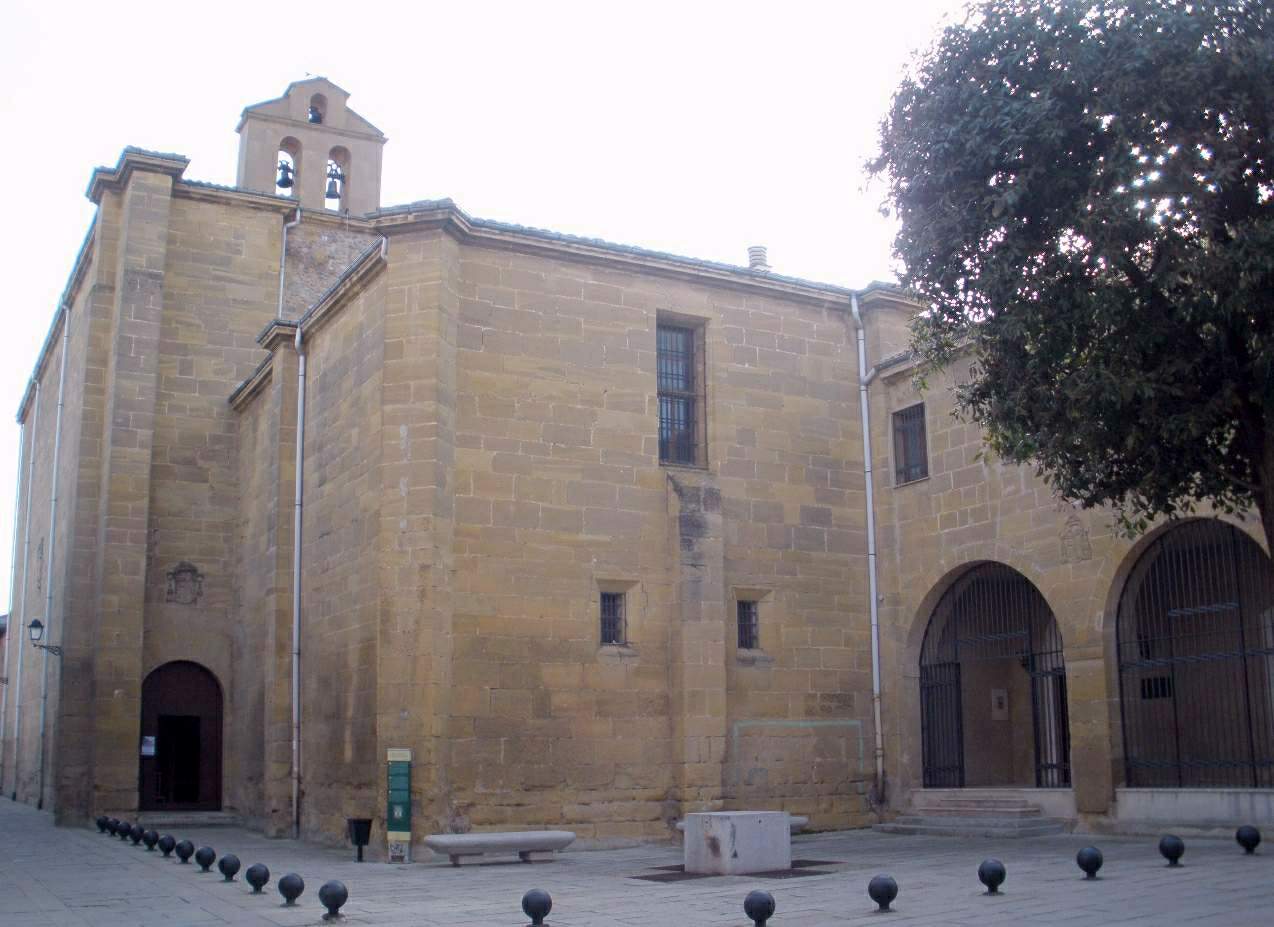
Nuestra Señora de la Anunciación
Santo Domingo de la Calzada
Nuestra Señora de la Anunciación is a Cistercian abbey in Santo Domingo de la Calzada, in Spain's La Rioja region, tucked along Calle Mayor in the heart of the old town. It remains an active convent, and its church and cloister are among the town's most rewarding — and least crowded — stops for anyone walking the Camino de Santiago through this stretch of the Camino Francés. Who founded the monastery, and when? The abbey was founded by Pedro Manso de Zúñiga, bishop of the diocese of Calahorra y La Calzada. Construction started in 1610 and wrapped up in 1621. The Cistercian nuns who settled here came from the Monastery of Santa María de los Barrios in Abia de las Torres, in Palencia province. For over two centuries the community answered to the powerful Abbey of Las Huelgas in Burgos, a dependency only lifted by a papal bull from Pius IX in 1873. What makes the place unusual is continuity: nuns have lived here without interruption since the 17th century. What will you see inside? The church was designed by architects Matías de Asteazu and Pedro de la Mata in a restrained classical style. It's built as a single nave in the shape of a Latin cross, with buttresses dividing the sides into chapels that hold the altarpieces. The showpiece is the main altarpiece, a mid-18th-century example of Riojan Baroque, with an image of Our Lady of the Annunciation — the monastery's namesake — set in the central niche. An alabaster tomb holds the founder alongside his two nephews, both bishops themselves, their effigies carved in recumbent pose. The cloister, dating to the 17th century, is a study in Cistercian austerity: plain lines, no ornament, built for quiet rather than display. The lower choir, used as a burial ground until 1960, holds the remains of more than 200 nuns. How do you get there, and when should you go? The monastery sits at Calle Mayor 31, right in the historic centre of Santo Domingo de la Calzada, a short walk from the cathedral and the main Camino Francés route — anywhere in the old town is a few minutes on foot. Regular visiting hours run through July, August and September; outside that window, visits can be arranged by phone year-round. Groups are kept small, so it's worth booking ahead. A small shop sells items made by the community, and pilgrims walking the Camino can stay for free in a restored 18th-century building attached to the monastery. Why is it worth the stop? Few monasteries along the Camino de Santiago have housed an unbroken religious community for four centuries, and here visitors get more than architecture — they get a living tradition still in practice. The contrast between the bare, disciplined cloister and the ornate Baroque altarpiece captures two very different instincts: Cistercian simplicity and 18th-century devotional excess, sitting side by side. For pilgrims specifically, it's also a practical stop, offering rest and a free bed steps from the route. Frequently asked questions Is the monastery open all year? No — regular visits run in July, August and September. Outside those months, you need to call ahead to arrange a visit. Can pilgrims stay overnight here? Yes. Pilgrims walking the Camino de Santiago can use free lodging in a restored 18th-century building next to the monastery. Who is buried in the monastery? The founder, Bishop Pedro Manso de Zúñiga, is buried in an alabaster tomb alongside his two nephews, also bishops. More than 200 nuns from the community are buried in the lower choir, used as a cemetery until 1960. How far is the monastery from the town centre? Very close — it stands at Calle Mayor 31, the old town's main street, just a few minutes' walk from the Santo Domingo de la Calzada cathedral and the main Camino Francés route.
-
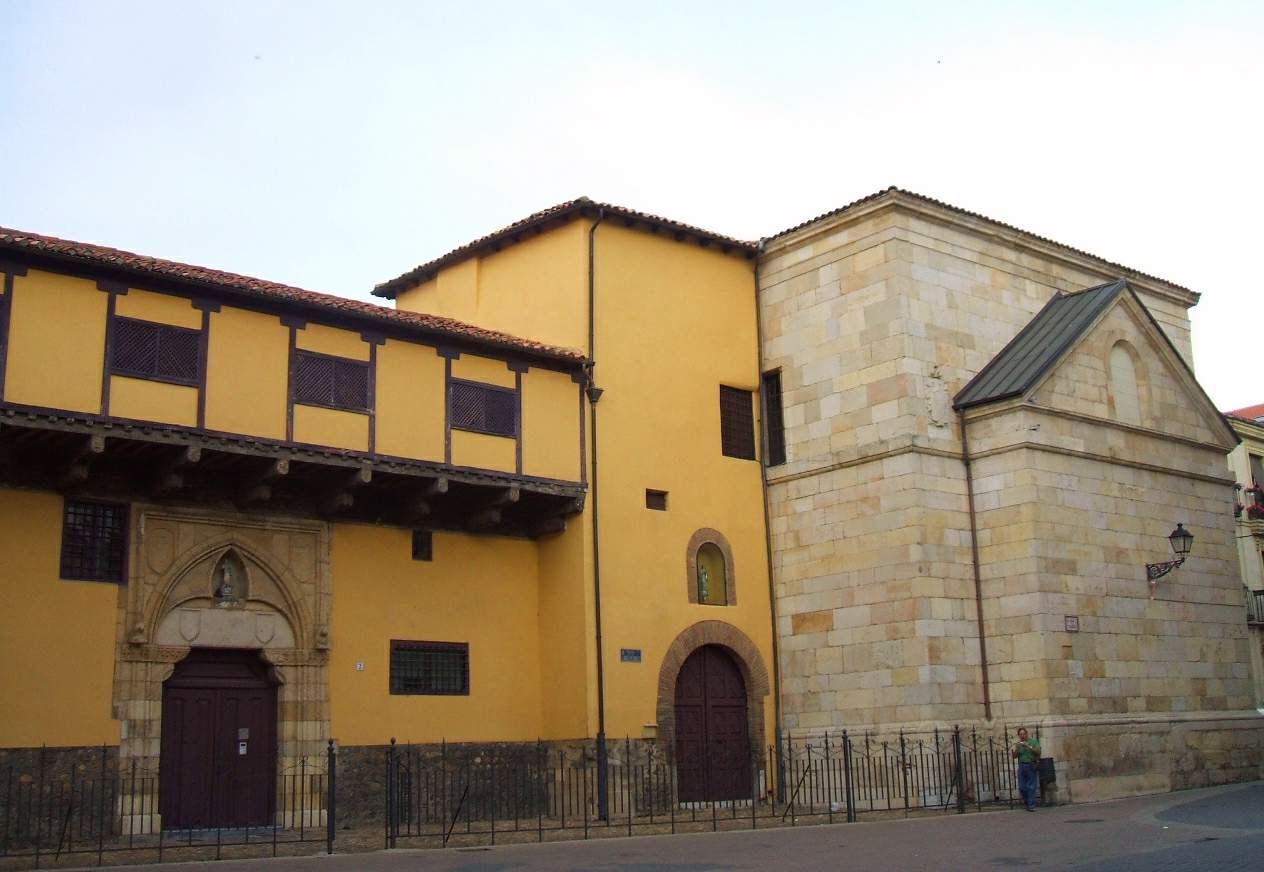
Convent of the Concepcionistas Franciscanas, León
León
The Convent of the Concepcionistas Franciscanas is an enclosed convent in León, tucked into the old town just a short walk from the cathedral. It blends the history of Spanish nobility with a monastic tradition that is still alive today — nuns continue to live behind its cloistered walls, and visitors can sense a place that has kept the same purpose for more than five centuries. How to get there? The convent sits within León's historic center, within walking distance of the city's main landmarks, including the Gothic cathedral and the Basilica of San Isidoro. The easiest way to reach it is on foot from the old town — the narrow streets of the former noble quarter lead straight to the walls of what was once a private palace. Travelers arriving from outside León can start from the train station, a short walk or a quick city bus ride from the center. What will you see? The building has kept the layout of a noble residence that was converted into a religious house in the 16th century. Enclosure defines the character of the place — most of the convent stays off-limits to outsiders, but the convent church and the entrance area, where the nuns sell their own baked sweets, are open to visitors. Buying pastries through the traditional revolving window, while exchanging a few words with the sisters inside, is one of the most distinctive experiences connected to this place. The plain façade and modest interior decoration reflect the austere, contemplative spirit of the order. What is the history behind it? The convent was founded in 1512 by Leonor de Quiñones, daughter of the first Counts of Luna, who turned her family's town palace into the seat of a new religious community. Her inspiration came from Saint Beatriz de Silva, founder of the Order of the Immaculate Conception in Toledo in 1489, whom Leonor came to know while serving at the court of Queen Isabella the Catholic. Her sister Francisca helped establish the community and became its first abbess; from then until the mid-16th century, the position of abbess in León always passed to another daughter of the Counts of Luna. The sisters also received strong backing from their brother, Francisco de Quiñones, a Franciscan friar who rose to become Minister General of the Franciscan Order and later a cardinal of the Catholic Church. His standing helped the convent gain influence well beyond León itself. When should you visit? The convent can be visited year-round, but as an enclosed community it follows its own daily rhythm, so it's worth checking the opening hours of the church and the sales window on-site or by phone before arriving. The weeks around Christmas are a particularly good time to visit, when interest in the convent's sweets rises and the atmosphere around the building — especially in candlelit evenings — takes on a more intimate feel. Outside the holiday season, spring and early autumn are the best times for an unhurried walk through León's old town and around the convent, since the city sees far fewer visitors than in summer. Frequently asked questions Can visitors go inside the convent? The enclosed section is closed to outsiders. The convent church and the sales point for the nuns' pastries are usually accessible. What makes this convent different from others in León? It is one of the few convents in the city founded directly by a noble family inside their own town palace, rather than on the site of an earlier religious foundation. Who founded the convent, and when? It was founded in 1512 by Leonor de Quiñones, with the support of her sister Francisca and her brother Francisco de Quiñones, who later became a cardinal. Can you buy something to take home from the convent? Yes — a traditional part of the visit is buying sweets baked by the nuns, sold through the convent's revolving window.
-
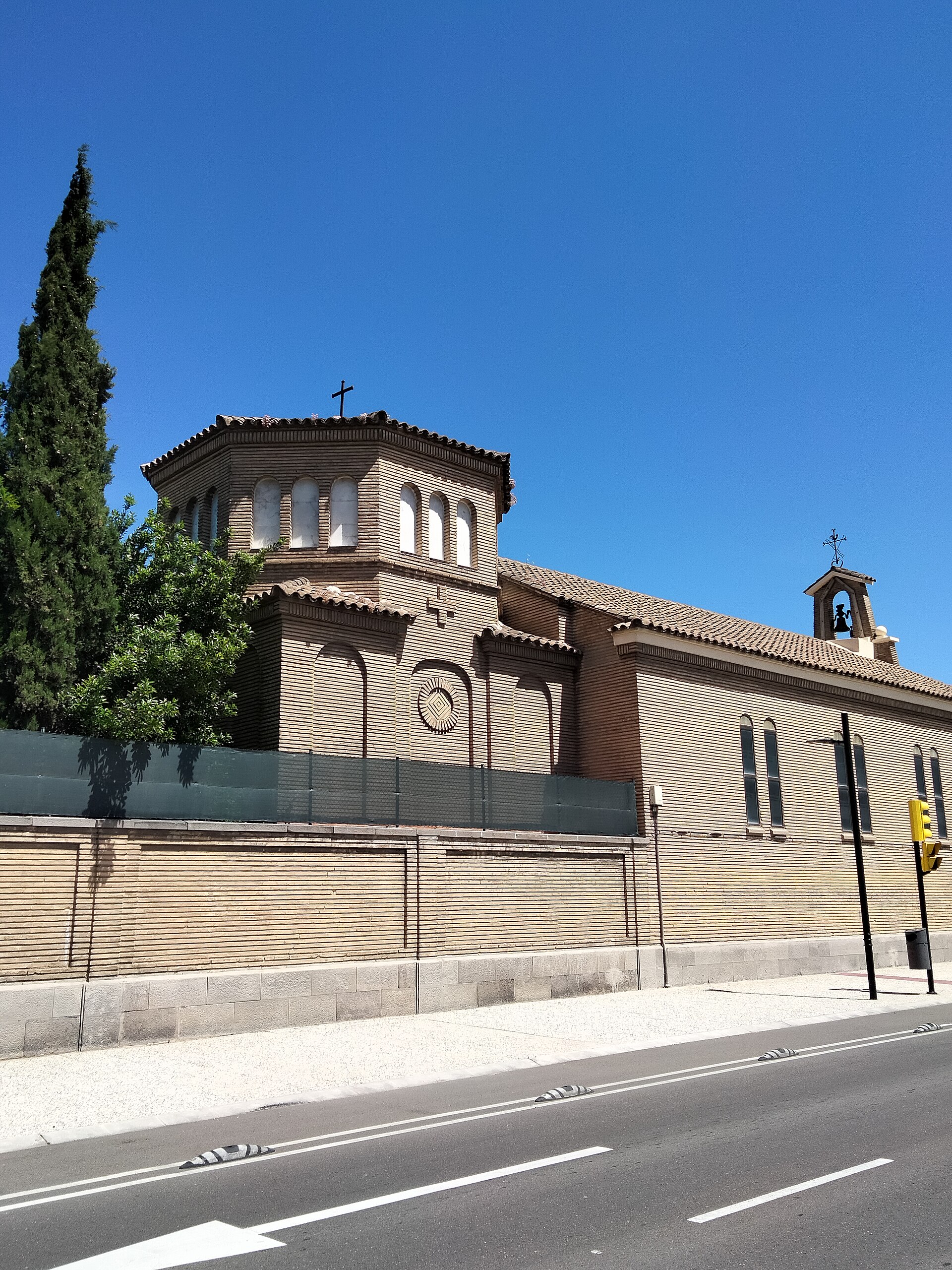
Convento de las Carmelitas Descalzas de San José
Zaragoza
Convento de las Carmelitas Descalzas de San José is a Discalced Carmelite convent in Zaragoza, located at Avenida de Cataluña 161. It is a place with a turbulent, centuries-long history that today functions as an active contemplative convent with its own church. How to get there? The convent sits on Avenida de Cataluña, one of Zaragoza's main arteries, south of the historic city centre. Public bus routes serve the area well, making it the most convenient way to arrive — the surrounding neighbourhood is densely built and well connected to the rest of the city. Drivers will find street parking available in the surrounding residential blocks. What will you see? The current convent and church building is the result of post-war reconstruction: the convent itself was designed in 1953 by architect José Romero Aguirre, and the church followed a year later, in 1960, designed by Santiago Lagunas Mayandía. The complex combines the practical enclosure of a working convent with the restrained, functional sacred architecture typical of mid-20th-century Spain. The community's history stretches back much further than the present building. The original convent of Discalced Carmelite nuns was established in Zaragoza in the 16th–17th century on the bank of the Huerva river, outside the city's old walls. That building suffered severe damage during the Napoleonic sieges of 1808–1809. Rebuilt in 1814, it went through a turbulent series of transformations: in 1835 it was confiscated and converted into a prison known as "Penal de San José," which operated until 1900. From 1908 the site served as army quartermaster barracks, until 1971, when it was sold to the Zaragoza City Council as part of the "Operación Cuarteles" urban programme and subsequently demolished to widen the road along the Ebro river and create green space. A notable recent development is an archaeological discovery: excavation work on the right bank of the Huerva uncovered the foundations of the original 16th-century convent — a tangible trace of this long history, even though the building itself no longer stands. When to visit? Since this is an active enclosed convent, visiting is in practice limited to the church interior, accessible during services. It's worth planning a visit around mass times — the best way to check the current schedule is to call the convent directly before arriving. Outside service hours, the building can still be appreciated from the outside, which is of particular interest to anyone curious about Zaragoza's mid-20th-century sacred architecture. Frequently asked questions Can you visit the convent? This is an active enclosed convent of Discalced Carmelite nuns, so access is largely limited to the church and mass times. The cloistered area itself remains off-limits to visitors. Where exactly is the convent located? At Avenida de Cataluña 161, in Zaragoza, postal code 50014. Is the current building the original 17th-century one? No — the present complex was built between 1953 and 1960. The original convent stood on the bank of the Huerva river and was demolished in the 1970s after decades of use as a prison and then as barracks. What should you know before visiting? It's worth calling the convent ahead of time to confirm mass times, since that's the only window during which the church interior is open to visitors.
-
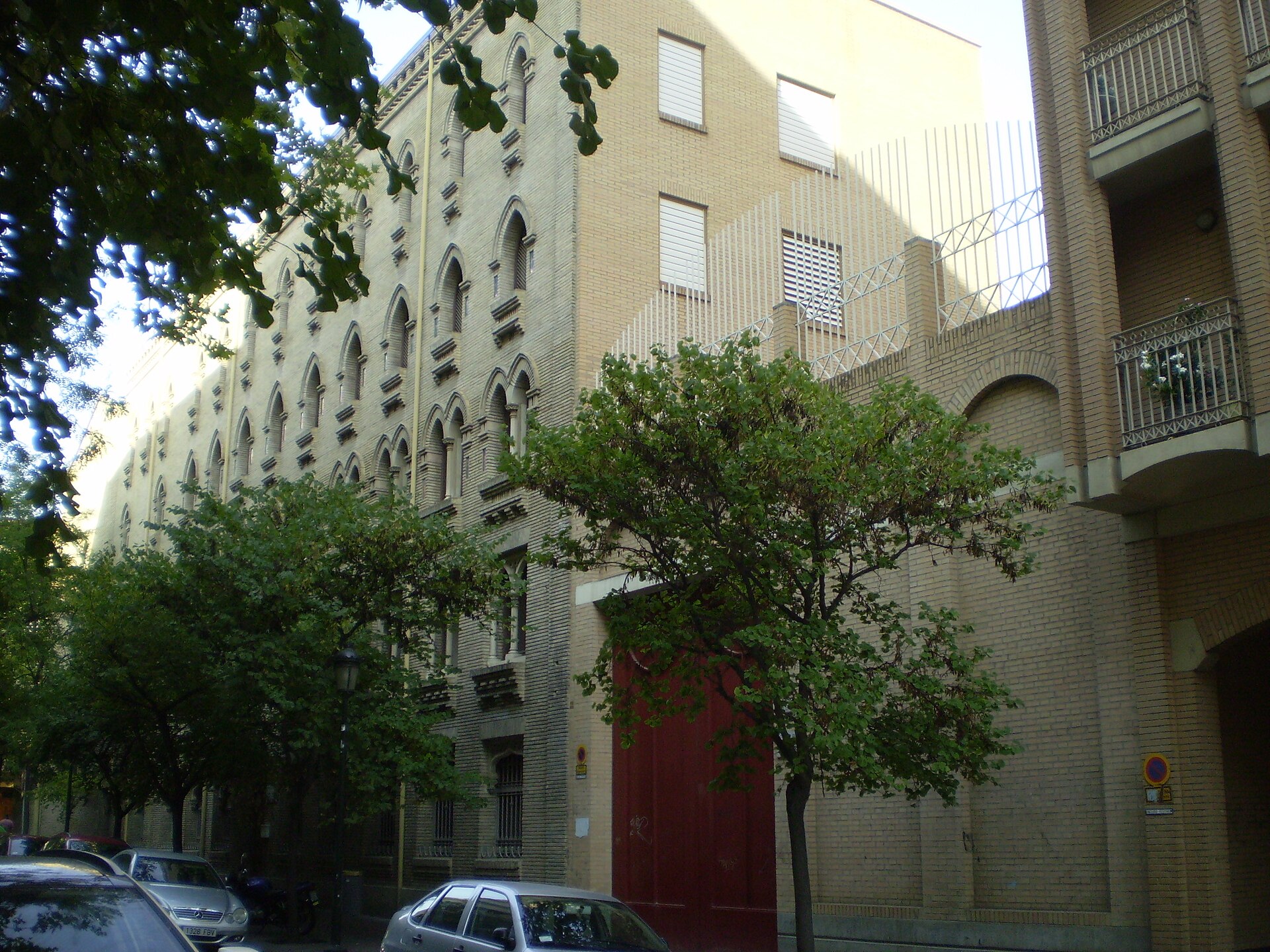
Monastery of Santa Catalina, Zaragoza
Zaragoza
The Monastery of Santa Catalina is one of the oldest convents in Zaragoza, tucked away on Calle Arquitecto Magdalena just steps from the historic centre. Poor Clares have lived here for nearly eight centuries, and the building still holds traces of Gothic-Mudéjar craftsmanship rarely found elsewhere in this part of Aragon. How do you get there? The monastery sits within Zaragoza's old town, an easy walk from both La Seo Cathedral and the Basilica of Nuestra Señora del Pilar. The simplest approach is on foot, combining the visit with a stroll through a district packed with historic sites. Visitors coming from other parts of the city can use the tram and bus stops near Plaza del Pilar as a reference point — from there it's only a few minutes through the narrow streets of the old quarter. What's the history behind it? The community was founded in 1234 just outside the city walls of the time, with the approval of Pope Gregory IX. Its founder was Ermisenda de Cellas, aunt of Teresa Gil de Vidaure, wife of King James I the Conqueror — a royal connection that brought the convent steady patronage and an endowment to secure its upkeep from the start. Daughters of the Aragonese nobility entered its ranks, and the community grew large enough to count around 120 nuns by the 17th century. The nuns were originally known as the "Sisters of San Damián," the name used for the Poor Clares before Saint Clare's canonization. The convent building went up in the first half of the 14th century, and its church, dating from that period, was reworked in a Baroque style in 1645. The complex suffered heavily during the Peninsular War of 1808, when Zaragoza endured the sieges by Napoleon's army that damaged most of the city's monastic buildings. A thorough renovation in 1928 gave the complex much of its present appearance. What will you see inside? The main draw is the surviving Gothic-Mudéjar core, still visible despite later Baroque and 19th- and 20th-century alterations. Inside the church, look for painted arcades, geometric compositions, and motifs drawn from Islamic decorative tradition — hallmarks of Mudéjar style, which blends Christian and Moorish building craft. Noble coats of arms scattered through the decoration point to the convent's aristocratic roots. Specialists in Zaragoza's Mudéjar architecture rank the decoration here among the richest of any convent of its kind in the city. Because the monastery remains an active enclosed community, visits are limited to the church and its adoration chapel rather than the cloistered quarters where the sisters live. Even so, that's enough to sense a place where prayer has continued uninterrupted since 1234. When should you visit? The church's daytime opening hours are the best time to come, when natural light through the windows brings out the detail in the Gothic-Mudéjar decoration. If you want a quiet look around, it's worth avoiding the times of religious services. Since this is an active place of worship rather than a museum, check current opening hours locally or with the tourist information office before planning your visit. Frequently asked questions Can you visit the Monastery of Santa Catalina? Yes, the church and adoration chapel are open to visitors. The enclosed section where the Poor Clares live is not accessible to the public. Who founded the monastery? Ermisenda de Cellas founded it in 1234, with the approval of Pope Gregory IX and the backing of the Aragonese royal family. What architectural style defines the interior? Gothic-Mudéjar, overlaid with Baroque changes from the 17th century and a renovation of the exterior complex in 1928. Do nuns still live there today? Yes, a community of Poor Clares has lived at the site continuously for almost eight centuries.
-
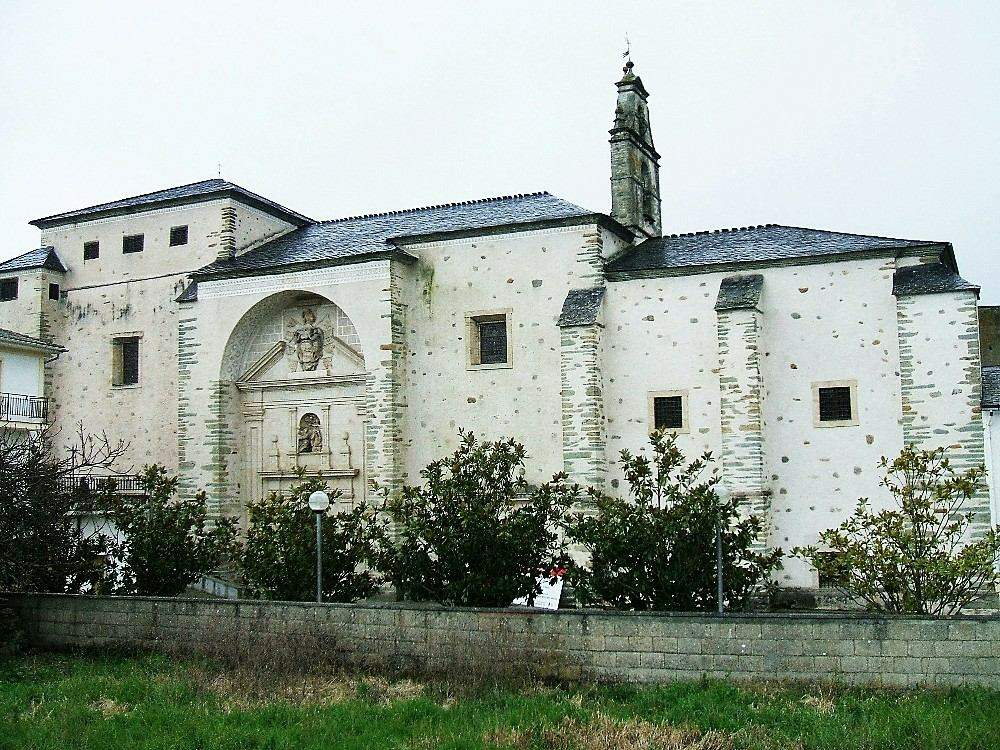
Monastery of the Anunciada, Villafranca del Bierzo
Villafranca del Bierzo
The Monastery of the Anunciada stands among the most valuable historic sites of Villafranca del Bierzo, a town on the Camino de Santiago in the province of León. Home to a community of Poor Clare nuns, the complex ties together the region's pilgrim past with striking Baroque religious architecture, and it remains an active contemplative convent to this day. How did the monastery come to be? Before the monastery existed, the same site housed a pilgrim hospital dedicated to Saint James, serving travelers on their way to Santiago de Compostela. Its transformation is tied to the noble family of the Marquises of Villafranca. Pedro Álvarez de Toledo, Marquis of Villafranca, and his wife Elvira sought to turn the hospital into a convent for their daughter María de Toledo, who wished to take religious vows. Papal authorization arrived in 1594, and the monastery was formally established in 1606, when nuns from the Descalzas Reales convent in Madrid took up residence. Poor Clare sisters have lived there ever since. What can visitors see today? The centerpiece of the complex is its church, built between 1655 and 1660 in the Italian Baroque style. It is regarded as one of the most beautiful religious buildings in Villafranca del Bierzo, and its facade and interior draw the attention of pilgrims and travelers passing through the Bierzo region alike. In January 2024, the monastery was declared a Bien de Interés Cultural (an asset of cultural interest) with monument status, an official recognition of its importance to the heritage of Castile and León. Because it remains an active enclosed convent, access to the interior may be limited to certain hours or occasions, following the rhythm of the community's religious life. What has the monastery survived over the centuries? The monastery's history has not been without turmoil. In 1809, during the Peninsular War, French soldiers stormed the building and the nuns were forced to flee. They did not return until 1813, finding the monastery stripped and damaged. Despite this destruction, the complex survived and was restored, preserving its character and its religious significance for the people of Villafranca del Bierzo. How do you get there? Villafranca del Bierzo lies in the western part of León province, directly on the Camino Francés, the most popular route of the Way of St. James. The town is well connected by road to León and Ponferrada, both of which offer local transport links. The monastery itself sits in the historic center of town, close to other landmarks, making it easy to combine a visit with a walk through the old quarter. When is the best time to visit? Villafranca del Bierzo sees most visitors in spring and summer, when pilgrims walking the Camino de Santiago stop here to rest and the weather is pleasant for exploring the town on foot. Since the monastery is still an active enclosed convent, though, access to the church interior can depend on the time of day and the community's schedule — it is worth checking locally or with tourist information beforehand. Frequently asked questions Can visitors go inside the monastery? The monastery church is open to visitors during set hours, but the enclosed section remains off-limits to outsiders, as it is still a working convent of nuns. Why was the monastery built on this particular site? It was built on the grounds of a former pilgrim hospital dedicated to Saint James, converted into a convent at the initiative of the Marquises of Villafranca for their daughter. What architectural style is the monastery church? The church, built between 1655 and 1660, follows the Italian Baroque style and is considered one of the town's finest religious landmarks. Is the monastery officially protected as a heritage site? Yes, in January 2024 it was declared a Bien de Interés Cultural with monument status, formally recognizing its value to the region's heritage.
-
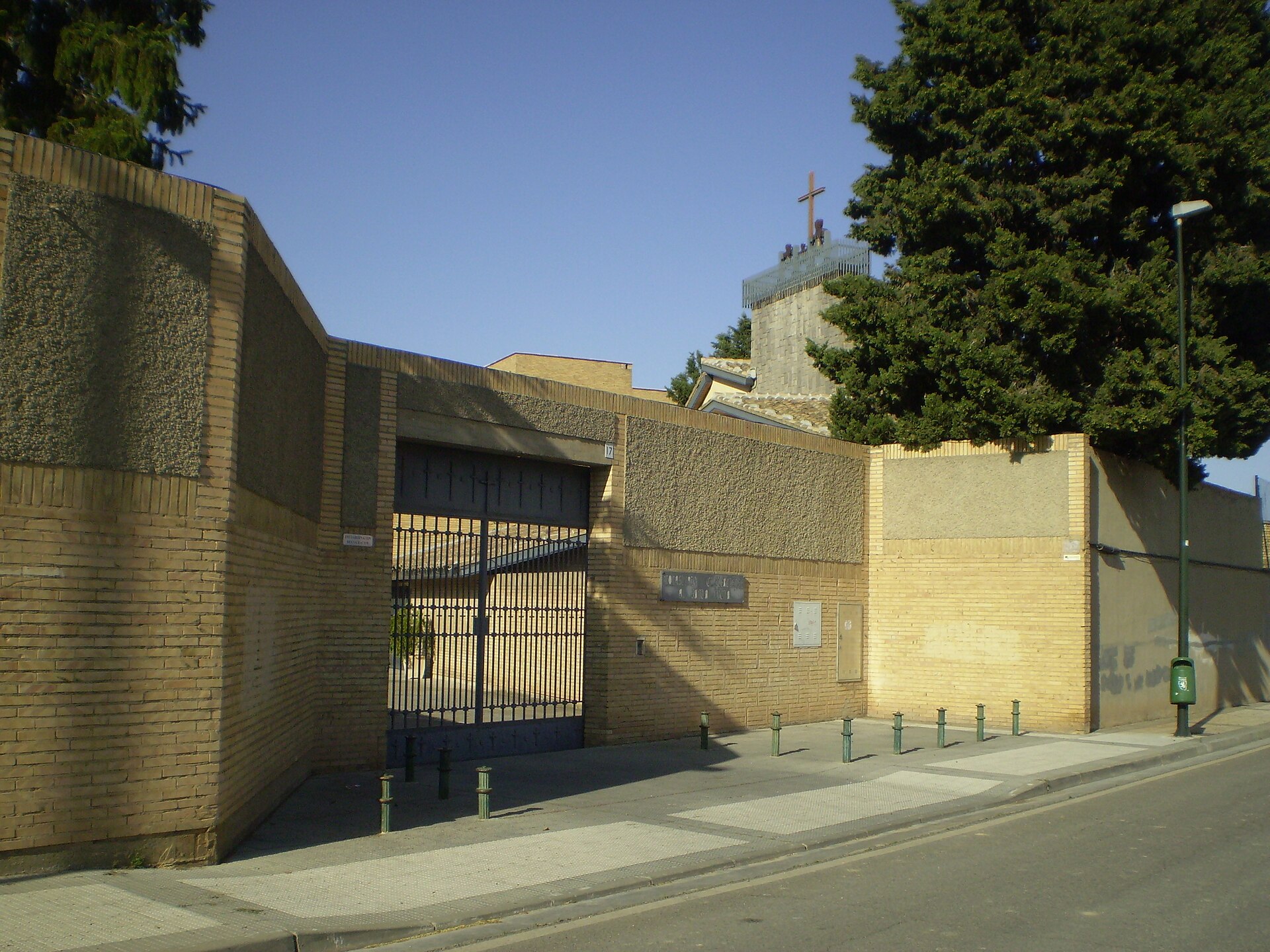
monastery of Santa Lucía
Zaragoza
Monasterio de Santa Lucía is a cloistered convent of Cistercian nuns in Zaragoza, one of the longest-running religious communities in the Aragón region. The building visitors see today only dates to the 1960s, but the community behind it has an unbroken history stretching back more than eight centuries, marked by repeated relocations and rebuilding. Where did this community come from? The story begins in the early 13th century, when King Pedro II of Aragón wanted to establish a Cistercian community in his territory, following the Rule of Saint Benedict — a life of simplicity, manual labor, and distance from towns. He asked the abbot of Morimond in France to send nuns for the purpose, and in 1212 the community settled on the Cambrón estate, granted to them by the king. The following centuries brought a string of forced moves. In 1454, for reasons that remain unclear, the nuns relocated to the monastery of Santa María In Foris near Huesca, returning to Cambrón in 1473. The real turning point came after the Council of Trent, which barred convents from remaining in isolated rural locations — forcing the community into the city of Zaragoza itself. They settled next to the hermitage of Santa Lucía, arriving in 1588, and it is that hermitage which gave the community the name it still carries today. Why has the monastery moved so many times? The 19th and 20th centuries proved especially turbulent. In 1808 the nuns had to abandon their home due to attacks by Napoleonic troops, taking refuge at the monastery of Trasobares. Between 1837 and 1840 they lived at the convent of Santa Catalina in Zaragoza, and from 1840 to 1850 at the convent of Santa María de Jerusalén. During the Spanish Civil War, between 1936 and 1940, they found temporary shelter at the Carmelo Santa Teresa. Each time, the community eventually returned to a home of its own — and in 1965 the nuns built an entirely new monastery in the Casablanca neighborhood of Zaragoza, moving in during August 1967. That is the building still standing today. What can you actually see on site? This is a living, cloistered monastery, not a museum, so access is largely limited to the monastery church, open to worshippers and visitors during services. The atmosphere reflects the Cistercian ideal of simplicity: little ornamentation, a quiet rhythm of prayer, and an emphasis on contemplation rather than display. As with many enclosed convents in Spain, the nuns of Santa Lucía support their community partly through manual work, producing traditional food products for sale, including a locally known style of preserved meat prepared escabeche-style. How to get there and when to visit? The monastery sits in the Casablanca district in the southern part of Zaragoza, well connected to the city center by public transport. This is a destination for travelers looking for quiet and a living monastic tradition rather than a conventional sightseeing stop with fixed opening hours — the best time to visit is around services, when the church is accessible, keeping in mind the discretion the setting calls for. Zaragoza itself offers plenty nearby, so a visit combines easily with the city's other landmarks. Frequently asked questions Can visitors go inside the monastery of Santa Lucía? The cloistered part of the monastery is closed to outsiders, but the monastery church is open to worshippers and visitors during service hours. Is the current building the original historic monastery? No — the present building in the Casablanca neighborhood was constructed between 1965 and 1967. The community itself, however, has existed continuously since 1212 and previously occupied several other sites in and around Zaragoza. Where does the name "Santa Lucía" come from? It comes from the hermitage of Santa Lucía, next to which the nuns settled after arriving in Zaragoza in 1588, following earlier stays in more isolated rural locations. Can you buy anything made by the nuns? Yes — the Cistercian nuns traditionally make and sell food products, including a local escabeche-style preserved meat, as part of how the community supports itself.
-
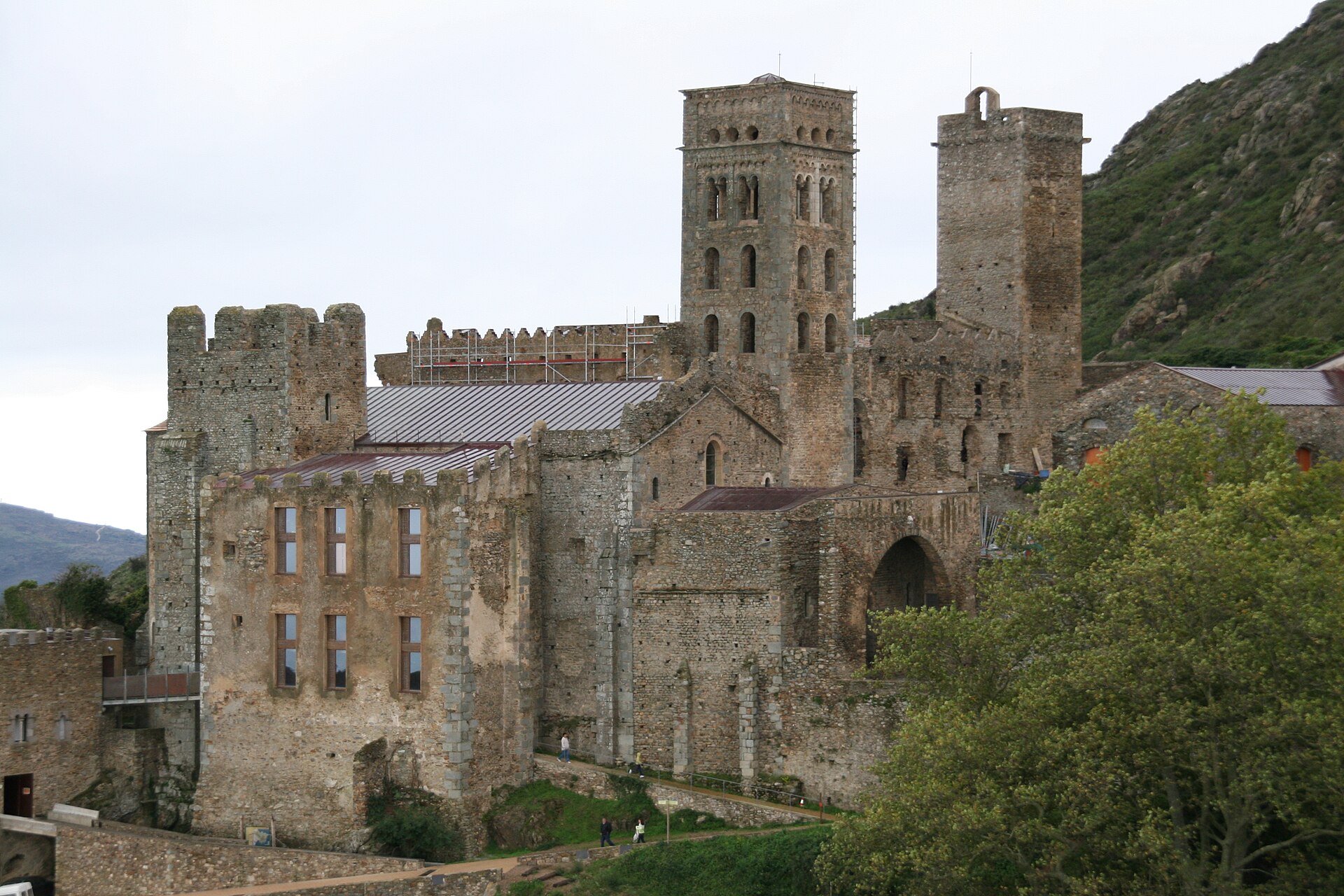
Sant Pere de Rodes
el Port de la Selva
Sant Pere de Rodes is a former Benedictine monastery perched on the slopes of the Serra de Rodes, above the coastal town of el Port de la Selva on the Costa Brava, in Girona province. Standing at nearly 500 metres above sea level, the ruined and partly restored monastic complex offers one of the best panoramic views over the Catalan coastline and the Cap de Creus headland. What will you see there? The centrepiece is the Romanesque monastery church, one of the most significant examples of Romanesque architecture in Catalonia, built with a three-nave layout, columns topped with richly carved capitals, and a tall Lombard-style bell tower. Visitors can also walk through the surviving cloister, the former monks' cells, the refectory, and remnants of the defensive walls that once protected the abbey during periods when it was a frequent target of raids and looting. It's worth continuing up the hill to the ruins of the Sant Salvador de Verdera watchtower, which opens up an even wider view — the Gulf of Lion on one side, the rugged Cap de Creus massif on the other. At the foot of the hill, near the hamlet of Santa Creu de Rodes, lie the remains of a medieval settlement that grew up around the monastery and was abandoned after its decline. How do you get there? The easiest approach is by a local road from el Port de la Selva — a short drive of about fifteen minutes along winding curves, ending at a car park right by the monastery entrance. Hikers can instead walk up from Vilajuïga or directly from el Port de la Selva; the mountain trails cut through Mediterranean scrubland and typically take one and a half to two hours one way, depending on the route and pace. This walking option is popular with visitors combining the monastery with a hike through the Cap de Creus Natural Park. When should you visit? Spring and autumn offer the best conditions, with mild temperatures and less exposure to the full summer sun on this largely shadeless hilltop. In summer, an early start is worth it — both to avoid the heat and the midday crowds of day-trippers from along the Costa Brava. Winter can bring strong winds that make the exposed site feel colder than the thermometer suggests, but the views are often at their clearest and the site far quieter. A bit of history The monastery was founded in the early medieval period and became one of the region's major religious centres, playing an important economic and spiritual role in Alt Empordà for centuries. Its long decline followed the departure of the monastic community, after which the buildings fell into disrepair until restoration and partial reconstruction work began — efforts that continue today. The site is now managed as a heritage monument open to visitors, with displays explaining its history. Frequently asked questions Can you drive almost right up to the monastery? Yes — the local road from el Port de la Selva leads to a car park directly at the entrance, so no long hike is required if you're arriving by car. How long does a visit take? Touring the monastery itself usually takes about an hour to ninety minutes, but allow extra time if you plan to hike up or down, or to climb further to the Sant Salvador de Verdera watchtower ruins. Is there anywhere to eat or drink on site? There's a small kiosk offering drinks and snacks, but for a proper meal it's best to eat in el Port de la Selva before or after the visit. Is the site suitable for children or visitors with limited mobility? The grounds include uneven stone surfaces, steps, and steep approaches, which can be difficult for wheelchairs or anyone with mobility issues — older children generally manage without trouble.
-
Friary of Valentuñana
Sos del Rey Católico
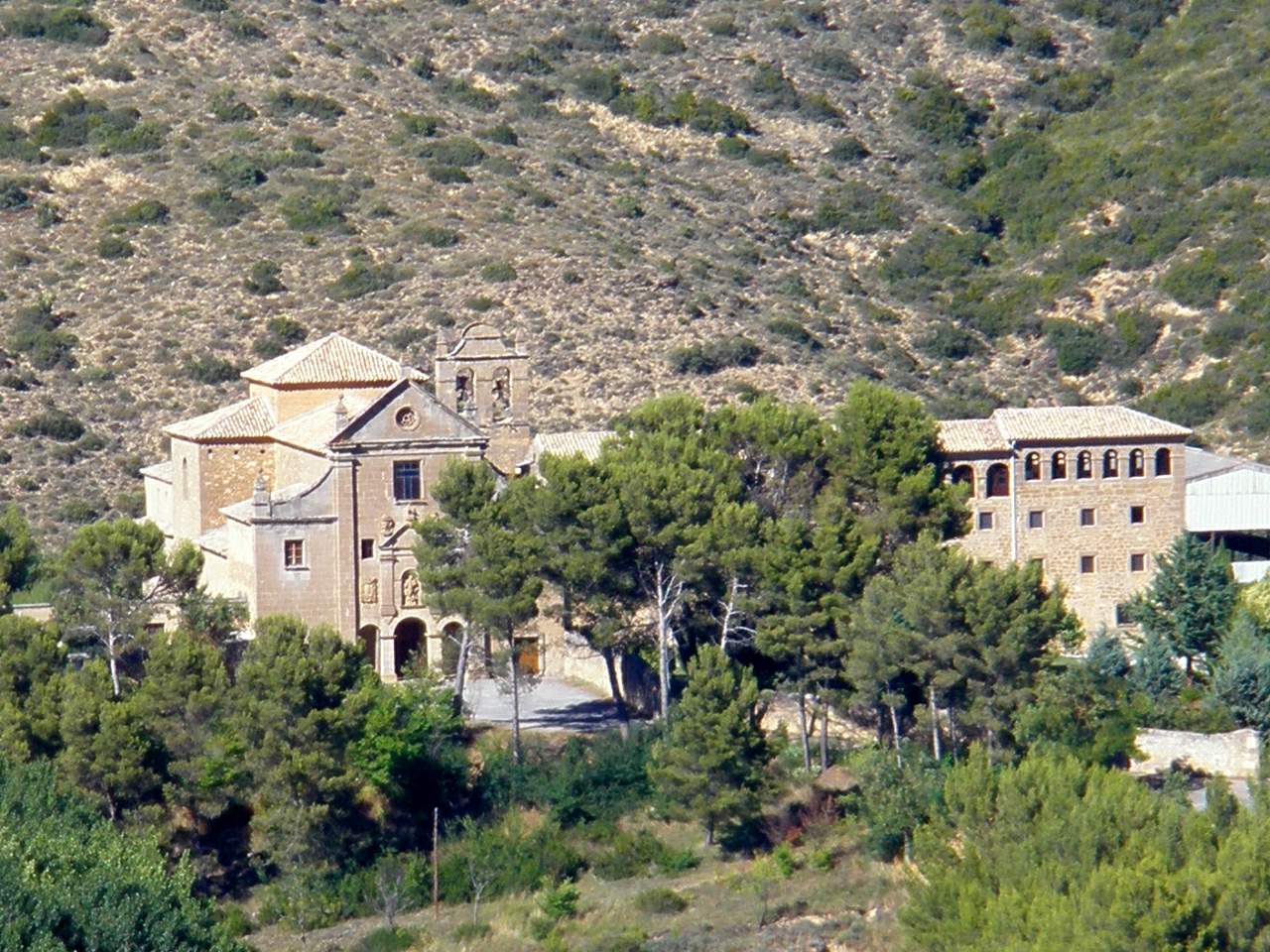
The Friary of Valentuñana stands about 4 km from Sos del Rey Católico, in the Zaragoza province of Aragón, in the Cinco Villas region. It ranks among the most significant religious monuments in the area, tied to the veneration of Our Lady of Valentuñana and centuries of monastic history in this corner of Aragón. Where does the site come from? Tradition holds that the Virgin appeared here in the mid-13th century, and a hermitage was raised in her honor. The earliest documented references date back to 1254, and the statue of the Virgin venerated at the sanctuary is likewise dated to the 13th century. For generations the hermitage served as a pilgrimage destination for the people of Sos and surrounding villages. How was the friary built? In 1672, Antonia Felipa Guerrero y Álava, a devotee of Santa María de Valentuñana, left her estate to found a convent of Discalced Carmelites at the existing hermitage. The first friars arrived in Sos in 1677, but they did not move into the new building until 1718 — construction work continued until 1732. The friary church opened for worship in 1723. The Discalced Carmelites settled here to live in community around the Marian shrine while also tending to the pastoral needs of nearby villages. Turbulent years and abandonment The friary's history was far from peaceful. During the Peninsular War against Napoleon's France, French troops occupied Sos and forced the friars to abandon the building. Attempts to return were then disrupted by the Carlist Wars, and the friary was ultimately abandoned following the 1835 Mendizábal disentailment decree, which secularized church properties across Spain. The building fell into ruin. The return of monastic life Years later, a widow purchased the ruins and donated them to the Diocese of Jaca. On October 13, 1902, the Augustinian Recollects arrived at Valentuñana and turned the friary into a major seminary. Starting in 1918, groups of missionaries departed from here for the Americas, making Valentuñana an important center of religious formation and missionary training for the region. How do you get there? The friary sits roughly 4 km from the center of Sos del Rey Católico, which is well connected by road to Pamplona and Zaragoza. A car is the most practical way to reach it — the local road winds through the hills of Cinco Villas, and the approach itself is part of the appeal, with views over the surrounding valleys. What can you see on site? Visitors come primarily for the friary church, home to the statue of Our Lady of Valentuñana, and for the building itself, whose solid stone silhouette blends into the landscape. The historic interiors and the setting of the sanctuary are worth a close look — for centuries this was a pilgrimage destination for the people of Cinco Villas. When should you visit? Spring and autumn are the best seasons, when temperatures across Aragón are mild and the surrounding hills are at their most scenic. Summers can get hot, which is worth factoring into plans for a longer stay in the region. Frequently asked questions How far is the friary from Sos del Rey Católico? About 4 kilometers from the town center, a few minutes by car. Who built the friary at Valentuñana? The Discalced Carmelites, following a foundation established in 1672 by Antonia Felipa Guerrero y Álava. Why was the friary abandoned in the 19th century? Because of the Peninsular War against France, and later the 1835 Mendizábal disentailment decree, which dissolved monastic properties throughout Spain. Which religious community stayed here the longest? The Augustinian Recollects, who arrived in 1902 and ran a seminary and missionary training center on the site.
-
Monastery of Santa María Magdalena, Medina del Campo
Medina del Campo
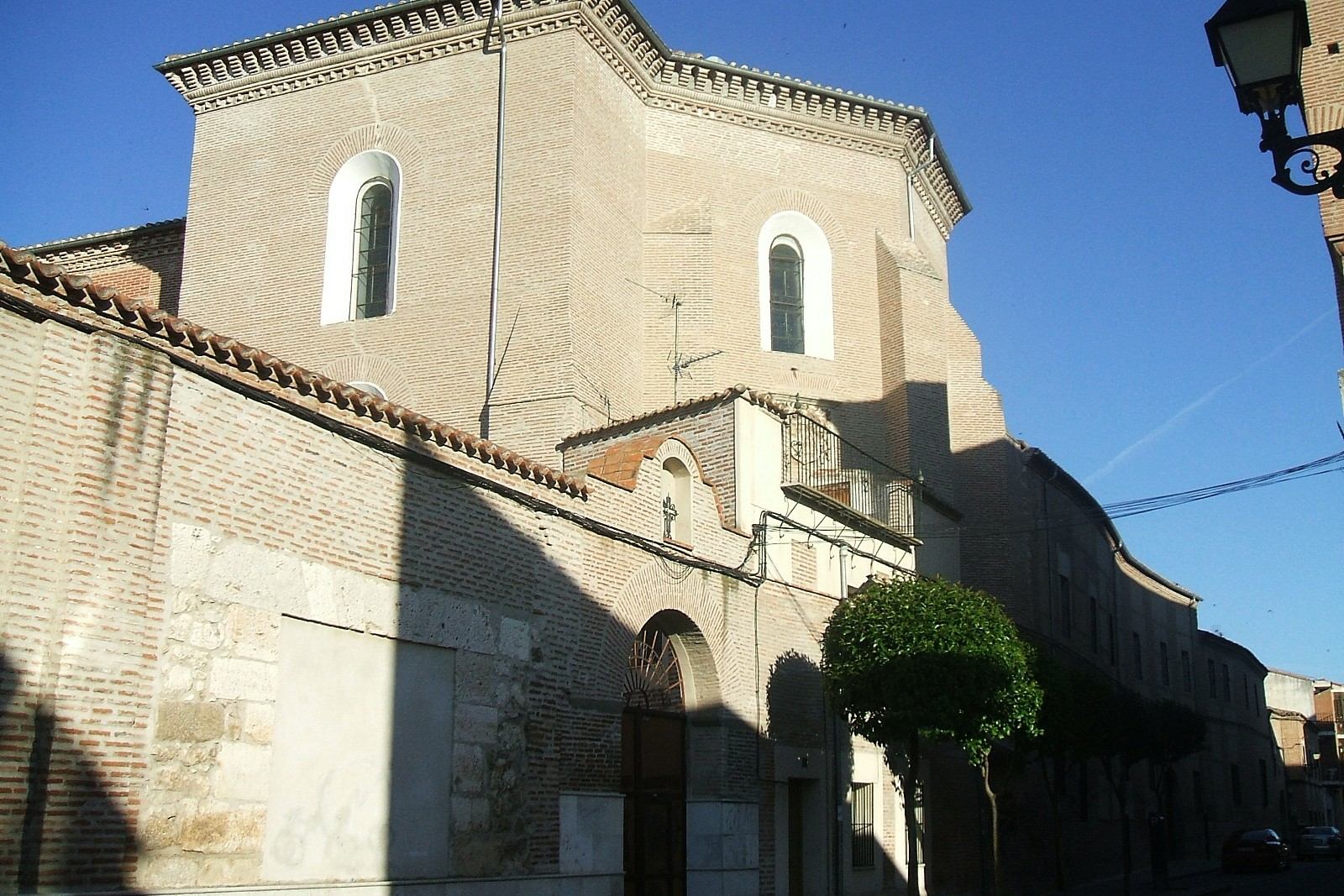
Monastery of Santa María Magdalena is a 16th-century Augustinian convent in Medina del Campo, one of the historic towns of the Valladolid province in Castile and León. Who founded the monastery? The monastery was established in 1551 by Rodrigo de Dueñas, an influential banker and Treasury counselor to Emperor Charles I, together with his wife Catalina Cuadrado. It was built with a dual purpose: to serve as a family burial site and to shelter women seeking spiritual renewal. The design is attributed to Rodrigo Gil de Hontañón, one of the leading architects of the Spanish Renaissance. Augustinian nuns have lived here continuously since its foundation, keeping the building an active place of worship rather than a mere monument. What can you see inside? The church is the most valuable part of the complex, built in a Gothic-Renaissance style on a Latin cross plan. Its interior consists of a single nave divided into three sections, a transept with modestly developed arms, and a chancel closed by a flattened apse. The walls of the transept and chancel are covered with grisaille murals depicting scenes from the life of Saint Joseph and the Passion of Christ, dated to around 1558 and attributed to the painter Luis Vélez of Medina del Campo. Another highlight is the sculptural Calvary group carved by Esteban Jordán, commissioned in 1571 by Juan de Ahumada Hormaza, the founder's son, who chose this very spot as his own burial place. How do you get to the monastery? Medina del Campo sits in the province of Valladolid, well connected to the rest of Castile through a network of national roads and rail links — the town has its own station served by regional and long-distance trains. From central Valladolid, the drive takes about half an hour. The monastery stands in the historic quarter of town, a short walk from major landmarks such as La Mota Castle, making it easy to combine both sites in a single visit. When is the best time to visit? Because the community follows an enclosed monastic life, access to the interior can be limited to specific hours or occasions — it's worth checking current visiting arrangements beforehand, ideally through the local tourist office in Medina del Campo. Spring and early autumn bring milder weather, making them pleasant seasons for exploring the town on foot. Timing a visit around market days is also worthwhile, since Medina del Campo has a trading tradition dating back to the Middle Ages that adds extra color to a walk through the area. Frequently asked questions Who founded the Monastery of Santa María Magdalena? It was founded in 1551 by Rodrigo de Dueñas, a banker and Treasury counselor to Charles I, together with his wife Catalina Cuadrado. What architectural style does the monastery church represent? The church blends Gothic and Renaissance elements, following a Latin cross plan with a distinctive flattened apse in the chancel. What do the paintings inside the church depict? The grisaille murals, created around 1558, show scenes from the life of Saint Joseph and the Passion of Christ. Can visitors tour the monastery? Yes, though since Augustinian nuns still live there, access can be limited — it's best to check opening hours in advance.
-
Convento de Santa Inés del Valle
Écija
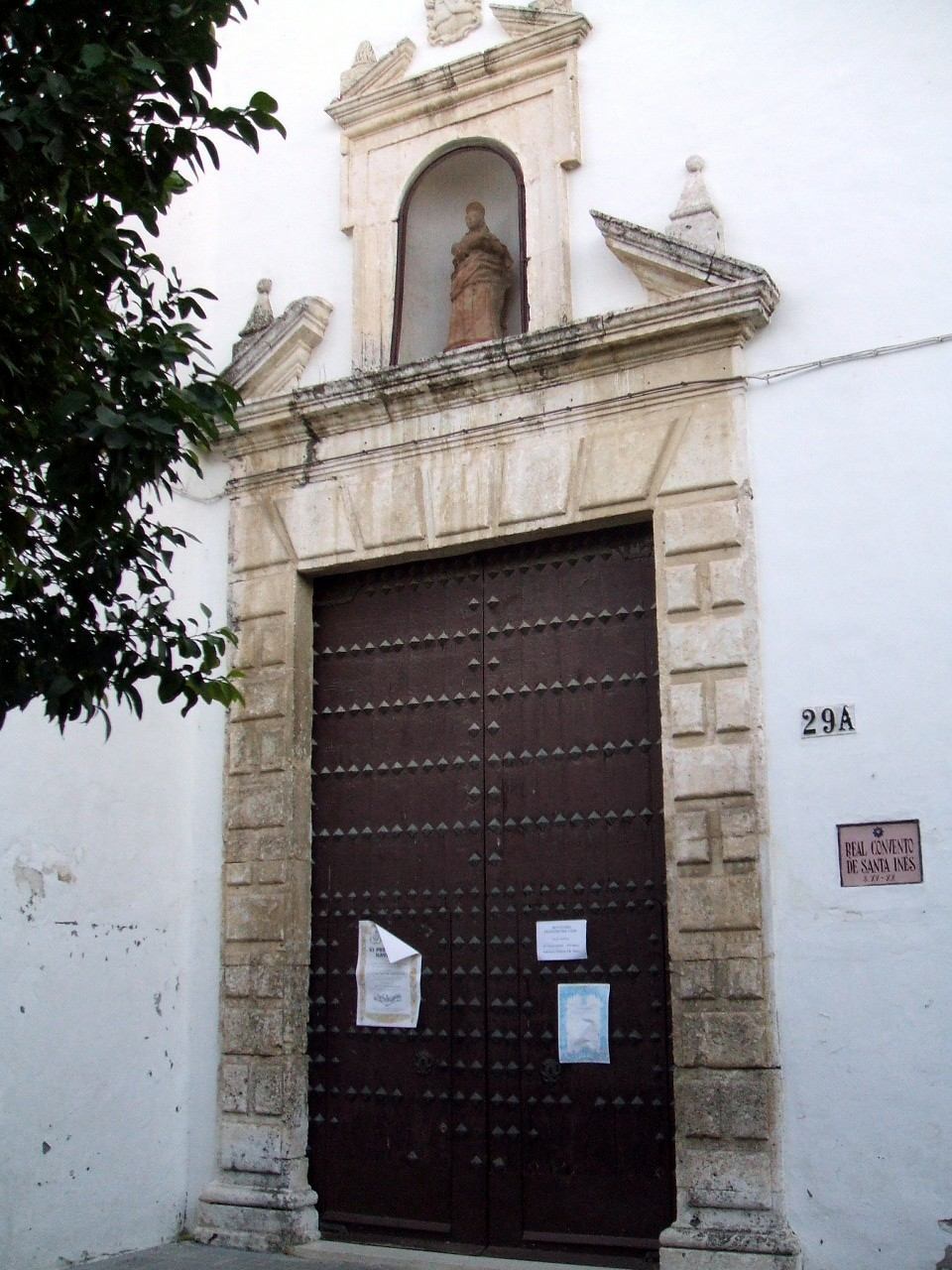
Convento de Santa Inés del Valle is a Poor Clare convent tucked into the historic core of Écija, one of Andalusia's most distinctly baroque towns. Behind its unassuming facade lies a community with more than five centuries of continuous history — a living cloister rather than a mere monument, still home to a small group of nuns today. How to get there? The convent sits in Écija's old town, a city positioned along the A-4 motorway between Córdoba and Seville, making it an easy stop for anyone travelling between the two. Écija has no high-speed rail station of its own, so a car is the most practical option, though regular buses connect the town with both Seville and Córdoba. The building itself stands within walking distance of the main squares, so once you're in the old town no further transport is needed to reach it. What will you see? The convent's story begins in the late 15th century: the nuns settled at this site around 1487 under the patronage of Doña Isabel Cherino, widow of Luis Pernía, who had served as mayor of Osuna. The community has belonged to the Franciscan Poor Clares ever since. The oldest surviving section is the cloister, raised in the final decades of the 15th century — a double arcade carried on brick piers, typical of the local building tradition of that era. The church, a single-nave structure, came later, in the 17th century, and reflects the plain-walled, richly decorated style characteristic of Écija's religious architecture. Beyond the architecture, the site carries a striking historical weight. Queen Isabella the Catholic is said to have stayed here for three months while raising funds for the war against Granada, a detail still recounted to visitors as proof of the convent's standing during the final years of the Reconquista. Later benefactors, including Empress Maria of Austria and the Infanta Isabella Clara Eugenia, endowed the convent with valuable relics — among them, reportedly, a thorn said to be from the Crown of Thorns. Today only a handful of Poor Clare sisters remain within its walls, continuing a contemplative way of life largely unchanged for centuries. When to visit? Écija is known for some of the highest summer temperatures in Europe, so spring (March–May) and autumn (September–November) are the most comfortable seasons to explore it, with softer light that flatters the cloister's brickwork. Because this is an active enclosed convent, access to the interior can be limited to specific hours or occasions — such as the sale of homemade sweets or occasional openings of part of the church — so it's worth checking current hours locally before planning a visit. Frequently asked questions Can you go inside the convent? Since this is a living enclosed community, interior access is limited — visitors are usually able to see the church and part of the cloister, while the cloistered living quarters remain off-limits. How long does a visit take? Given the convent's modest size, a visit typically takes 20 to 40 minutes, depending on which areas are open on the day. Are there other landmarks nearby worth seeing? Yes — Écija is known as the "city of towers" for its cluster of baroque churches and bell towers within a few hundred metres of the convent, making it easy to combine with a walk through the old town. Does the convent sell any homemade products? Spanish Poor Clare convents traditionally sell homemade pastries and sweets through a rotating hatch known as the torno — it's worth asking on site whether this service is currently available.
-
Monastery of Santa Clara, Medina de Pomar
Medina de Pomar
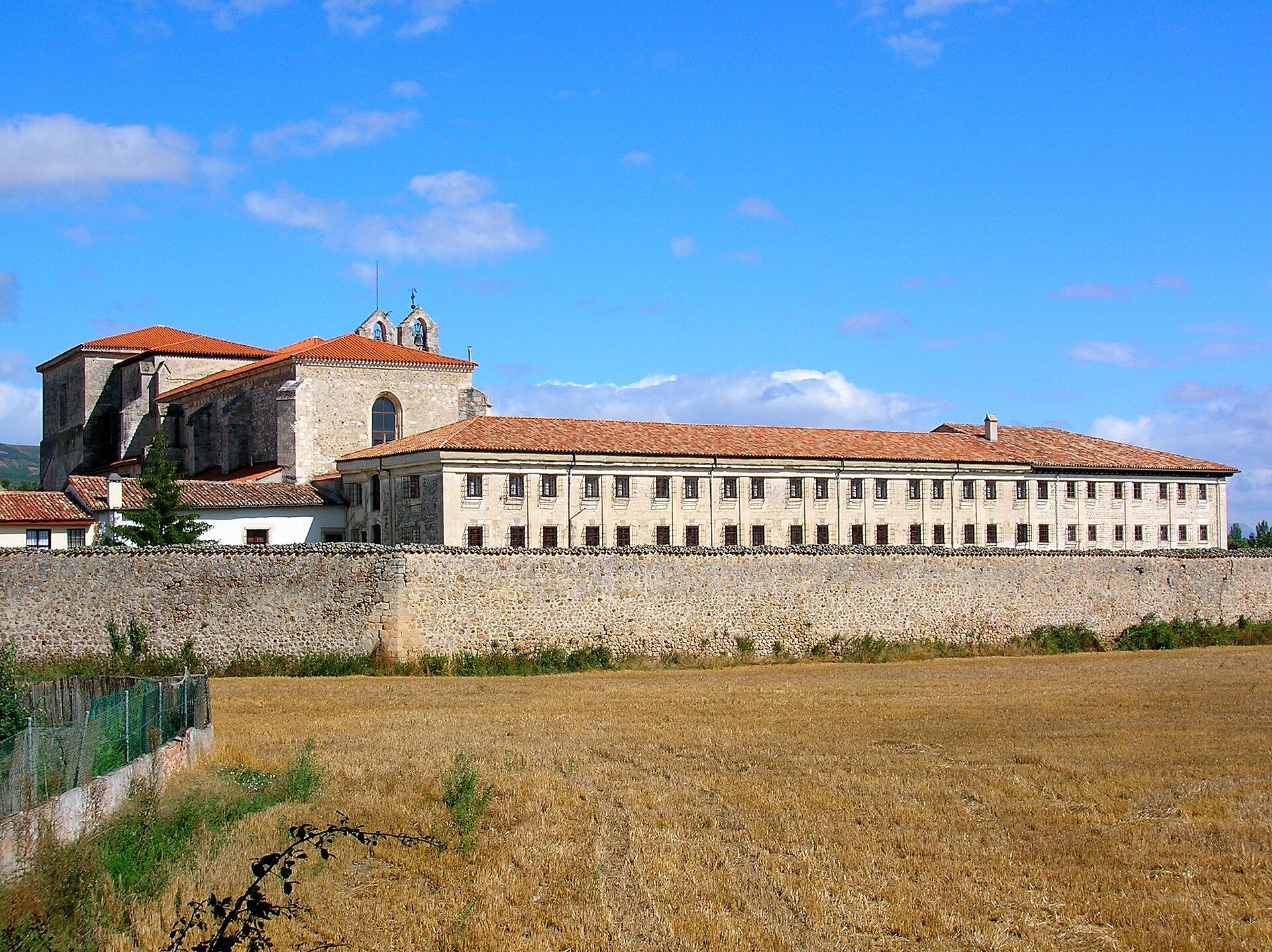
The Monastery of Santa Clara is a Gothic convent of Poor Clare nuns in Medina de Pomar, a town in the province of Burgos, in the Las Merindades region of northern Spain. Its founding is documented in a deed issued in Baeza on January 11, 1313, by Sancho Sánchez de Velasco, chief adelantado of Castile under Alfonso XI, and his wife Sancha García. For more than seven centuries since then, a community of Poor Clare sisters has lived within its walls without interruption, devoted to prayer and work. In 1992 the building was declared a Bien de Interés Cultural (Cultural Heritage Site) in the monument category. Where is the monastery located? The building stands on the southern edge of Medina de Pomar, next to the former Hospital de la Vera Cruz — now converted into a guesthouse — and close to the hermitage of San Millán. This setting, just outside the historic center but within easy walking distance, is typical of convents founded by noble families who wanted a degree of separation from the bustle of town life while remaining connected to it. What can you see inside? The interior combines a church, the attached Chapel of the Conception, a choir, and a cloister, all built predominantly in Gothic style. The church houses the family pantheon of the Fernández de Velasco lineage, who held the title of Constables of Castile and acted as patrons of the monastery for generations. Artists and workshops involved in decorating the interior included members of the Colonia family, Diego de Siloé, and Felipe de Bigarny — names central to Spanish Gothic and Renaissance art. The complex also houses the Museum of the Constables of Castile, arranged in several rooms covering both the history of the family and the daily life of the Poor Clare community. Among its most important pieces is the Cristo Yacente (Recumbent Christ), carved by Gregorio Fernández between 1622 and 1624 and ranked among the five finest works by the sculptor. The collection also includes a Flemish panel attributed to Hans Memling, dating from the last third of the 15th century, and a large funeral cloth dated to 1528. How do you get to Medina de Pomar? Medina de Pomar sits in the northern part of Burgos province, in the Las Merindades region, and is well connected by road to the city of Burgos as well as to the Basque cities of Vitoria-Gasteiz and Bilbao. The monastery itself lies within the town, so once you arrive the easiest way to reach it is on foot — it is a short walk of a few minutes from the historic center. When is the best time to visit? Because the monastery remains an active religious community, visits follow set opening hours rather than free access throughout the day. It is best to plan a visit during daytime hours outside the community's prayer times, and to check the current schedule before travelling, since — as a working convent — hours can vary by season and liturgical calendar. Frequently asked questions Who founded the Monastery of Santa Clara in Medina de Pomar? It was founded in 1313 by Sancho Sánchez de Velasco, chief adelantado of Castile, and his wife Sancha García, based on a deed issued in Baeza. Do nuns still live in the monastery today? Yes, a community of Poor Clare sisters has lived there continuously since its founding, making it a living religious site rather than only a museum. What is the most valuable piece in the monastery's museum? The Cristo Yacente by Gregorio Fernández, carved in 1622-1624, is considered one of the artist's five best works and is regarded as the museum's centerpiece. What is the monastery's connection to the Constables of Castile? The church contains the family pantheon of the Fernández de Velasco family, who held the hereditary title of Constable of Castile, and the on-site museum is dedicated to their history.
-
convent of San Pedro Regalado
Aranda de Duero
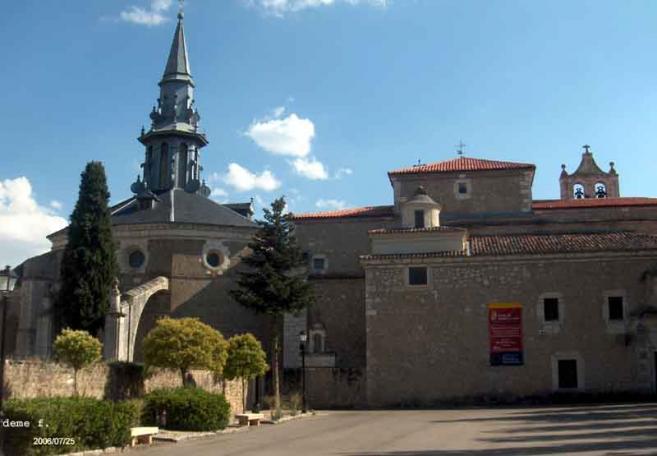
The Convent of San Pedro Regalado is a Franciscan monastic complex in La Aguilera, a village within the municipality of Aranda de Duero in the province of Burgos, right in the heart of the Ribera del Duero wine region. It functions today as a pilgrimage sanctuary and remains a compelling stop for anyone interested in medieval religious reform and Castilian sacred architecture. Where does the convent's history begin? The story starts in 1404, when the Franciscan reformer Pedro de Villacreces, previously linked to the convent of La Salceda in Guadalajara, obtained permission from the Bishop of Osma to found a community in La Aguilera built around a stricter, more austere interpretation of monastic life. He was joined by his disciple, Pedro Regalado, who would eventually become the site's central figure. In 1409, Pope Alexander V issued the bull "Ordinem Fratrum Minorum," formally confirming the reform Villacreces had initiated. After Villacreces died in 1422, Pedro Regalado took over leadership of the reformist communities. In 1438 he commissioned the construction of the convent church, and three years later became vicar of the convents of La Aguilera and El Abrojo. He spent his final years in La Aguilera and died there in 1456. His tomb, still housed at the site, quickly became a pilgrimage destination, though formal canonization by Pope Benedict XIV did not come until 1746 — long after his cult had already taken root in the region. What can you see when you visit? The complex preserves the layout typical of 15th-century Franciscan reform foundations: simple, unadorned, organized around the church and cloister rather than around display. The tomb of San Pedro Regalado remains the heart of the site, still venerated by pilgrims and residents of nearby towns. Inside the church, look for the elements tied directly to the saint's cult. A walk through La Aguilera itself is worthwhile too — it's a small, historic settlement surrounded by the vineyards that define the Ribera del Duero landscape. How do you get there, and when's the best time to visit? La Aguilera sits right next to Aranda de Duero, one of the main hubs of the Ribera del Duero region, well connected by road to Burgos, Valladolid, and Madrid. The easiest way to arrive is by car — the drive from central Aranda de Duero takes only about fifteen minutes. Spring and autumn are the best seasons to visit: temperatures are mild, and the surrounding vineyards look especially striking, particularly during the autumn grape harvest. Summers in this part of Castile can get quite hot, which is worth factoring into your plans. Why pair this with the rest of the region? The Convent of San Pedro Regalado fits naturally into a Ribera del Duero itinerary — a region best known for wine, but with a solid layer of history and religious architecture beneath it. It's easy to combine with a visit to Aranda de Duero itself, including its underground wine cellars, along with the wineries and bodegas scattered across the surrounding countryside, making it a good stop for both culturally minded travelers and wine tourists. Frequently Asked Questions Who was San Pedro Regalado? A Franciscan friar and disciple of the reformer Pedro de Villacreces, whom he succeeded as leader of the order's reform movement. He spent his final years at the convent in La Aguilera, where he died in 1456, and was canonized in 1746. Can visitors tour the convent? The site functions as a sanctuary and is open to pilgrims and visitors — it's worth checking current opening hours in advance, since they can vary by season and religious calendar. How far is it from Aranda de Duero? La Aguilera is very close to the center of Aranda de Duero, usually just a fifteen-minute drive away. Is it worth combining with wine tasting? Yes — Ribera del Duero is one of Spain's most important wine regions, and the area around Aranda de Duero has numerous bodegas and cellars open for tours.
-
Monasterio de Santa María de Valdediós
Villaviciosa
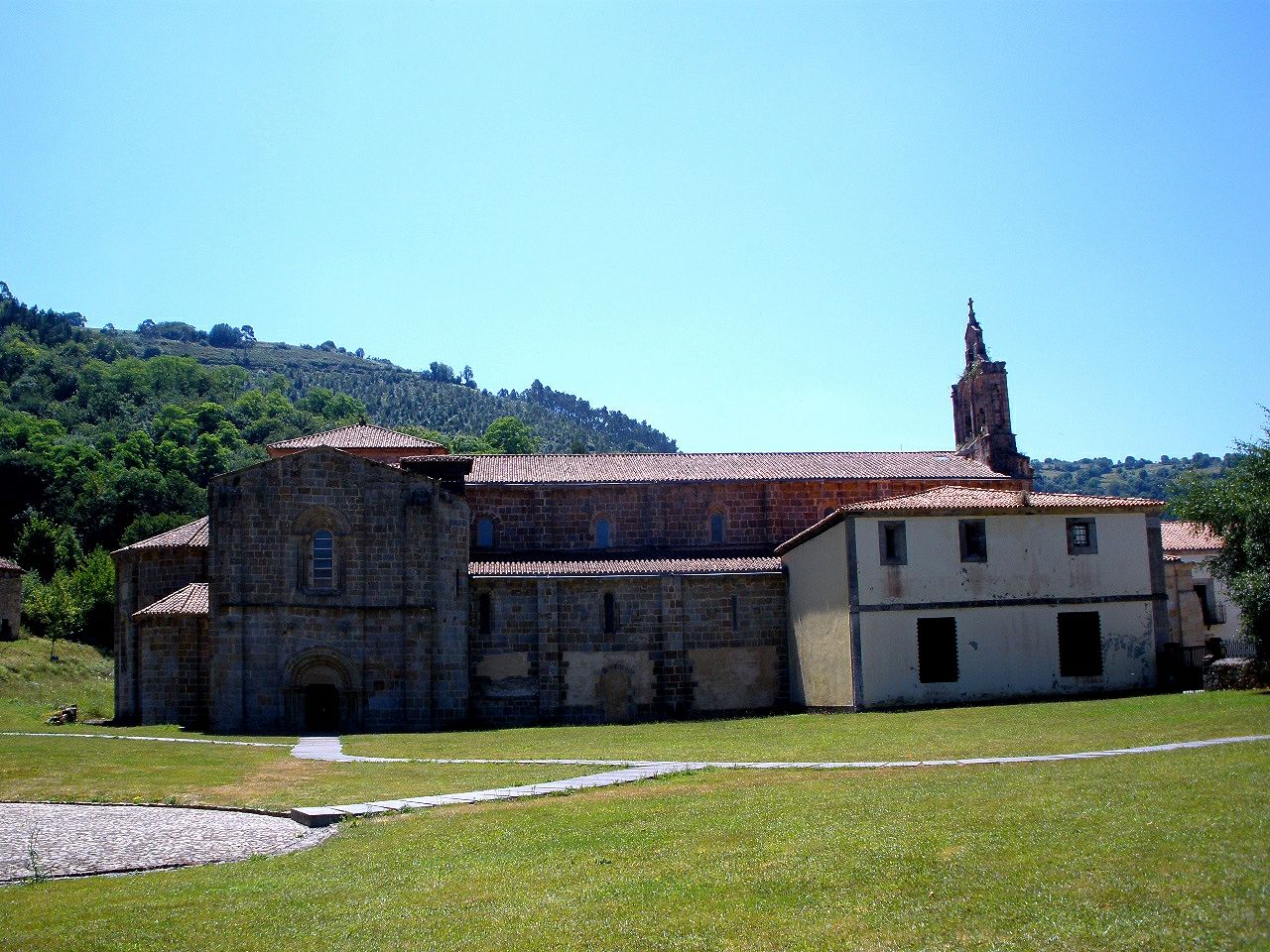
Monasterio de Santa María de Valdediós is a 13th-century Cistercian monastery tucked into the Valdediós valley, a short drive inland from Villaviciosa, on Spain's northern Asturian coast near the Bay of Biscay. What will you actually see there? The site holds two churches from two very different eras, standing almost side by side. The younger one is the Gothic-Cistercian monastery itself, founded in the 13th century, built with the austere stone lines typical of Cistercian architecture. Right next to it stands San Salvador de Valdediós, a pre-Romanesque church locally known as "El Conventín," dating back to the 9th century — one of the better-preserved examples of Asturian pre-Romanesque art, a style found only in this corner of Spain. Having both buildings in the same small valley is unusual, and it's the main reason the site draws visitors interested in medieval architecture. How do you get to Valdediós? The easiest way is by car from Villaviciosa, following a local road a few kilometers inland through Asturian farmland. Villaviciosa itself sits on the Bay of Biscay coast, roughly equidistant from Gijón and Oviedo, which makes it a convenient base for exploring central Asturias. Public transport to the valley itself is limited, so a rental car or a taxi from Villaviciosa is the most reliable option. What else is worth seeing nearby? The valley is quiet countryside — green pastures, stone farm buildings, and apple orchards, a landscape tied closely to the region's cider-making tradition. Villaviciosa, worth a stop before or after the monastery, has a historic old town and is one of Spain's main cider-producing towns, with several traditional cideries open to visitors. When should you go? Asturias has an oceanic climate: mild summers and wet but rarely freezing winters. Spring and early autumn are the best windows for visiting Valdediós — the countryside is at its greenest, and temperatures stay comfortable without the crowds that build up along the nearby coast in July and August. Frequently asked questions Is the monastery open to visitors? Yes, but both the Cistercian monastery and the San Salvador church keep limited opening hours, and part of the complex still serves a religious function, so it's worth checking current visiting times before arriving. Is it worth combining with a stay in Villaviciosa? Yes — it's the nearest sizeable town, with a historic center and a strong cider-making tradition, and it makes a practical base for exploring the valley. How far is it from the coast? Villaviciosa sits right on the Bay of Biscay, so the beaches and cliff coastline of Asturias are only a short drive away. Do you need a guide? Not really — both buildings can be visited independently, though on-site information panels are limited, so reading up on the history beforehand helps make sense of what you're looking at.
-
Convent of Capuchinas, Plasencia
Plasencia
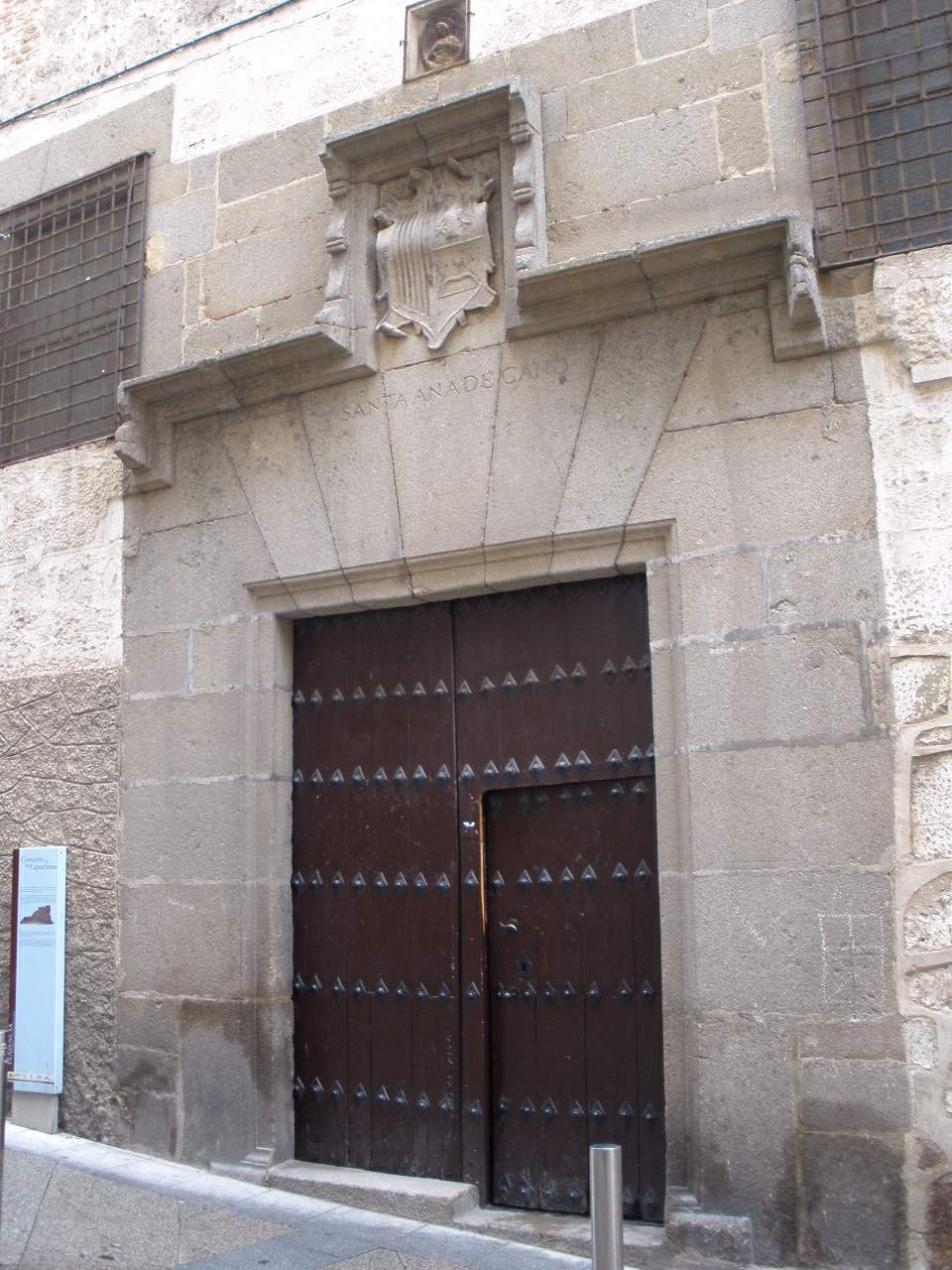
The Convent of Capuchinas is an enclosed convent in the historic center of Plasencia, Extremadura, occupying an entire block of the old town between the former Berrozanas gate and the Church of San Martín. Where does this convent come from? Construction began at the end of the 16th century, funded through the will of city alderman Juan Rodríguez Cano and his wife, Beatriz de Contreras. Rodríguez Cano had made his fortune as an indiano — a Spaniard who returned home wealthy after years in the Americas. Local tradition holds that on his voyage back to Spain his ship was caught in a violent storm, and he survived thanks to an image of the Virgin of Copacabana he was carrying with him. In gratitude, he pledged to build a church where that image could be permanently housed. The founder died before the project was finished, leaving underage heirs, so the building could not be handed over to any religious order for decades. It was only in 1635 that his grandson, Juan de Nebrija y Cano, completed the necessary arrangements. The convent was then entrusted to the Order of Capuchin Poor Clares, and in 1636 the first eight cloistered nuns arrived from the order's sister convent in Madrid. What should you know before visiting? This remains one of only three communities of nuns still active in Plasencia, though its future has looked uncertain at times. In September 2015 the nuns left the convent for Granada due to a shortage of new vocations, only to return to Plasencia in February 2016. Because the community lives under strict enclosure, the interior is not open to visitors — the appeal here is the building itself and its setting within the dense fabric of the old town, right next to the Church of San Martín. How do you get there? The convent sits inside the old walled quarter of Plasencia, an easy walk from Plaza Mayor and the cathedral. The narrow streets of the historic district are best explored on foot; cars struggle to navigate this part of town, and parking is available just outside the walls. What else is nearby? The immediate surroundings include the Church of San Martín and a maze of medieval and Renaissance-era streets. It's worth pairing a walk through this quarter with a visit to the cathedral and the old city walls — this is one of Plasencia's best-preserved historic areas, where convent walls and stone façades create a quiet, cohesive scene away from the busiest tourist routes. When is the best time to visit? Given the enclosed nature of the community, daytime hours are the natural time to walk this part of town, when the old streets are lively and well used by locals. Spring and autumn are the most comfortable seasons in Extremadura, avoiding the harsh summer heat that Plasencia can experience. Frequently asked questions Can you go inside the convent? No — it's a living community of enclosed Capuchin Poor Clare nuns, so the interior is not open to the public. When was the convent built? Construction began at the end of the 16th century, but it wasn't formally handed to the religious order and settled by nuns until 1635–1636. Why is it linked to the Virgin of Copacabana? Founder Juan Rodríguez Cano credited that image with saving him from a storm at sea and built the convent in gratitude. Is the convent still active today? Yes, although the community briefly relocated to Granada between 2015 and 2016 due to a lack of new vocations before returning to Plasencia.
-
Monastery of Santa Clara, Briviesca
Briviesca
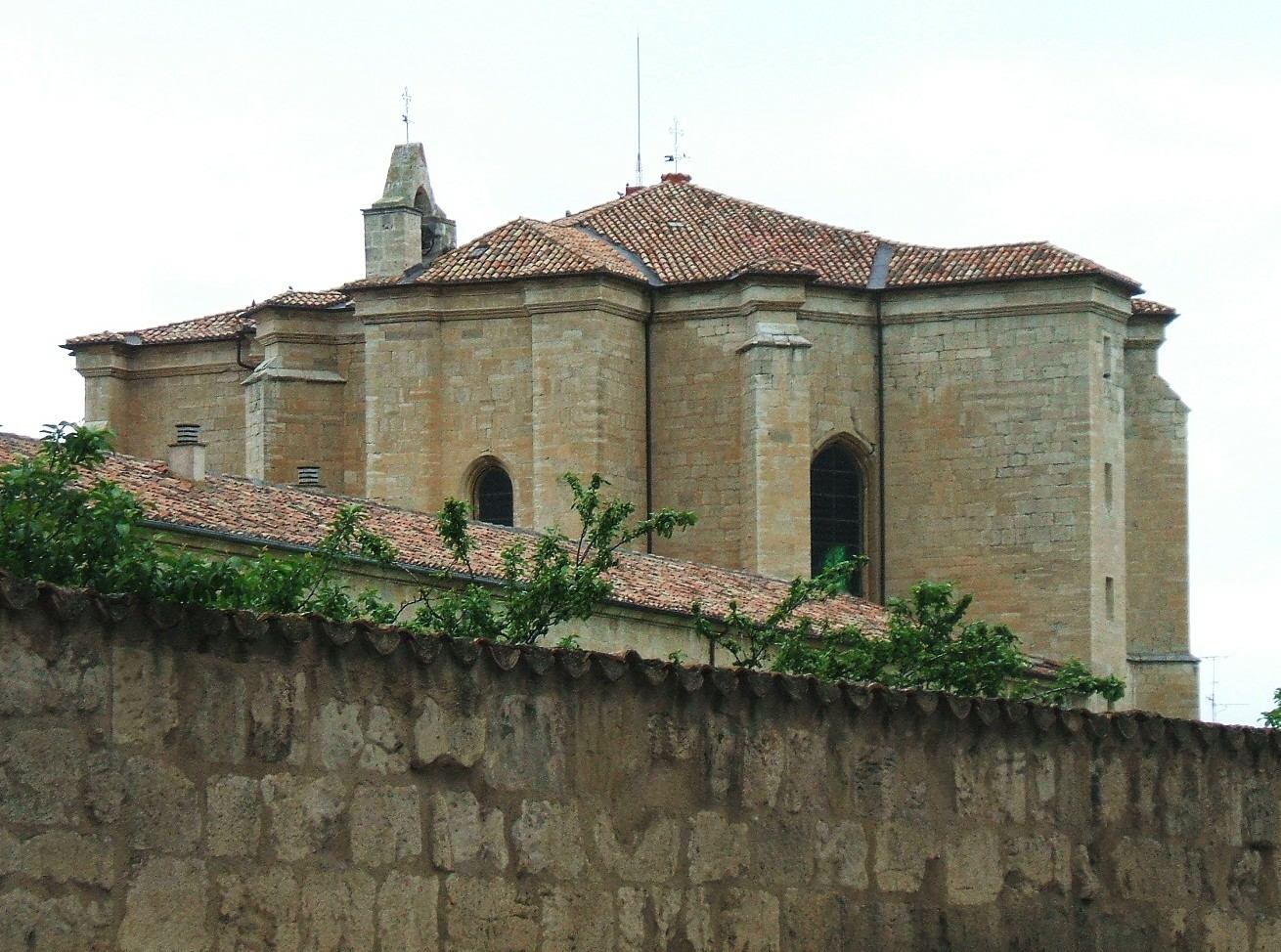
The Monastery of Santa Clara in Briviesca is one of the standout historic complexes in this Castilian town in the province of Burgos, blending Isabelline Gothic and Renaissance architecture into a monument that still carries the weight of nearly five centuries of religious life. How did the monastery come to be? The story predates the building itself. As early as the start of the 15th century, a community of religious women was already active in Briviesca. In 1438 Pope Eugene IV granted approval to formalize their status canonically, but a lack of funds to build a proper convent forced the community to join the Third Order of Saint Francis in 1445. The turning point came through the efforts of the Franciscan friar Lope de Salazar y Salinas: in 1460, Pope Pius II issued a bull elevating the sisters to the status of Poor Clares, part of the Second Franciscan Order. Construction of the actual monastery only began decades later. In 1511, Mencía de Velasco — one of six daughters of the Constables of Castile, Pedro Fernández III de Velasco and Mencía de Mendoza — commissioned the building. The following year, in 1512, the first stone was laid on land she had purchased in the Valdeprado valley. Her death in 1523 briefly halted progress, but work on the monastic complex resumed in earnest in 1524. What can you see there today? The monumental ensemble of Santa Clara brings together several connected structures: the convent itself, its church, a former hospital, and the so-called casa solariega, an ancestral manor house. The entire complex dates from the 16th century and mixes late Isabelline Gothic with Renaissance elements, visible both in the massing of the buildings and in their decorative detail. The true highlight inside the church is the Renaissance high altarpiece, crafted between 1551 and 1569. It's regarded as one of the finest works of art in Briviesca and is usually what draws visitors most interested in tracing the artistic patronage of Castile's noble families. The site's historical importance was formally recognized in 1931, when the conventual church was declared a national historic-artistic monument, a status that today makes it a protected asset of cultural interest (Bien de Interés Cultural). How do you get there? Briviesca sits in the province of Burgos, in northern Castile, well connected by national roads to both Burgos and Logroño. The monastery lies within the town itself, so once you arrive the easiest way to see it is on foot, as part of a walk through Briviesca's historic centre. When is the best time to visit? The monastery and its surrounding buildings can be visited year-round, but it's worth knowing about the site's living history: the community of Poor Clares occupied the monastery continuously until 2005, when the last eight sisters, by then elderly, relocated to the monastery of the Ascension in Lerma. That nearly five-hundred-year continuity of religious use makes the site a rare witness to monastic life in Castile. Frequently asked questions Who founded the Monastery of Santa Clara in Briviesca? Mencía de Velasco, daughter of the Constables of Castile, commissioned the monastery in 1511 and purchased the land for it in the Valdeprado valley. What architectural style does the monastery represent? The complex combines Isabelline Gothic with Renaissance elements, visible in both the building structures and their interior decoration. What is the most valuable feature inside? The church's Renaissance high altarpiece, made between 1551 and 1569, considered one of the most important works of art in Briviesca. Is the monastery still an active religious community? No — the Poor Clares left in 2005 for the monastery in Lerma, though the building has held protected cultural-heritage status since 1931.
-
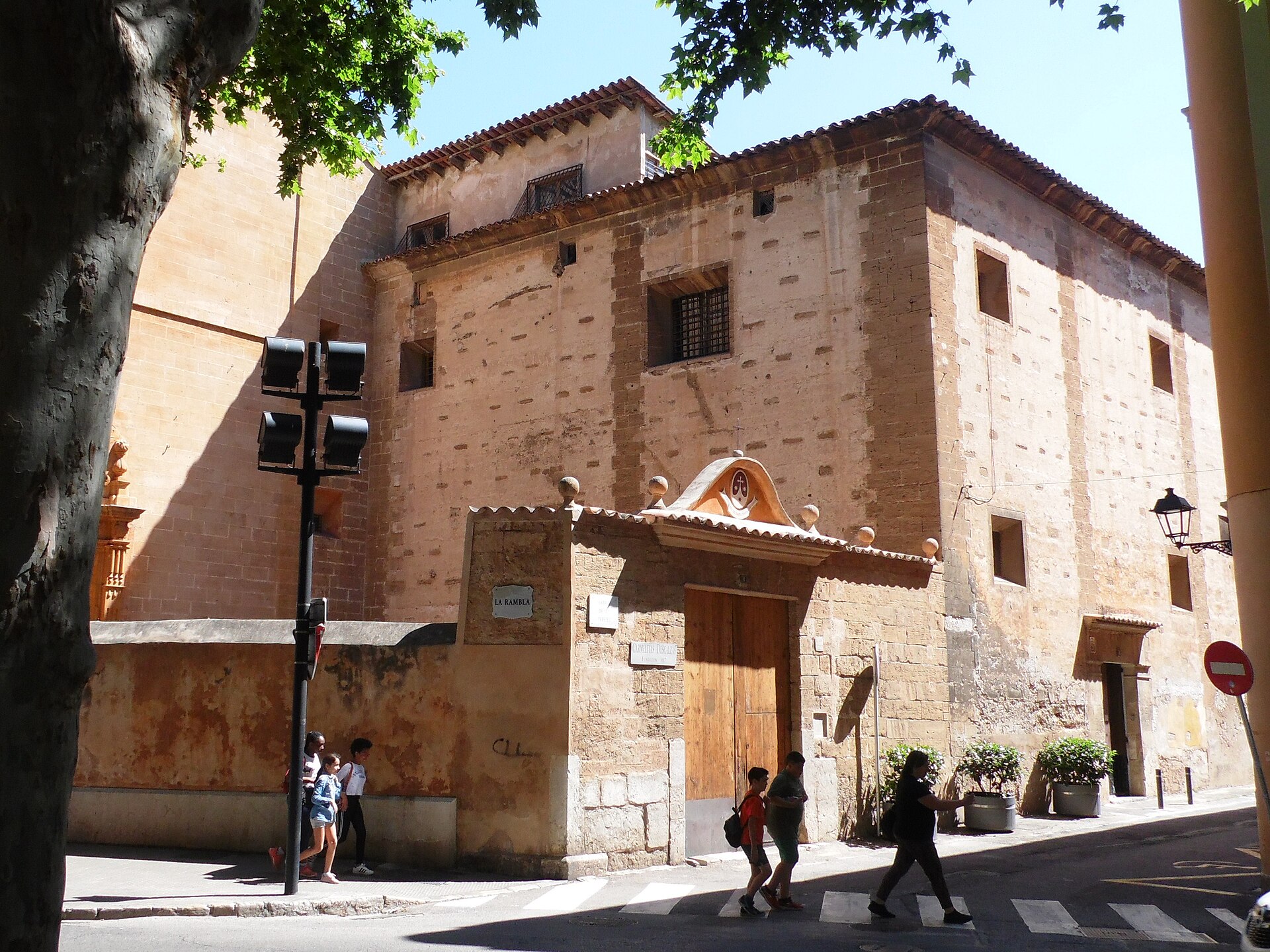
Convent de Santa Teresa
Palma
Convent de Santa Teresa is a Baroque convent of Discalced Carmelite nuns in the heart of Palma de Mallorca, widely regarded as one of the finest Baroque buildings on the island. It sits between the Rambla and the streets of Horts and Tereses, with its address at Carrer de les Tereses 8, right by La Rambla 12 — just a short walk from Palma's cathedral, in the middle of the Old Town. Who founded the convent? The convent was founded in 1613 by Leonor Ortiz, who donated her own house for the purpose along with an adjoining orchard next to the Rambla. Construction of the convent buildings began the following year, in 1616. The church itself was built in stages: work started in 1624 and the finished church was blessed in 1637, with further construction recorded in 1648 — a sign that the project developed gradually over several decades, in step with the order's resources. From its founding, the convent has belonged to the Discalced Carmelite nuns (Carmelitas Descalzas), a branch of the Carmelite order established by Saint Teresa of Ávila, after whom the building is named. What can you see there? The building is considered one of the best examples of Baroque architecture in Palma, and its construction marked a significant artistic step forward for the island at the time. The most striking feature of the facade is its richly decorated Baroque portal, which is what catches most visitors' attention as they walk along the Rambla. Inside the complex, look out for the convent's cloister, typical of monastic architecture from this period, and the altarpiece dedicated to Saint Teresa, which forms the focal point of the church's interior. How do you get there? The convent stands right in the centre of Palma, along the Rambla — one of the city's main avenues connecting the area around Plaça d'Espanya with the historic centre. It's an easy walk from almost anywhere in the Old Town, and the nearest bus stops are located directly on the Rambla or in its immediate vicinity. It makes a natural stop on a route that combines Palma's shopping streets with a visit to the cathedral and the La Seu district. When is the best time to visit? Since the building is primarily an active place of worship and a working convent, it's best to plan a visit around the church's opening hours, typically during Mass or other services, which is when the interior is most accessible. The facade and portal, on the other hand, can be admired from the outside at any time of day, making this an easy addition to a walk along the Rambla regardless of the hour. Frequently asked questions Who founded the Convent de Santa Teresa in Palma? It was founded in 1613 by Leonor Ortiz, who donated her house and an adjoining orchard by the Rambla for the purpose. Which order does the building belong to? It belongs to the Discalced Carmelite nuns (Carmelitas Descalzas), an order linked to Saint Teresa of Ávila. What is the main architectural highlight? The richly decorated Baroque entrance portal, considered one of the finest in Palma, along with the church interior and its altarpiece dedicated to Saint Teresa. Where exactly is the convent located? At Carrer de les Tereses 8, near La Rambla 12, in the centre of Palma de Mallorca, between the Rambla and the streets of Horts and Tereses.
-
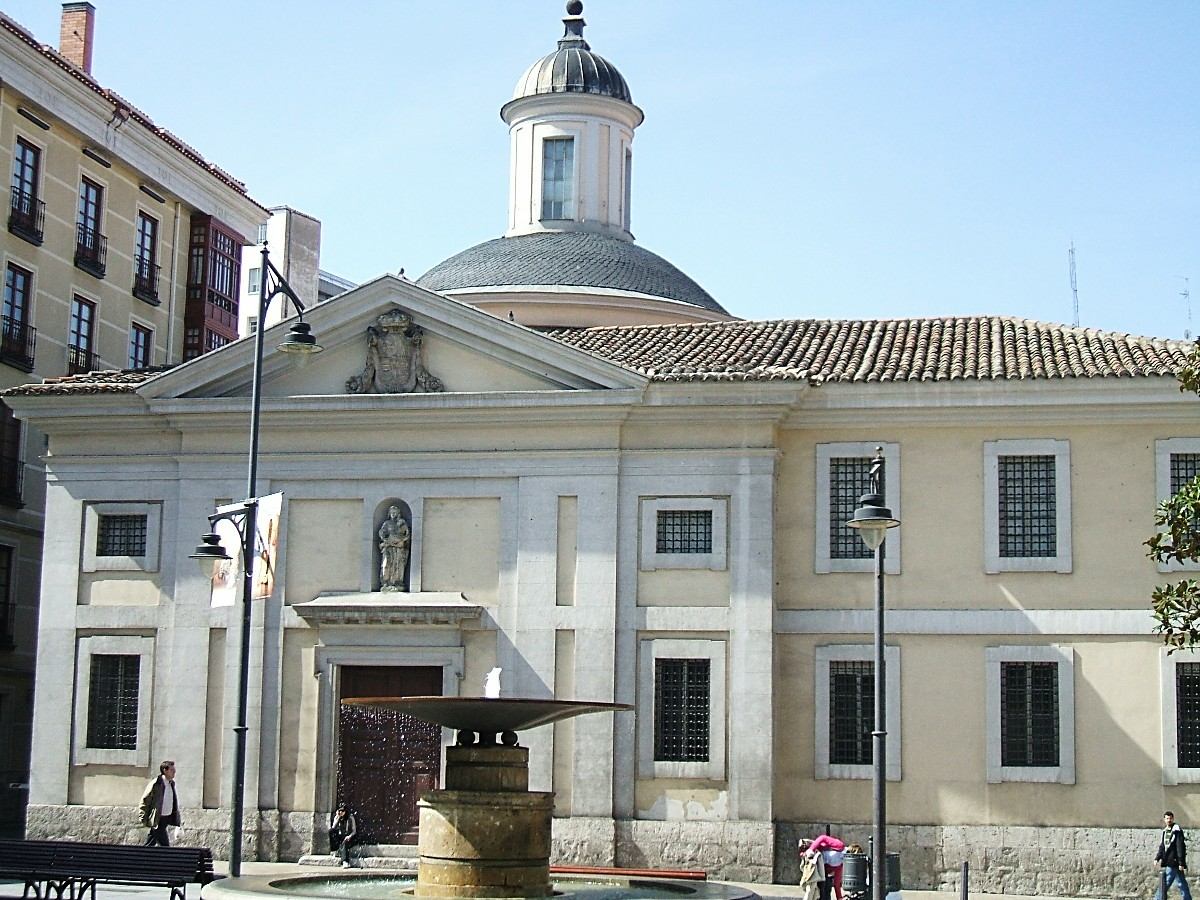
Real Monasterio de San Joaquín y Santa Ana
Valladolid
The Monastery of Saint Joachim and Saint Anne is a royal Cistercian convent located in Valladolid, one of the historic cities of Castile and León in northern Spain. Its dual dedication honors Joachim and Anne, venerated in Catholic tradition as the parents of Mary, mother of Jesus. What should you know before visiting? The convent belongs to the Cistercian order, the female branch of the medieval Benedictine reform known for its stricter rule and contemplative way of life. Communities of this kind in Spain traditionally follow an enclosed (cloistered) way of life, meaning that parts of the building — cells, the cloister garden, service areas — remain off-limits to visitors. What usually stays open to the public is the convent church, where you can attend Mass or listen to the nuns' prayer following the rhythm of the canonical hours. How do you get there? Valladolid is well connected to the rest of Spain: a high-speed train from Madrid takes under an hour, and frequent bus services link the city with other parts of the region. The city itself is compact, and its historic center is best explored on foot. The monastery sits within the urban fabric of Valladolid, so reaching it doesn't require travel beyond the city — a short walk or a local bus ride from the center is enough. What else is worth seeing nearby? Valladolid has a rich history tied for centuries to the Spanish royal court and to religious life, which explains the dense concentration of convents, churches, and palaces within a few hundred meters of the center. It's worth pairing a visit to the Monastery of Saint Joachim and Saint Anne with a stop at the cathedral, the Colegio de San Gregorio — home to the National Museum of Sculpture — or a walk through the old town with its characteristic Castilian brick-and-stone architecture. In spring, the city is known for its Holy Week (Semana Santa) processions, among the most solemn in Spain, with local religious brotherhoods and convent communities taking part. When is the best time to visit? Spring and early autumn are the best times to come, when temperatures in Castile are milder than in the height of summer and the city sees fewer tourists. If you want to experience the community's liturgical life, plan your visit around service times — these can vary, so it's worth checking the current schedule on-site or by phone beforehand. Practical tips As an active place of worship and a religious community's home, the monastery expects visitors to behave accordingly: move quietly, dress modestly (covering shoulders and knees), and avoid photographing the interior during services. Visits are usually limited to the church section — remember this is a place of prayer, not a museum, so opening times may follow the community's own daily rhythm rather than standard tourist hours. Frequently asked questions Is the monastery open to visitors? The convent church is generally open to the public at set hours, while the enclosed part of the building remains closed — typical for contemplative women's communities. Is there an entrance fee? Entry to the church of an active religious site like this is usually free, though donations toward the community's upkeep are welcome. How long does a visit take? Visiting the church itself typically takes 20–30 minutes, but it's worth allowing more time if you plan to combine it with a walk through the nearby old town landmarks. Can you take photos inside? Rules can be strict, especially during services — it's best to ask on-site or follow any posted signs.
-
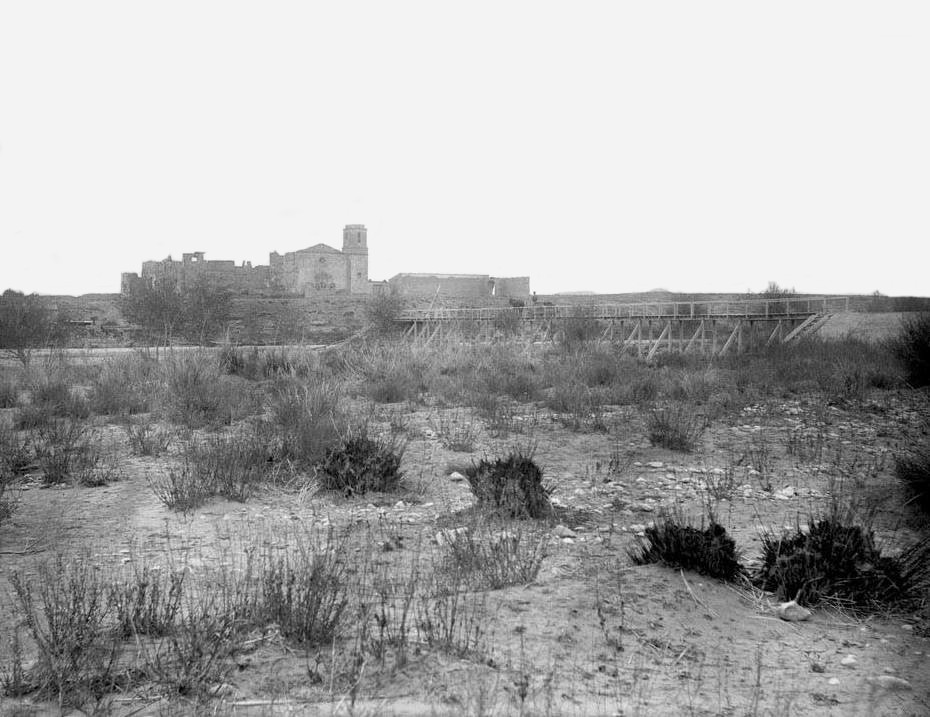
Santa Maria d'Escarp
Massalcoreig
Santa Maria d'Escarp is a medieval Cistercian monastery in the municipality of Massalcoreig, in the Segrià region of Catalonia, standing on the right bank of the Segre River just before it meets the Cinca. Today its ruins sit on the edge of the Escarp plain, at a spot where routes along both rivers have crossed for centuries. How do you get there? Massalcoreig lies in western Catalonia, close to the border with Aragon, not far from Fraga and Mequinensa. The easiest way in is by car, via local roads branching off the route between Lleida and Fraga, both of which connect to the region's larger transport hubs. From the centre of Massalcoreig, a short road leads toward the Segre valley and the monastery site; since the ruins sit off the main track on land that may be private or agricultural, it's worth checking current access with the town hall before setting off. What will you see? The best-preserved part of the complex is its tower, built in regular ashlar stonework, along with fragments of the church and outbuildings. Much of what stands today reflects a neoclassical rebuilding in the 17th and 18th centuries, layered over the original medieval structure. The whole complex is now in ruins — a state that itself appeals to visitors drawn to historic architecture and sites with a long, layered past rather than polished restorations. A brief history The site was recorded as early as 1082 as a Saracen almúnia (agricultural estate) within the territory of Escarp castle. Everything changed in 1212, when King Peter II of Aragon (Peter the Catholic) granted the land to Abbot Arnau of Cîteaux so he could establish a daughter house of the mother abbey of Cîteaux. The new foundation gained influence quickly: in 1223 it took part in transferring the monastery of Lavaix to the Cistercian order, and in 1227 it founded its own priory, Santa Susanna, in Maella, just across the border in Aragon. The 13th and 14th centuries were the monastery's most prosperous period. From the 15th century onward, though, it entered a slow decline under a succession of commendatory abbots — figures who held the title without necessarily living at or actively developing the monastery. By the mid-16th century, Santa Maria d'Escarp had come under the authority of the great abbey of Poblet, one of Catalonia's most important Cistercian centres. A reduced community held on for several more centuries, until the Spanish confiscation of monasteries in 1836 brought its life as an active religious institution to an end. When should you visit? Given the open, agricultural landscape around Massalcoreig, spring and autumn are the best times to visit, since summers here run hot and dry. It's worth pairing a stop at the monastery ruins with a visit to Massalcoreig itself and nearby villages along the Segre and Cinca rivers, turning the trip into a full day exploring the history of the Segrià region. Frequently asked questions Can you visit the monastery ruins? The site is a ruin with no organised visitor infrastructure, so it's worth checking current access conditions with the Massalcoreig town hall before you go. Who founded the monastery? It was founded in 1212 at the initiative of King Peter II of Aragon, who granted the land to Abbot Arnau of Cîteaux to establish a new Cistercian house. Why did the monastery decline? From the 15th century, management passed to commendatory abbots, starting a gradual decline; the 1836 confiscation of monasteries in Spain marked its definitive end. What's worth seeing on site? The stone monastery tower is the best-preserved feature, along with remains of the church and outbuildings rebuilt in neoclassical style during the 17th and 18th centuries.
-
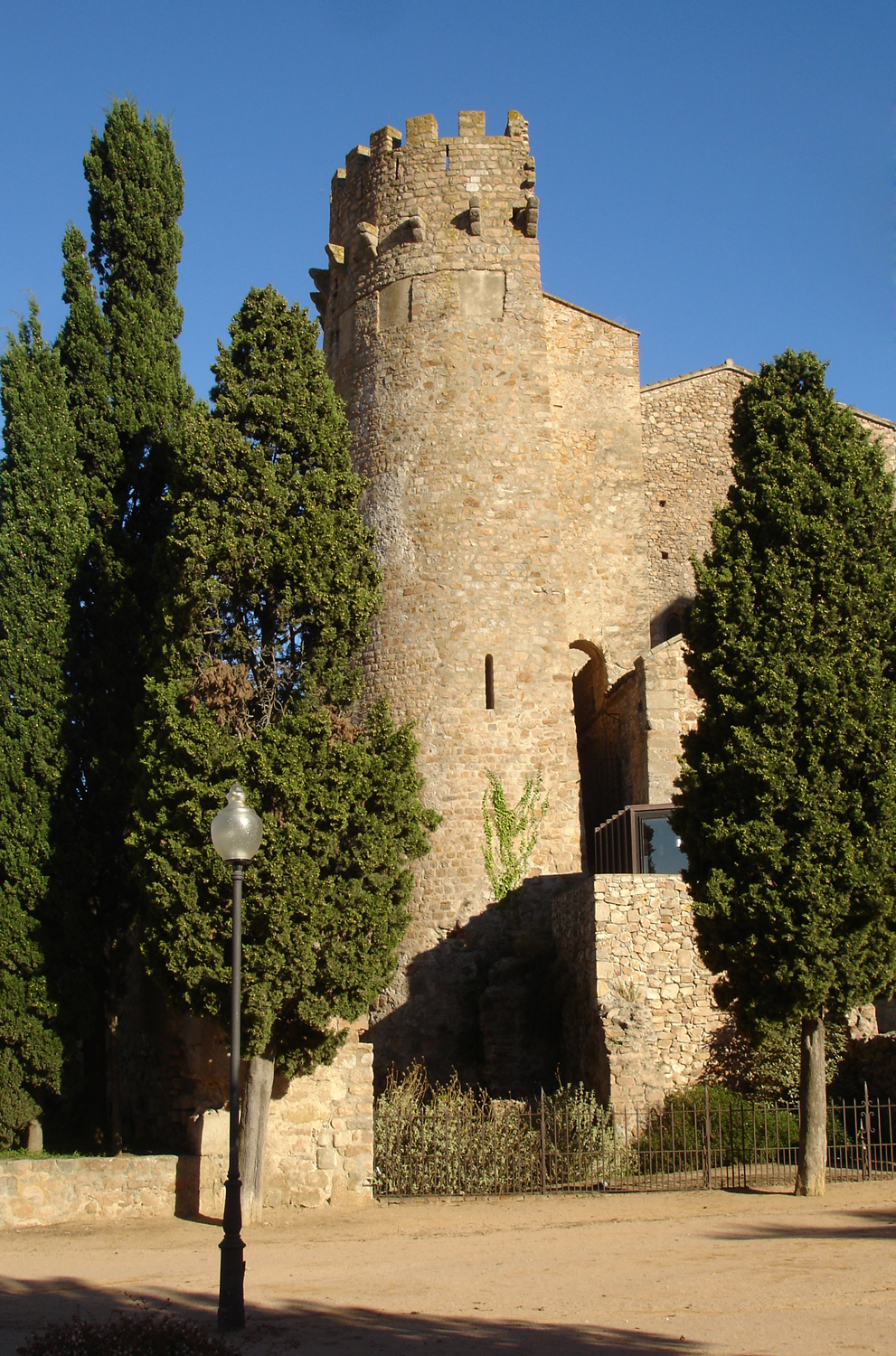
Monestir de Sant Feliu de Guíxols
Sant Feliu de Guíxols
Monestir de Sant Feliu de Guíxols is a Benedictine monastery standing at the heart of Sant Feliu de Guíxols, a town in the Baix Empordà comarca of Catalonia, Spain. The community is first documented in the year 961, making it one of the oldest monastic foundations along the Catalan coast. In 1931 the monastery complex was declared a Bien de Interés Cultural, Spain's highest category of heritage protection, reserved for sites of exceptional historical and cultural significance. How do you get there? The monastery sits right in the town centre of Sant Feliu de Guíxols, close to the Costa Brava seafront, so it's within easy walking distance of the old town and the harbour promenade. The town is roughly an hour's drive from Girona along the coastal road. Girona's airport is the closest major air link, with bus and car connections running on to Sant Feliu de Guíxols. Travellers coming from Barcelona can take a coach or drive along the coast, with the journey typically taking around ninety minutes to two hours depending on traffic and season. What can you see there? The monastery complex reflects layers of history typical of a religious site that has been in continuous use since the 10th century. The sheer age of the first record — over a thousand years old — makes it one of the earliest testimonies to organised religious life on this stretch of the Catalan coast. Its 1931 designation as a Bien de Interés Cultural confirms the site's national-level importance and guarantees it formal conservation protection. Visitors mainly come to see a place that has survived the transition from a medieval monastic centre to a landmark woven into the fabric of present-day Sant Feliu de Guíxols. When is the best time to visit? Sant Feliu de Guíxols is a coastal town, so the busiest tourist season runs from June to September. Travellers who prefer a quieter visit may want to consider spring or early autumn, when the Costa Brava weather still suits sightseeing but the town sees fewer crowds than in peak summer. Opening hours and access to the monastery's interior can vary by season, so it's worth checking current details locally or with the town's tourist information office before visiting. What else should you know? A visit to the monastery pairs naturally with a walk through the old town of Sant Feliu de Guíxols and along its seafront promenade, giving visitors a sense of the landmark within the town's wider historic fabric. Its central, seaside location makes it one of the natural reference points when exploring this part of the Costa Brava. Frequently asked questions How old is the monastery in Sant Feliu de Guíxols? The monastery is first documented in the year 961, making it one of the oldest religious sites in the Baix Empordà region. Is the monastery a protected heritage site? Yes, in 1931 the complex was officially declared a Bien de Interés Cultural, Spain's highest level of heritage protection. Where exactly is the monastery located? It stands in the centre of Sant Feliu de Guíxols, in the Baix Empordà comarca of Catalonia, near the Costa Brava coastline. Can you combine the visit with other sights in town? Yes, thanks to its central location the monastery is easy to combine with a walk through the old town and the seafront promenade of Sant Feliu de Guíxols.
Earn badges for the places you visit
Download NextOnTrip, discover new places and check off your trails.