Sacred Monuments in Spain
A guide to 2038 Sacred Monuments in Spain — with descriptions, photos and traveler visits from the NextOnTrip community. Locations spread across 1060 cities and towns. Most visited by the community: Basilica of the Most Holy True Cross, Sant Salvador d’Artà, Iglesia y muralla del Tozal del Muro.
-
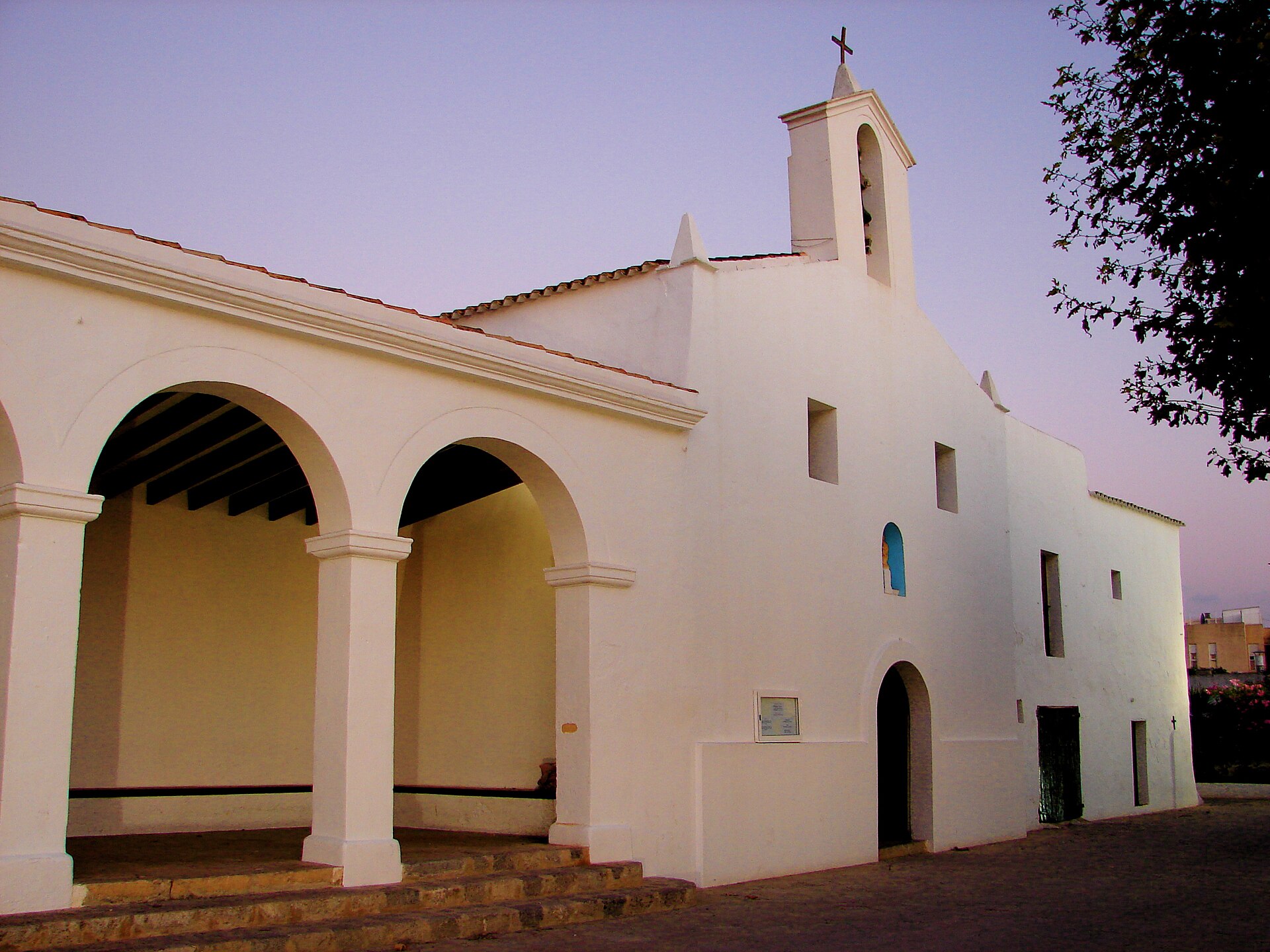
Església de la Mare de Déu de Jesús
Santa Eulària des Riu
Església de la Mare de Déu de Jesús is a Gothic church in the village of Jesús, part of the municipality of Santa Eulària des Riu on Ibiza. It ranks among the oldest and most artistically significant places of worship on the island, best known for the monumental altarpiece it houses from the turn of the 15th and 16th centuries. Where is it and how do you get there? The church stands right in the centre of Jesús, a few kilometres from Ibiza Town along the road toward Santa Eulària des Riu. The village has effectively merged with the outskirts of the island's capital, so the visit slots naturally into a day spent exploring Ibiza Town — the drive or local bus ride takes only a matter of minutes. The building faces a small square at the heart of the village, making it an easy stop for anyone touring the eastern coast of the island. What is the history behind it? The earliest surviving record of the temple dates back to 1466, when the magistrates of the University (town council) of Ibiza petitioned the Archbishop of Tarragona for permission to hold Sunday mass in a church then being built on the plain known as Pla de Vila, dedicated to Our Lady of Jesús. Construction itself is placed at the end of the 15th century and is tied to the presence of Franciscan friars on the site, which explains both the Marian dedication and the richness of the main altar that followed. Over the centuries the building underwent repeated extensions and repairs, so its current form blends elements from several periods. Notably, the church originally served not just the small settlement but also the maritime community living outside the walls of Ibiza's old town — beyond what is now Dalt Vila. As the settlement around the church grew, it eventually merged into what is today the village of Jesús, with the church now fully integrated into its urban fabric. What should you look for inside? The undisputed highlight is the monumental Gothic altarpiece dating from the late 15th to early 16th century, regarded as one of the most valuable works of religious art in the Balearic Islands. The piece measures roughly 7.5 metres in height and 5.10 metres in width, and is made up of 25 painted panels. It is attributed to the Valencian painters Rodrigo de Osona and his son Francisco, key figures of the Gothic painting school active in Valencia at the turn of that era. Given its scale and state of preservation, it is worth setting aside a few extra minutes just to take it in, even on a brief stop in Jesús. When is the best time to visit? The church remains an active parish, so the calmest time to look inside is outside mass hours — it's worth checking locally, since opening times for visitors can be limited. In summer, mornings help you avoid both the heat and the crowds heading to nearby beaches, while spring and autumn make for a relaxed, unhurried visit combined with a stroll through the rest of Jesús. Frequently asked questions Is there an entrance fee? No — this is an active place of worship rather than a museum, so visits are generally free, though visitors should be respectful, especially if a service is under way. What is the single most important feature inside? The Gothic altarpiece made up of 25 panels, attributed to Rodrigo de Osona and his son Francisco — one of the most significant works of sacred painting on Ibiza. How long does a visit take? The church itself can be seen in 15–20 minutes, but combined with a short walk around Jesús, a visit can easily stretch to an hour. Can this be combined with other nearby sights? Yes — Jesús sits close to Ibiza Town, so the church fits naturally into a route linking the island's capital with the coast toward Santa Eulària des Riu.
-
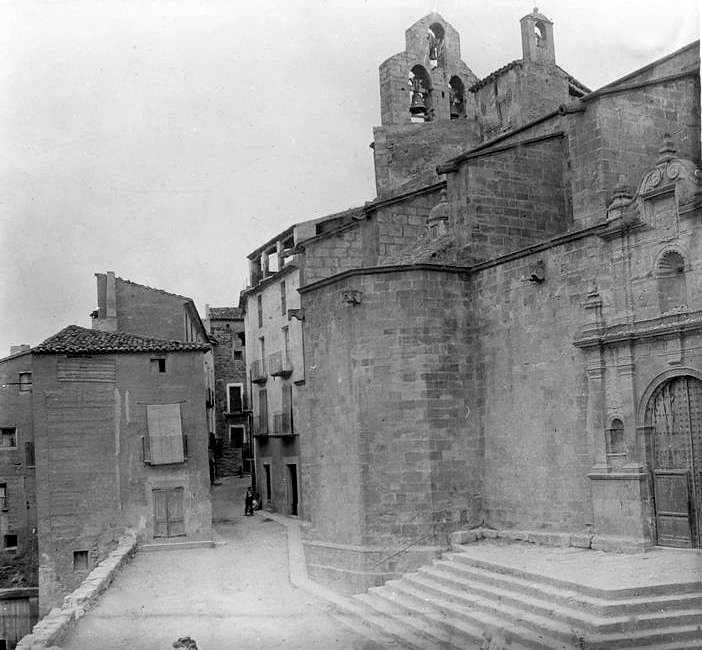
Església parroquial d'Ascó
Ascó
The Església parroquial d'Ascó is the parish church of the small town of Ascó, in the province of Tarragona, in the Ebro valley in Catalonia. The building carries more than eight centuries of history, tied closely to local events — from a courtroom-style dispute over a chair in the presbytery to the birth of one of Catalonia's beatified sons. How do you get to the church in Ascó? Ascó sits on the banks of the Ebro river, inland in the province of Tarragona, in the Ribera d'Ebre district. The parish church stands right in the historic centre of town, so the easiest approach is by car along the local roads that connect Ribera d'Ebre with the rest of the province, then parking near the old town and walking the last stretch — Ascó is compact enough that its historic core can be covered on foot in a few minutes. The town makes a sensible short stop for travellers exploring the Ebro valley, an area better known for its river landscapes and vineyards than for monumental architecture, which makes a church with this much layered history a worthwhile detour. What is the history behind this church? The building's roots go back to the 12th century. In 1148, Count Ramon Berenguer IV set aside the church of Ascó to fund and maintain his comital chapel inside the Cathedral of Tortosa. After his death in 1163, the church passed under the jurisdiction of the Diocese of Tortosa, a link that has endured to this day. At the start of the 17th century, the building still preserved an octagonal floor plan in its presbytery — an unusual feature that marks the oldest surviving phase of construction. After the expulsion of the Moriscos, the town was resettled by Christian families, and the resulting growth in population forced an expansion: in 1703 the church was enlarged, with the works starting from the keystone of the presbytery vault. One especially vivid episode in the parish's history dates to 1668, when a dispute broke out over a chair in the presbytery. The Commander of the Hospitaller order, who was also feudal lord of Ascó and its surrounding lands, wanted to claim a seat of honour there — a request both the parish rector and the bishop refused to grant. The disagreement escalated into a genuine legal case, eventually requiring the involvement of 152 doctors of law from Barcelona, Valencia and Tortosa before it was settled. In the early 20th century, the church was extended once more — this time to bring the birthplace of Blessed Pere Sans inside the building, within the choir. To make that possible, the parish purchased the neighbouring house and joined it to the existing structure. What should you look out for inside and around the church? Walking through the building, it's worth noticing how its different historical layers sit side by side: the original octagonal presbytery plan neighbours the additions made in the 18th and 20th centuries, turning the structure into a kind of physical record of the town's own growth. The spot linked to the birth of Blessed Pere Sans, folded into the choir area, is of particular interest to anyone curious about local religious history and the story of Catalan missionaries abroad. The area immediately around the church — Ascó's historic centre — is also worth a slow walk, giving a feel for a small riverside town shaped by the wider Ribera d'Ebre district. When is the best time to visit? Since this is first and foremost a working parish church, access to the interior depends on Mass times and local parish arrangements — it's worth checking current opening details on site or contacting the parish directly before planning a visit. As for the season, the Ebro valley can get intensely hot during the height of summer, so spring or early autumn tend to offer more comfortable conditions for exploring the old town on foot. Frequently asked questions Where is the parish church of Ascó located? In the historic centre of the town of Ascó, in the province of Tarragona, in the Ribera d'Ebre district on the Ebro river. How old is this church? Its history stretches back to at least the mid-12th century — the church of Ascó is first documented in 1148 — though the building was substantially enlarged more than once afterwards, notably in 1703 and again in the early 20th century. What was the 1668 dispute about? It concerned the right to sit in a seat of honour in the presbytery, claimed by the Commander of the Hospitaller order, who was also feudal lord of Ascó. The case was significant enough that 152 doctors of law from three cities were called in to resolve it. What connects the church to Blessed Pere Sans? In the early 20th century, the parish expanded the building by purchasing the house where Blessed Pere Sans was born and incorporating it into the church's choir.
-
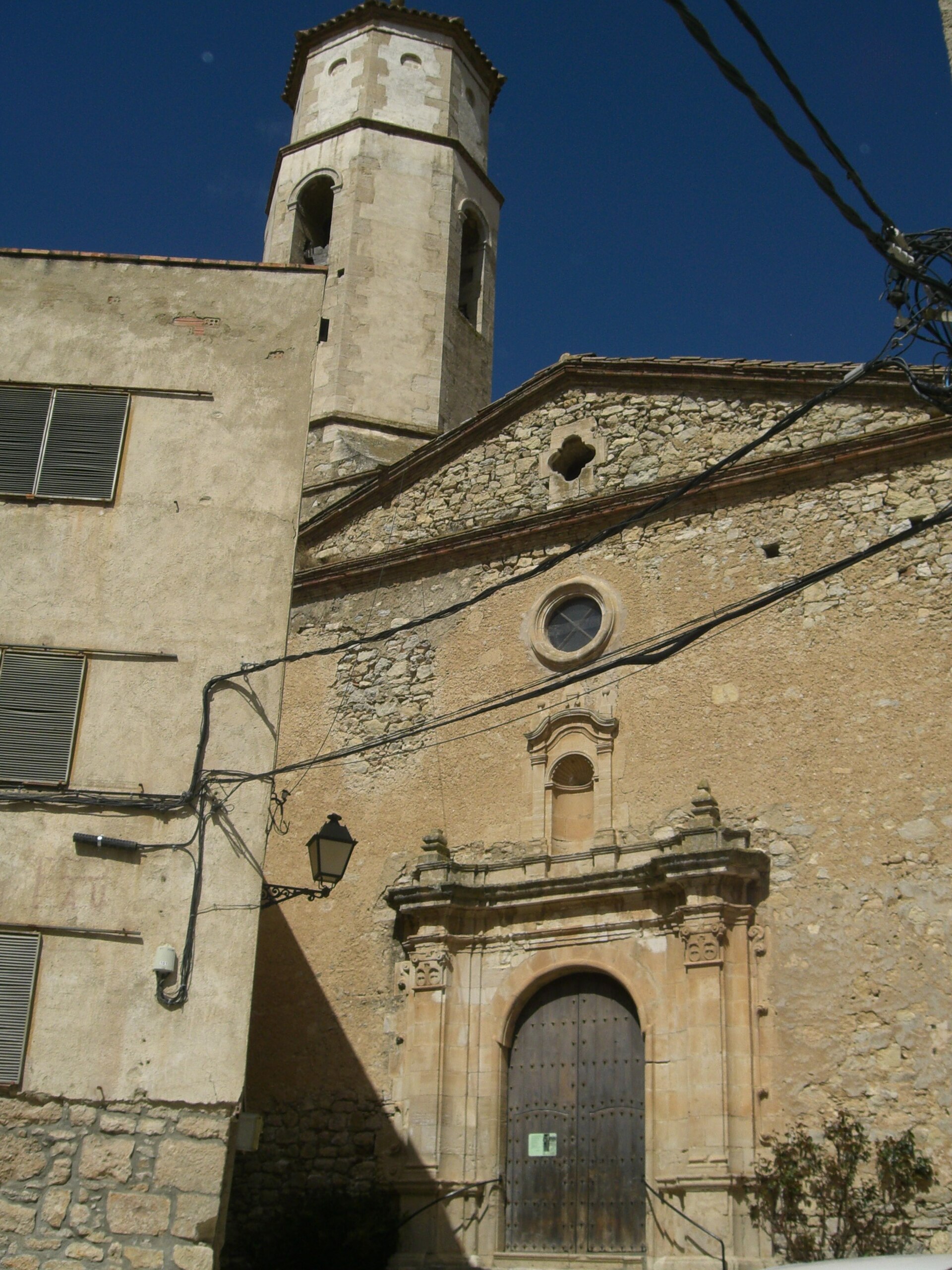
St. Andrew's church in Arbolí
Arbolí
St. Andrew's church (Sant Andreu) is the landmark building of Arbolí, a small mountain village in the Baix Camp region of Tarragona province, Catalonia. The church sits at the heart of this quiet settlement below the Montsant range, close to the famous cliff-top village of Siurana, and has anchored community life here for centuries. How do you get to the church in Arbolí? Arbolí lies in the hilly northern stretch of Baix Camp, reached along narrow, winding roads that climb through olive groves and vineyards typical of this part of inland Catalonia. A car is the most practical way in, since public transport to such a small village is limited. Once you arrive, the church stands right in the compact village core, so it's a short walk of just a few minutes from wherever you park. The coordinates are 41.24245, 0.94865 — worth punching into your navigation in advance, as Arbolí is easy to miss on a quick drive-through. What will you see there? The current building dates from the late 18th century, completed in 1799 in a neoclassical style typical of Catalan church architecture of that era. It has three naves, a choir, and a bell tower that rises above the rooftops and marks the village from a distance. Inside, the central nave is covered by a barrel vault with lunettes, while the side naves are roofed with ribbed vaulting. The sanctuary closes in a polygonal apse, giving the stone structure a lighter visual rhythm despite its solid walls. The site's history runs much deeper than the present building. A settlement called Erbolion is already recorded in 1154, and the church itself appears in documents from 1279, initially as a chapel dependent on the parish of Siurana — one of the oldest and most important parishes in the area. By the end of the 15th century it had come directly under archiepiscopal appointment, a sign of its growing administrative standing within the church hierarchy. The turbulent 20th century left its mark too: the church was burned in 1936 amid the upheaval of the Spanish Civil War, though its architectural form has survived intact for visitors to see today. When is the best time to visit? Spring and early autumn are the most comfortable seasons for a visit, when temperatures in this elevated part of Baix Camp are mild and the surrounding hills turn green or take on the colors of the grape harvest. Summers can get hot, especially at midday, which makes walking around the village and nearby viewpoints less pleasant. Pairing a stop in Arbolí with a visit to nearby Siurana makes for a fuller day out — the two villages are only a short drive apart and together tell a richer story of this corner of Catalonia. Frequently asked questions Can you go inside the church? It is an active parish building, so interior access may be limited to service times or require checking with the local parish beforehand. The facade, bell tower, and surroundings can be viewed freely at any time. What is Arbolí, and why visit it? It's a tiny mountain village in the hills of Baix Camp with only a few dozen residents. It draws travelers looking for quiet, views over the Montsant range, and easy access to Siurana's cliff-top castle ruins. How long does a visit take? Seeing the church from the outside takes just a few minutes, but a short walk through the village and its lookout points usually fills about an hour. Are there other attractions nearby? Yes — Siurana, with its castle ruins and cliffs popular among climbers, is very close by, along with other villages of the Priorat and Baix Camp regions known for their winemaking traditions.
-
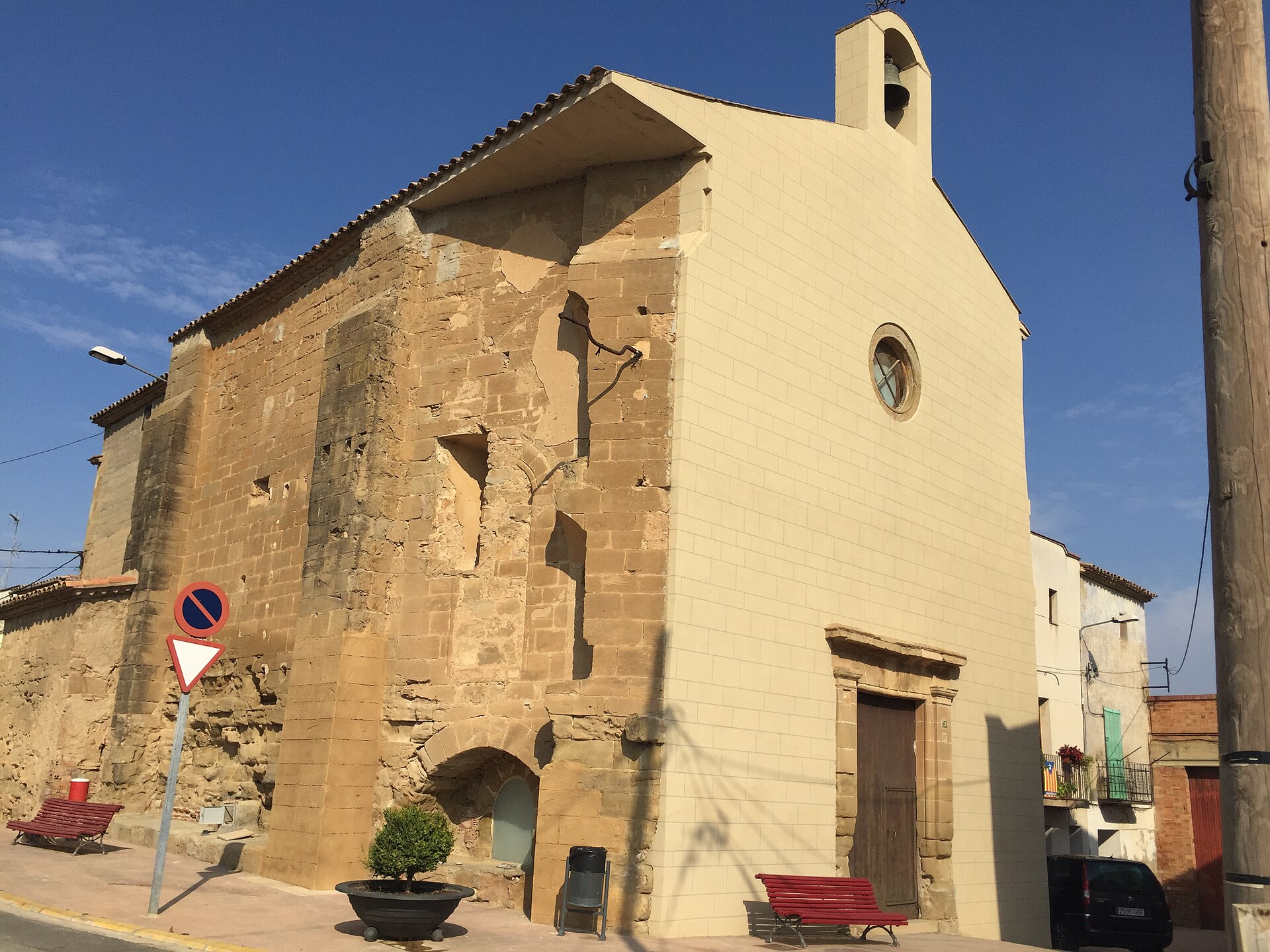
Mare de Déu del Merli
Mare de Déu del Merli is a Gothic church in Alguaire, a small town in the Segrià comarca of Lleida province, Catalonia, Spain. It is the patron shrine of the town, and its cult reaches back further than the settlement itself, making it one of the oldest and most recognizable places of worship in the area. How do you get to Mare de Déu del Merli? Alguaire sits in Segrià, a short drive from the city of Lleida in northeastern Spain. The church stands within the town itself, close to other landmarks that anchor local life — the parish church, the remains of the Sanjoanista (Knights Hospitaller) monastery, and the Sagrat Cor chapel. The easiest way in is by car from Lleida, a trip of well under half an hour; once in Alguaire, the town is compact enough to reach the church on foot from almost anywhere in the centre. What will you actually see there? The building carries a layered history of rebuilding. Its origins trace back to a Visigothic church that predates Alguaire's own founding. In 1264 the site was restored by the first prioress of the nearby convent, the Marquesa de Guàrdia, and the following year — once Sanjoanista nuns had settled at the castle — proper reconstruction of the church began, alongside a residence for the priests attached to it. Backed by several ecclesiastical institutions, the works were finished in 1278. What stands today is Gothic in form: a single nave with a flat-ended chancel, to which two side chapels were added later, in the 18th century. That two-stage story — a medieval core plus early-modern additions — is visible in the architecture itself, and it is one of the reasons the building was listed as a Cultural Asset of Local Interest (BCIL) on 23 December 2010. Why does this place matter locally? Mare de Déu del Merli is patroness not only of Alguaire but of the wider Segrià region. The devotion tied to this Marian figure is among the oldest in the area, and the church has long served as an anchor for local identity — alongside the parish church and the traces of the Sanjoanista monastery, which archaeologists are still excavating, uncovering fresh details about the lives of the medieval women who lived there. When is the best time to visit? The standout date is September 8, the feast of the Trobades (the "Found Virgins"), when Alguaire holds its main celebrations in honour of the town's patroness. Every year an ofrena floral — a formal floral offering laid before the figure of Mare de Déu del Merli — draws in the whole local community. Visiting then means seeing the church in full festive context, not just walking through an empty historic building. Outside that date, the church can be visited year-round. Its Gothic architecture and the visible layers of its building history don't depend on the calendar, and the quiet pace of a small town makes for an easy, uncrowded visit at any time of year. Frequently asked questions What is Mare de Déu del Merli? A Gothic church in Alguaire (Segrià, Lleida province) that serves as the patron shrine of both the town and the wider Segrià region, listed as a Cultural Asset of Local Interest. How old is the building? Its roots go back to a Visigothic church that predates Alguaire's own founding. The current Gothic structure was built between 1265 and 1278, following a 1264 restoration led by the convent's first prioress. When should you plan a visit? September 8, the feast day of the patroness, when the town holds its annual floral offering and other religious celebrations. What makes the architecture noteworthy? The combination of a medieval core — a single nave with a flat chancel — and two chapels added in the 18th century, which together make the building a record of more than one historical period in a single structure.
-
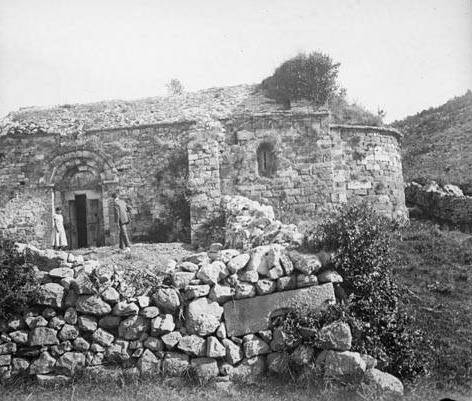
Sant Cristòfol dels Horts
Albanyà
Sant Cristòfol dels Horts is a medieval church in the municipality of Albanyà, standing within the now-abandoned settlement of Els Horts, in the far northern part of this Catalan municipality (Girona province, Alt Empordà region). Listed in Catalonia's architectural heritage inventory, the building has stood in ruins for decades among the forests of the Pyrenean foothills. Where is Sant Cristòfol dels Horts located? The church sits within the old, dispersed settlement of Els Horts, now uninhabited, in a mountainous and sparsely populated corner of Albanyà. Its coordinates are roughly 42.3611 N, 2.67967 E. Access runs along local dirt roads and Pyrenean hiking trails starting from the village centre — this is a destination for visitors prepared for a short trek, not a site reachable directly by paved road. How do you get there? The best starting point is Albanyà itself, from where marked trails lead toward Els Horts. The route crosses forested terrain and pastures, partly on mountainous ground, so sturdy footwear and enough water are worth planning for — there is no tourist infrastructure along the way. Visitors unaccustomed to mountain walking should expect a round trip of several hours. What is the history behind the church? The name of the Horts settlement already appears in a royal charter from the year 878, pointing to a very old pattern of settlement in this corner of the Pyrenees. The parish of Sant Cristòfol dels Horts itself, however, is only confirmed in written sources from around 990 — a gap between the first mention of a place and the documented existence of a functioning parish that is common across the region. The church building visible today was raised later, most likely at the turn of the 12th and 13th centuries, replacing an earlier and more modest place of worship. What does the building look like? The church was designed as a single-nave structure closed to the east by a semicircular apse — a classic layout for Catalan Romanesque architecture of the period. The nave walls were reinforced with buttresses, which allowed the vault to be raised without risking collapse. The vault itself has a pointed profile and is further strengthened by two transverse arches that carry the load onto the side walls — a construction approach typical of the transition from Romanesque to early Gothic in rural Catalan architecture. What condition is the site in today? The church is today substantially ruined — parts of the roof and furnishings are missing, and the structure was exposed to weathering for decades. In recent years, however, consolidation work has been carried out: in the autumn of 2019 and again in 2020, the GAT de la Jonquera team stabilised the surviving vault and apse and reinforced the nave roof structure, protecting the building from further deterioration. As a result, the ruin, while incomplete, still shows a clear spatial layout and lets visitors read the original architectural form. When is the best time to visit? Given the mountainous nature of the approach and the lack of sheltered rest points along the way, spring and autumn are the best times to visit, when temperatures are moderate and the trails are not baking in summer sun. In winter, access to the higher ground can be complicated by weather, while in summer it is worth setting out early to avoid the midday heat. Frequently asked questions Can you drive up to the church? No — the final stretch has to be covered on foot along the trail; a car can only get you to the starting points near Albanyà. Has the church been rebuilt, and can you go inside? It has not been rebuilt — it remains a stabilised ruin following the 2019–2020 consolidation works, viewable from the outside and partly from within, but without a full roof or furnishings. Where does the name "dels Horts" come from? The name refers to the former, now-abandoned settlement of Els Horts, within which the church was built and which it served as the parish church. Are there other heritage sites nearby worth seeing? The Albanyà and Alt Empordà area is rich in similar rural Romanesque churches and Pyrenean trails passing through abandoned settlements, making it easy to combine the visit with a longer hike through the surrounding countryside.
-
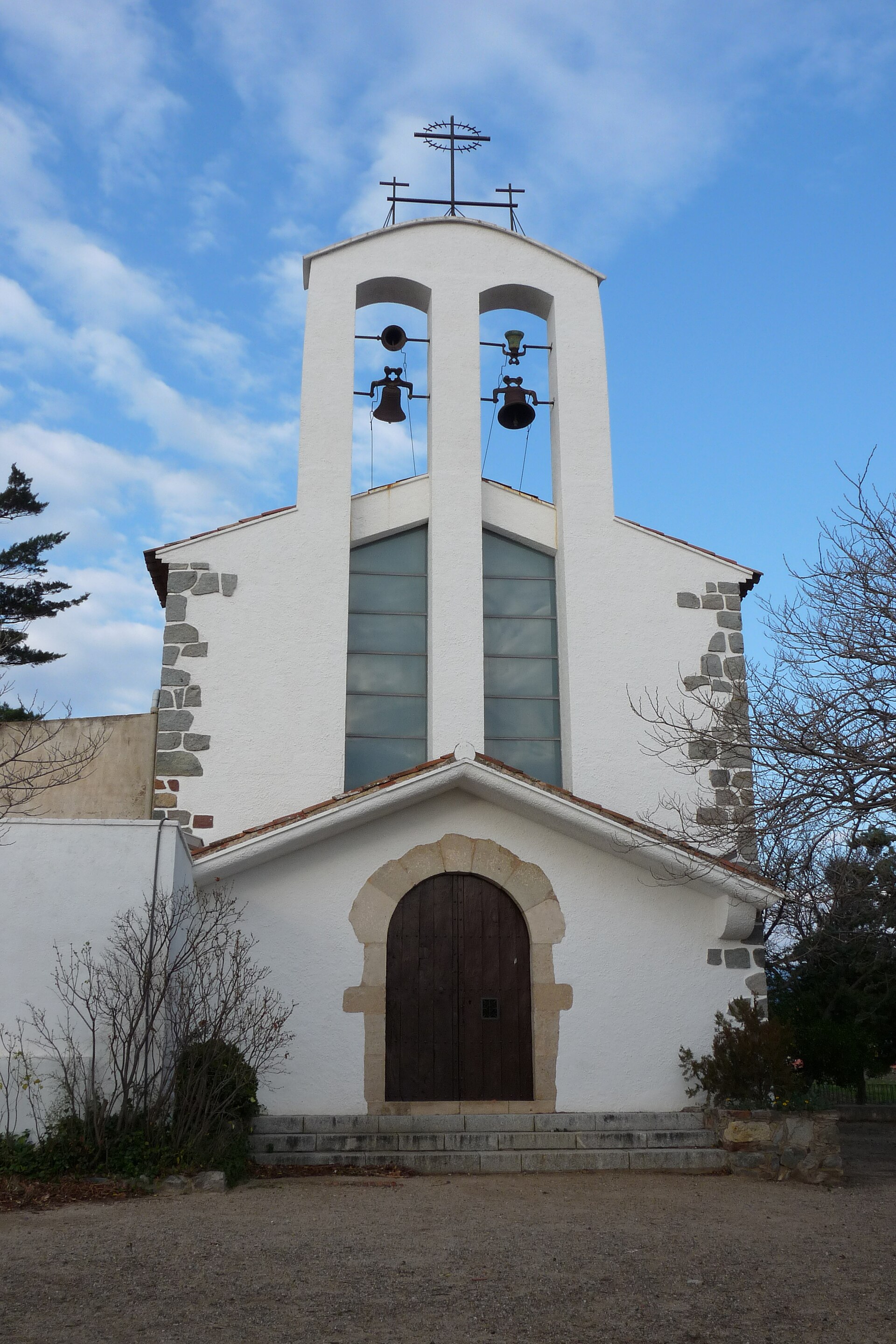
Sant Antoni de Pàdua de Maspujols
Maspujols
The Ermita de Sant Antoni de Pàdua is a small hilltop chapel in Maspujols, a village in the Baix Camp county of Catalonia. Listed in the Inventory of Architectural Heritage of Catalonia, it is one of the few historic structures preserved in this small community. How do you get there? The chapel sits on a rise just above Maspujols, reached by a cypress-lined path that starts a short, easy walk from the village center. The same path continues on to the local cemetery, which borders the chapel grounds. The site's coordinates are 41.181134, 1.043617 — useful if you're driving in from nearby Baix Camp towns such as Reus or Riudoms and want to set a precise destination. What will you see on site? The building has a single nave on a rectangular plan, built from rubble masonry with dressed stone blocks reinforcing the corners. The façade is rendered white from top to bottom and topped by a tall double bell gable — a classic Catalan espadanya — holding four bells, visible from the approach road well before you reach the building itself. The chancel ends in a rounded apse, and inside sits a modest altar. The altar's centerpiece is a sculptural group depicting Saint Anthony of Padua, Saint Anthony the Abbot, and Saint Francis Xavier, carved by Ramon Ferran, a sculptor from nearby Reus. That local authorship gives the altar a distinctly regional character rather than an imported one. The chapel's history stretches back to the eighteenth century: construction began in 1761, but the building wasn't finished and formally blessed until July 28, 1796 — a gap that points to a long, drawn-out building process. In the following decades the structure suffered damage during the Carlist Wars (1846–1849) and had to be rebuilt. It later fell into a near-ruinous state and underwent another major reconstruction, completed in 1963, which is largely why it stands in good condition today. When should you visit? The ermita keeps no fixed visiting hours the way larger monuments do — it's a small rural chapel, best seen during daylight hours when the sun brings out the white façade and the hilltop views over the Baix Camp countryside. It sees little tourist traffic, so any season works; autumn and winter give the cypress path a particularly quiet, contemplative feel. Pair the visit with a short walk through Maspujols itself, a small village where the chapel is one of the main points of interest. Frequently asked questions Do you have to walk to the chapel? Yes — the approach is a short walk up a cypress-lined path from the village center, manageable for most visitors. Is the chapel open to visitors? As a small religious building, it doesn't keep regular opening hours; check local information in Maspujols before your visit, especially if you want to see the interior. Why is the chapel named after Saint Anthony of Padua? It's dedicated to the Franciscan preacher and theologian Saint Anthony of Padua, a figure widely venerated across Catalan villages, many of which have chapels bearing his name. Is it worth combining the visit with the cemetery? The Maspujols cemetery sits right next to the chapel, so visitors naturally pass it on the way, even though the two sites serve very different purposes.
-
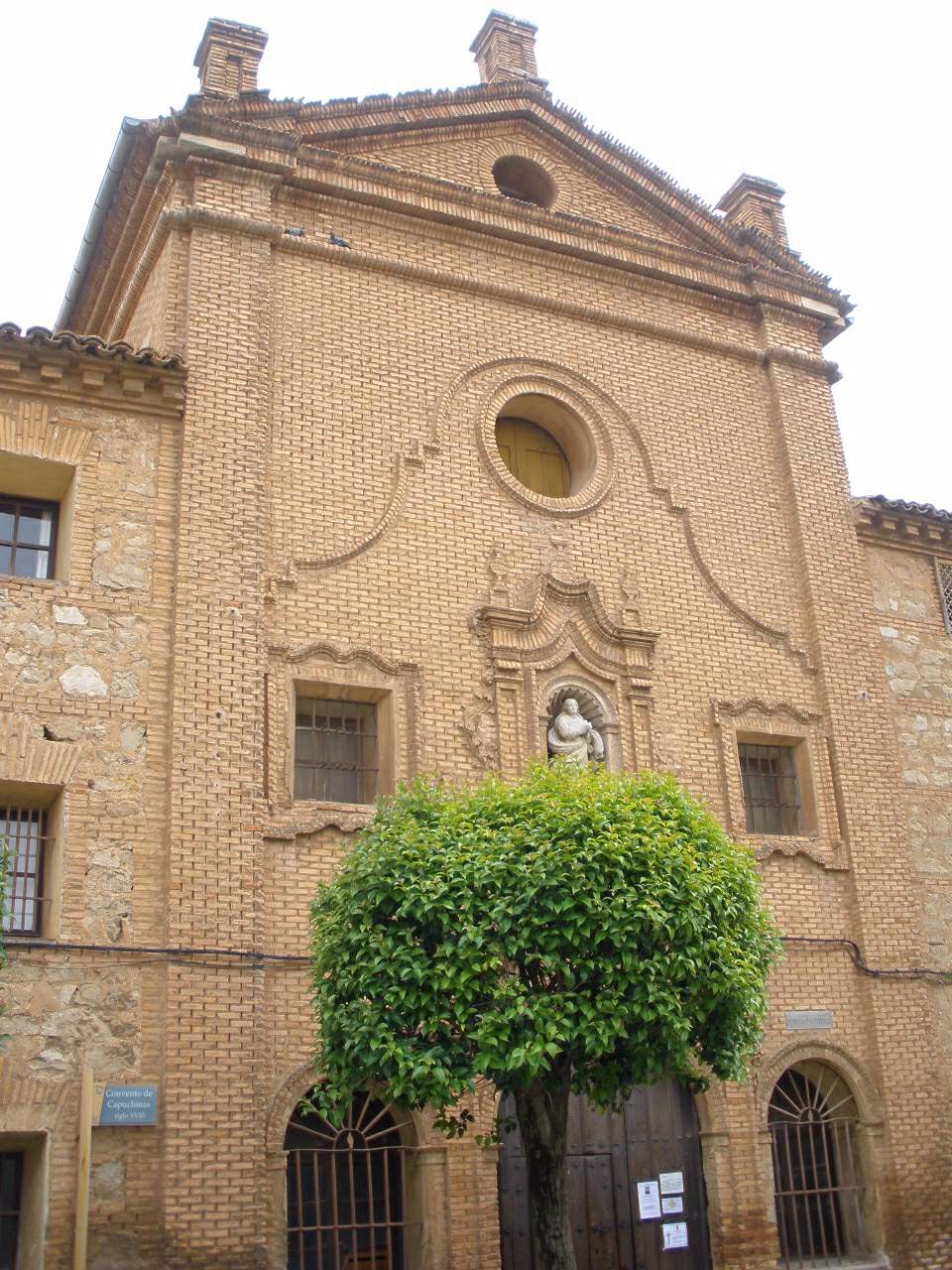
Convent of Capuchinas, Tudela
Tudela
Convento de las Capuchinas is a Baroque church and convent in Tudela, Navarre, built in the mid-18th century for a community of Capuchin nuns. Standing on the promenade that carries its own name, Paseo de las Capuchinas, the building today serves as the parish church of the Immaculate Conception (Parroquia de la Inmaculada Concepción). How do you get there? The church sits at Paseo de las Capuchinas 7, in Tudela, a compact and walkable town in southern Navarre well connected by train and bus to both Pamplona and Zaragoza. From the historic centre of Tudela, it's an easy stroll of ten to fifteen minutes through the old town streets toward the leafy boulevard that gives the building its name. Drivers will find parking without much trouble just outside the most historic core of the town. What will you see? The church follows a Latin-cross plan, with a nave divided into three bays flanked by side altar niches, and a transept whose central bay is covered by a barrel vault with lunettes, rising to an octagonal dome supported on squinches above the crossing. The whole structure rests on robust, fluted pilasters typical of Spanish ecclesiastical Baroque of the period. The adjoining convent building, by contrast, has a more restrained, neoclassical character — the tension between the ornamental church and the sober convent block is one of the more interesting features of the complex. Inside, the chancel and transept are the parts most worth lingering over, since it's here that the Baroque geometry of the vaulting is easiest to appreciate. The church remains an active parish, so it's worth checking Mass times before visiting if you want to see the interior outside of service hours. When should you visit? Tudela has the continental climate typical of Navarre, with hot, dry summers and cooler, damper winters. Spring (April to June) and autumn (September to October) are the most comfortable seasons for exploring the town and the Paseo de las Capuchinas area, with mild temperatures and good light for photographing the architecture. July and August can get very hot, which makes long walks around town less pleasant. Keep in mind that, as a working parish church, the building may be closed to visitors during Mass and other services — it's worth checking locally on arrival. Why is it worth a visit? Convento de las Capuchinas isn't one of Tudela's headline attractions — it sits in the shadow of the cathedral and the old town — but that lower profile, combined with its still-active religious role, is exactly what makes it worth a stop. It offers a chance to see how Baroque religious architecture functioned in a provincial 18th-century Navarrese town, away from the crowds that gather at the region's better-known landmarks. Frequently Asked Questions Can you visit Convento de las Capuchinas without a guide? Yes. As an active parish church, it's open around service times and, subject to availability, outside them too — it's best to confirm on site or with the parish directly. How long does a visit take? Seeing the church itself takes about 15 to 20 minutes, though anyone interested in Baroque architecture may want to linger longer over the vaulting and layout. Are there other sights nearby? Yes. Tudela has a compact historic centre with its cathedral and other notable religious buildings, all within an easy walk of the Paseo de las Capuchinas. Is there an entrance fee? As a working parish church, entry is generally free, though visitors should keep a respectful, quiet demeanour in line with the building's religious function.
-
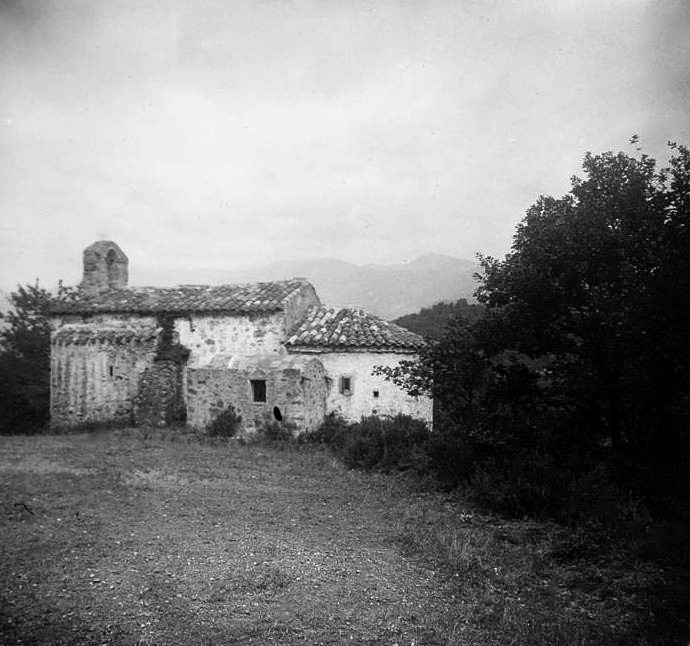
Sant Esteve del Llop
Darnius
Sant Esteve del Llop is a hermitage complex in the municipality of Darnius, in the Alt Empordà region of Catalonia — a Romanesque chapel joined to an adjoining masia, a traditional Catalan rural farmhouse. The site sits roughly two and a half kilometers from the center of Darnius, among the foothills of the Serra de l'Albera, and is listed in the Inventory of Architectural Heritage of Catalonia. What will you see there? The complex is made up of two parts with different histories. The chapel has Romanesque origins: its oldest section, the semicircular apse of the chancel, dates back to the early medieval period (10th–11th centuries). The rest of the building was rebuilt in the 14th century, with later alterations added over subsequent centuries. The facade features a portal with carved voussoirs, topped by a small open bell tower, known locally as an espadanya. The adjoining masia has a rectangular floor plan with a ground floor and one upper story, facing south. An additional volume was added on the west side, covered by a two-pitched roof, which served as a granary for storing grain. The site's history carries an intriguing dispute. Some authors have claimed that Sant Esteve del Llop once belonged to the Knights Templar. Surviving 14th-century records, however, describe it as a simple chapel subordinate to the parish of Darnius, which undermines the theory that a Templar commandery or priory ever stood here. How do you get there? The easiest way to reach Sant Esteve del Llop is on foot from Darnius — the route covers about two and a half kilometers and forms part of popular local hiking trails that link the chapel to nearby viewpoints such as the Mirador de la Tortuga and the Serrat del Sentinella. The path crosses hilly terrain typical of the Albera foothills, so sturdy walking shoes are recommended. The site's coordinates are 42.3707, 2.80497, easy to mark in a navigation app or on a hiking map before setting out. When is the best time to visit? Spring and autumn are the best seasons to visit, when temperatures in Alt Empordà are mild and the trail isn't baking under the summer sun. In summer the route can get hot with little shade, so an early morning start is advisable. Views from the nearby lookout points are especially rewarding on clear days, which are more common outside the summer haze and heat. Why is this place worth visiting? Sant Esteve del Llop is a rare example of a place where religious and rural architecture have coexisted within a single complex for centuries. For anyone interested in regional history or Romanesque architecture, it offers a chance to see an authentic site that hasn't been polished for mass tourism, set against the natural backdrop of the Albera hills. For hikers setting out from Darnius, it also makes a natural waypoint on the route toward the nearby viewpoints. Frequently asked questions Is Sant Esteve del Llop open to visitors? The site sits along a hiking trail and can be viewed from the outside as a stop on the route; it doesn't keep regular opening hours like a museum. How long does the walk from Darnius take? The trail from the center of Darnius is about 2.5 km, which typically takes a bit over an hour one way at a moderate walking pace, depending on fitness and speed. Did the site really belong to the Knights Templar? That's a popular but unconfirmed theory. Records from the 14th century show Sant Esteve del Llop as a simple chapel subordinate to the Darnius parish, not a Templar commandery. What else can you see nearby? The trail connects the chapel to the Mirador de la Tortuga and Serrat del Sentinella viewpoints, which offer views over the surrounding Alt Empordà countryside.
-
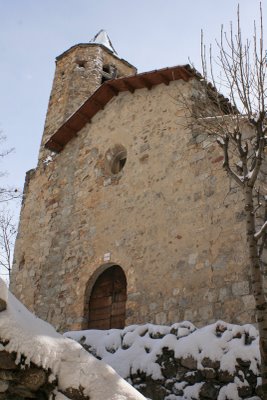
Church of Saint Fructuosus of Perves
el Pont de Suert
The Church of Saint Fructuosus of Perves is the former Romanesque parish church of the small hamlet of Perves, part of the municipality of el Pont de Suert in the Alta Ribagorça region. Until 1968 Perves belonged to the old municipality of Viu de Llevata, and today it remains one of many scattered mountainside settlements typical of this stretch of the Pyrenees. How much of the original Romanesque building survives? Very little of the medieval structure remains visible today: the church underwent a thorough Baroque remodeling that reshaped its overall appearance. The main façade now features a round-arched entrance doorway topped by a simple rose window that lights the choir and side galleries. To the left of the façade stands an octagonal bell tower, roofed in slate and fitted with an opening that houses a bell — a detail that gives the building its distinctive Pyrenean silhouette. What is the church's historical background? The church was once among the possessions of the Santa Maria de Lavaix monastery, one of the more significant monastic centers in the medieval Ribagorça region. That dependency helps explain why a modest rural parish church ended up with relatively refined architecture and furnishings — churches tied to monasteries typically benefited from their resources and craftsmen. What did the church house inside? The building was once home to the Crist de Perves, a wooden sculpture of the crucified Christ dated to the second half of the 13th century. Gothic crucifixes of this kind rank among the most valuable pieces of sacred art in the Pyrenees, and their presence in small village churches underscores the importance these places held in local religious life. Does the building carry legal protection? Yes. The Church of Saint Fructuosus of Perves holds the status of a Cultural Asset of Local Interest (Bé Cultural d'Interès Local), granting it legal protection for its structure and surroundings against uncontrolled alteration. How can visitors reach Perves? Perves sits in the mountainous part of the el Pont de Suert municipality, within Alta Ribagorça — a region known for its scattered rural settlements and numerous small Romanesque churches dotting the valley slopes. The hamlet is not a major tourist hub, so visitors can expect a quiet, intimate atmosphere typical of high-Pyrenean villages. Frequently Asked Questions Does the church still look Romanesque? Not really — the Baroque remodeling largely erased the original medieval features. What visitors see today is mostly Baroque work, such as the façade's doorway and rose window. What is the Crist de Perves? It is a wooden sculpture of the crucified Christ from the second half of the 13th century, once kept inside this church and considered one of the more valuable sacred art pieces associated with the site. Which monastery was the church connected to? The church belonged to the possessions of the Santa Maria de Lavaix monastery, an important monastic center in the Ribagorça region. Is the church under heritage protection? Yes, it holds the status of a Cultural Asset of Local Interest, which gives it formal legal protection.
-
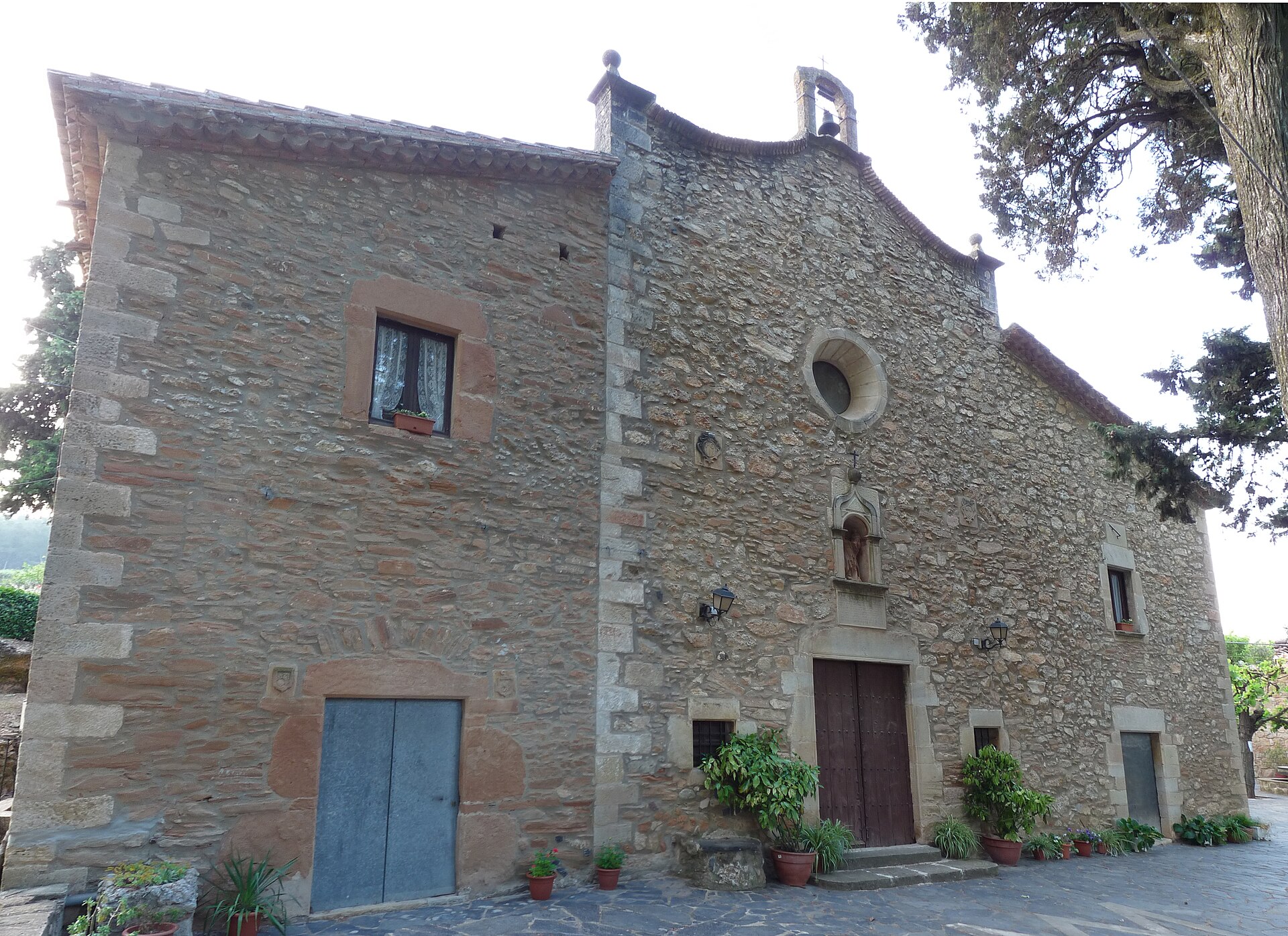
Mare de Déu dels Torrents
Vimbodí i Poblet
Mare de Déu dels Torrents is a small hermitage in the municipality of Vimbodí i Poblet, in the Conca de Barberà region of Catalonia. The modest, single-nave building stands along the road connecting the village of Vimbodí with the Poblet monastery, surrounded by fields and the stream that gave the site its name. How do you get there? The hermitage sits roughly one kilometer from the center of Vimbodí and about three kilometers from the Poblet monastery, right beside the road linking the two. It's an easy stop for anyone driving or cycling between the village and the monastery — the route is flat and well marked, and the building is visible from the road itself. For those on foot, it makes a short, quiet outing that pairs naturally with a visit to Poblet. What's the history behind it? The hermitage was founded in 1484 by Juan Payo Coello, abbot of the Poblet monastery — two coats of arms honoring the founder are still visible on the façade. According to local legend, an image of the Virgin was found among the reeds of the torrent d'en Guiot that runs through the site, an event that marked the beginning of devotion at this spot. In 1714 the building underwent a Baroque remodeling, carried out by Magí Alandó, a clergyman and pharmacist at the Poblet monastery, with the permission of abbot Josep Escuder. An inscription commemorating the work is still readable on the façade today. That renovation gave the hermitage the form it retains now. The Gothic image of the Virgin kept inside was destroyed in 1936, during the Spanish Civil War. It was later restored using surviving fragments of the original, so the current figure still carries a direct link to the earlier sacred artwork. What should you look out for? The architecture is plain and austere, typical of rural chapels in the region — no ornamentation to speak of, but plenty of character built up over centuries. Look for the façade with its two founder's coats of arms and the 1714 Baroque inscription documenting the remodeling. Inside, the focal point is the reconstructed Gothic figure of the Virgin, the object of local devotion and the centerpiece of the annual religious festivities. The hermitage is listed as a locally protected heritage asset (BCIL), confirming its status as part of the historic fabric of Vimbodí i Poblet. When's the best time to visit? The site can be visited year-round, but it's liveliest during the annual festival honoring the village's co-patroness, marked by religious services and a communal dinner at the hermitage. Once every five years — in years ending in 4 or 9, following a tradition begun in 1944 — the celebration expands into the Festes Quinquennals, an extended festival drawing wider participation from across the region. That's the best time to see the hermitage at its most festive. Frequently Asked Questions Is the hermitage open to visitors all year? The site can be visited year-round, though the interior is mainly accessible during services and religious festivities — check the local calendar before planning a visit. How far is it from the Poblet monastery? The hermitage is about three kilometers from the Poblet monastery, along the road connecting the monastery to the village of Vimbodí. What does "dels Torrents" mean? The name refers to the stream (Catalan "torrent") running through the site, the torrent d'en Guiot, tied to the legend of the Virgin's image being found among its reeds. What are the Festes Quinquennals? They are an extended, five-yearly festival honoring the Mare de Déu dels Torrents, held in years ending in 4 or 9, continuing a tradition that began in 1944.
-
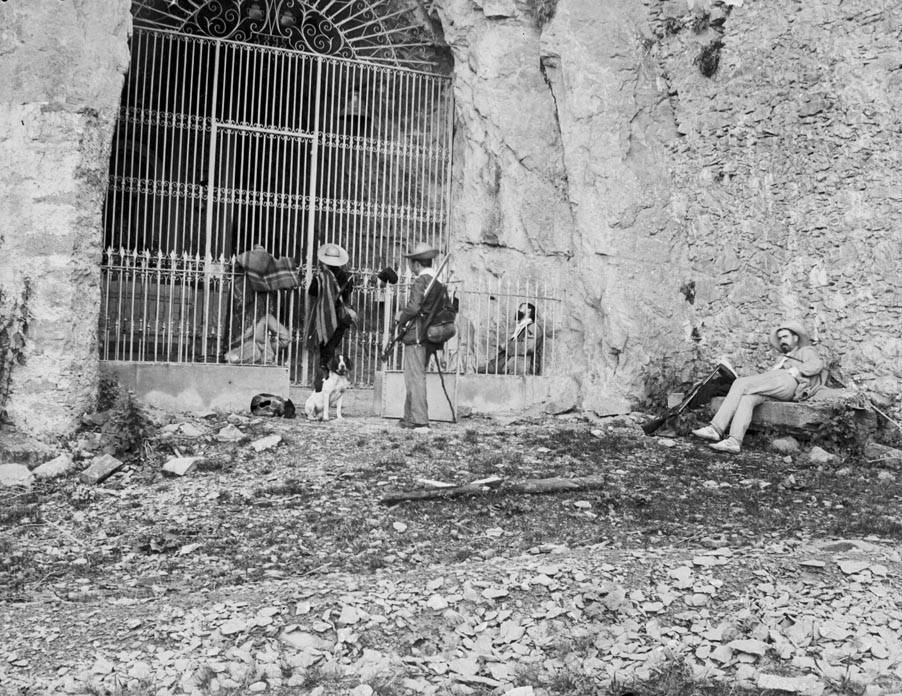
Mare de Déu de les Olletes
la Vall d'en Bas
Mare de Déu de les Olletes is a mountain sanctuary carved into the rock, tucked inside a gorge above la Vall d'en Bas, in the heart of the Garrotxa region in Girona province. For generations it has drawn pilgrims from across the valley, and today it also attracts hikers seeking one of the more unusual corners of the Catalan Pyrenees. Where exactly is the sanctuary located? The chapel sits at an altitude of 1,036 metres, on the northern slope of the Puigsacalm massif, just below the Santa Magdalena del Mont peak. Administratively it belongs to the municipality of la Vall d'en Bas, with the village of Sant Privat d'en Bas serving as the nearest access point and the start of the most popular approach trail. Its remote mountain setting means the site can only be reached on foot — there is no road access to the cave itself. Where does the name "Olletes" come from? According to tradition, the name refers to the small, pot-shaped hollows found throughout the surrounding rock formations — in Catalan, "olletes" means little pots. Legend holds that the image of the Virgin was discovered inside one of these natural cavities. The same motif reappears on the wrought-iron grille that closes off the entrance to the cave, decorated with small forged pots. What does the cave and its interior look like? The natural cavern that houses the sanctuary measures five metres high, eight metres deep, and four metres wide. The marble image of the Virgin kept inside dates from the 16th–17th century and, according to local tradition, is a "found" image rather than a commissioned one — a detail that explains the particular devotion the site has attracted over the centuries. How has the sanctuary changed over time? A modest chapel originally stood at the site, but growing numbers of pilgrims led to major works between 1855 and 1895, during which a much larger chamber was excavated directly into the living rock to accommodate more worshippers. Only once this decades-long project was finished was the image of the Virgin placed inside the enlarged space. The result is a distinctive blend of natural cave and sacred architecture built straight into the mountainside. Are religious celebrations still held here? Yes, the sanctuary remains an active place of worship. Every year, on the first Sunday of September, an annual gathering (aplec) draws residents of la Vall d'en Bas and neighbouring villages who have kept up the tradition for generations. Pilgrimages to the cave date back many decades and continue to be an important part of local identity. How do you reach the sanctuary on foot? The most popular route starts in Sant Privat d'en Bas and covers roughly 7.5 kilometres one way, with about 400 metres of elevation gain. Hikers often combine it with a visit to the nearby Santa Magdalena del Mont hermitage, turning it into a longer, full-day outing across the Puigsacalm massif. Along the way, the trail opens up views over the Vall d'en Bas valley and the surrounding Garrotxa countryside. Frequently Asked Questions Can you drive to the sanctuary? No, the cave is only reachable on foot — the nearest starting point is Sant Privat d'en Bas, about 7.5 km away. Where does the name "Olletes" come from? From the small, pot-shaped hollows in the surrounding rocks, one of which is said to have held the found image of the Virgin. When is the main celebration held at the sanctuary? The annual pilgrimage gathering takes place on the first Sunday of September and draws residents from across the valley. How big is the cave sheltering the chapel? The natural cavern measures five metres high, eight metres deep, and four metres wide.
-
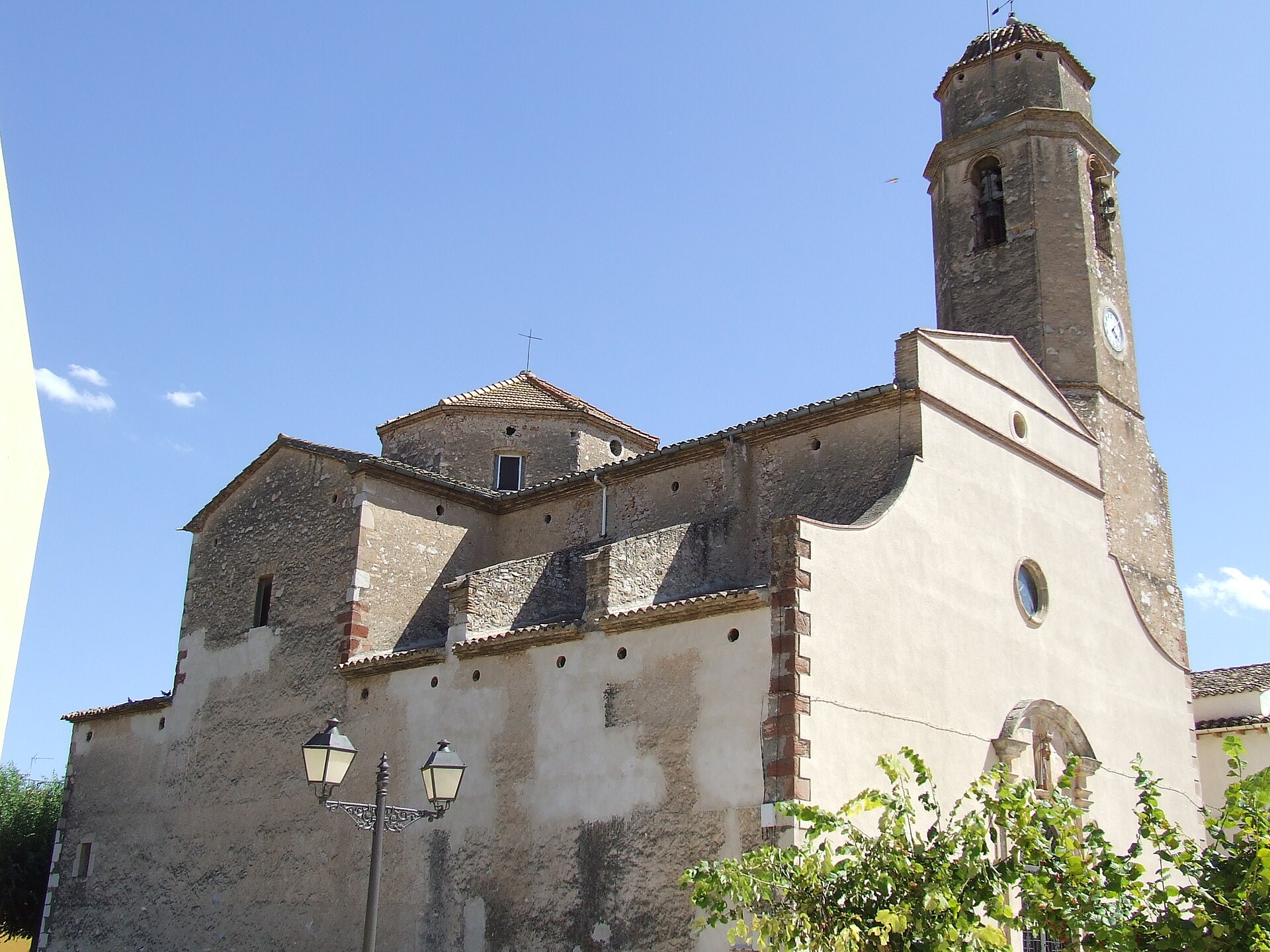
Sant Lluís dels Guiamets
Els Guiamets
Sant Lluís dels Guiamets is a Baroque parish church in the village of Els Guiamets, within the Priorat comarca of Tarragona province, Catalonia. Dedicated to the bishop saint Louis, the building is listed as a cultural asset of local interest (BCIL) on Catalonia's heritage register. What does the church of Sant Lluís dels Guiamets look like? The building follows a rectangular floor plan. Its walls are rendered masonry, while cut stone reinforces the corners — a common technique in Catalan rural churches built around the turn of the 19th century. The roof is tiled, and a dome rises over the crossing point of the naves. Inside, the church is divided into three naves, each with three bays. The choir occupies the first bay, set apart from the rest by pilasters. The crossing does not project beyond the outline of the building, and the sanctuary ends in a polygonal apse. The most distinctive feature from the outside is the octagonal bell tower, positioned at the front of the main nave. It rests on a square base, rises 36 metres, and is pierced by four window openings. A pyramidal roof finished in glazed tiles crowns the tower, giving the church a colourful silhouette visible across the surrounding area. What is the history behind the church? The current building replaced an older parish church that had fallen into poor structural condition. In 1791, the bishop of Tortosa — under whose jurisdiction the parish then fell — granted permission to begin construction of the new temple. Earlier, on 3 September 1784, the local church had already been raised to the status of a vicariate, and on 15 June 1787 it became a full parish — both milestones reached before permission for the new building was even granted. This sequence suggests the religious community in Els Guiamets was outgrowing its existing infrastructure, which eventually led to the construction of the larger church seen today. Where is Els Guiamets located? Els Guiamets is a municipality in the southern part of the Priorat comarca, in Tarragona province. The wider region is known for its terraced vineyards and mountainous terrain, and the church of Sant Lluís dels Guiamets acts as one of the village's landmarks — its tall tower is visible from much of the surrounding area thanks to the village's low-rise built environment. Frequently Asked Questions Who is the church in Els Guiamets dedicated to? The church is dedicated to the bishop saint Louis (Sant Lluís), which gives the building its name. How tall is the church's bell tower? The octagonal bell tower stands 36 metres high and is topped with a pyramidal roof covered in glazed tiles. When was the current church building constructed? The bishop of Tortosa authorised construction of the new church in 1791, after the earlier parish building had deteriorated. Is the church legally protected? Yes, Sant Lluís dels Guiamets is listed as a cultural asset of local interest (BCIL) under Catalonia's heritage protection system.
-
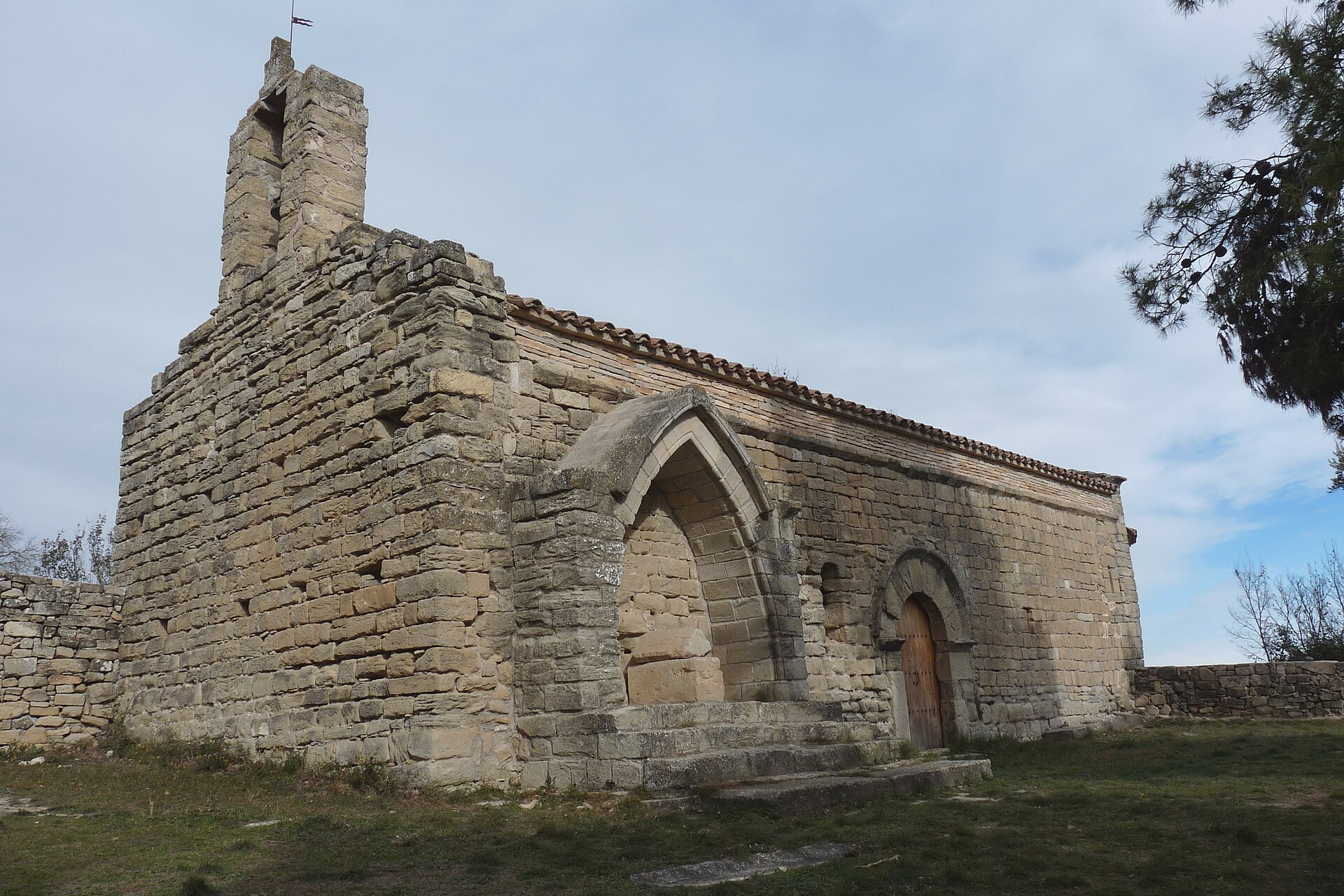
Sant Salvador
les Piles
Sant Salvador is a small Romanesque church standing on the site of the abandoned settlement of Figuerola, within the municipality of les Piles in Conca de Barberà (Tarragona province). Although the village of Figuerola no longer exists, the church survives as a witness to its history and remains one of the more interesting monuments in the area. What will you see on site? The building is a single-nave church with a semicircular apse closing the presbytery. The interior is covered by a barrel vault resting on formeret arches running along the lateral walls — a construction typical of 12th-century Catalan Romanesque architecture. Externally the church has survived in good condition, though the interior is not freely accessible, so visitors should expect to admire the structure mainly from the outside. The setting itself — among the fields and hills of Conca de Barberà, on the footprint of a vanished village — gives the place a quiet, rural character. It's a spot where silence and empty landscape say more than any information panel could. What is the history behind it? The parish of Figuerola is already documented in 1150 as a possession of the Canonry of Solsona. The oldest reference to the building itself dates back to 1195, when one of the castellans of Timor made a bequest to Sant Salvador. At the end of the 13th century, Figuerola passed by donation under the authority of the Santes Creus monastery and remained within its territorial domain until the 19th-century Mendizábal disentailment, which stripped the Catholic Church of much of its landed property across Spain. Centuries of dependence on one of Catalonia's most important Cistercian monasteries explain why such a small rural church received such a solid stone construction — investing in sacred architecture on lands controlled by Santes Creus was standard practice at the time. How do you get there? The church sits just off the T-201 road, close to the village of les Piles. It's best reached by car as part of a wider tour of Conca de Barberà — the region rewards travelers who combine a stop at Sant Salvador with other villages and viewpoints along the same route. When is the best time to visit? Since the interior can't be entered, plan a daytime visit with good light to bring out the architectural details of the apse and walls. Spring and autumn are the most comfortable seasons for exploring Conca de Barberà, when temperatures are mild and the landscape around abandoned Figuerola is at its most striking. Frequently Asked Questions Can you go inside the church of Sant Salvador? No, the interior is not freely accessible to visitors. The building can be viewed from the outside, where its architecture — including the apse and walls — is visible and well preserved. How old is the church? The building dates back to the 12th century and represents the Romanesque style typical of Catalan religious architecture of that period. Does anyone still live in Figuerola? No, the settlement of Figuerola is now uninhabited. The church of Sant Salvador is the only lasting element left from the former village. What is the connection between Sant Salvador and the Santes Creus monastery? From the end of the 13th century, Figuerola belonged to the Santes Creus monastery and remained under its territorial authority until the 19th-century Mendizábal disentailment.
-
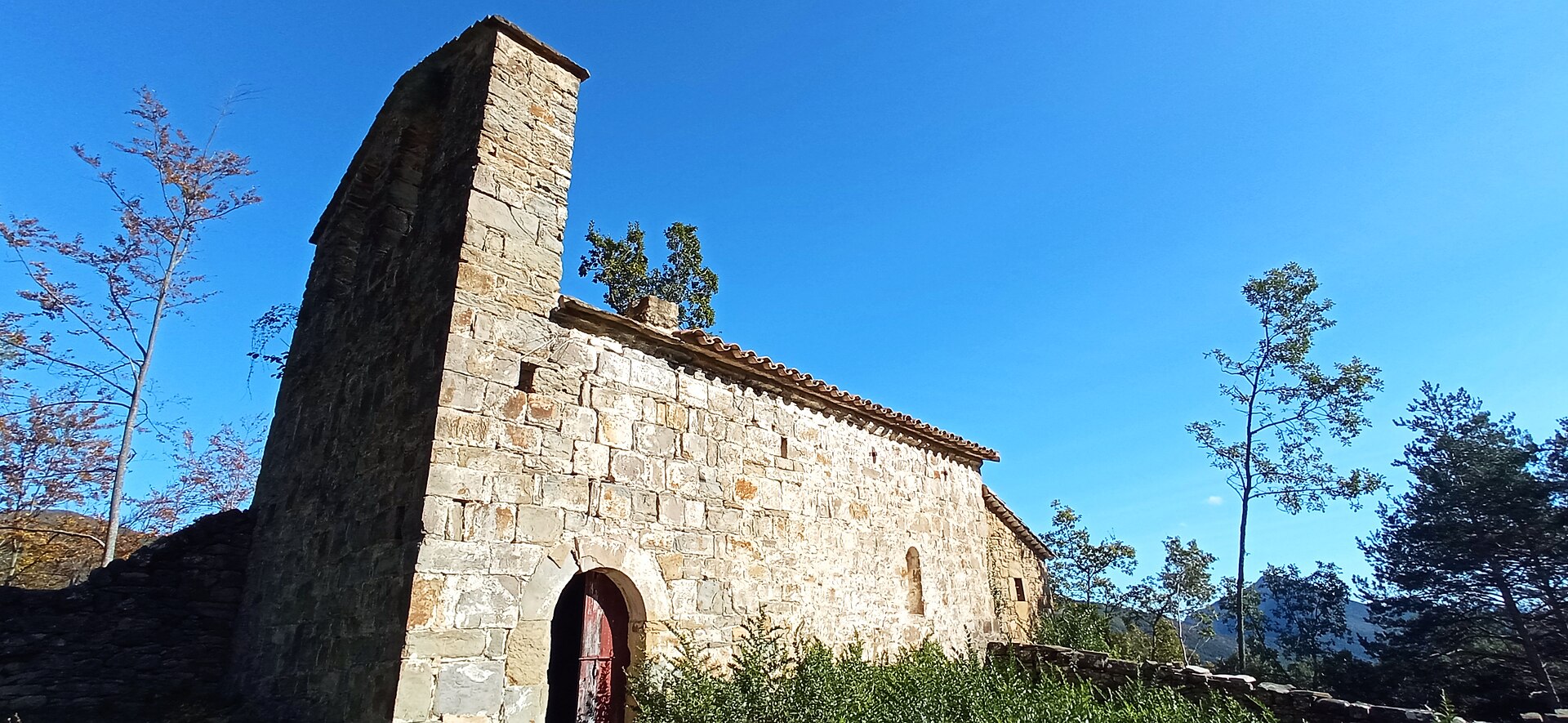
Sant Feliu del Bac
la Vall de Bianya
Sant Feliu del Bac is a Romanesque church standing alone on a small hill in the municipality of la Vall de Bianya, in the Garrotxa comarca of Girona province. The building rises on the northern slope of the Malforat range, above the left bank of the Oix stream, set apart from the village itself amid meadows and woodland — a setting that explains why walkers tracking rural Romanesque heritage in Garrotxa tend to seek it out deliberately. How old is the church, and what's the earliest record of it? The oldest surviving reference to the parish of Sant Feliu del Bac goes back to the year 946, when a man named Froilà, executor of Goltred's will, handed over to the monastery of Sant Pere de Camprodon a plot of land bordering the Sant Feliu de Bac property. The church itself was consecrated in January 996, making it one of the earlier documented places of worship in this part of Garrotxa. The building visible today, however, dates to the 12th century, the result of a later rebuild in full Romanesque style; a sacristy was added afterward, altering the original east façade. What does the church look like inside? The layout follows the pattern typical of rural Romanesque churches in this area: a single nave under a barrel vault, divided by a pointed triumphal arch that splits the space into two roughly equal sections — nave and presbytery. The main entrance sits on the south side. The bell tower, meanwhile, is reached by an external stone staircase built against the north façade, a solution that kept the work of accessing it separate from the nave itself. What have archaeological digs turned up here? In 1996, excavations at the site uncovered a Romanesque altar slab and a rectangular baptismal font. These finds gave physical confirmation to a history previously known only from written sources, and they point to continuous religious use of the site from the medieval period onward. Why add it to a route through la Vall de Bianya? Sant Feliu del Bac isn't on a main road and won't be stumbled upon by accident — reaching it takes a deliberate detour. That's exactly its appeal for anyone chasing Romanesque architecture away from crowds: a stone church on a hilltop, the quiet of the Oix valley, and views over the surrounding hills of Garrotxa. For anyone interested in the region's history, it also serves as a useful marker of just how densely this part of Catalonia was already dotted with small parish churches by the 10th century, well before the valley's larger settlements took shape. Frequently Asked Questions Where exactly is Sant Feliu del Bac located? The church stands in the municipality of la Vall de Bianya, in the Garrotxa comarca (Girona province), on a rise above the Oix stream, set some distance from the village center. How old is the church? The parish is first mentioned in a document from 946, and the church was consecrated in January 996. The building standing today, though, dates from a 12th-century rebuild. What architectural style does it represent? It's a classic example of rural Romanesque from the Catalan Pyrenees foothills: a single nave with a barrel vault, a pointed triumphal arch separating the presbytery, a south-facing entrance, and a bell tower reached via an external staircase. Has any archaeological work been done at the site? Yes — in 1996, excavations there uncovered a Romanesque altar slab and a rectangular baptismal font, confirming the site's medieval origins.
-
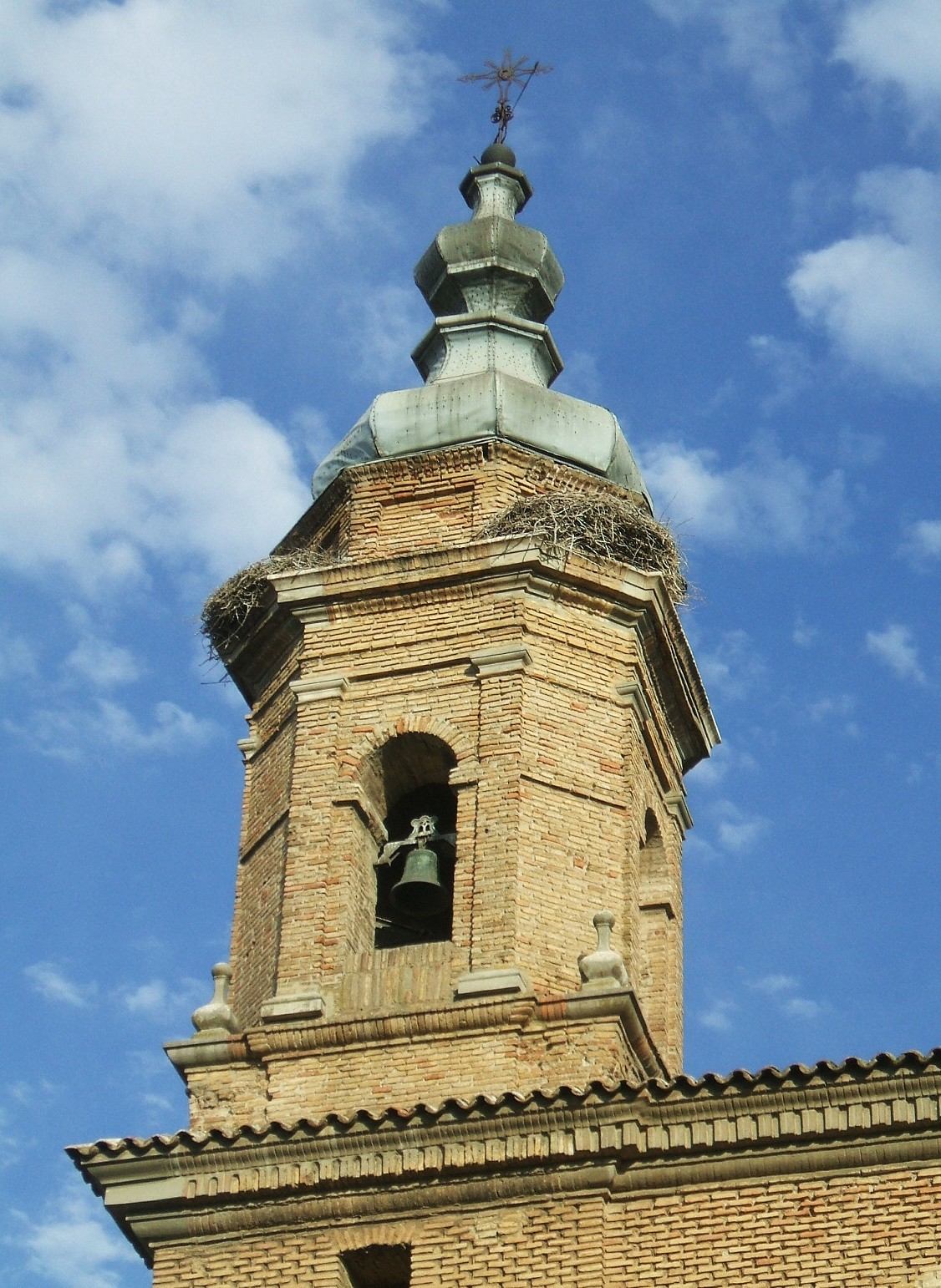
Church of San Antonio de Padua, Alagón
Alagón
The Church of San Antonio de Padua stands in Alagón, a small town on the Ebro river in the province of Zaragoza, and remains one of the town's most recognizable landmarks. Who built the church, and when? Construction began in 1735, based on a design by Antonio Forcada, a Jesuit architect from Zaragoza who also designed the adjoining Jesuit college. The Society of Jesus had already been established in Alagón since the second half of the 17th century, and the new church was meant to serve both the order and the townspeople. What does the building look like architecturally? The church follows a Latin-cross floor plan with a single nave, covered by a barrel vault with lunettes. Side chapels line the nave, topped with galleries above them. The transept is comparatively modest in size, while a dome resting on pendentives — the triangular transitional elements that connect a round dome base to a square crossing below — rises above the point where nave and transept meet. The apse closes in a polygonal shape rather than a simple curve. The exterior walls are built mostly of brick, a common choice in Aragonese architecture of the period. Stone was reserved for the base of the building, while the entrance portal was carved in alabaster — a more costly material used to mark the main facade. Among the most distinctive external features are the tower positioned at the facade and a small lantern tower (cimborrio) above the crossing, capped with an eight-sided roof covered in colorful glazed tiles — a detail that gives the building a distinctly picturesque silhouette compared to neighboring parish churches. Did the church survive the Spanish Civil War intact? The building suffered a fire during the Spanish Civil War that caused serious damage, mostly to the interior furnishings — altars, sculptures, and decorative elements bore the brunt of the destruction, while the structure itself survived. Restoring the interior took decades, and the most significant turning point came with a comprehensive restoration carried out by the Diputación de Zaragoza (the provincial council), completed in 1997. That project returned the historic building to a stable condition that it retains today. Is the church worth visiting while in Alagón? For visitors touring the Ebro valley, the Church of San Antonio de Padua offers a clear example of Aragonese Baroque religious architecture, combining plain building materials — brick above all — with concentrated ornamental richness at key points such as the portal and the dome. The adjoining former Jesuit college adds historical context, recalling the order's presence in the town since the 17th century. Frequently Asked Questions When was the Church of San Antonio de Padua in Alagón built? Construction started in 1735, following a design by the Jesuit architect Antonio Forcada. Who designed the church? Antonio Forcada, a Jesuit from Zaragoza, designed both the church and the adjoining Jesuit college. What are the church's most distinctive architectural features? A facade tower, a dome resting on pendentives, a lantern tower with an eight-sided, colorfully glazed tile roof, and an alabaster entrance portal set against brick exterior walls. Was the building damaged in the past, and has it been restored? Yes — a fire during the Spanish Civil War destroyed much of the interior furnishings. A full restoration of the building, carried out by the Diputación de Zaragoza, was completed in 1997.
-
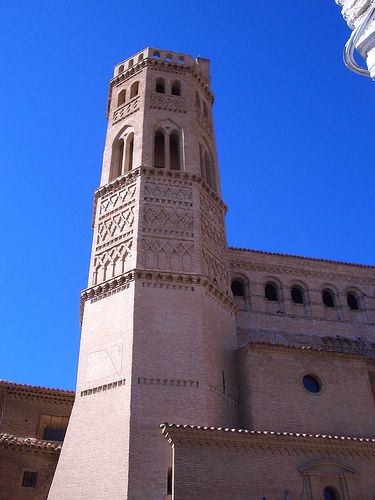
Church of San Pedro Apóstol, Alagón
Alagón
The Church of San Pedro Apóstol in Alagón, a town in the province of Zaragoza, Aragon, stands as one of the region's clearest examples of Gothic-Mudéjar architecture. Located along Aragon's Mudéjar route, the church has been protected as a Bien de Interés Cultural (Cultural Heritage Site) since 2001. When was the church built? The main body of the church dates to the late 13th or early 14th century. Much of the evidence suggests it was raised on the site of a former mosque, a common pattern in Aragonese towns where Christian parishes inherited the religious and urban footprint left after the Reconquista. The bell tower is older still: it was built over the remains of an earlier minaret, possibly dating back to the 11th century. Why does the tower look so distinctive? The tower follows the classic Almohad minaret tradition found across the Iberian Peninsula, and its upper section preserves elaborate Mudéjar ornamentation — corner friezes, zig-zag patterns, rhombus motifs, and interlacing arches. This blend of Islamic decorative craftsmanship with a Christian religious structure is exactly what defines the Mudéjar style, and it's why towers like this one are instantly recognizable across the churches of Aragon. What does the interior look like? Inside, the church has a single nave divided into two sections, closed by an apse that is semicircular on the interior and polygonal, with five sides, on the exterior. The whole structure is covered with simple cross vaults, a construction choice typical of more modest parish churches of the period, favoring durability and function over ornament. What historic event is linked to this church? Historical accounts point to this Mudéjar church as the likely site where King Pedro IV of Aragon married María of Navarre in 1338. The choice of San Pedro for a royal wedding says a good deal about how prominent the church was in Alagón and the wider region at the time. What protection status does the building hold? The church and its tower were declared a Bien de Interés Cultural in the Monument category by a decree dated December 18, 2001, published in the Official Bulletin of Aragon on January 4, 2002. That designation formally recognizes the building's architectural and historical importance at a regional level. Frequently Asked Questions Where exactly is the Church of San Pedro Apóstol located? It stands in Alagón, a town in the province of Zaragoza in northeastern Spain, along Aragon's Mudéjar heritage route. How old is the church? The main structure dates to the late 13th or early 14th century, while the tower — built over an earlier minaret — may go back as far as the 11th century. Why is the style called Mudéjar? Mudéjar architecture emerged from Muslim craftsmen who continued working under Christian rule after the Reconquista, combining Islamic decorative techniques, such as brick friezes and geometric patterns, with the structural needs of Christian churches. Can visitors go inside the church? As an active place of worship and a site listed among Aragon's Cultural Heritage properties, the church is generally open to visitors as part of Alagón's local tourism offer, though exact visiting hours are best confirmed locally or through the town's tourist information point.
-
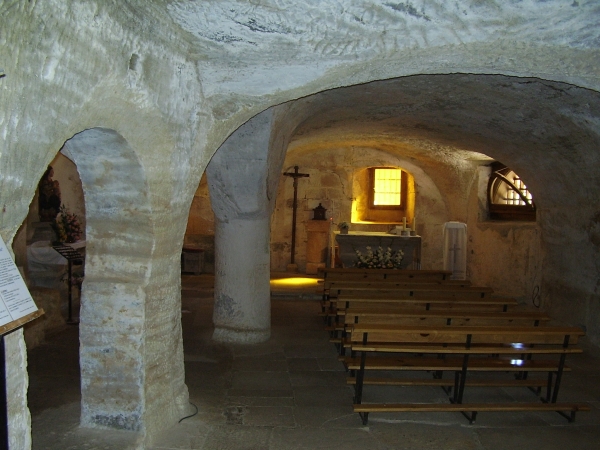
Iglesia rupestre de Santa María de Valverde
Valderredible
The Iglesia rupestre de Santa María de Valverde is the largest of the rock-cut churches in the Valderredible valley in Cantabria, and the only one among them still used for regular religious worship. Where is it and how do you get there? The church stands in the village of Valverde, within the municipality of Valderredible, right beside the road connecting Quintanilla de las Torres (Palencia), near Aguilar de Campoo, with Polientes, the capital of Valderredible. The building sits on the right-hand side of this road, carved directly into the sandstone rock typical of the Ebro valley. Right next to it operates the Centro de Interpretación de la Arquitectura Rupestre, an interpretation centre run by the Cantabrian regional government, where visitors can learn about the history and construction techniques of rock-cut architecture before or after stepping inside the church itself. What can you see inside? The interior stands out among the region's rock-cut churches for its scale and complexity. The building has three entrances, one of them Gothic, and its interior space is divided into two parallel naves by square pillars hewn directly from the solid rock. A late-Romanesque bell tower, added in the late twelfth century, was built onto the older core of the church, marking one of several later expansion phases the building went through over the centuries. The whole site was declared a Bien de Interés Cultural (a nationally protected cultural property) on 14 March 1985. What is the history behind it? The earliest written record of the church dates back to the year 978, when it was known as Santa Mª la Sotarraña. This makes it one of the oldest documented religious sites in the valley, where rock-cut churches, chapels and tombs were carved from the early Middle Ages onward, taking advantage of the soft sandstone as a natural building material. Santa María de Valverde stands apart from the rest: it is the only rock-cut church in the whole of Valderredible where regular services are still held today, unlike the valley's other surviving examples, which remain only as monuments without an active liturgical role. When is the best time to visit? Touring the Valderredible valley and its rock-cut churches works well in any season, but spring and early autumn offer the most comfortable conditions for walking between the different sites, with mild temperatures and the Ebro valley landscape at its most scenic. It is worth checking the interpretation centre's opening hours before visiting, since access to the church interior can depend on the centre's schedule or on the timing of religious services. Frequently Asked Questions Can you go inside the church on your own? Access to the interior depends on the opening hours of the neighbouring interpretation centre and on the schedule of religious services, so it is worth checking locally or with the municipal authorities beforehand. How does this church differ from the other rock-cut churches in Valderredible? It is the largest of them and the only one still used for regular worship — the valley's other surviving rock-cut churches now function purely as historical monuments. How do we know the church is so old? The oldest known written mention of the church, then referred to as Santa Mª la Sotarraña, dates from the year 978, though the bell tower and some architectural elements were added later, during the late Romanesque period. What else is worth seeing nearby? Right beside the church stands the Centro de Interpretación de la Arquitectura Rupestre, which offers broader context on the valley's rock-cut architecture and makes a good starting point for visiting the other rock-cut churches in Valderredible.
-
Iglesia de Santa María (Tíjola)
Tíjola
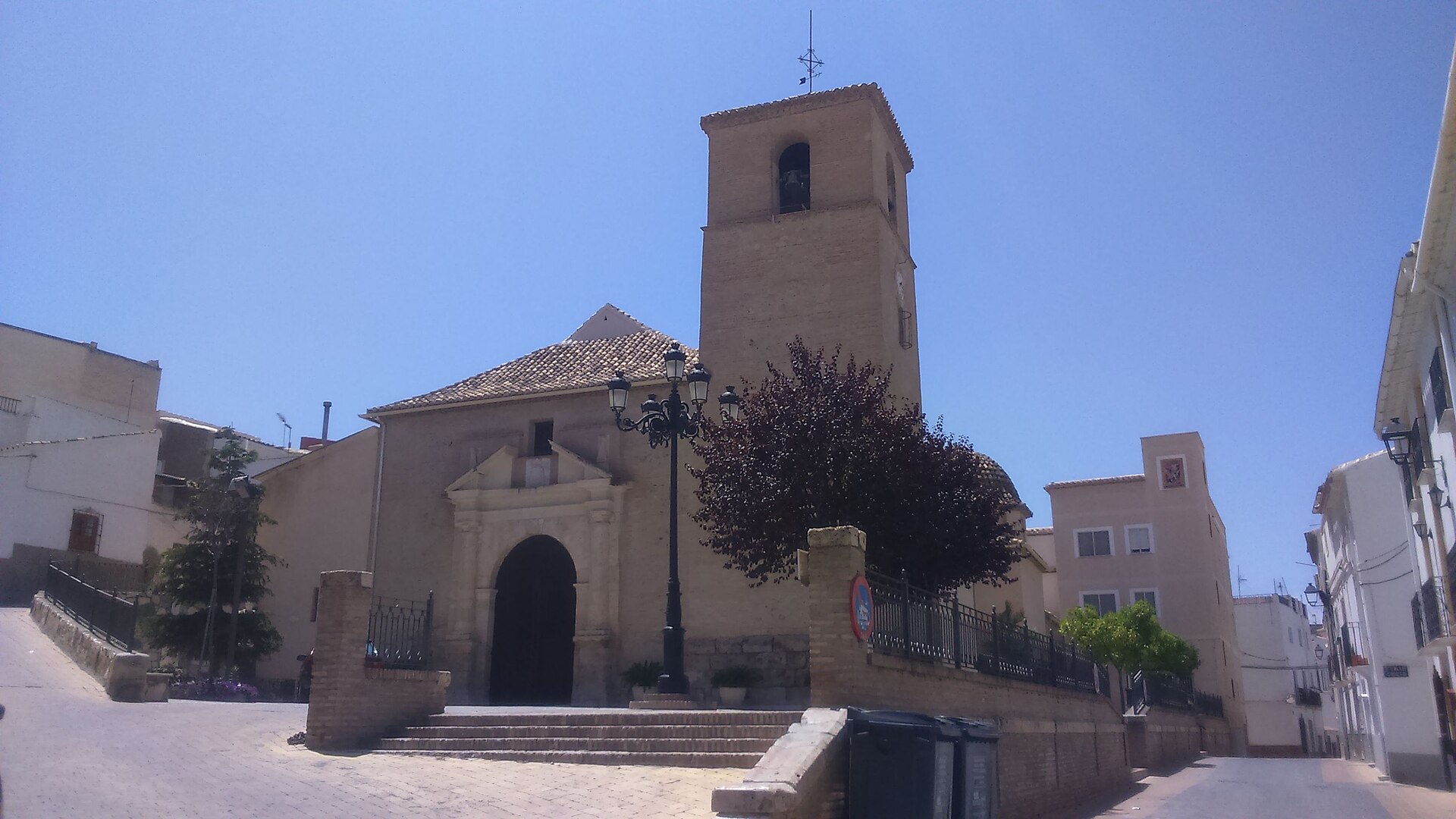
Iglesia de Santa María is the historic parish church of Tíjola, a small town in the Almanzora Valley in the province of Almería. The building carries several centuries of history and remains the main religious and cultural landmark for the community. How do you get there? Tíjola sits in the northeastern part of Almería province, in the Almanzora Valley, and the easiest way to reach it is by car, with decent road links to both Almería city and neighboring Murcia. The church stands right in the town center, so once you arrive in Tíjola it's a short walk from the main square. The building's coordinates are 37.344379, -2.438825, which makes GPS navigation straightforward. What will you see inside? The story of the church goes back to the 17th century. According to research by Father Tapia, the parish took its current shape between 1640 and 1650, although an earlier 16th-century parish church stood nearby, at what is now the Hermitage of San Cayetano. There's also a theory that the current building was raised on the site of an old Arab mosque — not an unusual pattern in this part of Andalusia, where Christian churches were frequently built over former Islamic places of worship after the Reconquista. The church was originally designed as a single-nave temple. Over time, thanks to private patronage from local families, side chapels were added, creating the visual impression of side aisles from both outside and inside — even though structurally the building remained a single nave. Architecturally it's classified as Franciscan in style, with the plain, straight chancel typical of that order. Interestingly, beneath layers of whitewash, fragments of painted decoration survive — filigree patterns in red and black, characteristic of Franciscan churches. The presbytery has a rectangular floor plan and a barrel-vaulted ceiling, slightly raised above the main body of the church, connecting to the nave through a wide triumphal arch — one of the building's most notable architectural features. The church also carries a dramatic chapter from more recent history. At the end of the Spanish Civil War, from April to at least September 1939, Francoist troops used the church and its surrounding streets as a prisoner camp — officially holding up to a thousand detainees, though oral accounts suggest the real number may have been double that. When should you visit? The church can be visited year-round, though the most vivid time to see it is during local patron saint festivities and religious processions, when the building and its surroundings come to life. Keep in mind that as an active parish church, it may be closed outside mass hours — it's worth checking locally before your visit if you want to see the interior rather than just the façade. Given its historical and architectural value, Iglesia de Santa María was declared a Bien de Interés Cultural (Asset of Cultural Interest) in the monument category, under Decree 14/2004 of January 20, 2004. This official recognition confirms the building's importance among the heritage sites of Almería province. Frequently Asked Questions How old is the church? The parish took its current form between 1640 and 1650, though an earlier 16th-century parish church already existed in Tíjola, on the site of today's Hermitage of San Cayetano. Is the church a protected heritage site? Yes, it was declared a Bien de Interés Cultural in the monument category by a decree dated January 20, 2004. What's the most notable feature inside? The presbytery, with its barrel vault and wide triumphal arch, along with surviving fragments of Franciscan-style painted decoration in red and black hidden under the whitewash. Does the building have a connection to darker 20th-century history? Yes — in 1939, following the Spanish Civil War, the church and nearby streets were used by Francoist forces as a camp for prisoners.
-
Mare de Déu del Coll de l'Alba
Tortosa
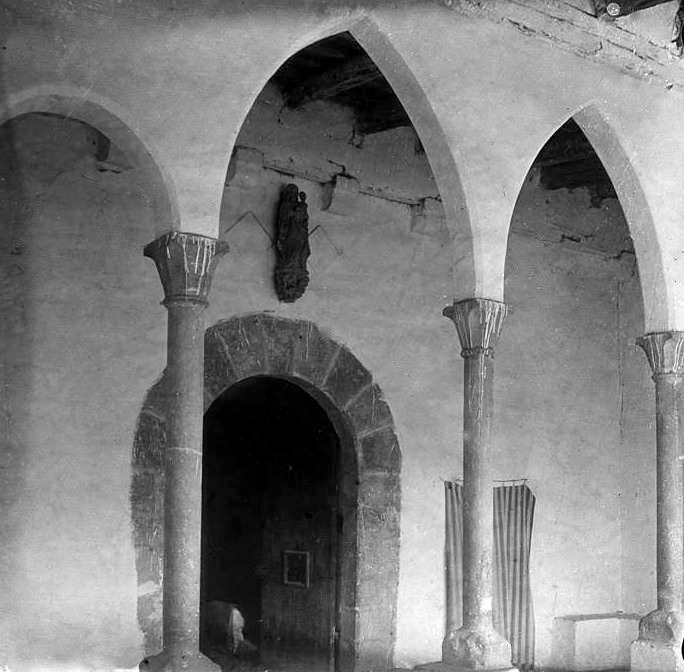
Mare de Déu del Coll de l'Alba is a small hermitage set on a hilltop in the municipality of Tortosa, in the Catalan region of Baix Ebre. The site combines the role of a Marian shrine with that of a former lookout post over the Ebre valley. Where exactly is the hermitage located? The building stands on the ridge of the Serra del Coll de l'Alba, a hill rising to the east of Tortosa. This was once the route of the Roman road linking Tortosa to Tarragona, a branch of the Via Augusta. Thanks to its elevated position, the spot has served for centuries as a watch point over the Baix Ebre area — a role underlined by the ancient tower still standing right beside the chapel. What is the history behind this place? The first record of pilgrims visiting Coll de l'Alba dates to 1442, and the Gothic hermitage itself was built the following year, in 1443. In 1444, Tortosa assigned the site its first priest, tasked with celebrating Sunday Mass. In the 16th century, an atrium with a single arch was added to shelter pilgrims and travelers from the weather while stopping at the chapel. Older documents refer to the site under several older names — Coll de l'Alma, Acma, or Acme — and the Virgin venerated here was also known under names such as Espasme or Espant before the current name, tied to the hill itself, became fixed. Why is it worth visiting? Beyond its historical and religious value, Coll de l'Alba is above all a viewpoint. From the terrace by the hermitage, visitors get a panorama over the Ebre delta, the river valley, and the Els Ports mountain range further inland. It's one of those spots where the flat delta landscape and the mountainous backdrop of the region appear in the same view. The hermitage itself is modest in scale — not a monumental church, but the kind of intimate hilltop shrine typical of the Catalan countryside, where the architecture serves shelter and prayer rather than display. Are there any traditional celebrations here? Yes. Coll de l'Alba has for centuries been the destination of an annual pilgrimage held on the Monday after Pentecost, known locally as Dilluns de Pentecosta. On that day the hillside comes alive, as residents of Tortosa and the surrounding area walk up to take part in the service and celebrate together, making use of surroundings that stay quiet and secluded for the rest of the year. How do you get to Coll de l'Alba? Because of its ridge-top location, access is on foot via trails starting from around Tortosa; the site is also a waypoint on longer hiking routes that cross the hills surrounding the city. It's worth planning the visit with proper walking shoes, since the approach is a hillside hike rather than a casual stroll. Frequently Asked Questions What is Mare de Déu del Coll de l'Alba? It is a 15th-century Marian hermitage set on the Coll de l'Alba hill near Tortosa, which historically also served as a lookout point. When was the hermitage built? The Gothic building dates to 1443, with the first documented pilgrimage recorded a year earlier, in 1442. What can you see from the site? From Coll de l'Alba you get a panoramic view of the Ebre delta, the river valley, and the Els Ports mountain range. Are there any religious celebrations held here? Yes, an annual pilgrimage takes place on the Monday after Pentecost, locally known as Dilluns de Pentecosta.
-
Iglesia de la Inmaculada Concepción, Benalmádena
Arroyo de la Miel-Benalmádena Costa
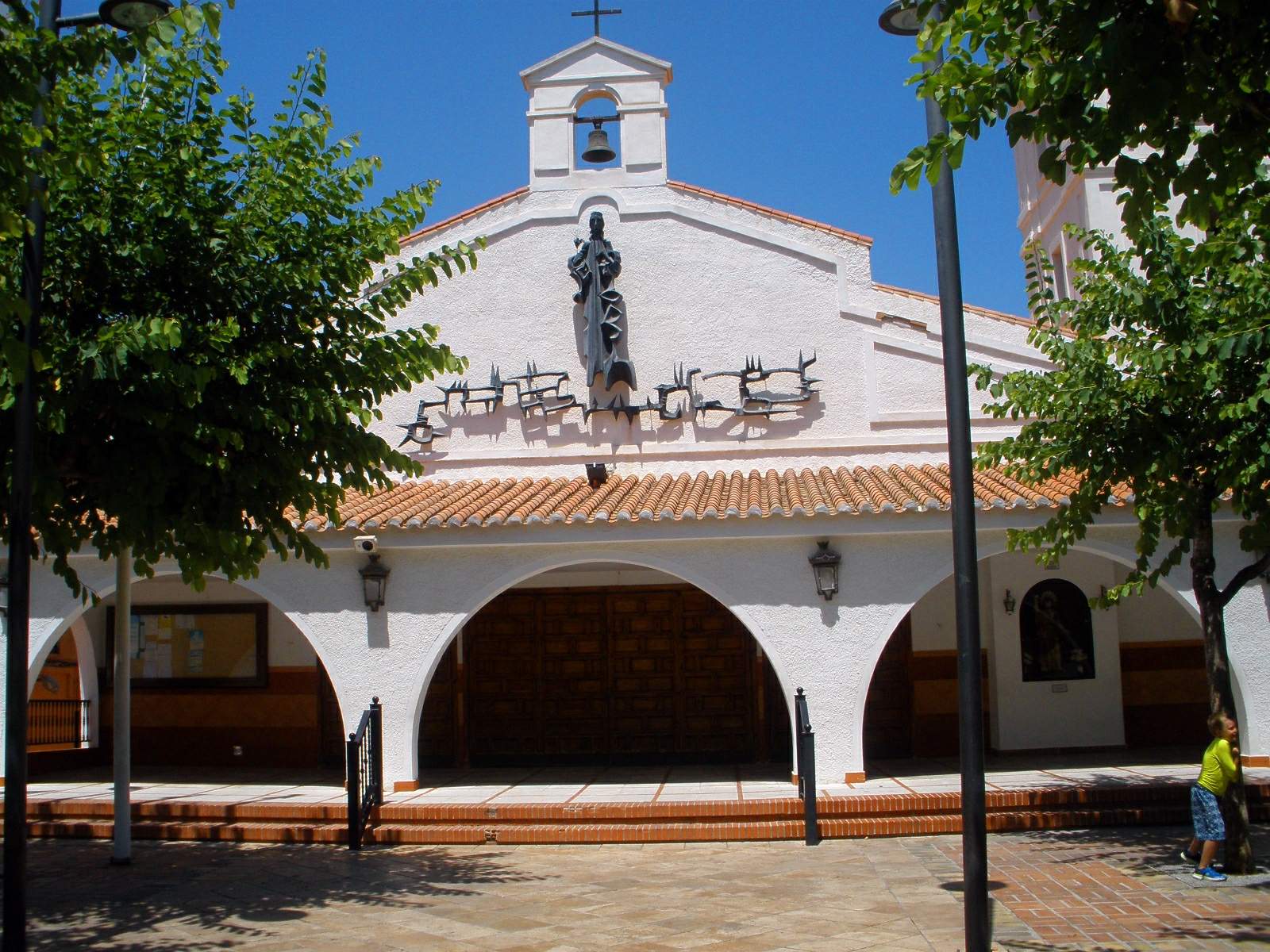
Iglesia de la Inmaculada Concepción is the parish church of Arroyo de la Miel, the most populated district of Benalmádena on the Costa del Sol. It sits at the heart of this part of town and serves as the main parish church for residents of Arroyo de la Miel-Benalmádena Costa. Where does the church's dedication come from? Devotion to the Immaculate Conception in Arroyo de la Miel goes back to Félix Solesio, the founder of the settlement. Holding a particular devotion to this Marian title, he built the first, small chapel here and established the Immaculate Conception as patroness of the settlement, alongside Saint John the Baptist, who remains the patron of Arroyo de la Miel itself to this day. The current, much larger church was built in the 1970s, replacing Solesio's original structure. What does the building look like? The architecture is distinctly modern — there are no Gothic towers or Baroque facades here, unlike the older churches found elsewhere in Andalusia. The building follows a single-nave floor plan, and one of its most notable features is the large glass windows on the left side, which flood the interior with natural light. It is a modest but functional example of religious architecture, typical of the Costa del Sol's postwar expansion. What is worth seeing inside? Behind the High Altar stands a stone decoration featuring images of both patrons of the parish: the Immaculate Conception and Saint John the Baptist. This is the visual centerpiece of the church, bringing together the settlement's two patronal traditions in a single composition. Attached to the main body of the church is also the Chapel of the Virgin of Sorrows, which formally forms part of the parish and serves as an additional space for prayer and Marian devotion. Why is it worth a visit while staying in Benalmádena? The church is not a historic landmark in the architectural sense, but it functions as an important local reference point and the spiritual center of Arroyo de la Miel. For visitors exploring this part of the Costa del Sol, it offers a glimpse of religious life in a modern Andalusian resort town — away from the historic old quarters, yet still carrying a living patronal tradition that traces back to the settlement's founder. Frequently Asked Questions Where exactly is the church located? In Arroyo de la Miel, the most populated part of the municipality of Benalmádena, in the area known as Arroyo de la Miel-Benalmádena Costa. Who is the church's patron? The Immaculate Conception of the Virgin Mary, with an image of Saint John the Baptist, patron of Arroyo de la Miel itself, placed alongside her behind the High Altar. When was the current building constructed? The present church dates from the 1970s and replaced an earlier, smaller chapel built by the settlement's founder, Félix Solesio. Is there anything attached to the church besides the main nave? Yes — the Chapel of the Virgin of Sorrows is attached to the building and forms an integral part of the parish.
-
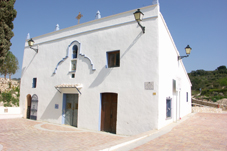
Ermita de la Font Santa de Teulada
Moraira
Ermita de la Font Santa de Teulada is a small pilgrimage chapel located about three kilometers from Teulada, right along the road toward Moraira on Spain's Costa Blanca. The site combines a working religious sanctuary with a centuries-old legend about "miraculous" water, making it a quieter, more spiritual stop than a typical sightseeing attraction. How do you get there? The chapel sits in a rural setting a short drive from Teulada's town center, directly on the route connecting the town with Moraira. Access is straightforward by car, and there's parking available nearby. It works well as a brief stop when traveling between Teulada and the coast, without needing to plan a separate excursion just to see it. What will you see there? The building is made up of three connected sections: the central chapel, a small room on the left housing the fountain itself, and a house that once belonged to the hermit who looked after the site. The structure in its current form largely dates from the mid-19th century, although the story behind the place goes back much further. According to local tradition, the sanctuary's origins trace back to the 15th century, when Saint Vincent Ferrer is said to have performed a miracle, making water spring from a rock at the request of his sister Constança, who lived in Teulada. Since then, the spring is said to flow at a constant, modest rate regardless of whether the year has been dry or rainy — a detail locals treat as part of the "holy water" legend. The chapel functions as an active sanctuary rather than a museum piece — thousands of people visit each year, and many pilgrims leave written notes of thanks or requests addressed to Saint Vincent Ferrer. Entry to the site is free, making it accessible to visitors regardless of faith or motivation for stopping by. Nearby, there's also a recreational area popular with local families for picnics and short outings, which makes for a good complement if you want to linger after seeing the chapel itself. When should you visit? The site can be visited year-round and isn't a seasonal attraction in the usual sense. That said, as an active place of worship, it tends to see more visitors around dates tied to the cult of Saint Vincent Ferrer and other local religious festivities. If you're after a quieter visit, weekdays outside the summer holiday season are your best bet. Given its modest size, a visit typically takes somewhere between fifteen and thirty minutes — this is a stop along the way rather than a full-day destination. Frequently Asked Questions Is there an entrance fee for the chapel? No, entry to the Ermita de la Font Santa grounds is free for all visitors. Where does the legend of the miraculous water come from? Tradition holds that Saint Vincent Ferrer made water spring from a rock in the 15th century at the request of his sister Constança — the spring still runs today, housed in a small room beside the main chapel. How far is the chapel from Teulada and Moraira? The sanctuary sits about three kilometers from Teulada's town center, directly on the road toward Moraira, making it an easy stop from either town. Is it worth combining with other nearby attractions? Yes — there's a recreational picnic area right next to the chapel, so you can easily turn a quick stop into a longer break outdoors.
-
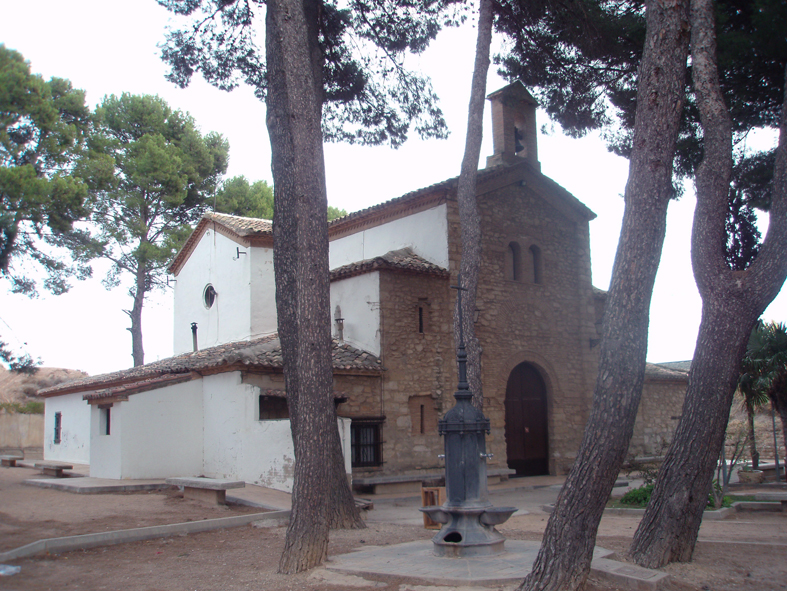
Ermita de Santa Cruz - El Cristo
Tudela
Ermita de Santa Cruz – El Cristo is a small pilgrimage chapel in Tudela, Navarre, standing roughly a kilometre north of the old town on the right bank of the Ebro river. Locals rarely use its formal name, calling it simply "El Cristo," and it remains one of the most significant devotional sites in the area. Where does the name Santa Cruz come from? The chapel is first documented in 1145, when the land was linked to a monastic community connected to a foundation dating back to the era of Alfonso the Battler, king of Aragon and Navarre. Local tradition holds that the site was chosen at the spot where a large cross was said to have appeared floating on the waters of the Ebro — which explains the name Santa Cruz, or Holy Cross. A confraternity known as the Ballesteros (crossbowmen) was later associated with the chapel, with roots possibly going back as far as the 13th century. Why is it also called "El Cristo"? The chapel's more common nickname comes from its role as the seat of a confraternity devoted to the cult of Christ. Over time this popular name overtook the formal one, and today residents of Tudela almost always refer to the building as El Cristo rather than Santa Cruz. How has the building changed over the centuries? The site's history has been anything but calm. The chapel was rebuilt in 1620, then destroyed by French troops in 1808 during the Peninsular War. It was reconstructed in 1815, only to burn down again in a fire in 1857. The building visitors see today dates from 1859 and stands on a new plot nearby, because the original location conflicted with the route planned for the Zaragoza–Alsasua railway line. As recently as 2025, Tudela's town council allocated around 11,000 euros toward restoring the chapel's roof, a sign that the building remains actively maintained by the local community. What is the El Cristo festival about? The tradition of pilgrimages to the hermitage dates back to 1734, credited to Juan de Mur, a military officer from Tudela who later became captain general of the Canary Islands. The main celebration falls on 3 May, preceded by a nine-day novena held at the chapel. A key part of the festivities is culeca, a traditional sweet bread eaten specifically for the occasion. The romería to El Cristo is one of the most recognisable fixtures on Tudela's annual calendar, drawing both townspeople and visitors from surrounding villages. What should visitors know before going? The chapel sits close to the city centre, right along the Ebro, making it an easy short walk from the old town. It combines a scenic riverside setting just outside the city walls with a history stretching back to the Middle Ages and a living folk tradition that has survived despite the building itself being destroyed and rebuilt more than once. Frequently Asked Questions How far is the hermitage from central Tudela? It stands about 1 km north of the old town, on the right bank of the Ebro, so it's reachable on foot. Why does the chapel have two names? The formal name, Santa Cruz, refers to the legend of a cross found in the river, while "El Cristo" comes from the confraternity devoted to Christ that was based there. When is the main festival held at the chapel? The romería and main celebrations take place on 3 May, preceded by a traditional novena during which the sweet bread culeca is eaten. Is the current building the original medieval structure? No — it was destroyed and rebuilt several times, including by French troops in 1808 and in a fire in 1857. The structure standing today dates from 1859, though devotion at this site goes back to the 12th century.
-
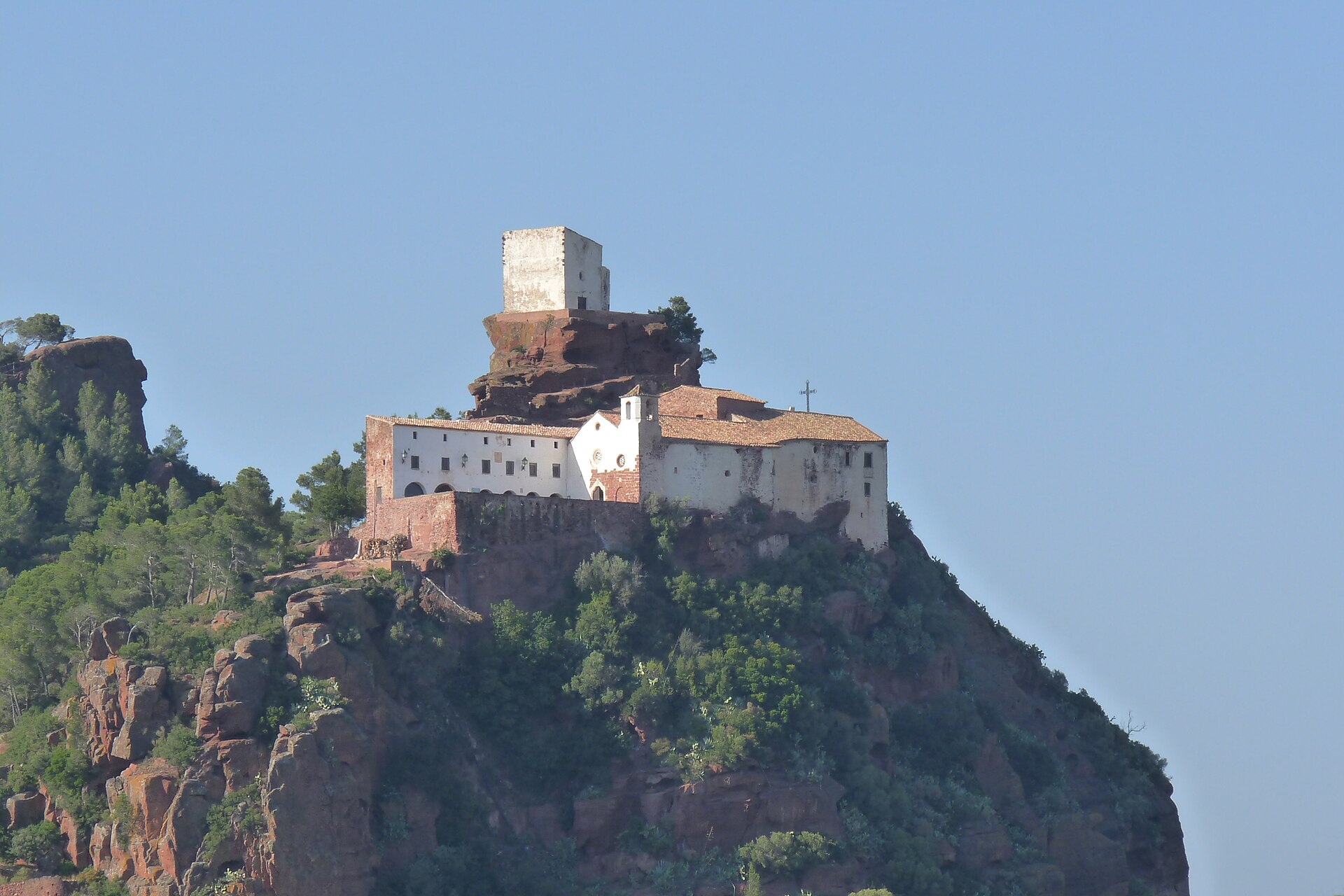
Mare de Déu de la Roca de Mont-roig
Mont-roig del Camp
Mare de Déu de la Roca is a 16th-century hermitage perched above Mont-roig del Camp, partly carved into the red sandstone of a hill 294 meters above sea level. It is one of the most recognizable landmarks of the Baix Camp area and one of the best viewpoints over the Costa Daurada coastline near Tarragona. How do you get there? The hermitage sits a few kilometers from the center of Mont-roig del Camp, along a road that climbs into the hills. Driving from the town takes only about ten to fifteen minutes, and there is a parking area on site. A well-used walking and cycling trail also leads through the hills, and many visitors combine the climb with a stop at the nearby Roca Foradada, a pierced rock formation visible from a distance. The route is not technically demanding, but bring water — the open terrain gets hot in summer. What will you see? The chapel has a single rectangular nave, partly hewn out of the natural rock, with a small blind bell tower on the facade. The current building dates from 1592, a date confirmed by a stone inscription bearing the name Giberga that survives on the wall. The sanctuary was rebuilt after French troops passed through in 1811, and the original wooden image of the Virgin of la Roca was destroyed in 1936 during the war. The earliest mention of the site of worship goes back to 1230, found in the will of Guillem de Tarragona, which included a bequest to the Mare de Déu de la Roca. The hermitage building itself is documented from 1299, though Iberian pottery fragments found on the site suggest it was inhabited even earlier, in antiquity. A legend recorded by Narcís Camós in the mid-17th century tells of a shepherd who found a wooden carving of the Virgin in the shade of a palm tree — the miraculous find is said to have taken place around 1153. The complex also includes the small chapel of Sant Ramon nearby. In 2022, the whole site was declared a Bé Cultural d'Interès Nacional (National Cultural Heritage Asset) in the Historic Monument category. The place was a favorite of painter Joan Miró, who was born in Mont-roig del Camp — the hermitage and the surrounding rock formations left a mark on his work. From the terrace in front of the chapel, the view stretches over the Camp de Tarragona plain, the coastline and the Mediterranean beyond. A bar, a restaurant and overnight accommodation are available on site, making it a comfortable base for longer walks in the area. When should you visit? Spring and autumn are the best seasons, with mild temperatures and trails that aren't baking in direct sun. In summer, an early morning visit helps you avoid the heat on the climb up. On September 8th, the feast of the Mare de Déu de la Roca, patroness of the municipality, is celebrated with religious ceremonies and local festivities that draw people from across the region. Frequently Asked Questions Is there an entrance fee for the hermitage? No, the chapel is free to visit, though opening hours can vary depending on the season and religious events. Can you walk there from Mont-roig del Camp? Yes, a marked hiking trail leads through the hills to the hermitage, popular with visitors who combine it with a stop at the nearby Roca Foradada. What is the Roca Foradada? It's a distinctive pierced rock formation near the hermitage, one of the landmarks of the Mont-roig del Camp landscape, often visited on the same outing. Is there anywhere to eat on site? Yes, the hermitage has a bar and restaurant, and it also offers overnight accommodation for visitors who want to stay longer.
-
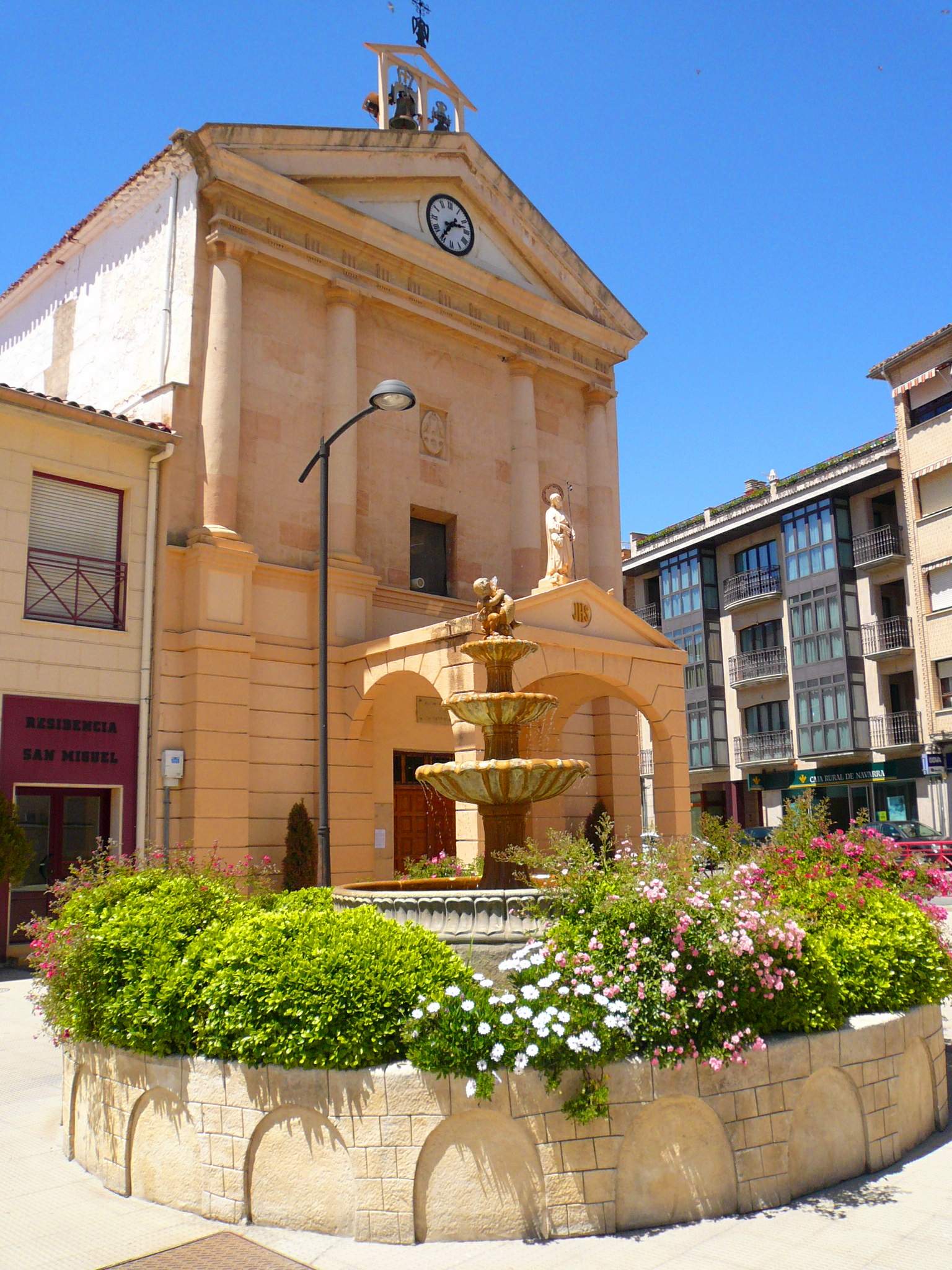
Basílica de San Miguel
Peralta / Azkoien
Basílica de San Miguel is a 17th-century church in Peralta (Navarre) that grew out of a former Capuchin convent and remains one of the town's most significant historic landmarks. What is the history behind the basilica? The date 1629, carved into the coat of arms on the main façade, marks the building's construction. The church originally belonged to a Capuchin convent established in Peralta. Over time it was raised to the rank of basilica and became the town's principal center of Marian devotion, linked to the image of the Virgen del Pero, patroness of Peralta. What does the interior look like? The basilica follows a Latin-cross plan with a wide, three-bay nave, a transept, and a straight-ended chancel. Barrel vaults with lunettes cover most of the space, except for the central bay of the transept, which is topped by an elliptical half-vault with radial ribbing and elaborate plasterwork — the single most decorative feature inside the church. At the west end, above the entrance, a raised choir sits on a lowered arch. It is enclosed by an ornate Baroque wrought-iron railing centered on a radiant sun motif bearing the letters AVM (Ave Virgo Maria), a clear nod to the church's Marian dedication. What artworks can visitors see? The spiritual centerpiece of the church is the altarpiece of the Virgen del Pero, dating from the early 18th century and attributed to workshops from Tudela. On the Epistle side stands the altarpiece of Santa Lucía, forming a set with the side altarpiece dedicated to San Miguel, the church's patron. Also notable is a larger-than-life crucifix dating from the 17th century, one of the oldest pieces preserved inside. How do you get to the basilica? Peralta sits in the Ribera Navarra region, in the Ebro river valley, close to towns such as Falces and Marcilla. The Basílica de San Miguel stands in the historic center of Peralta, within easy walking distance of anywhere in the old town. It works well as a starting point for exploring the town, since routes to other historic sites in Peralta branch out from around the basilica. When is the best time to visit? The interior is best appreciated during quieter daytime hours, when light filtering through the nave windows highlights the plasterwork in the transept. Try to visit outside Mass times so you can look closely at the altarpieces and architectural details without interruption. Summers in the Ribera Navarra region run hot, so spring and autumn are the most comfortable seasons for exploring both the town and the basilica. Frequently Asked Questions What was the basilica before it earned that title? It began as the church of a Capuchin convent in Peralta, built in 1629, and was only later elevated to the status of basilica. What architectural style does the church represent? It is a Baroque building on a Latin-cross plan, notable for its barrel vaults and the elliptical, plasterwork-decorated vault over the transept. What are the most important artworks inside? The early 18th-century altarpiece of the Virgen del Pero, linked to Tudela workshops, along with the altarpiece of Santa Lucía and a 17th-century crucifix. Is the basilica located in central Peralta? Yes, it stands in the historic center of the town and serves as a natural reference point for visiting Peralta's other landmarks.
Earn badges for the places you visit
Download NextOnTrip, discover new places and check off your trails.