About this place
The Iglesia rupestre de Santa María de Valverde is the largest of the rock-cut churches in the Valderredible valley in Cantabria, and the only one among them still used for regular religious worship.
Where is it and how do you get there?
The church stands in the village of Valverde, within the municipality of Valderredible, right beside the road connecting Quintanilla de las Torres (Palencia), near Aguilar de Campoo, with Polientes, the capital of Valderredible. The building sits on the right-hand side of this road, carved directly into the sandstone rock typical of the Ebro valley. Right next to it operates the Centro de Interpretación de la Arquitectura Rupestre, an interpretation centre run by the Cantabrian regional government, where visitors can learn about the history and construction techniques of rock-cut architecture before or after stepping inside the church itself.
What can you see inside?
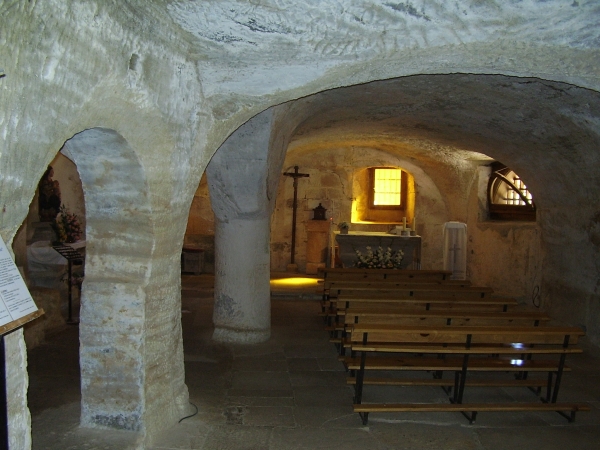
The interior stands out among the region's rock-cut churches for its scale and complexity. The building has three entrances, one of them Gothic, and its interior space is divided into two parallel naves by square pillars hewn directly from the solid rock. A late-Romanesque bell tower, added in the late twelfth century, was built onto the older core of the church, marking one of several later expansion phases the building went through over the centuries. The whole site was declared a Bien de Interés Cultural (a nationally protected cultural property) on 14 March 1985.
What is the history behind it?
The earliest written record of the church dates back to the year 978, when it was known as Santa Mª la Sotarraña. This makes it one of the oldest documented religious sites in the valley, where rock-cut churches, chapels and tombs were carved from the early Middle Ages onward, taking advantage of the soft sandstone as a natural building material. Santa María de Valverde stands apart from the rest: it is the only rock-cut church in the whole of Valderredible where regular services are still held today, unlike the valley's other surviving examples, which remain only as monuments without an active liturgical role.
When is the best time to visit?
Touring the Valderredible valley and its rock-cut churches works well in any season, but spring and early autumn offer the most comfortable conditions for walking between the different sites, with mild temperatures and the Ebro valley landscape at its most scenic. It is worth checking the interpretation centre's opening hours before visiting, since access to the church interior can depend on the centre's schedule or on the timing of religious services.
Frequently Asked Questions
Can you go inside the church on your own? Access to the interior depends on the opening hours of the neighbouring interpretation centre and on the schedule of religious services, so it is worth checking locally or with the municipal authorities beforehand.
How does this church differ from the other rock-cut churches in Valderredible? It is the largest of them and the only one still used for regular worship — the valley's other surviving rock-cut churches now function purely as historical monuments.
How do we know the church is so old? The oldest known written mention of the church, then referred to as Santa Mª la Sotarraña, dates from the year 978, though the bell tower and some architectural elements were added later, during the late Romanesque period.
What else is worth seeing nearby? Right beside the church stands the Centro de Interpretación de la Arquitectura Rupestre, which offers broader context on the valley's rock-cut architecture and makes a good starting point for visiting the other rock-cut churches in Valderredible.
Nearby places

Earn badges for the places you visit
Download NextOnTrip, discover new places and check off your trails.