About this place
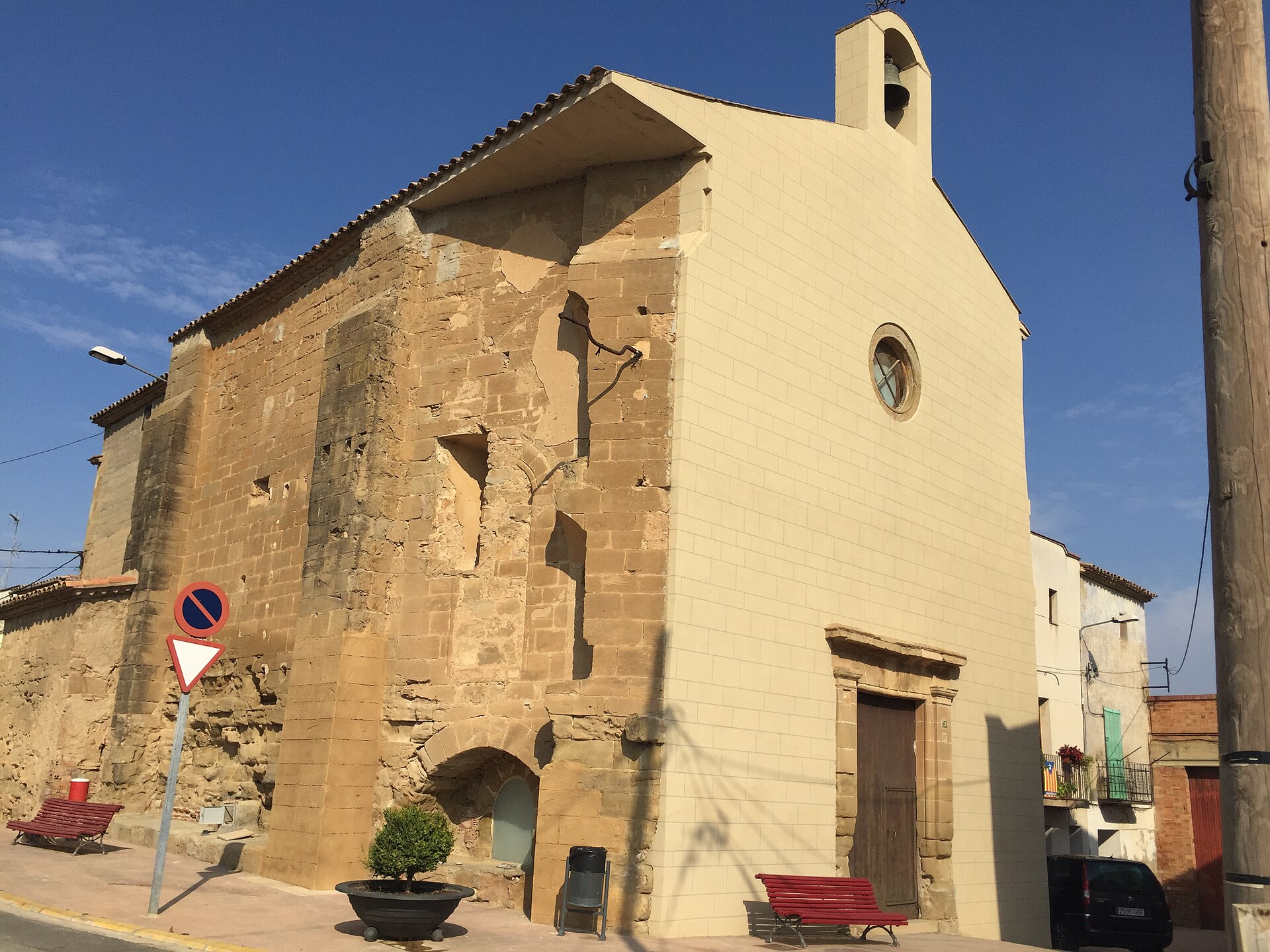
Mare de Déu del Merli is a Gothic church in Alguaire, a small town in the Segrià comarca of Lleida province, Catalonia, Spain. It is the patron shrine of the town, and its cult reaches back further than the settlement itself, making it one of the oldest and most recognizable places of worship in the area.
How do you get to Mare de Déu del Merli?
Alguaire sits in Segrià, a short drive from the city of Lleida in northeastern Spain. The church stands within the town itself, close to other landmarks that anchor local life — the parish church, the remains of the Sanjoanista (Knights Hospitaller) monastery, and the Sagrat Cor chapel. The easiest way in is by car from Lleida, a trip of well under half an hour; once in Alguaire, the town is compact enough to reach the church on foot from almost anywhere in the centre.
What will you actually see there?
The building carries a layered history of rebuilding. Its origins trace back to a Visigothic church that predates Alguaire's own founding. In 1264 the site was restored by the first prioress of the nearby convent, the Marquesa de Guàrdia, and the following year — once Sanjoanista nuns had settled at the castle — proper reconstruction of the church began, alongside a residence for the priests attached to it. Backed by several ecclesiastical institutions, the works were finished in 1278.
What stands today is Gothic in form: a single nave with a flat-ended chancel, to which two side chapels were added later, in the 18th century. That two-stage story — a medieval core plus early-modern additions — is visible in the architecture itself, and it is one of the reasons the building was listed as a Cultural Asset of Local Interest (BCIL) on 23 December 2010.
Why does this place matter locally?
Mare de Déu del Merli is patroness not only of Alguaire but of the wider Segrià region. The devotion tied to this Marian figure is among the oldest in the area, and the church has long served as an anchor for local identity — alongside the parish church and the traces of the Sanjoanista monastery, which archaeologists are still excavating, uncovering fresh details about the lives of the medieval women who lived there.
When is the best time to visit?
The standout date is September 8, the feast of the Trobades (the "Found Virgins"), when Alguaire holds its main celebrations in honour of the town's patroness. Every year an ofrena floral — a formal floral offering laid before the figure of Mare de Déu del Merli — draws in the whole local community. Visiting then means seeing the church in full festive context, not just walking through an empty historic building.
Outside that date, the church can be visited year-round. Its Gothic architecture and the visible layers of its building history don't depend on the calendar, and the quiet pace of a small town makes for an easy, uncrowded visit at any time of year.
Frequently asked questions
What is Mare de Déu del Merli? A Gothic church in Alguaire (Segrià, Lleida province) that serves as the patron shrine of both the town and the wider Segrià region, listed as a Cultural Asset of Local Interest.
How old is the building? Its roots go back to a Visigothic church that predates Alguaire's own founding. The current Gothic structure was built between 1265 and 1278, following a 1264 restoration led by the convent's first prioress.
When should you plan a visit? September 8, the feast day of the patroness, when the town holds its annual floral offering and other religious celebrations.
What makes the architecture noteworthy? The combination of a medieval core — a single nave with a flat chancel — and two chapels added in the 18th century, which together make the building a record of more than one historical period in a single structure.
Nearby places

Earn badges for the places you visit
Download NextOnTrip, discover new places and check off your trails.