About this place
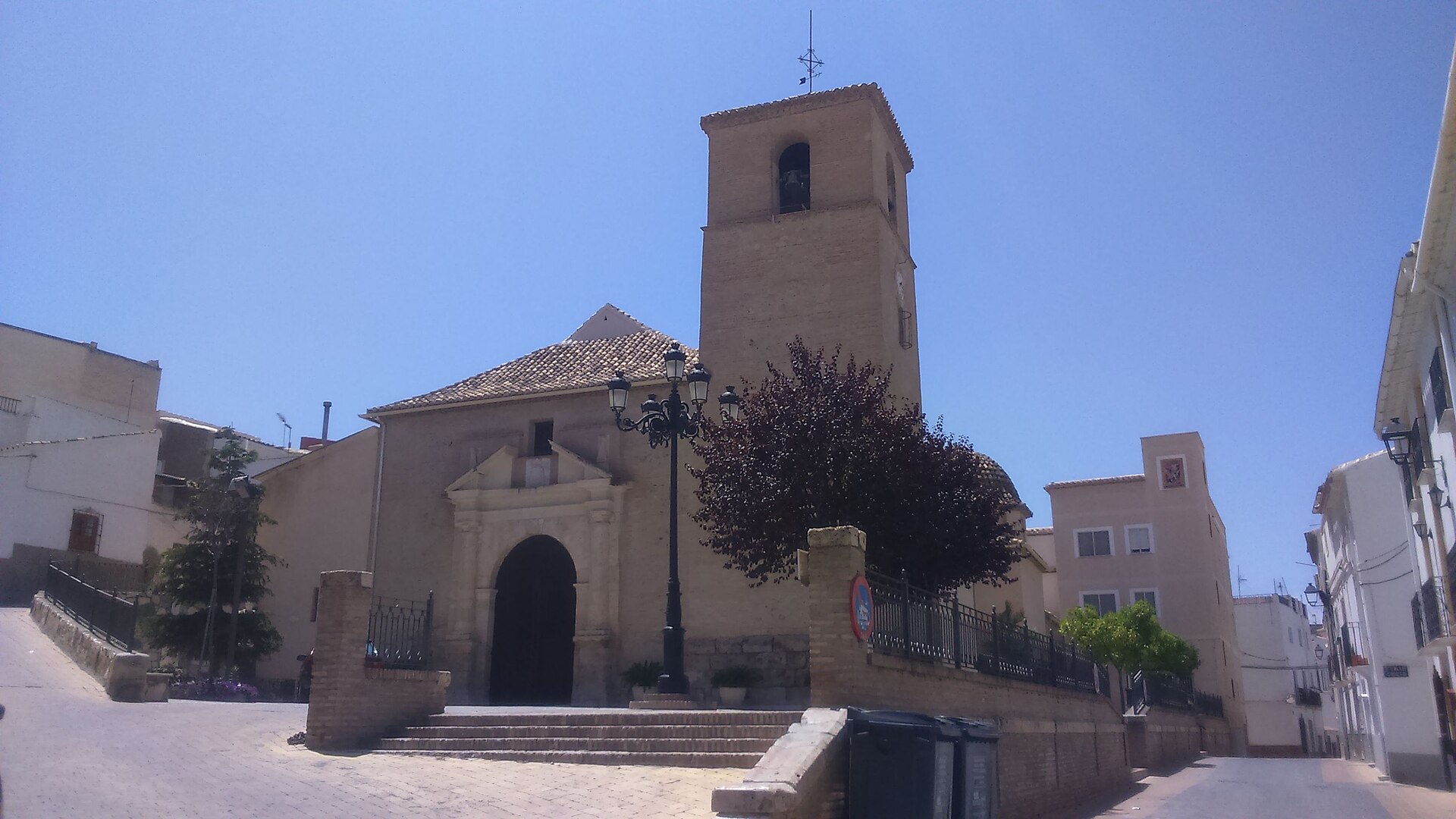
Iglesia de Santa María is the historic parish church of Tíjola, a small town in the Almanzora Valley in the province of Almería. The building carries several centuries of history and remains the main religious and cultural landmark for the community.
How do you get there?
Tíjola sits in the northeastern part of Almería province, in the Almanzora Valley, and the easiest way to reach it is by car, with decent road links to both Almería city and neighboring Murcia. The church stands right in the town center, so once you arrive in Tíjola it's a short walk from the main square. The building's coordinates are 37.344379, -2.438825, which makes GPS navigation straightforward.
What will you see inside?
The story of the church goes back to the 17th century. According to research by Father Tapia, the parish took its current shape between 1640 and 1650, although an earlier 16th-century parish church stood nearby, at what is now the Hermitage of San Cayetano. There's also a theory that the current building was raised on the site of an old Arab mosque — not an unusual pattern in this part of Andalusia, where Christian churches were frequently built over former Islamic places of worship after the Reconquista.
The church was originally designed as a single-nave temple. Over time, thanks to private patronage from local families, side chapels were added, creating the visual impression of side aisles from both outside and inside — even though structurally the building remained a single nave. Architecturally it's classified as Franciscan in style, with the plain, straight chancel typical of that order. Interestingly, beneath layers of whitewash, fragments of painted decoration survive — filigree patterns in red and black, characteristic of Franciscan churches.
The presbytery has a rectangular floor plan and a barrel-vaulted ceiling, slightly raised above the main body of the church, connecting to the nave through a wide triumphal arch — one of the building's most notable architectural features.
The church also carries a dramatic chapter from more recent history. At the end of the Spanish Civil War, from April to at least September 1939, Francoist troops used the church and its surrounding streets as a prisoner camp — officially holding up to a thousand detainees, though oral accounts suggest the real number may have been double that.
When should you visit?
The church can be visited year-round, though the most vivid time to see it is during local patron saint festivities and religious processions, when the building and its surroundings come to life. Keep in mind that as an active parish church, it may be closed outside mass hours — it's worth checking locally before your visit if you want to see the interior rather than just the façade.
Given its historical and architectural value, Iglesia de Santa María was declared a Bien de Interés Cultural (Asset of Cultural Interest) in the monument category, under Decree 14/2004 of January 20, 2004. This official recognition confirms the building's importance among the heritage sites of Almería province.
Frequently Asked Questions
How old is the church? The parish took its current form between 1640 and 1650, though an earlier 16th-century parish church already existed in Tíjola, on the site of today's Hermitage of San Cayetano.
Is the church a protected heritage site? Yes, it was declared a Bien de Interés Cultural in the monument category by a decree dated January 20, 2004.
What's the most notable feature inside? The presbytery, with its barrel vault and wide triumphal arch, along with surviving fragments of Franciscan-style painted decoration in red and black hidden under the whitewash.
Does the building have a connection to darker 20th-century history? Yes — in 1939, following the Spanish Civil War, the church and nearby streets were used by Francoist forces as a camp for prisoners.
Nearby places

Earn badges for the places you visit
Download NextOnTrip, discover new places and check off your trails.