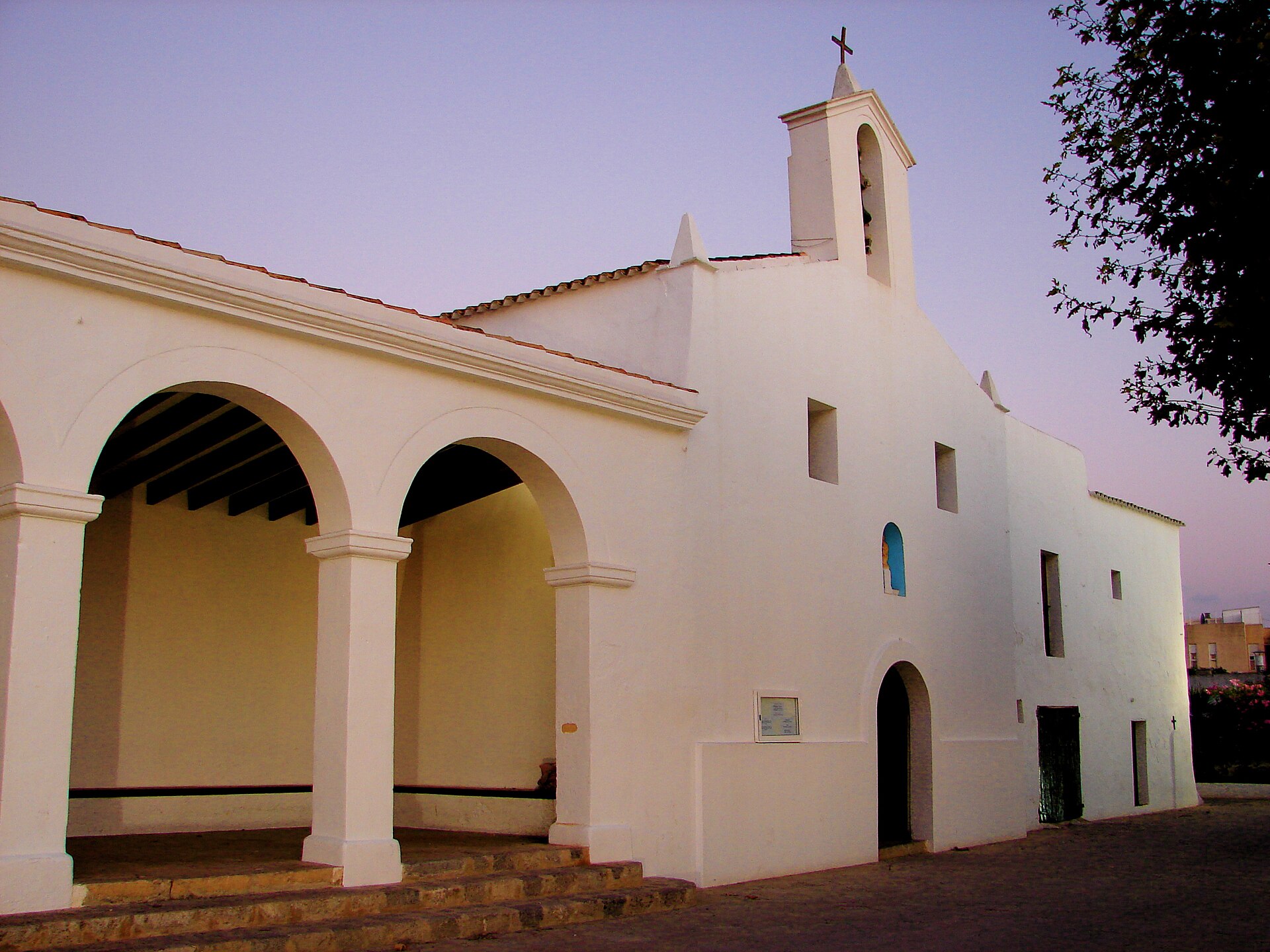
About this place
Església de la Mare de Déu de Jesús is a Gothic church in the village of Jesús, part of the municipality of Santa Eulària des Riu on Ibiza. It ranks among the oldest and most artistically significant places of worship on the island, best known for the monumental altarpiece it houses from the turn of the 15th and 16th centuries.
Where is it and how do you get there?
The church stands right in the centre of Jesús, a few kilometres from Ibiza Town along the road toward Santa Eulària des Riu. The village has effectively merged with the outskirts of the island's capital, so the visit slots naturally into a day spent exploring Ibiza Town — the drive or local bus ride takes only a matter of minutes. The building faces a small square at the heart of the village, making it an easy stop for anyone touring the eastern coast of the island.
What is the history behind it?
The earliest surviving record of the temple dates back to 1466, when the magistrates of the University (town council) of Ibiza petitioned the Archbishop of Tarragona for permission to hold Sunday mass in a church then being built on the plain known as Pla de Vila, dedicated to Our Lady of Jesús. Construction itself is placed at the end of the 15th century and is tied to the presence of Franciscan friars on the site, which explains both the Marian dedication and the richness of the main altar that followed. Over the centuries the building underwent repeated extensions and repairs, so its current form blends elements from several periods.
Notably, the church originally served not just the small settlement but also the maritime community living outside the walls of Ibiza's old town — beyond what is now Dalt Vila. As the settlement around the church grew, it eventually merged into what is today the village of Jesús, with the church now fully integrated into its urban fabric.
What should you look for inside?
The undisputed highlight is the monumental Gothic altarpiece dating from the late 15th to early 16th century, regarded as one of the most valuable works of religious art in the Balearic Islands. The piece measures roughly 7.5 metres in height and 5.10 metres in width, and is made up of 25 painted panels. It is attributed to the Valencian painters Rodrigo de Osona and his son Francisco, key figures of the Gothic painting school active in Valencia at the turn of that era. Given its scale and state of preservation, it is worth setting aside a few extra minutes just to take it in, even on a brief stop in Jesús.
When is the best time to visit?
The church remains an active parish, so the calmest time to look inside is outside mass hours — it's worth checking locally, since opening times for visitors can be limited. In summer, mornings help you avoid both the heat and the crowds heading to nearby beaches, while spring and autumn make for a relaxed, unhurried visit combined with a stroll through the rest of Jesús.
Frequently asked questions
Is there an entrance fee? No — this is an active place of worship rather than a museum, so visits are generally free, though visitors should be respectful, especially if a service is under way.
What is the single most important feature inside? The Gothic altarpiece made up of 25 panels, attributed to Rodrigo de Osona and his son Francisco — one of the most significant works of sacred painting on Ibiza.
How long does a visit take? The church itself can be seen in 15–20 minutes, but combined with a short walk around Jesús, a visit can easily stretch to an hour.
Can this be combined with other nearby sights? Yes — Jesús sits close to Ibiza Town, so the church fits naturally into a route linking the island's capital with the coast toward Santa Eulària des Riu.
Nearby places

Earn badges for the places you visit
Download NextOnTrip, discover new places and check off your trails.