About this place
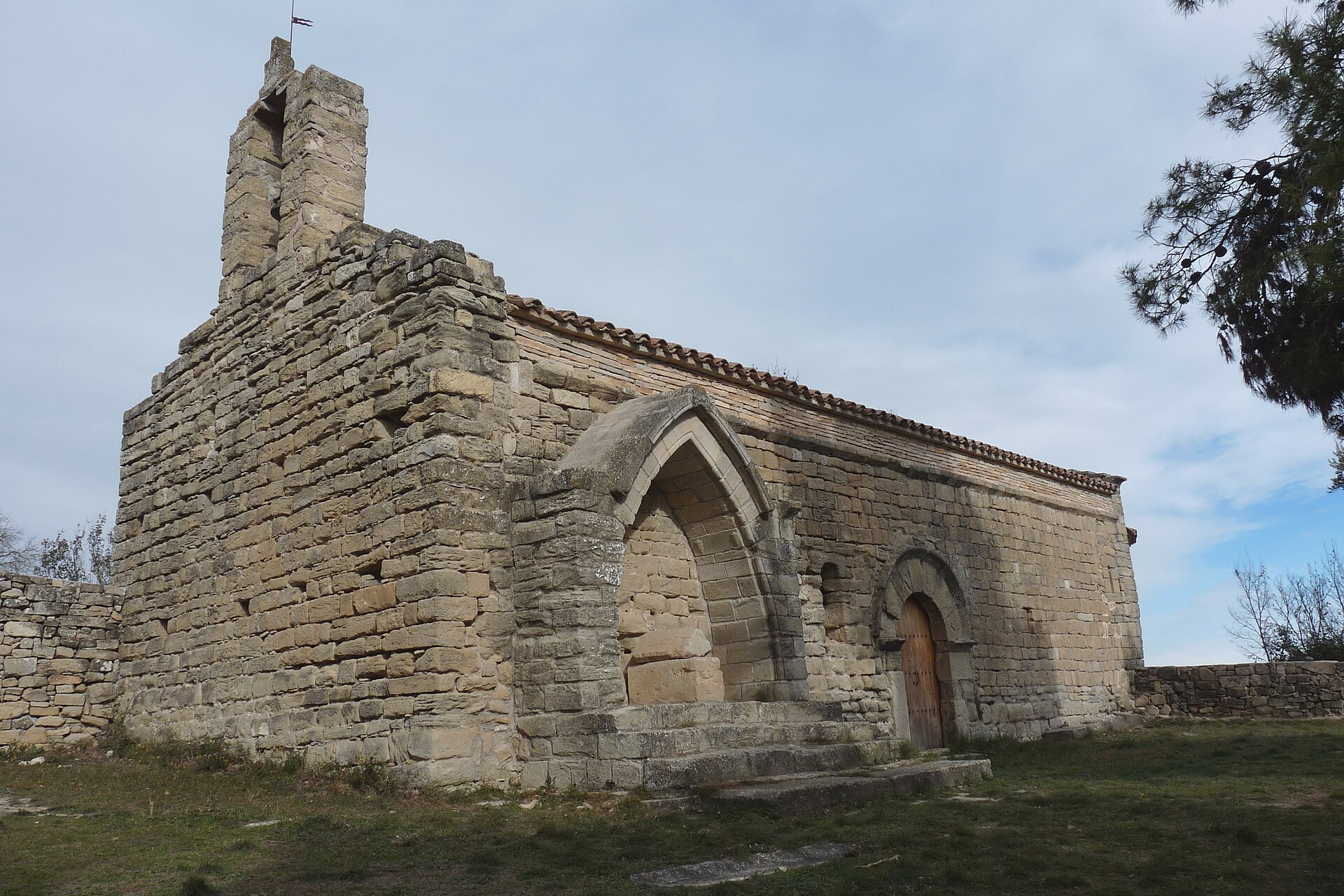
Sant Salvador is a small Romanesque church standing on the site of the abandoned settlement of Figuerola, within the municipality of les Piles in Conca de Barberà (Tarragona province). Although the village of Figuerola no longer exists, the church survives as a witness to its history and remains one of the more interesting monuments in the area.
What will you see on site?
The building is a single-nave church with a semicircular apse closing the presbytery. The interior is covered by a barrel vault resting on formeret arches running along the lateral walls — a construction typical of 12th-century Catalan Romanesque architecture. Externally the church has survived in good condition, though the interior is not freely accessible, so visitors should expect to admire the structure mainly from the outside.
The setting itself — among the fields and hills of Conca de Barberà, on the footprint of a vanished village — gives the place a quiet, rural character. It's a spot where silence and empty landscape say more than any information panel could.
What is the history behind it?
The parish of Figuerola is already documented in 1150 as a possession of the Canonry of Solsona. The oldest reference to the building itself dates back to 1195, when one of the castellans of Timor made a bequest to Sant Salvador. At the end of the 13th century, Figuerola passed by donation under the authority of the Santes Creus monastery and remained within its territorial domain until the 19th-century Mendizábal disentailment, which stripped the Catholic Church of much of its landed property across Spain.
Centuries of dependence on one of Catalonia's most important Cistercian monasteries explain why such a small rural church received such a solid stone construction — investing in sacred architecture on lands controlled by Santes Creus was standard practice at the time.
How do you get there?
The church sits just off the T-201 road, close to the village of les Piles. It's best reached by car as part of a wider tour of Conca de Barberà — the region rewards travelers who combine a stop at Sant Salvador with other villages and viewpoints along the same route.
When is the best time to visit?
Since the interior can't be entered, plan a daytime visit with good light to bring out the architectural details of the apse and walls. Spring and autumn are the most comfortable seasons for exploring Conca de Barberà, when temperatures are mild and the landscape around abandoned Figuerola is at its most striking.
Frequently Asked Questions
Can you go inside the church of Sant Salvador? No, the interior is not freely accessible to visitors. The building can be viewed from the outside, where its architecture — including the apse and walls — is visible and well preserved.
How old is the church? The building dates back to the 12th century and represents the Romanesque style typical of Catalan religious architecture of that period.
Does anyone still live in Figuerola? No, the settlement of Figuerola is now uninhabited. The church of Sant Salvador is the only lasting element left from the former village.
What is the connection between Sant Salvador and the Santes Creus monastery? From the end of the 13th century, Figuerola belonged to the Santes Creus monastery and remained under its territorial authority until the 19th-century Mendizábal disentailment.
Nearby places

Earn badges for the places you visit
Download NextOnTrip, discover new places and check off your trails.