About this place
Església de Sant Gallard is a small church in Sant Gallard, a hamlet that belongs administratively to the municipality of les Piles, in the Conca de Barberà region of Catalonia. Modest in size, the building carries centuries of history and is listed in Catalonia's Inventory of Architectural Heritage.
Where exactly is the church?
Sant Gallard is a small population nucleus attached to les Piles, sitting near the border between the Conca de Barberà and the Anoia comarca. It's less a village in the classic sense than a scatter of farmhouses gathered around the church and a nearby hill that once carried a castle. The coordinates are 41.512769, 1.391597, which makes it straightforward to find with GPS navigation — the surroundings are rural and served by local roads, so a car is the practical way to get there.
What will you see on site?
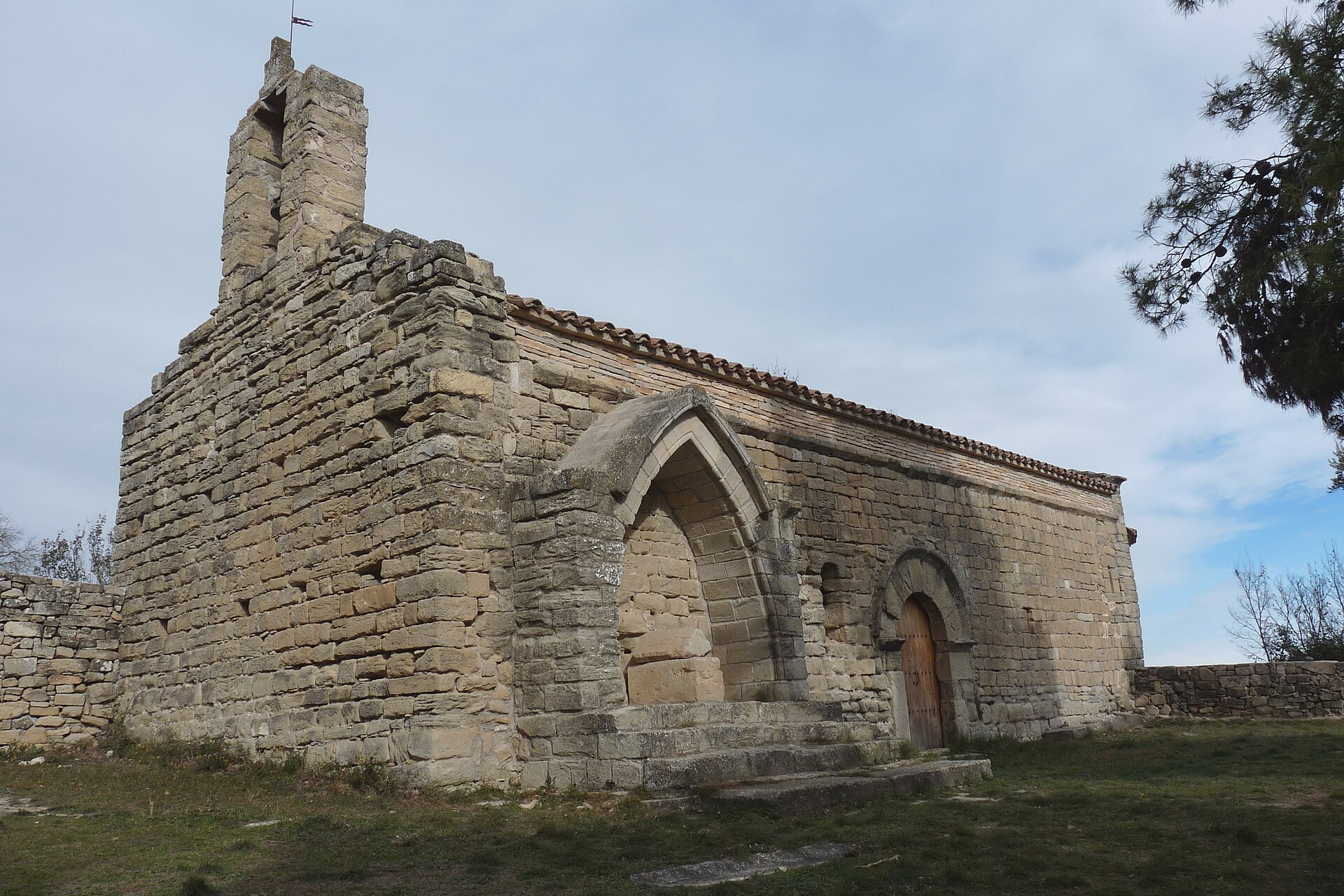
The church has a single nave on a rectangular plan, covered by a stone vault, with two side altars. The doorway draws the eye with its flat lintel formed from one large rectangular stone block and a small window set above it — this part of the façade likely dates from a later period than the original structure. At the top of the façade sits a stone bell gable (espadanya), a feature typical of rural churches in this part of Catalonia. The rest of the ensemble retains Romanesque characteristics, pointing to the building's medieval origins.
The church is dedicated to Sant Josep and to the Mare de Déu de la Llet (Our Lady of Milk), a patroness traditionally associated with the protection of mothers and children. It formally belongs to the parish of Santa Coloma de Queralt, even though it stands within the administrative boundaries of les Piles.
What's the history behind it?
The building has Romanesque roots and was originally linked to a castle that no longer stands — nothing of it remains today, but the place name and the church's position on a hillside still hint at that past. Until 1247, rights to the site belonged to the Queralt family, one of the more prominent noble houses of medieval Catalonia. That year, the rights passed to the monastery of Santes Creus, one of the region's major Cistercian monasteries, revealing Sant Gallard's ties to a wider network of ecclesiastical and feudal dependencies.
A second major shift came much later: until 1957 the church fell under the bishopric of Vic, after which it was transferred to the diocese of Tarragona, where it remains today. That administrative change reflects broader realignments of diocesan boundaries across Catalonia during the 20th century.
Today the building is registered in Catalonia's Inventory of Architectural Heritage, confirming its historical and architectural value, even though it remains a local site rarely visited by mass tourism.
When should you visit?
Sant Gallard suits travelers looking for quiet, lesser-known corners of the Conca de Barberà rather than crowded landmarks. Spring and autumn are the best times to come, when temperatures in the region are comfortable for exploring on foot or by bike and the surrounding landscape — typical Catalan hills and fields — looks its best. It's worth pairing a visit with a stop in les Piles itself and the neighboring villages of the Conca de Barberà, which share the same authentic, rural character.
Frequently Asked Questions
Is the church open to visitors? As a small rural church, access may be limited — it doesn't keep regular opening hours like a major cathedral. It's worth checking locally for current access before visiting.
How do you get to Sant Gallard? A car is the best option — the area is rural, and Sant Gallard lies on the outskirts of the les Piles municipality in the Conca de Barberà region. GPS coordinates are 41.512769, 1.391597.
What sets this church apart from others in the region? Its combination of Romanesque origins with a later-rebuilt façade, an unusual double dedication — to Sant Josep and the Mare de Déu de la Llet — and its historical link to a now-vanished castle.
Is it worth combining with other nearby sights? Yes, the Conca de Barberà region is known for its Cistercian monasteries — including Santes Creus, historically tied to this church — and for picturesque villages that make a natural extension of the visit.
Nearby places

Earn badges for the places you visit
Download NextOnTrip, discover new places and check off your trails.