About this place
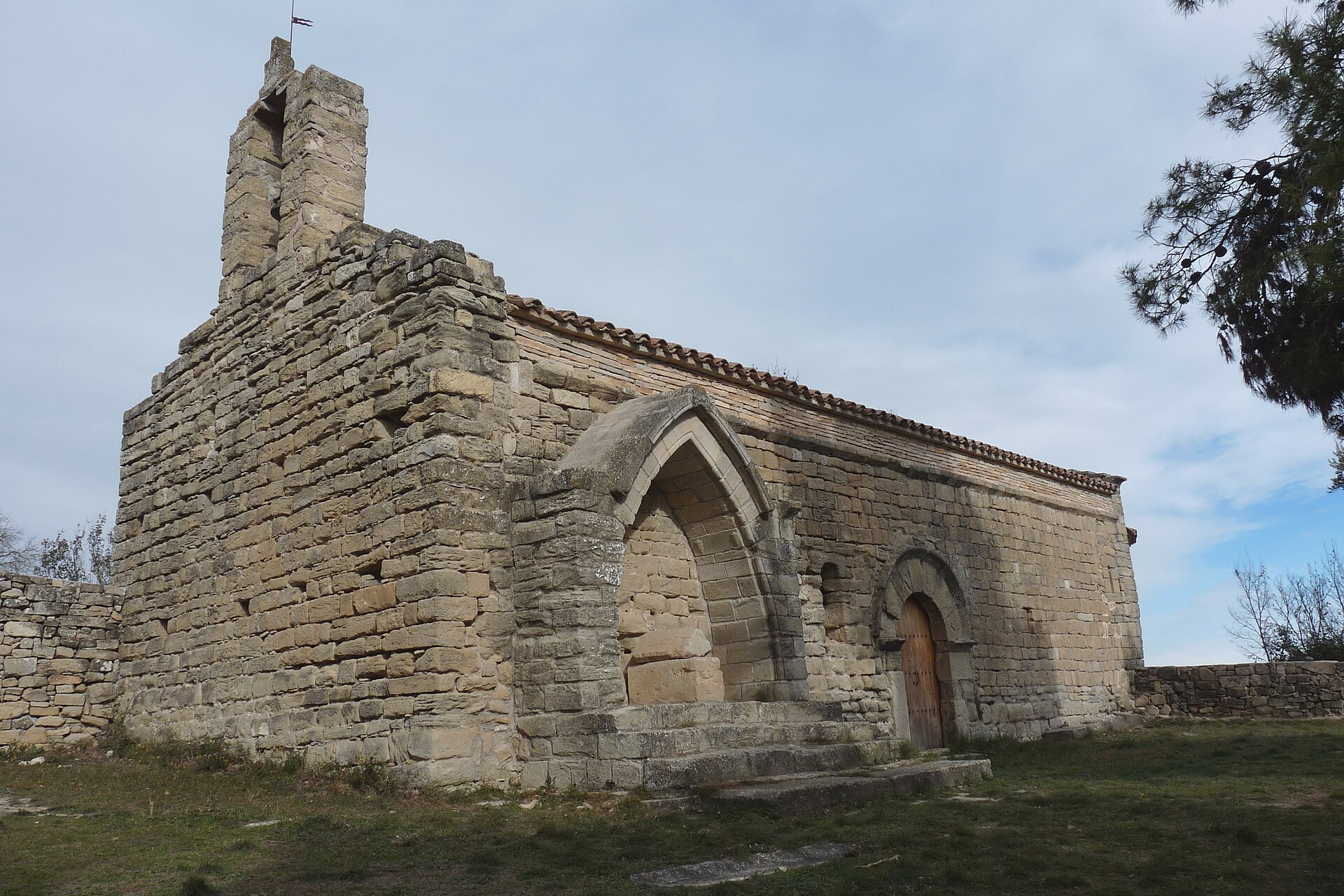
Santa Maria de Pontils is the parish church of the small village of Pontils, in the Conca de Barberà region of Catalonia. Modest in size, the building carries several centuries of local history — from a medieval Romanesque predecessor to a Renaissance-era rebuild carried out four hundred years ago.
What is the history behind the church?
The current building replaced an earlier Romanesque church, documented as far back as 1168. Work on the new temple began in 1598, and the church was consecrated just two years later, right at the turn of the 17th century. This kind of rebuilding was common across rural Catalonia at the time: older Romanesque churches were routinely replaced with larger, single-nave buildings flanked by side chapels.
A tangible trace of the noble family who held patronage over Pontils survives inside the church: the vault keystones bear the coat of arms of the Cervelló family, lords of the area. For local historians, this detail is a key reference point for dating and interpreting the building.
What will you see inside?
The interior consists of a single nave — tall but relatively short — with side chapels set between the buttresses. The whole space is covered by ribbed vaulting, a technique typical of late-Gothic and early-Renaissance parish churches in the region. The Cervelló arms, as noted, appear on the vault keystones.
The façade is topped by a small bell-gable with three openings for bells, a feature found on many rural Catalan churches and visible from a distance against the surrounding countryside. The main portal has a rounded arch with external moulding whose style deliberately echoes 14th-century forms — an archaising touch chosen by the builders working at the end of the 16th century.
How do you get to Pontils?
Pontils sits inland in the Conca de Barberà, in the province of Tarragona, surrounded by the hills and fields typical of the region. The village is best reached by car, with local roads connecting it to neighbouring towns. The church stands at the centre of the village and serves as a natural landmark for visitors.
When is the best time to visit?
Spring and autumn are the most comfortable seasons, when inland temperatures are mild and the hills of the Conca de Barberà look their best. Summers can get hot, while winter brings a quiet, largely tourist-free atmosphere that some visitors actually prefer.
Frequently Asked Questions
Can you go inside the church? Access depends on the parish's opening hours — in small Catalan villages, churches are typically open during Mass or by prior arrangement with the local parish.
How does the current building differ from the original church? The original church was Romanesque and is documented from 1168 onward. The present building is the result of a complete rebuild carried out around 1598–1600.
Why does the vault display the Cervelló coat of arms? The Cervelló family held feudal lordship over Pontils when the new church was built, so their arms were placed on the vault keystones as a mark of their patronage.
Are there other notable churches nearby? The Conca de Barberà region has several similar rural churches from the same period, including one in nearby Santa Perpètua de Gaià, also within the municipality of Pontils.
Nearby places

Earn badges for the places you visit
Download NextOnTrip, discover new places and check off your trails.