About this place
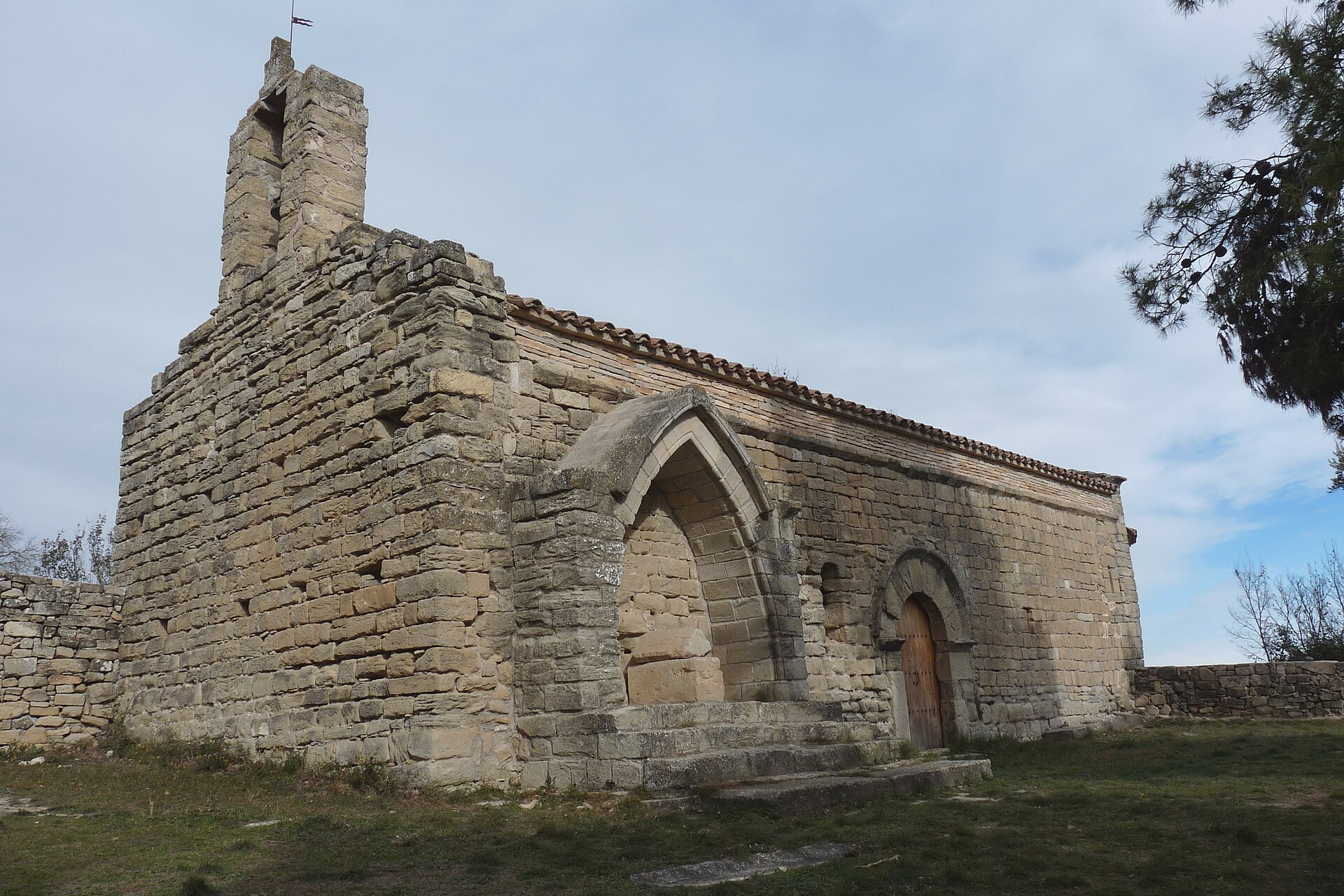
Església de Selmella, also known as Sant Llorenç de Selmella, is an abandoned medieval church standing on a hilltop above el Pont d'Armentera, in the Alt Camp region of Catalonia. It is one of the few surviving remnants of the depopulated settlement of Selmella and is listed as a cultural asset of local interest.
Where exactly is it?
The building sits north of the town centre of el Pont d'Armentera, on top of the hill that shares its name with the old settlement. A short distance away lie the ruins of a medieval frontier castle from the era of the Hispanic March, a fortification built around the turn of the 10th and 11th centuries when this area marked the border between Christian and Muslim territories on the Iberian Peninsula. Together, the church and the castle form a compact but striking historical site, reachable on foot along an old track leading up from the valley.
What will you see there?
The most intact part of the original structure is the entrance doorway: a round arch built with large stone voussoirs that has survived remarkably well over the centuries. The interior vault is partly collapsed, which actually makes the medieval construction technique easier to observe. The architectural details show a clear transition between styles — Romanesque elements sit alongside early Gothic features, including pointed arches. Overall, the building is dated to the 13th century and classified as Romanesque with later Gothic additions.
The church's ownership history is almost as notable as its architecture. It once belonged to the parish of Santa Maria del Querol. In December 2008, the Archdiocese of Tarragona formally decreed its desacralization, and ownership passed to the municipality of El Pont d'Armentera. The building no longer serves a religious function today; instead, it stands as a piece of local heritage and a destination for those exploring the area on foot.
How do you get there?
El Pont d'Armentera itself is the best starting point — a small town in Alt Camp well connected by local roads to Valls and Tarragona. From the village, an old walking path, known locally as the "camí vell de Selmella," climbs toward the abandoned settlement and the hilltop church. The walk is short but has the character of a countryside hike, so sturdy footwear is worth bringing, especially after rain, when the trail can turn muddy.
When is the best time to visit?
Since the route offers little shade or shelter, spring and autumn are the most comfortable seasons to visit, with mild temperatures throughout the walk. In summer, an early morning visit helps avoid the heat on the exposed hillside. The site is accessible year-round, though heavy rain can make the approach path more difficult.
Why is this place worth a visit?
Església de Selmella offers a rare chance to see, in one small area, traces of two distinct historical periods: early medieval frontier defences from the Reconquista era and a church architecture that bridges Romanesque and Gothic styles. For visitors interested in Catalan history and countryside walking, it is a rewarding, uncrowded stop well off the main tourist routes.
Frequently asked questions
Is the church still used for religious services? No. Since December 2008, the building has been formally desacralized by decree of the Archdiocese of Tarragona, and it is now owned by the municipality of El Pont d'Armentera.
Are there other historic sites nearby? Yes. A short distance from the church stand the ruins of a medieval frontier castle from the Hispanic March period, dated to around the turn of the 10th and 11th centuries.
How long does the walk to the church take? The route follows an old footpath from El Pont d'Armentera and is a short but somewhat demanding uphill walk, requiring a reasonable level of fitness.
Is there an entrance fee? No. The site is an open historical ruin with no ticketing infrastructure, and access is free, as is typical for similar heritage sites in the region.
Nearby places

Earn badges for the places you visit
Download NextOnTrip, discover new places and check off your trails.