About this place
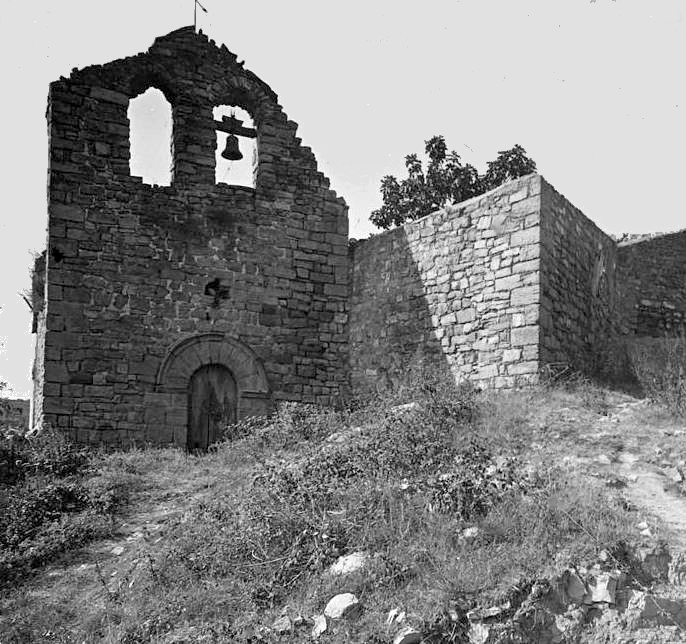
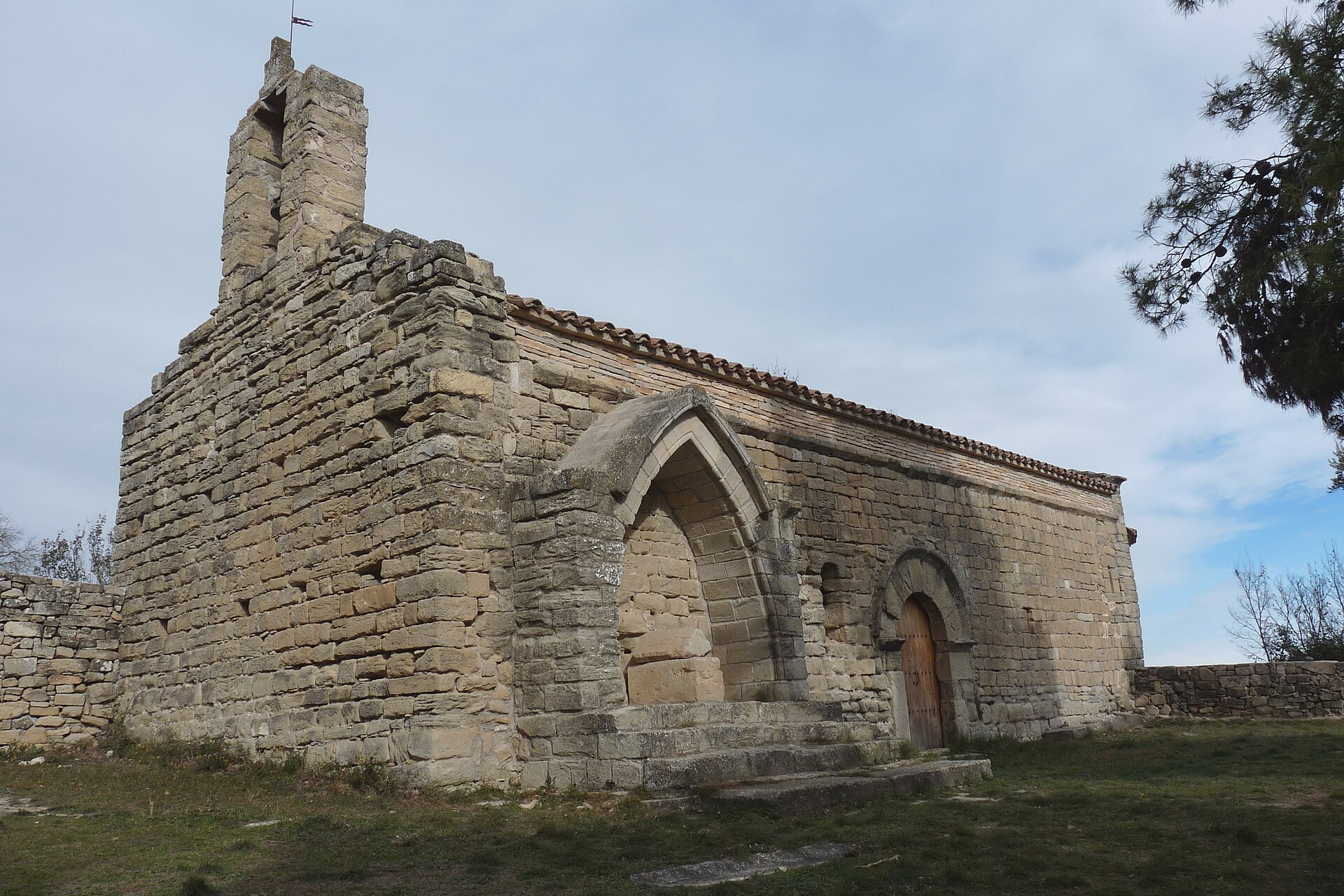
Sant Jaume d'Almenara is a ruined Romanesque church standing in the countryside of Santa Coloma de Queralt, a small town in the Conca de Barberà region of Tarragona province, Catalonia. The remains sit on the eastern edge of the municipality, close to the old Almenara farmstead, at an elevation of around 803 metres.
Where exactly are the ruins?
The church stands a short distance outside the town centre, reached by a local access road that climbs into the hills surrounding Santa Coloma de Queralt. A small parking area near the site lets visitors cover the last stretch on foot. The ruins are open and free to visit at any time.
What is the history behind the church?
Built in the Romanesque style, the church shows at least three distinct construction phases, spanning roughly the 11th to the early 13th century. Its name comes from the nearby Almenara castle, first documented in 1185. During the 12th century, the Almenara estate came under the control of the Queralt family, who also ruled over Santa Coloma de Queralt. The church functioned as a dependency of the main parish in Santa Coloma: wills from the late 13th century record bequests made to it, and throughout the 14th century a succession of lay custodians looked after the building. Ecclesiastically, the parish of Santa Coloma de Queralt — and Sant Jaume with it — belonged to the Diocese of Vic until 1957, when it passed to the Archdiocese of Tarragona.
What remains of the original building?
The church has a roughly rectangular floor plan, the result of successive rebuilding rather than an original design. Inside, a single nave leads to a flat-ended chancel that was originally roofed with a barrel vault. The entrance, set into the south wall, is framed by a semicircular arch. Today only the nave walls still stand — the roof has entirely disappeared, and vegetation has taken over the interior. The site carries no formal heritage protection status, and stands as an abandoned but accessible relic of the area's medieval past.
Is the church still used for worship?
No. Sant Jaume d'Almenara has been out of religious use for a long time; there are no services held here, and the site is visited purely as a historical ruin.
How can visitors get there?
The easiest starting point is Santa Coloma de Queralt itself, from where a local road leads towards the old Almenara farmstead. A small parking spot near the ruins means the final approach can be done on foot in just a few minutes.
Frequently Asked Questions
What is Sant Jaume d'Almenara? It is the ruin of a medieval Romanesque church located in the municipality of Santa Coloma de Queralt, in Tarragona province.
Is this connected to the town of Almenara in Castellón? No. The name refers to a local castle and farmstead called Almenara in the Conca de Barberà area, unrelated to the town of Almenara in Castellón province, hundreds of kilometres to the south.
Can visitors walk around the ruins? Yes, the site is freely accessible, although the building is roofless and abandoned, so care should be taken when exploring.
How old is the building? It dates to the Romanesque period, with masonry showing at least three separate building phases between the 11th and early 13th centuries.
Nearby places

Earn badges for the places you visit
Download NextOnTrip, discover new places and check off your trails.