About this place
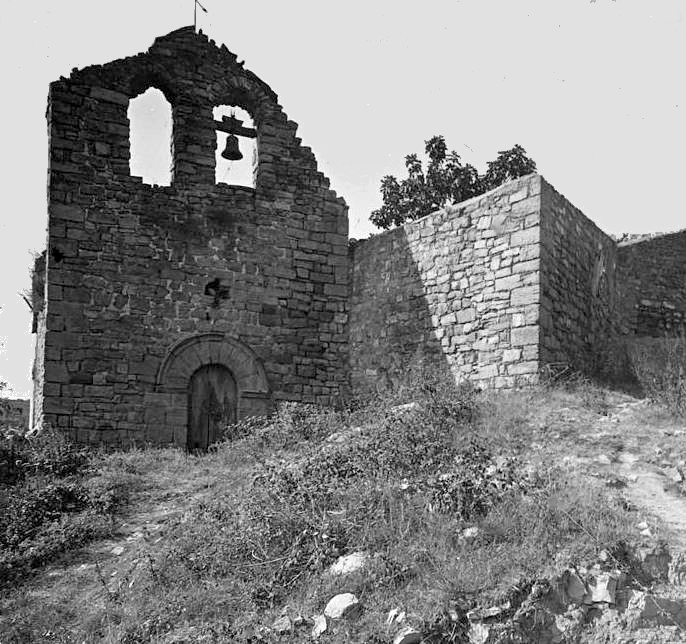
Sant Pere de la Goda is a ruined Romanesque church in the municipality of Argençola, in the Anoia comarca of Barcelona province, Catalonia. It stands beside a track that branches off the road linking Igualada and Santa Coloma de Queralt, near its fifteenth kilometre, inside what was once the hamlet of la Goda — a settlement abandoned long ago.
What is the history behind the church?
Records place a parish here as early as the 11th and 12th centuries, although the structure still standing today was largely built in the 13th century. The church once belonged to the lands controlled from the castle of la Goda, a fortification of which no visible trace survives above ground. When the surrounding hamlet was abandoned, the church lost its role and slowly fell into disrepair; the foundations and broken walls of the former houses are still scattered around it, overtaken by scrub and undergrowth.
What does the building look like today?
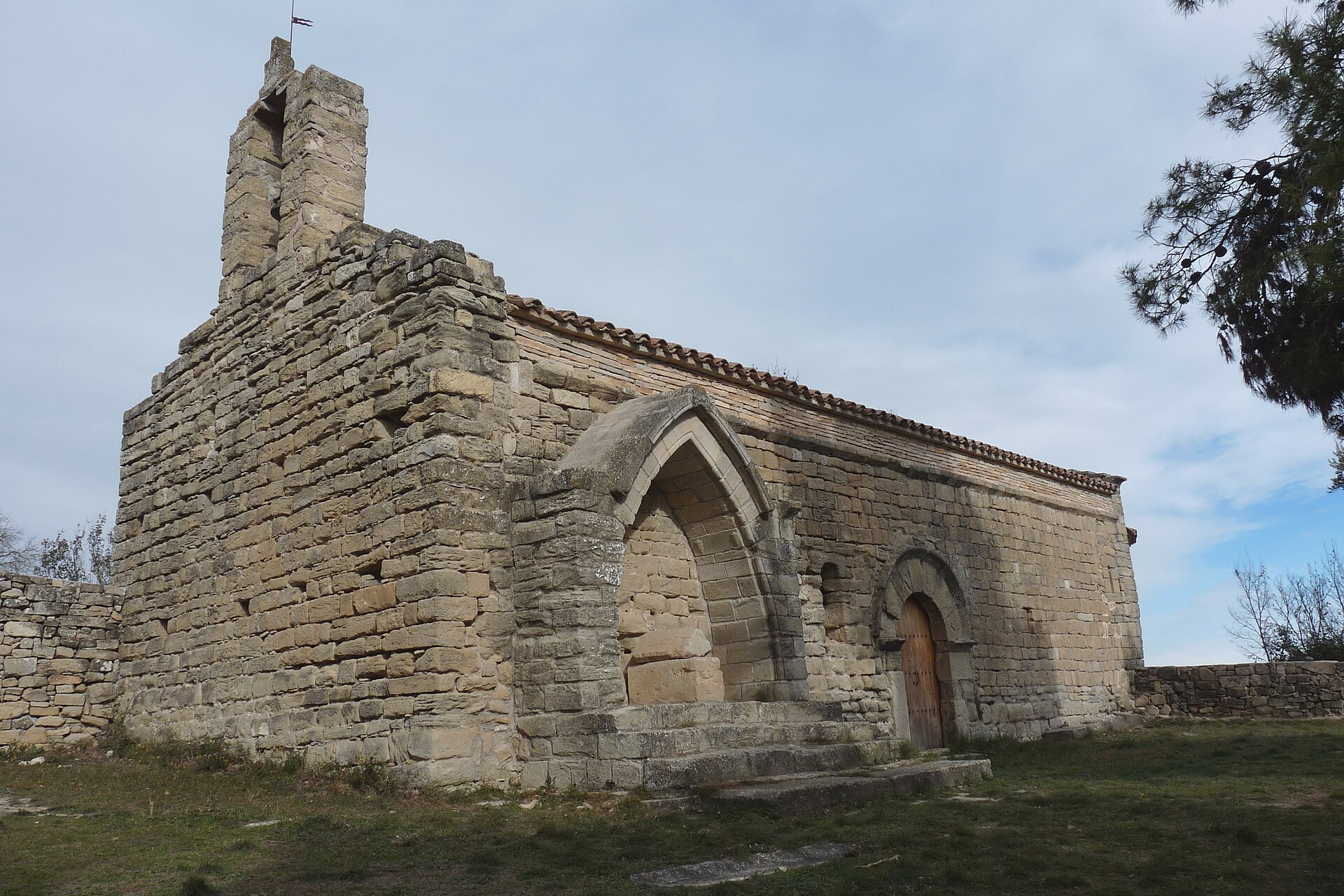
The church consists of a single nave without an apse, roofed with a pointed barrel vault. At the end of the nave, a double-splayed window originally faced a house that stood right against the chapel — that house is now a ruin as well. The main doorway is formed by a round arch built from cut voussoirs, framed on its outer edge by an extra archivolt. Above the façade rises a restored bell-gable with two openings for bells, one of the few parts of the building that has kept a clearly readable shape.
How do you get there?
Access follows a path leaving the Igualada–Santa Coloma de Queralt road near its fifteenth kilometre marker. There is no paved approach and no visitor facilities; the final stretch has to be covered on foot or by mountain bike, in the same way as the hiking and biking routes that already cross this stretch of countryside around Argençola. The site sits at coordinates 41.56234 N, 1.45113 E, and visitors should expect overgrown ground and an unmarked, informal approach.
What else is worth seeing nearby?
Argençola municipality holds several other rural medieval churches scattered across small, partly deserted settlements, a pattern that is common in this part of inland Catalonia. The landscape here is one of low rolling hills and shallow valleys, where scattered ruined chapels and wall remains are often the clearest surviving evidence of medieval rural settlement.
Frequently Asked Questions
Can you drive directly to the church? No. The last stretch has to be walked or cycled along a path off the Igualada–Santa Coloma de Queralt road.
Is the church still used for worship? No, it stands abandoned inside the deserted hamlet of la Goda and has no active religious use.
How old is the building? A parish is documented here from the 11th and 12th centuries, but the surviving structure dates mostly from the 13th century.
What has survived in the best condition? The restored double bell-gable and the round-arched entrance portal with its extra archivolt are the most recognisable surviving features.
Nearby places

Earn badges for the places you visit
Download NextOnTrip, discover new places and check off your trails.