About this place
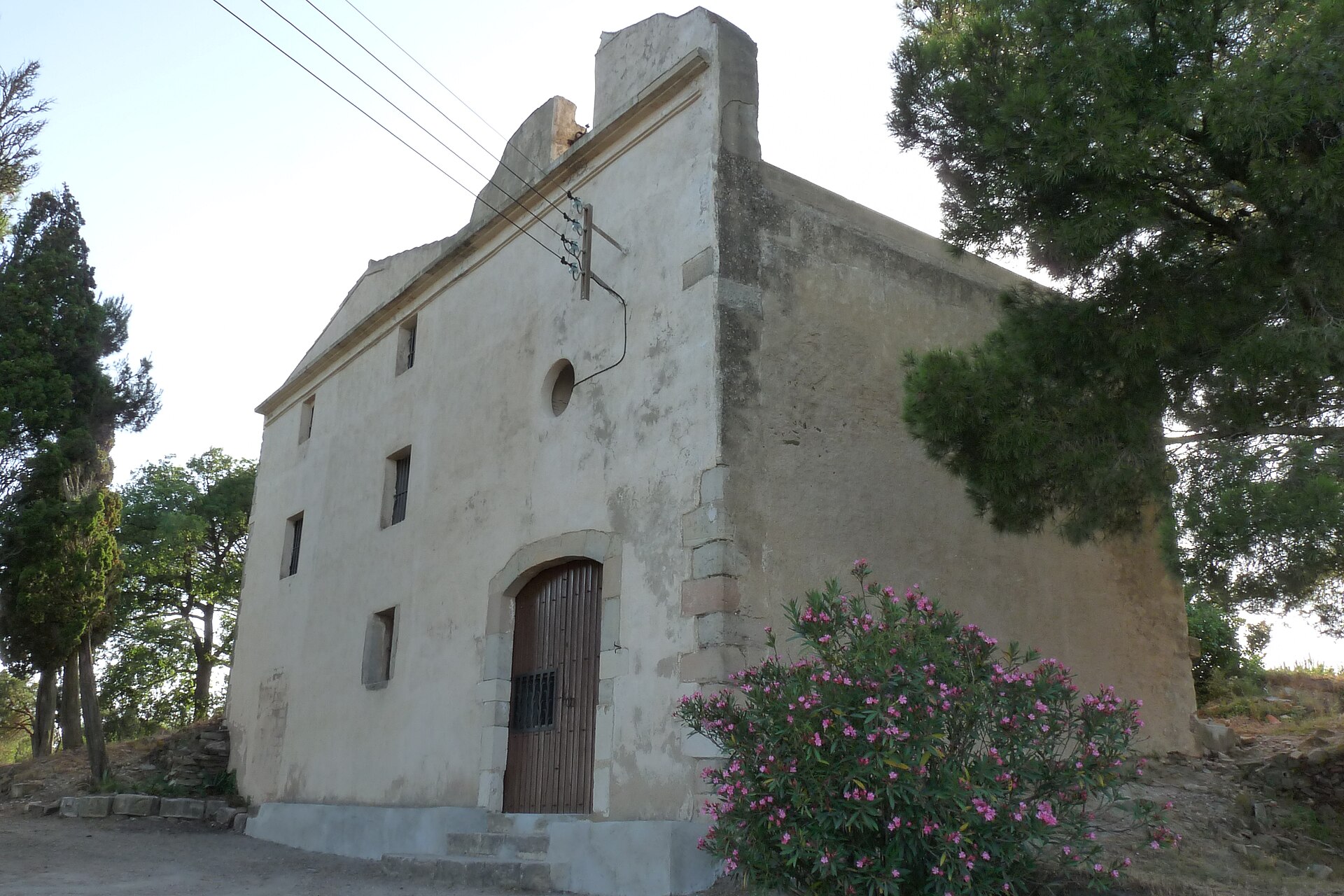
Sant Pere del Puig is a hilltop hermitage overlooking the town of la Selva del Camp, in the Baix Camp region of Catalonia. Perched at roughly 500 metres above sea level, it is one of the most recognisable viewpoints over the whole Camp de Tarragona plain and a favourite short hike from the town centre.
Where is it and how do you get there?
The hermitage sits on one of the first hills of the Puig d'en Cama massif, rising above the rooftops of la Selva del Camp. A signposted footpath climbs from the town centre to the summit in under an hour; the walk needs no special equipment, though the final stretch is noticeably steep. For anyone looking for a short but rewarding walk in Baix Camp, this is a natural choice — the view from the top takes in the entire Camp de Tarragona plain, and on a clear day it reaches as far as the coastline.
What will you see there?
The building standing on the summit today is actually the third church raised on this spot. The first, a Romanesque chapel, was built in the 12th century on top of older Roman and Saracen remains — only fragments of its apse and a handful of stone blocks survive. In 1588 the site was rebuilt in Renaissance style by Pere Blai, a noted architect of the period. What followed was a turbulent chapter: in 1811 French troops fortified the hermitage, and in 1837, during the First Carlist War, it was destroyed outright in a clash between liberals and the Carlist forces of Llarg de Copons. Reconstruction, on a more modest scale than before, ran from 1861 to 1877, and the building needed further repairs in 1952 after damage sustained during the Spanish Civil War.
Today's hermitage has a rectangular floor plan and is covered by a flat brick vault. Both the façades and the interior are whitewashed, giving it the plain, austere look typical of rural Catalan hermitages. Sant Pere is also the name of one of the hamlets that make up the municipality of la Selva del Camp, alongside the main town itself and Paretdelgada — so the name refers both to the hilltop chapel and to the small cluster of dwellings at its foot.
When should you visit?
Spring and autumn are the best seasons to climb up, with mild temperatures and the clearest views. In summer, an early-morning start is worth planning for, since the final stretch of the path is exposed with little shade. The spot is popular with local families for Sunday outings, so weekends tend to be a little busier than weekdays.
Who is this for?
Sant Pere del Puig suits anyone after a short but rewarding viewpoint close to Tarragona, as well as visitors interested in religious architecture — three successive churches on the same site, despite repeated destruction, make for an unusual case of architectural continuity. It also works well for families with children, provided the walk is taken at an easy pace.
Frequently asked questions
Is the climb up the hill difficult? The route is moderate — most of it is a gentle ascent, with only the last section before the hermitage becoming steeper. It usually takes under an hour one way.
Can you go inside the church? The interior is sometimes open during local festivities and services organised by the la Selva del Camp parish; outside those occasions, access may be limited.
Why does the building look so plain architecturally? Its current form dates from the rebuilding that followed the destruction of the Carlist War in 1837 — the new church was raised on a smaller scale than its Renaissance predecessor.
What can you see from the top? The viewpoint by the hermitage offers a panorama over the entire Camp de Tarragona plain, and on haze-free days the Costa Daurada coastline is visible in the distance.
Nearby places

Earn badges for the places you visit
Download NextOnTrip, discover new places and check off your trails.