- Sacred Monuments
- Religious monuments
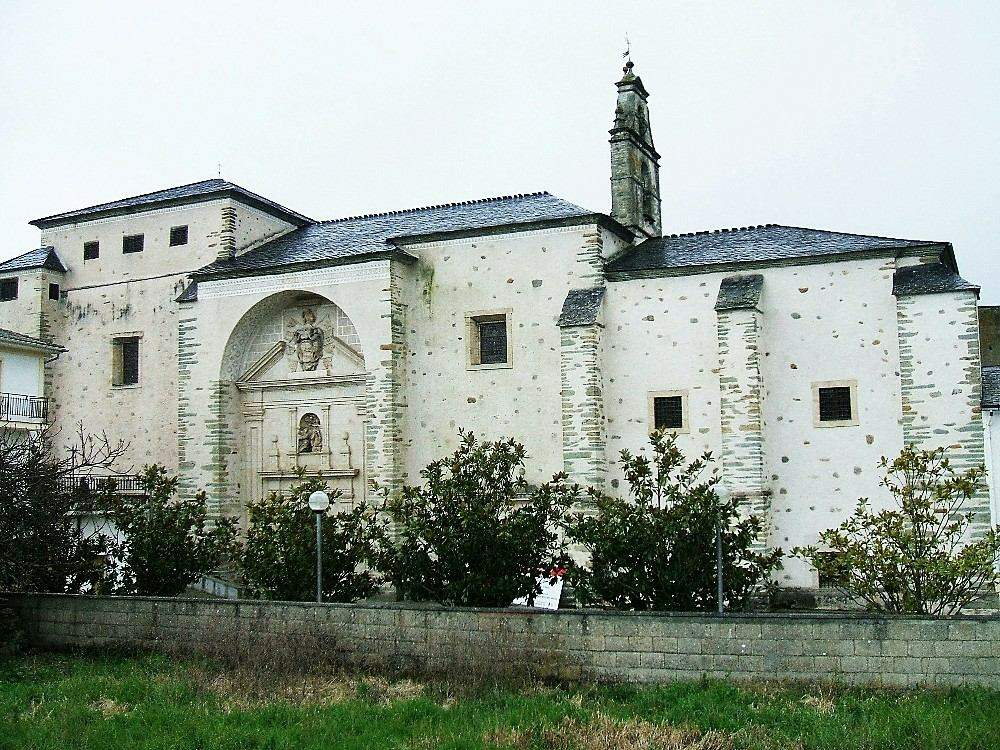
Monastery of the Anunciada, Villafranca del Bierzo
About this place
The Monastery of the Anunciada stands among the most valuable historic sites of Villafranca del Bierzo, a town on the Camino de Santiago in the province of León. Home to a community of Poor Clare nuns, the complex ties together the region's pilgrim past with striking Baroque religious architecture, and it remains an active contemplative convent to this day.
How did the monastery come to be?
Before the monastery existed, the same site housed a pilgrim hospital dedicated to Saint James, serving travelers on their way to Santiago de Compostela. Its transformation is tied to the noble family of the Marquises of Villafranca. Pedro Álvarez de Toledo, Marquis of Villafranca, and his wife Elvira sought to turn the hospital into a convent for their daughter María de Toledo, who wished to take religious vows. Papal authorization arrived in 1594, and the monastery was formally established in 1606, when nuns from the Descalzas Reales convent in Madrid took up residence. Poor Clare sisters have lived there ever since.
What can visitors see today?
The centerpiece of the complex is its church, built between 1655 and 1660 in the Italian Baroque style. It is regarded as one of the most beautiful religious buildings in Villafranca del Bierzo, and its facade and interior draw the attention of pilgrims and travelers passing through the Bierzo region alike. In January 2024, the monastery was declared a Bien de Interés Cultural (an asset of cultural interest) with monument status, an official recognition of its importance to the heritage of Castile and León.
Because it remains an active enclosed convent, access to the interior may be limited to certain hours or occasions, following the rhythm of the community's religious life.
What has the monastery survived over the centuries?
The monastery's history has not been without turmoil. In 1809, during the Peninsular War, French soldiers stormed the building and the nuns were forced to flee. They did not return until 1813, finding the monastery stripped and damaged. Despite this destruction, the complex survived and was restored, preserving its character and its religious significance for the people of Villafranca del Bierzo.
How do you get there?
Villafranca del Bierzo lies in the western part of León province, directly on the Camino Francés, the most popular route of the Way of St. James. The town is well connected by road to León and Ponferrada, both of which offer local transport links. The monastery itself sits in the historic center of town, close to other landmarks, making it easy to combine a visit with a walk through the old quarter.
When is the best time to visit?
Villafranca del Bierzo sees most visitors in spring and summer, when pilgrims walking the Camino de Santiago stop here to rest and the weather is pleasant for exploring the town on foot. Since the monastery is still an active enclosed convent, though, access to the church interior can depend on the time of day and the community's schedule — it is worth checking locally or with tourist information beforehand.
Frequently asked questions
Can visitors go inside the monastery? The monastery church is open to visitors during set hours, but the enclosed section remains off-limits to outsiders, as it is still a working convent of nuns.
Why was the monastery built on this particular site? It was built on the grounds of a former pilgrim hospital dedicated to Saint James, converted into a convent at the initiative of the Marquises of Villafranca for their daughter.
What architectural style is the monastery church? The church, built between 1655 and 1660, follows the Italian Baroque style and is considered one of the town's finest religious landmarks.
Is the monastery officially protected as a heritage site? Yes, in January 2024 it was declared a Bien de Interés Cultural with monument status, formally recognizing its value to the region's heritage.
Nearby places
-

Collegiate of Santa María de Cluniaco, Villafranca del Bierzo
Villafranca del Bierzo
-
Convento de Cabeza de Alba
Corullón
-

Church of El Buen Pastor, Ponferrada
Ponferrada
-
Saint Andrew Monastery, Vega de Espinareda
Vega de Espinareda
-
Church of San Andrés, Ponferrada
Ponferrada
-
Convent of Inmaculada Concepción, Ponferrada
Earn badges for the places you visit
Download NextOnTrip, discover new places and check off your trails.