About this place
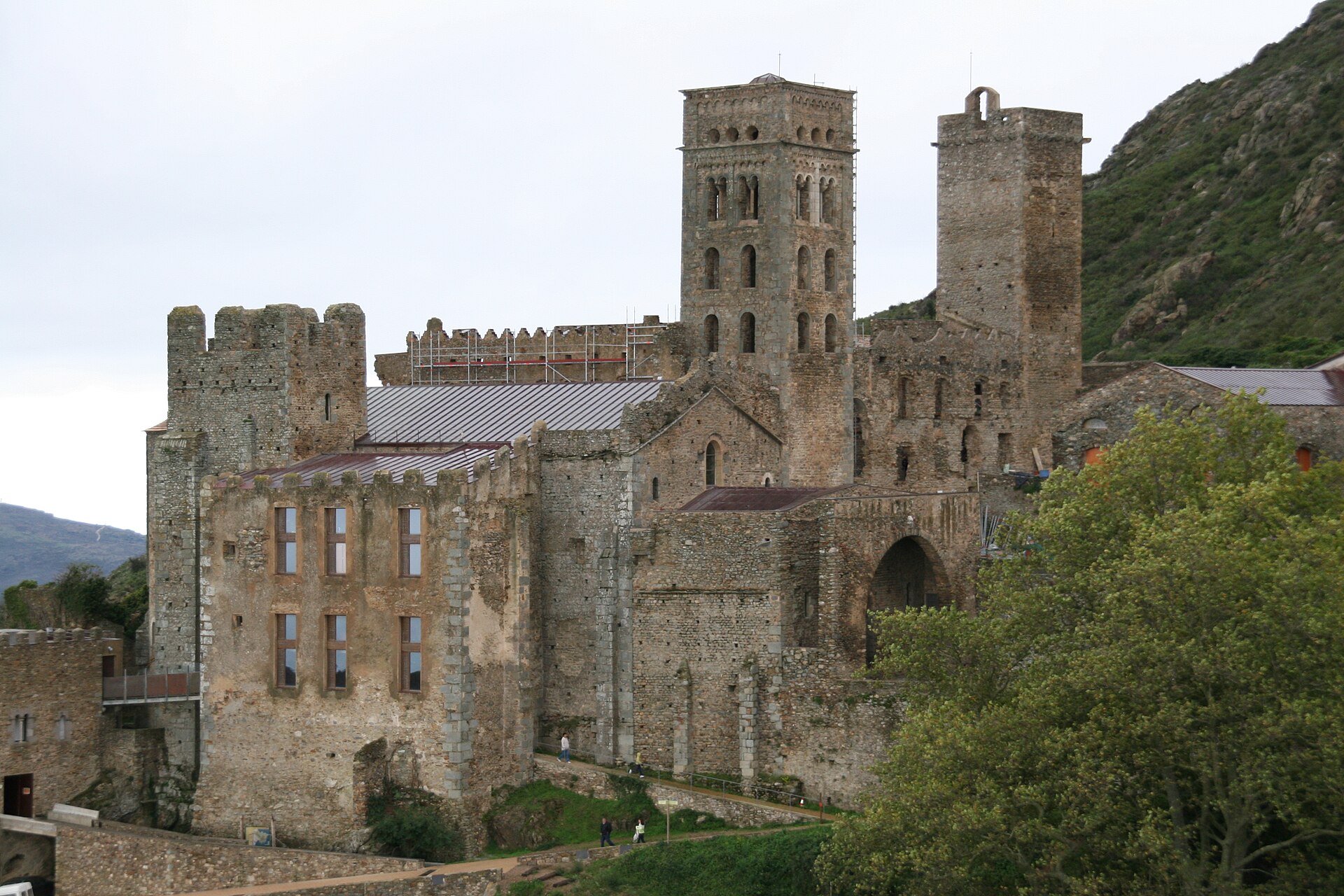
Sant Pere de Rodes is a former Benedictine monastery perched on the slopes of the Serra de Rodes, above the coastal town of el Port de la Selva on the Costa Brava, in Girona province. Standing at nearly 500 metres above sea level, the ruined and partly restored monastic complex offers one of the best panoramic views over the Catalan coastline and the Cap de Creus headland.
What will you see there?
The centrepiece is the Romanesque monastery church, one of the most significant examples of Romanesque architecture in Catalonia, built with a three-nave layout, columns topped with richly carved capitals, and a tall Lombard-style bell tower. Visitors can also walk through the surviving cloister, the former monks' cells, the refectory, and remnants of the defensive walls that once protected the abbey during periods when it was a frequent target of raids and looting.
It's worth continuing up the hill to the ruins of the Sant Salvador de Verdera watchtower, which opens up an even wider view — the Gulf of Lion on one side, the rugged Cap de Creus massif on the other. At the foot of the hill, near the hamlet of Santa Creu de Rodes, lie the remains of a medieval settlement that grew up around the monastery and was abandoned after its decline.
How do you get there?
The easiest approach is by a local road from el Port de la Selva — a short drive of about fifteen minutes along winding curves, ending at a car park right by the monastery entrance. Hikers can instead walk up from Vilajuïga or directly from el Port de la Selva; the mountain trails cut through Mediterranean scrubland and typically take one and a half to two hours one way, depending on the route and pace. This walking option is popular with visitors combining the monastery with a hike through the Cap de Creus Natural Park.
When should you visit?
Spring and autumn offer the best conditions, with mild temperatures and less exposure to the full summer sun on this largely shadeless hilltop. In summer, an early start is worth it — both to avoid the heat and the midday crowds of day-trippers from along the Costa Brava. Winter can bring strong winds that make the exposed site feel colder than the thermometer suggests, but the views are often at their clearest and the site far quieter.
A bit of history
The monastery was founded in the early medieval period and became one of the region's major religious centres, playing an important economic and spiritual role in Alt Empordà for centuries. Its long decline followed the departure of the monastic community, after which the buildings fell into disrepair until restoration and partial reconstruction work began — efforts that continue today. The site is now managed as a heritage monument open to visitors, with displays explaining its history.
Frequently asked questions
Can you drive almost right up to the monastery? Yes — the local road from el Port de la Selva leads to a car park directly at the entrance, so no long hike is required if you're arriving by car.
How long does a visit take? Touring the monastery itself usually takes about an hour to ninety minutes, but allow extra time if you plan to hike up or down, or to climb further to the Sant Salvador de Verdera watchtower ruins.
Is there anywhere to eat or drink on site? There's a small kiosk offering drinks and snacks, but for a proper meal it's best to eat in el Port de la Selva before or after the visit.
Is the site suitable for children or visitors with limited mobility? The grounds include uneven stone surfaces, steps, and steep approaches, which can be difficult for wheelchairs or anyone with mobility issues — older children generally manage without trouble.
Nearby places

Earn badges for the places you visit
Download NextOnTrip, discover new places and check off your trails.