About this place
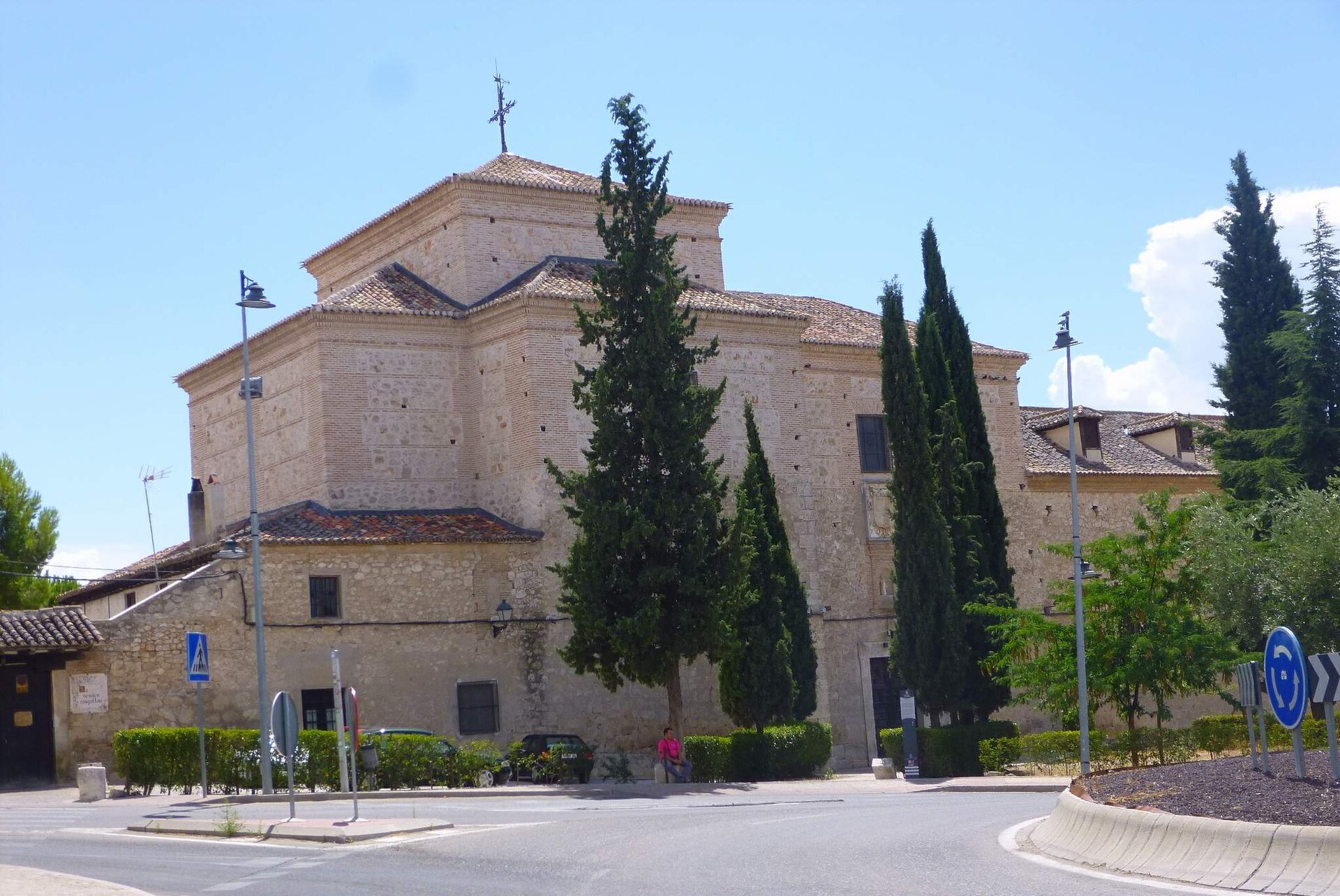
Convent of the Poor Clares is an enclosed monastery in Chinchón, one of the best-preserved small towns in the Madrid region. The building stands in a quiet corner of the historic centre, just a short walk from the town's famous oval Plaza Mayor, and still functions today as a living community of Poor Clare nuns.
Where did this convent come from?
The foundation is tied to the noble House of Chinchón. Construction began in 1597 at the initiative of the 3rd Count of Chinchón, Don Diego Fernández de Cabrera y Bobadilla, and his wife Doña Inés Pacheco, who wanted to link their lineage to a cloistered convent. The work dragged on for decades, and it was ultimately the 5th Count, Don Francisco Faustino Fernández de Cabrera y Bobadilla, who completed the foundation in 1653. The architectural design came from Nicolás de Vergara el Mozo, a master builder connected to the cathedral and archdiocese of Toledo — which explains the clear Toledan influence in the building's overall shape.
What will you actually see?
The complex follows a sober Herrerian Baroque style: restrained, disciplined lines with little ornamentation, typical of Castilian religious architecture at the turn of the 16th and 17th centuries. The church has a single nave, while the convent itself is arranged around a two-storey cloister supported by semicircular arches.
Inside the church lies the mausoleum of the 5th Count of Chinchón, placed in the choir area — a fitting spot, since he was the one who finally brought the project to completion. Look out too for the painting "The Divine Shepherd" by Alonso del Arco and an artistically valuable silver urn-tabernacle.
The convent remains active, home to Poor Clare nuns living in enclosure, so access to the interior is limited and parts of the complex stay off-limits to visitors.
How do you get there, and when's best to go?
Chinchón sits roughly 45 km southeast of Madrid, making it a popular day-trip destination from the capital — expect a 45 to 60 minute drive or bus ride. The convent is located within the historic centre, so the easiest way to reach it is on foot from Plaza Mayor.
Spring and autumn are the best times to visit, avoiding the intense heat of the Castilian summer. It's worth pairing a stop at the convent with a walk through the old town and a taste of the local specialities.
Sweets straight from the cloister
One of the most distinctive things about this place is the nuns' tradition of baking. The convent is known for its homemade rosquillas, muffins, pastries, and a local treat known as "tetas de novicia" (novice's sweets). These are sold directly through a rotating window, or torno, set into the convent wall — a centuries-old method used in enclosed convents that lets the nuns interact with the outside world while preserving their seclusion.
Frequently asked questions
Can you visit the inside of the convent? Partially. Since it's an active cloistered convent, access to the interior is restricted, though the church is often open to visitors during set hours.
Who founded it, and when? The convent was founded by the Counts of Chinchón — construction began under the 3rd Count in 1597 and was finally completed in 1653 by the 5th Count, Don Francisco Faustino Fernández de Cabrera y Bobadilla.
What should you buy while you're there? The nuns' traditional baked goods — rosquillas, muffins, and pastries — sold through the convent's rotating window.
How long does a visit take? Seeing the exterior and part of the church takes about 20-30 minutes, but it's worth combining it with a longer stroll through Chinchón's historic centre.
Nearby places

Earn badges for the places you visit
Download NextOnTrip, discover new places and check off your trails.