- Sacred Monuments
- Religious monuments
Convento de las Carmelitas Descalzas de San José
About this place
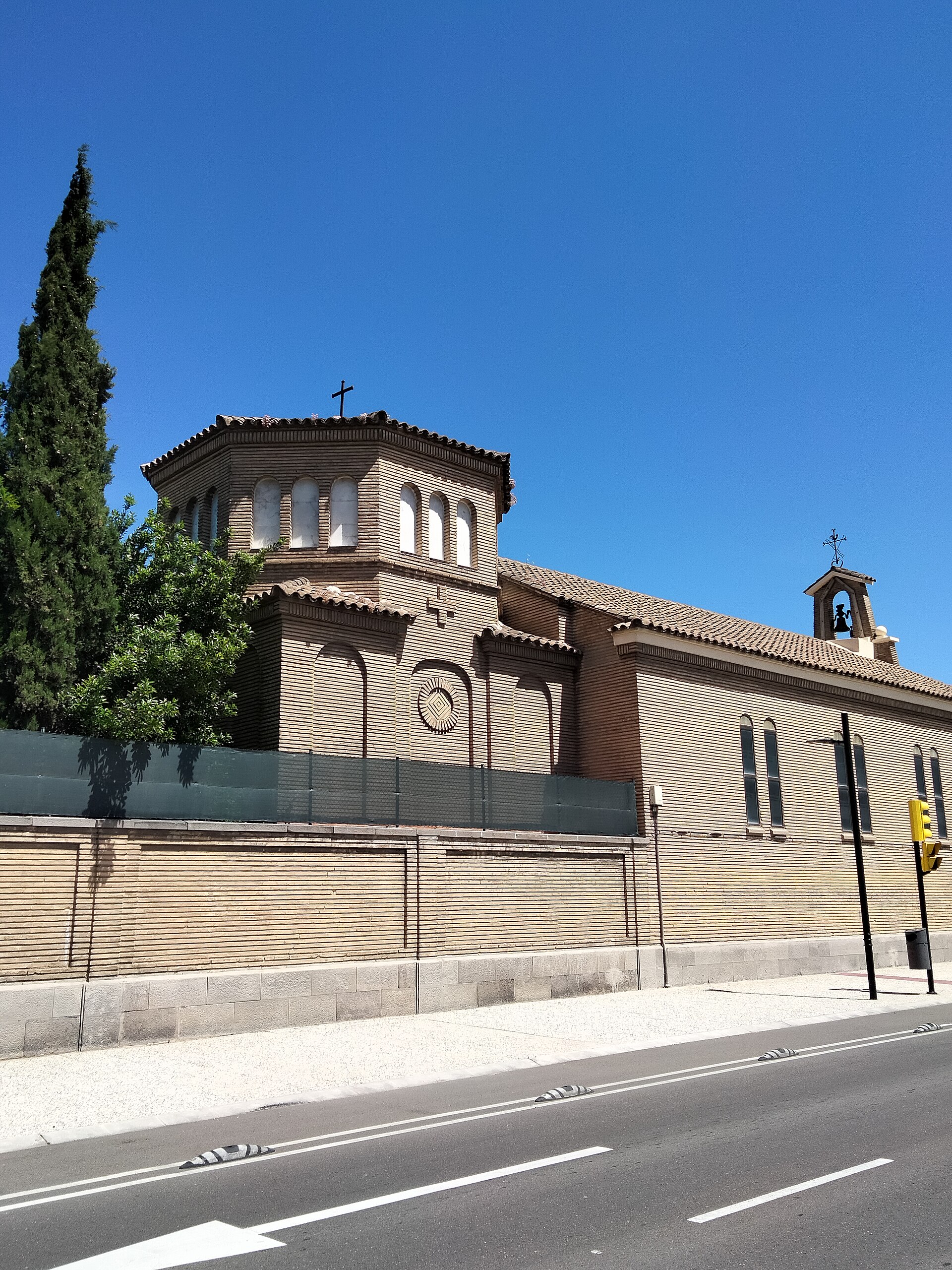
Convento de las Carmelitas Descalzas de San José is a Discalced Carmelite convent in Zaragoza, located at Avenida de Cataluña 161. It is a place with a turbulent, centuries-long history that today functions as an active contemplative convent with its own church.
How to get there?
The convent sits on Avenida de Cataluña, one of Zaragoza's main arteries, south of the historic city centre. Public bus routes serve the area well, making it the most convenient way to arrive — the surrounding neighbourhood is densely built and well connected to the rest of the city. Drivers will find street parking available in the surrounding residential blocks.
What will you see?
The current convent and church building is the result of post-war reconstruction: the convent itself was designed in 1953 by architect José Romero Aguirre, and the church followed a year later, in 1960, designed by Santiago Lagunas Mayandía. The complex combines the practical enclosure of a working convent with the restrained, functional sacred architecture typical of mid-20th-century Spain.
The community's history stretches back much further than the present building. The original convent of Discalced Carmelite nuns was established in Zaragoza in the 16th–17th century on the bank of the Huerva river, outside the city's old walls. That building suffered severe damage during the Napoleonic sieges of 1808–1809. Rebuilt in 1814, it went through a turbulent series of transformations: in 1835 it was confiscated and converted into a prison known as "Penal de San José," which operated until 1900. From 1908 the site served as army quartermaster barracks, until 1971, when it was sold to the Zaragoza City Council as part of the "Operación Cuarteles" urban programme and subsequently demolished to widen the road along the Ebro river and create green space.
A notable recent development is an archaeological discovery: excavation work on the right bank of the Huerva uncovered the foundations of the original 16th-century convent — a tangible trace of this long history, even though the building itself no longer stands.
When to visit?
Since this is an active enclosed convent, visiting is in practice limited to the church interior, accessible during services. It's worth planning a visit around mass times — the best way to check the current schedule is to call the convent directly before arriving. Outside service hours, the building can still be appreciated from the outside, which is of particular interest to anyone curious about Zaragoza's mid-20th-century sacred architecture.
Frequently asked questions
Can you visit the convent? This is an active enclosed convent of Discalced Carmelite nuns, so access is largely limited to the church and mass times. The cloistered area itself remains off-limits to visitors.
Where exactly is the convent located? At Avenida de Cataluña 161, in Zaragoza, postal code 50014.
Is the current building the original 17th-century one? No — the present complex was built between 1953 and 1960. The original convent stood on the bank of the Huerva river and was demolished in the 1970s after decades of use as a prison and then as barracks.
What should you know before visiting? It's worth calling the convent ahead of time to confirm mass times, since that's the only window during which the church interior is open to visitors.
Nearby places
-

Convento Santa María de Jesús
Zaragoza
-
Iglesia parroquial de Nuestra Señora de Altabás
Zaragoza
-
Alma Mater Museum
Saragossa
-
Chapel of Saint Michael the Archangel (La Seo of Zaragoza)
Saragossa
-
Chapel of Saint Paschal Baylon for the perpetual adoration of the Eucharist
Zaragoza
-
Tapestry museum of the Cathedral of El Salvador in Zaragoza
Saragossa
Earn badges for the places you visit
Download NextOnTrip, discover new places and check off your trails.