About this place
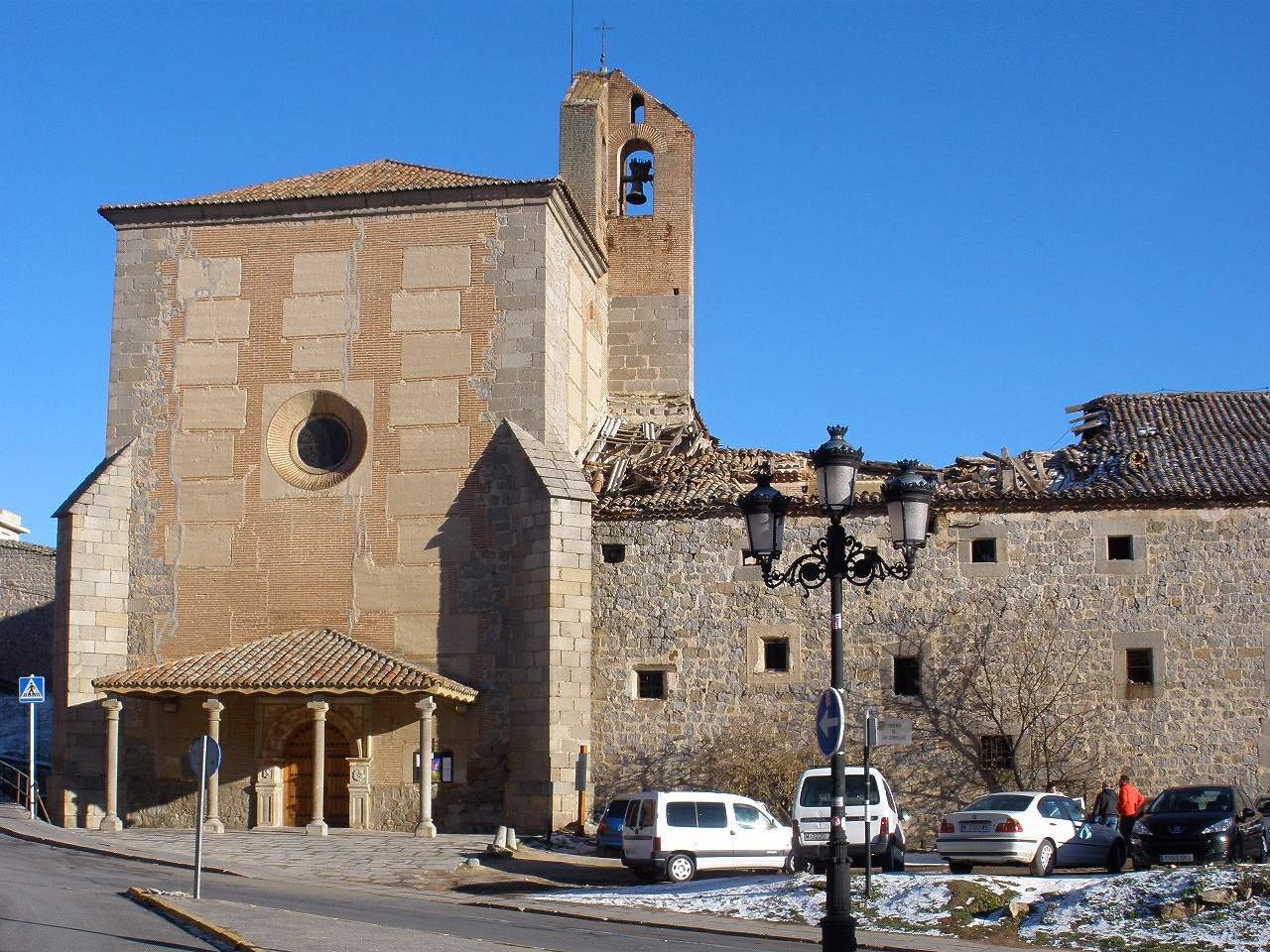
The Church of Santa María de Jesús in Ávila, also known as the Convent of the Poor Clares or "Las Gordillas," is one of those quiet corners of the city that's easy to walk past yet holds a surprisingly layered history. The building stands on Calle de la Luna, right against the eastern wall of the Santo Tomás monastery, in a calm part of Ávila far from the crowds along the city walls.
Where does the name "Las Gordillas" come from?
The nickname has nothing to do with the size of the building. It comes from a grove of oak trees that once grew near the convent's original site. The Poor Clares nuns moved several times before settling here — first to the palace of the Marquis of Sofraga near the San Vicente gate, then to a house between Plaza de Santa Ana and Paseo de San Roque, and only later to the current spot on Calle de la Luna.
Who founded the convent?
The founder was María Dávila, wife of Fernando de Acuña, Viceroy of Sicily. The convent was established in 1502, and the Poor Clares reached Ávila in the second half of the 16th century. It's a familiar pattern for the period — a wealthy, influential family endowing a convent to secure a place of burial and prayer for generations.
What's worth seeing inside?
The standout feature is the cenotaph of the founder, María Dávila, carved in alabaster by Vasco de la Zarza, one of the most important Renaissance sculptors active in Ávila. The piece is worth the visit on its own, regardless of the building's religious context. The church itself is a 16th-century Renaissance structure that has survived in good condition, unlike the adjoining convent, which gradually fell into ruin.
What happened to the convent?
The nuns left the convent in 1973 and moved to the outskirts of Ávila. Since then, the convent building has stood abandoned and deteriorated, while the church itself has held up far better and still stands as a witness to that era. Given its historical and architectural value, the site was declared a Bien de Interés Cultural (Cultural Heritage Site) on October 24, 1991.
How do you get there?
The church sits within the old town, an easy walk from Ávila's city walls and from the Santo Tomás monastery, one of the city's main attractions. It's worth pairing a visit with both — the walk along Calle de la Luna takes you through a quieter, less touristy but genuinely authentic stretch of the city.
When's the best time to visit?
Ávila is best explored in spring or autumn, when temperatures are mild; summers can be hot and dry given the altitude and continental climate of the Castilian plateau, while winters turn cold. As an active place of worship, the church is best visited outside service hours — check the posted schedule at the entrance.
Frequently asked questions
Is the Church of Santa María de Jesús open to visitors? Yes, though as an active place of worship it may have limited visiting hours — it's best to check the current schedule on site or at the local tourist information office.
Why is the church called "Las Gordillas"? It's a popular nickname derived from a grove of oak trees that grew where the Poor Clares lived before moving to their current location.
What's the most important feature inside? The alabaster cenotaph of founder María Dávila, carved by sculptor Vasco de la Zarza — one of the notable works of Renaissance art in Ávila.
Can you visit the adjoining convent? Not fully — the nuns left in 1973 and the convent building fell into ruin, unlike the church itself, which has been preserved in good condition.
Nearby places

Earn badges for the places you visit
Download NextOnTrip, discover new places and check off your trails.