About this place
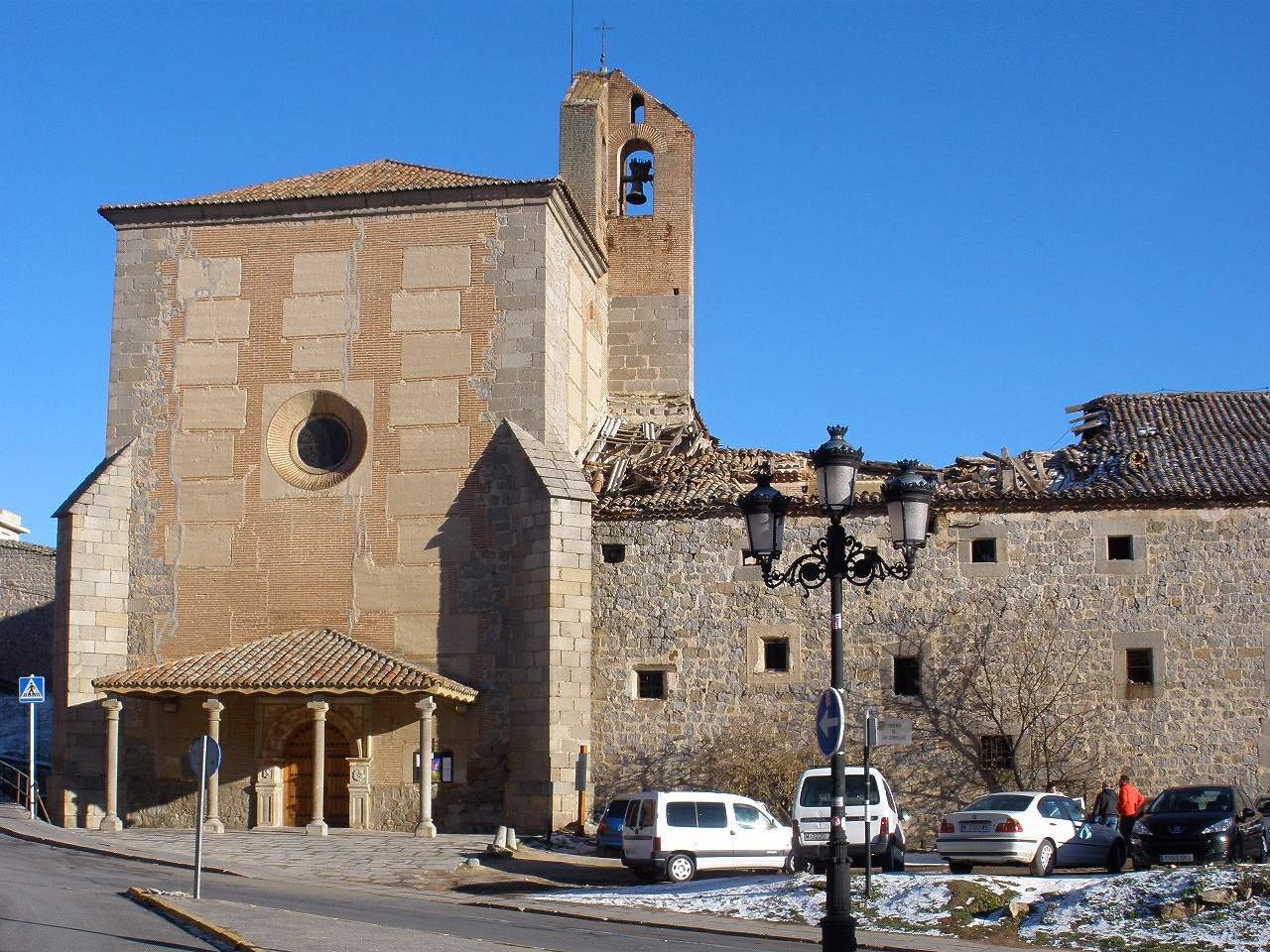
The Royal Monastery of St. Thomas in Ávila is one of the most significant religious monuments in Castile and León, founded in the late 15th century by the Catholic Monarchs, Ferdinand of Aragon and Isabella of Castile, together with the Grand Inquisitor Tomás de Torquemada and local patron doña María Dávila. Built for the Dominican Order, the complex also served for a time as a summer residence for the royal court, which explains why its architecture is unusually elaborate for a monastic building.
How do you get there?
The monastery stands on Plaza de Granada, just outside the old town walls but still within easy reach of central Ávila — roughly a fifteen-to-twenty-minute walk from the cathedral and the main city walls. For anyone already exploring Ávila on foot, it makes a natural extension beyond the walled perimeter; a taxi or local bus is also an option if time is limited. Pairing the visit with a walk along the city's defensive walls, already the main draw for most visitors, makes for an efficient half-day itinerary.
What can you see inside?
The complex was built in a Gothic-Renaissance style under architect Martín de Solórzano. Its most distinctive feature is a set of three separate cloisters: the Novitiate cloister, austere and unadorned; the Cloister of Silence, richly decorated with pomegranate motifs and carved stone spheres; and the Kings' Cloister, the most ceremonial of the three.
Inside the monastery church, the main altarpiece stands out — a five-panel work by Pedro de Berruguete depicting scenes from the life of St. Thomas Aquinas, the building's patron saint. Directly in front of the altar lies the tomb of Prince John of Asturias, the only son of the Catholic Monarchs, who died young. The sepulcher was carved by the Italian sculptor Domenico Fancelli, known for the striking realism of his figures.
Part of the monastery today houses a Museum of Oriental Art, run by the Dominican order. The collection was assembled from objects brought back by Dominican missionaries returning from Asia, including pieces from China, the Philippines, and Vietnam — an unexpected find in a monument so deeply tied to Castilian royal history.
When is the best time to visit?
The monastery opens in two blocks — roughly 10:00 a.m. to 12:45 p.m. and 4:00 p.m. to 7:45 p.m. — so it's worth checking the schedule before showing up, to avoid the midday closure. Ávila sits at an altitude of over 1,100 meters, making its summers noticeably cooler than much of southern Spain, which makes it a comfortable choice when other regions are too hot for walking tours. Spring and early autumn bring smaller crowds and mild weather, if avoiding peak season matters to you.
Why is it worth the detour?
Unlike the busier sights inside Ávila's walls, the Royal Monastery of St. Thomas offers a quiet, almost meditative atmosphere. It suits travelers who want more than the walls and the cathedral — the combination of royal history, Gothic art, and an unexpected Asian art collection means a visit here tends to run longer than most first-time visitors expect.
Frequently asked questions
Is there an entrance fee? Yes, admission costs around €3, with a reduced group rate available.
Is the monastery inside Ávila's old town walls? No — it sits on Plaza de Granada, just outside the walls, but still within a comfortable walking distance of the historic center.
What's the highlight inside? The tomb of Prince John, son of the Catholic Monarchs, carved by Domenico Fancelli, along with the main altarpiece by Pedro de Berruguete.
Is the Museum of Oriental Art worth visiting? Yes — it's an unusual collection for a Castilian monastery, gathered by Dominican missionaries who worked in Asia, and it's rarely mentioned in standard Ávila guides.
Nearby places

Earn badges for the places you visit
Download NextOnTrip, discover new places and check off your trails.