About this place
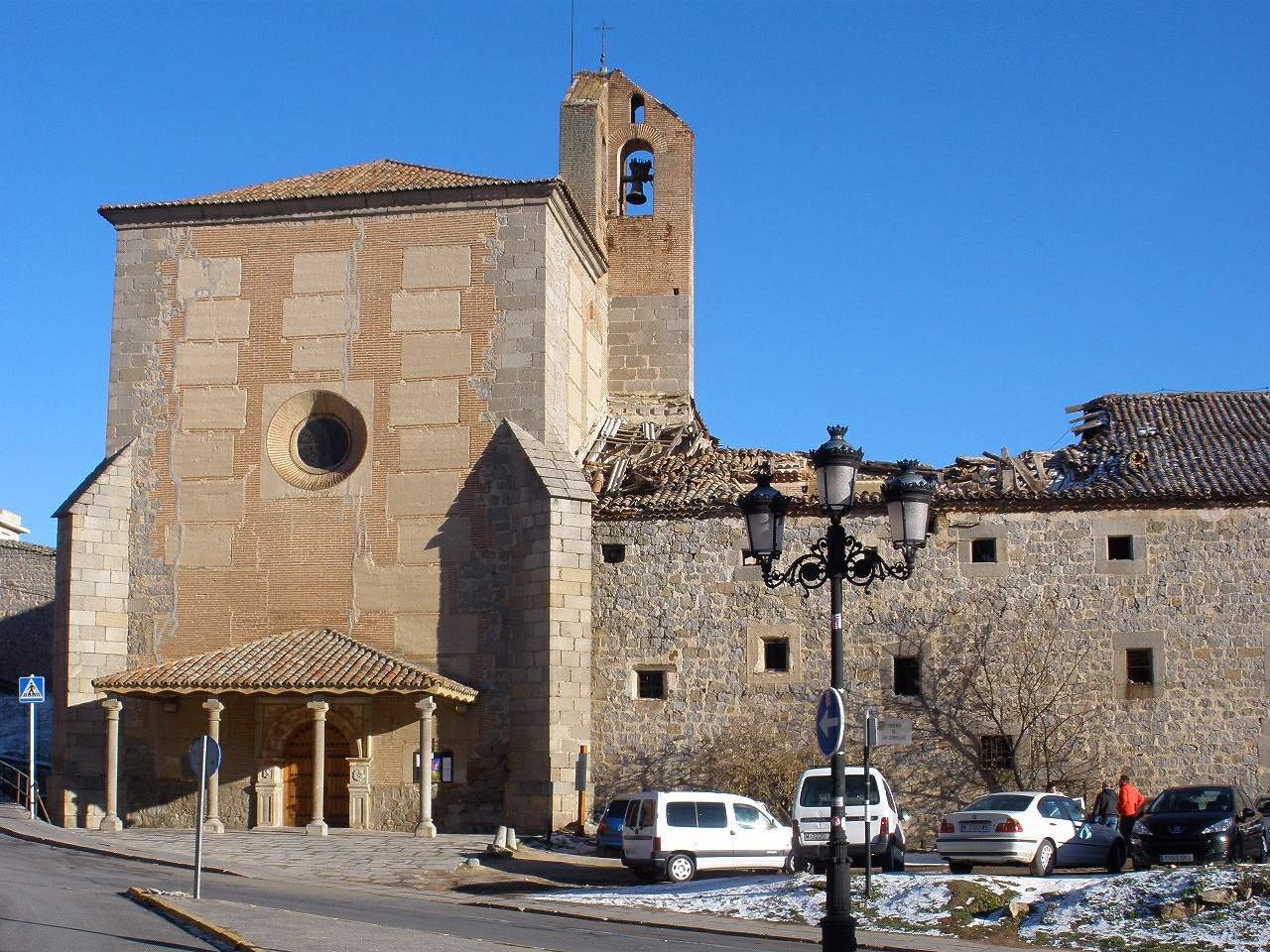
The Church of Santo Tomé el Viejo is a small Romanesque church in Ávila, standing just outside the city's medieval walls on Plaza del Doctor Benigno Velázquez. It's one of those corners of the city that visitors focused on the famous ramparts often walk right past — which is a shame, because it packs a surprising amount of local history into a modest footprint.
How do you get there?
The church sits directly outside the walls, facing the old Peso de la Harina gate ("Flour Weight Gate"), on the exterior side of the fortifications. From the historic center it's a short walk of just a few minutes — step out through the nearby gate and head toward the small square where the building stands. It's an easy stop if you're walking the perimeter of the walls from the outside or coming back from the districts beyond the fortified center.
What will you see?
The building's core structure dates to the second half of the 12th century, a period when Ávila was actively expanding both its defensive walls and its network of parish churches. In the 16th century the church underwent alterations that gave it much of its present appearance — a common pattern for Romanesque churches in the region, which were frequently adapted over the centuries to fit changing needs.
For hundreds of years the building functioned as a parish church, until the 18th century, when it was placed under the authority of Ávila Cathedral's chapter. Its use then shifted dramatically: the church was converted into a granary, storing grain, bread, and flour — a function that ties in neatly with its location facing the old "flour weight" gate. In 1835, as part of Spain's disentailment decrees (the state-driven sale of church property), the building passed into private hands. In the decades that followed it took on some unlikely new roles, including service as a garage and a gas station.
Today the church is closed to worship. Its interior is now used to store and display part of the collection of the Provincial Museum of Ávila (Museo de Ávila). Admission is free, and given the building's small size, a visit typically takes around 20 minutes. It's a spot better suited to visitors curious about the afterlife of religious buildings following secularization than to those expecting a large, polished exhibition.
When should you visit?
Since the building now serves a museum rather than a liturgical function, it's worth checking local opening hours before heading over — they can be seasonal and don't always match those of Ávila's main attractions, such as the cathedral or the city walls. The easiest approach is to fold a visit into a walk along the outside of the walls, since you'll pass close to Plaza del Doctor Benigno Velázquez anyway.
Frequently asked questions
Is the Church of Santo Tomé el Viejo still used for worship? No. The church is closed to religious services; its interior now houses part of the Provincial Museum of Ávila's collection.
How much does admission cost? Admission is free.
How long does a visit take? Given the building's modest size, a visit usually takes about 20 minutes.
Why is it called "el Viejo" ("the Old")? The name distinguishes it from other churches dedicated to Saint Thomas in the region and highlights its early, 12th-century origins — making it one of the oldest surviving churches near Ávila.
Nearby places

Earn badges for the places you visit
Download NextOnTrip, discover new places and check off your trails.