About this place
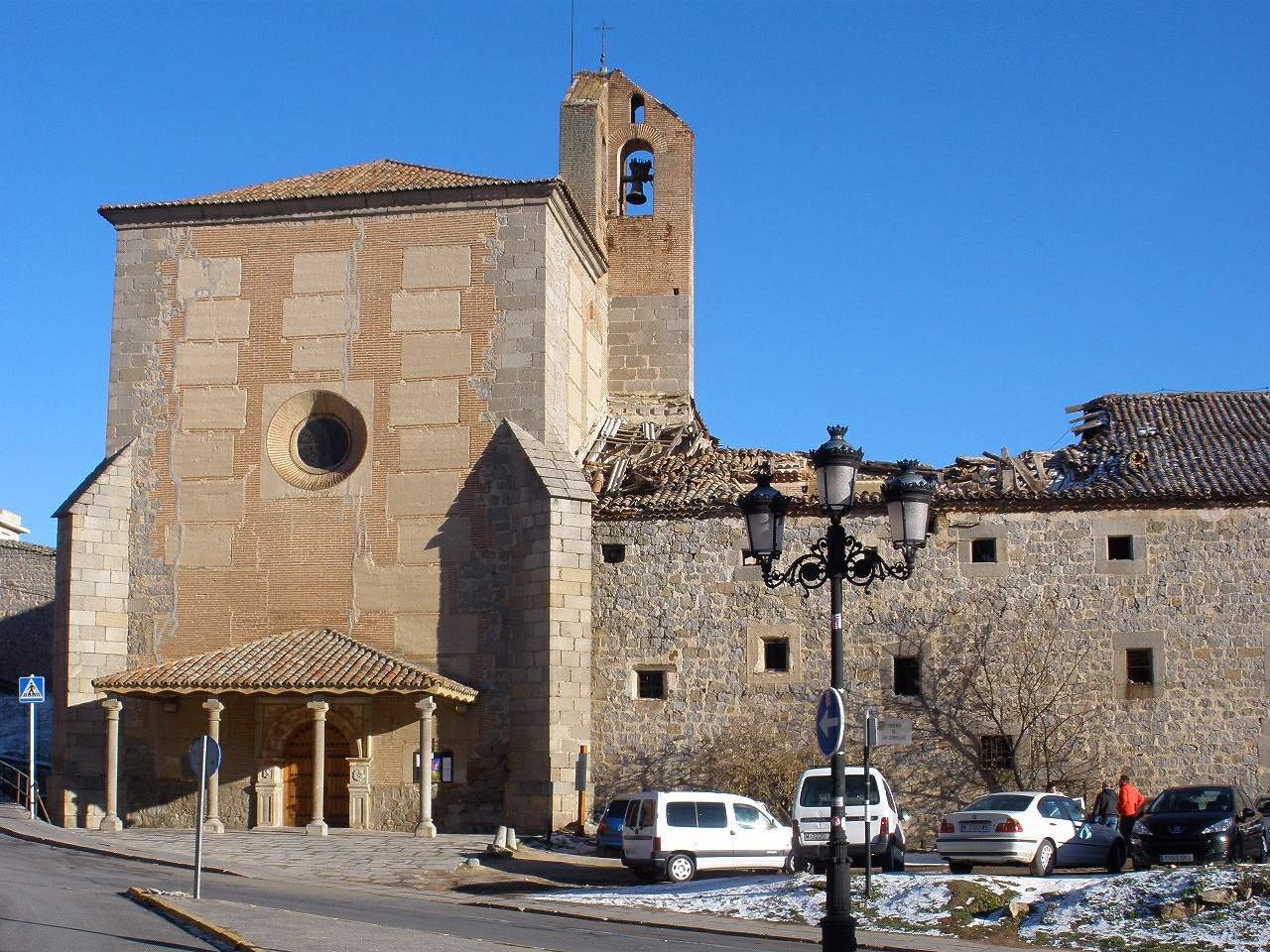
Convento de Santa Teresa stands inside Ávila's medieval walls on the exact spot where Saint Teresa of Ávila was born — the mystic and reformer who later became the first woman named a Doctor of the Church.
Why was this convent built here?
Toward the end of the 16th century, the Discalced Carmelite order set out to establish a house in Ávila dedicated to their founder. After years of negotiations, the friars managed to acquire the plot where Teresa's family home had once stood. The friar-architect Fray Alonso de San José was put in charge of the project, and the finished church and convent were consecrated in 1636. The presbytery was deliberately positioned to align with the very room in which Teresa was born, a detail that makes this site one of the most significant stops on any Teresian pilgrimage route.
What is there to see inside?
The church's façade is Baroque, while the interior follows a Latin-cross floor plan with side naves holding sculptures by Gregorio Fernández, one of Spain's foremost Baroque sculptors. Among his works is the striking group depicting Christ Bound to the Column together with Saint Teresa of Jesus, considered one of the city's most important pieces of religious art.
Beneath the church, in the crypt, sits the Museo de Santa Teresa. Its location carries real weight: the museum occupies the exact footprint of the house where Teresa's family once lived. The collection brings together sculptural pieces from different periods and styles, tracing both the saint's biography and the devotion that grew around her over the following centuries.
How do you get there, and when should you visit?
The convent sits well within Ávila's old town, inside the city walls, so the easiest way to reach it is on foot while exploring the historic center. The church is open Monday to Saturday from 9:30 am to 1:00 pm and 3:30 pm to 7:30 pm, and on Sundays and public holidays from 9:30 to 11:00 am and 3:30 to 7:00 pm; entry to the church itself is free.
The museum keeps a separate schedule: from April to October it opens 10:00 am–2:00 pm and 4:00–7:00 pm, and from November to March 10:00 am–1:30 pm and 3:30–5:30 pm. It is closed on Mondays year-round. Admission costs €3, and entry is also included with the ÁvilaCard tourist pass.
It's worth timing a visit to combine the convent with a walk along Ávila's city walls and the other landmarks tied to Saint Teresa's life, together forming the city's well-known Teresian Route.
Frequently asked questions
Is entry to the convent free? The church itself can be visited free of charge. Only the museum in the crypt charges admission — €3, or included if you're using an ÁvilaCard.
How long does a visit take? Seeing both the church and the museum typically takes 30 to 45 minutes, depending on how much time you spend with the exhibits in the crypt.
Why is this site so significant for Saint Teresa's legacy? Because it stands exactly where her family home once was — the church's presbytery was built directly over the room where she was born, and the crypt museum occupies the former family property.
Are there notable artworks inside? Yes, the main artistic highlight is the set of sculptures by Gregorio Fernández in the church's side naves, including the famous group showing Christ Bound to the Column alongside Saint Teresa.
Nearby places

Earn badges for the places you visit
Download NextOnTrip, discover new places and check off your trails.