About this place
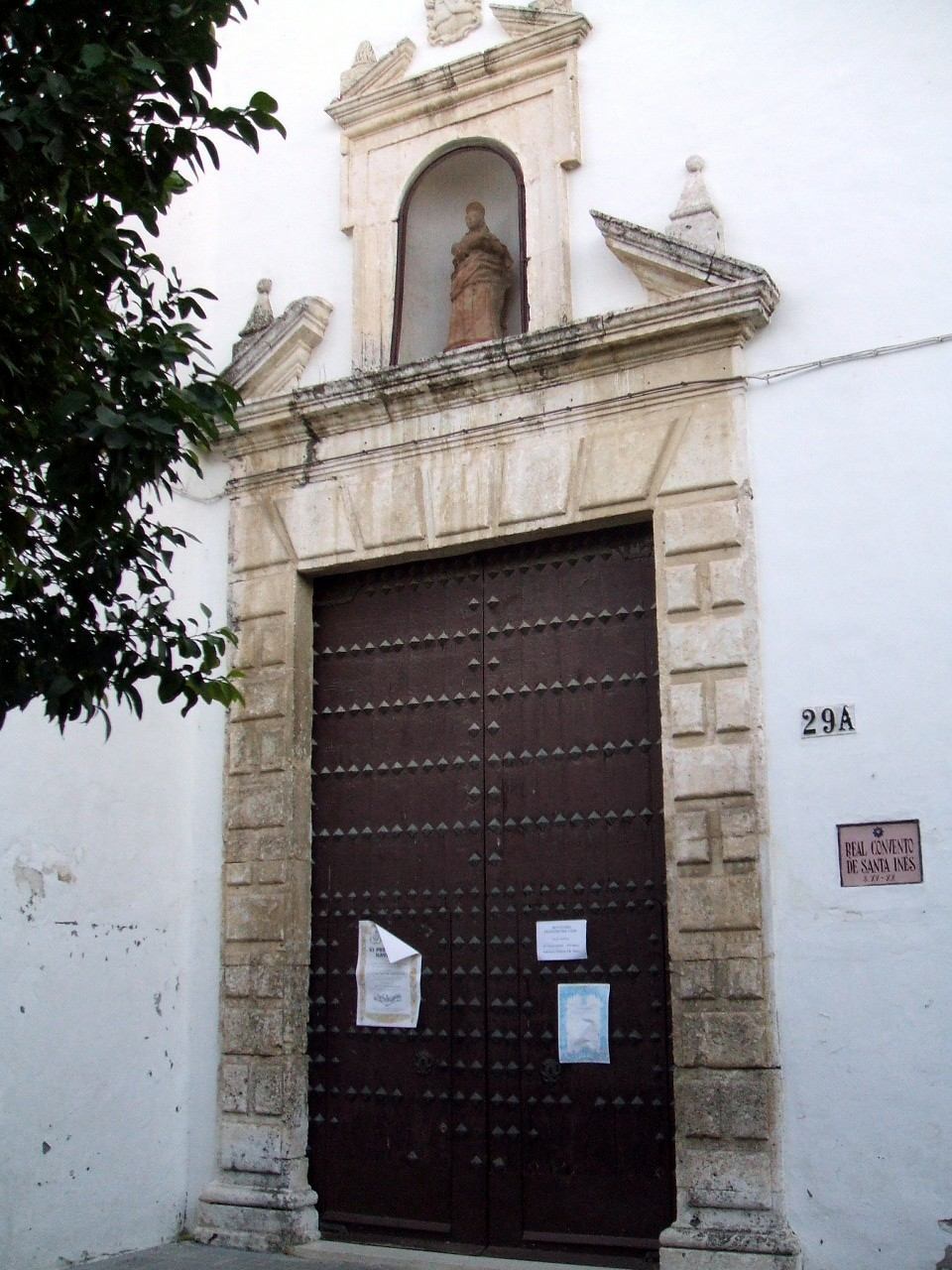
Convento de Santa Inés del Valle is a Poor Clare convent tucked into the historic core of Écija, one of Andalusia's most distinctly baroque towns. Behind its unassuming facade lies a community with more than five centuries of continuous history — a living cloister rather than a mere monument, still home to a small group of nuns today.
How to get there?
The convent sits in Écija's old town, a city positioned along the A-4 motorway between Córdoba and Seville, making it an easy stop for anyone travelling between the two. Écija has no high-speed rail station of its own, so a car is the most practical option, though regular buses connect the town with both Seville and Córdoba. The building itself stands within walking distance of the main squares, so once you're in the old town no further transport is needed to reach it.
What will you see?
The convent's story begins in the late 15th century: the nuns settled at this site around 1487 under the patronage of Doña Isabel Cherino, widow of Luis Pernía, who had served as mayor of Osuna. The community has belonged to the Franciscan Poor Clares ever since. The oldest surviving section is the cloister, raised in the final decades of the 15th century — a double arcade carried on brick piers, typical of the local building tradition of that era. The church, a single-nave structure, came later, in the 17th century, and reflects the plain-walled, richly decorated style characteristic of Écija's religious architecture.
Beyond the architecture, the site carries a striking historical weight. Queen Isabella the Catholic is said to have stayed here for three months while raising funds for the war against Granada, a detail still recounted to visitors as proof of the convent's standing during the final years of the Reconquista. Later benefactors, including Empress Maria of Austria and the Infanta Isabella Clara Eugenia, endowed the convent with valuable relics — among them, reportedly, a thorn said to be from the Crown of Thorns. Today only a handful of Poor Clare sisters remain within its walls, continuing a contemplative way of life largely unchanged for centuries.
When to visit?
Écija is known for some of the highest summer temperatures in Europe, so spring (March–May) and autumn (September–November) are the most comfortable seasons to explore it, with softer light that flatters the cloister's brickwork. Because this is an active enclosed convent, access to the interior can be limited to specific hours or occasions — such as the sale of homemade sweets or occasional openings of part of the church — so it's worth checking current hours locally before planning a visit.
Frequently asked questions
Can you go inside the convent? Since this is a living enclosed community, interior access is limited — visitors are usually able to see the church and part of the cloister, while the cloistered living quarters remain off-limits.
How long does a visit take? Given the convent's modest size, a visit typically takes 20 to 40 minutes, depending on which areas are open on the day.
Are there other landmarks nearby worth seeing? Yes — Écija is known as the "city of towers" for its cluster of baroque churches and bell towers within a few hundred metres of the convent, making it easy to combine with a walk through the old town.
Does the convent sell any homemade products? Spanish Poor Clare convents traditionally sell homemade pastries and sweets through a rotating hatch known as the torno — it's worth asking on site whether this service is currently available.
Nearby places
-

Convento de las Teresas
Écija
-
Convento de San José
Écija
-
Iglesia de la Limpia Concepción de Nuestra Señora y portada del antiguo convento de los Carmelitas Descalzos
Ecija
-
Cruz del Calvario
Montalbán de Córdoba
-
Monasterio de Santa María de las Escalonias
Hornachuelos
-
Iglesia Nuestra Señora de La Purificación
Puente Genil
Earn badges for the places you visit
Download NextOnTrip, discover new places and check off your trails.