Sacred Monuments in France
A guide to 433 Sacred Monuments in France — with descriptions, photos and traveler visits from the NextOnTrip community. Locations spread across 379 cities and towns. Most visited by the community: Église de Saint-Pierre-de-Neyran, Abbaye d'Ulmet, chapelle Notre-Dame de Baillarguet.
-
Prieuré d'Ardevon
Pontorson
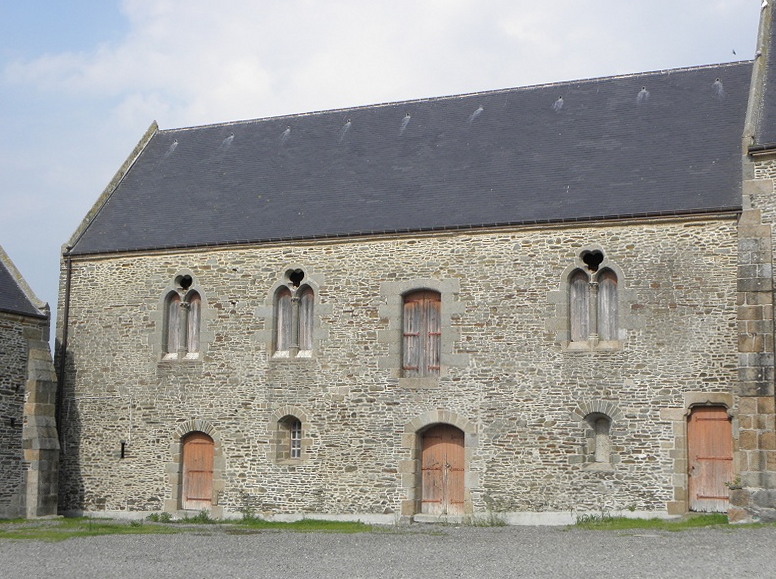
Prieuré d'Ardevon is a former monastic farmstead in the village of Ardevon, now part of the commune of Pontorson in the Manche department of Normandy, France. It sits only a few kilometres from the Mont-Saint-Michel bay, and its history has been tied to the great abbey on the rock ever since it was founded. When was the priory built, and by whom? For a long time local tradition credited Rollo, the first Duke of Normandy, with founding the priory. The dates don't add up, though: construction is generally placed around 966, roughly three decades after Rollo's death. Most historians now point instead to Richard I of Normandy as the more likely founder. The monks of Mont-Saint-Michel were granted this estate, a dozen or so kilometres from their island abbey, and it served from the outset as a kind of mainland outpost for a community whose home was cut off by the tides. How did the buildings change over time? Almost nothing of the original structures survives, since the priory was substantially rebuilt in the 12th and 14th centuries. The most striking building on the site today is the Gothic tithe barn, raised around 1400 and reinforced with twenty side buttresses — a structure once said to hold as many as fifteen thousand sheaves of grain. Roughly a decade later, the monks also rebuilt the main residential quarters from the ground up. What role did the priory play for the abbey? From the 14th century onward, Ardevon became almost the exclusive residence of the abbot of Mont-Saint-Michel and the storage point for tithes collected across the monastery's estates. The monks also carried out substantial land reclamation here: between the 12th and early 14th centuries they drained the brackish marshland of the bay, using a slight rise in the terrain reaching about twelve metres and partly redirecting the Sée and Sélune rivers. That work turned the low-lying ground around Ardevon into farmland that fed the abbey's economy. What happened to the estate after the French Revolution? The Revolution scattered the monastery's holdings, and the buildings themselves fell into serious disrepair. It wasn't until the mid-20th century that the estate passed to the Manche departmental council, which used it as the headquarters of the Syndicat mixte de la baie du Mont-Saint-Michel, the body overseeing the bay, until 2013. The site's heritage value was recognised earlier still, when it was listed as a monument historique by decree on 15 September 1937. What is the priory used for today? Since 2014, the former farmstead has taken on a new role: welcoming pilgrims on their way to Mont-Saint-Michel. Across three hectares of grounds, it now offers a campsite and simple lodging used by scouts, families, parish groups, and individual pilgrims arriving on foot, by bicycle, or by car. Frequently asked questions How far is Ardevon from Mont-Saint-Michel? The priory stands about five kilometres from the abbey, on the mainland edge of the bay. Who founded the priory, and when? It was most likely founded around 966 by Richard I, Duke of Normandy — not by Rollo, as older tradition claimed. Can visitors stay overnight at the priory today? Yes. The site now functions as a pilgrim reception area, with a campsite and lodging available for both groups and individual travellers. What is the most notable building on site? The Gothic tithe barn built around 1400, supported by twenty buttresses, is the standout structure, alongside the residential building rebuilt in the following decades.
-
Abbaye Saint-André de Villeneuve-lès-Avignon
Villeneuve-lès-Avignon
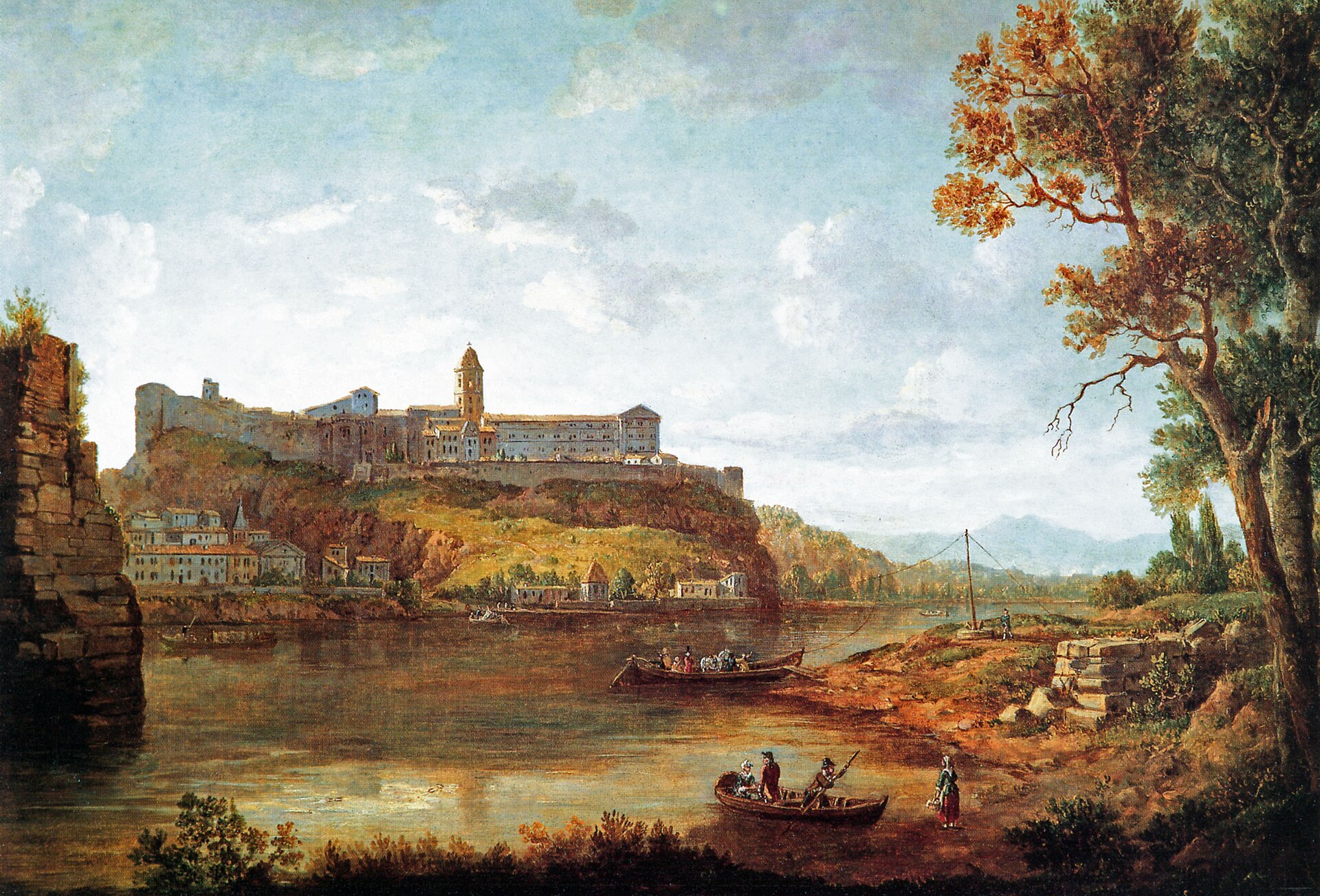
Saint-André Abbey sits atop Mont-Andaon in Villeneuve-lès-Avignon, in the Gard department, directly across the Rhône from Avignon. The former Benedictine abbey stands inside the walls of Fort Saint-André, a formidable medieval stronghold, and today the site is best known for its terraced gardens overlooking the Palace of the Popes. How old is the abbey? A Benedictine community settled on Mont-Andaon in the 10th century, on a site already linked to the 6th-century tomb of Saint Casarie. The abbey grew into one of the most powerful religious houses in the region, at its height overseeing more than 200 priories stretching from Uzès to Forcalquier. Little of the medieval fabric survives above ground today: the abbey buildings were largely rebuilt in the 17th and 18th centuries, following plans attributed to Pierre Mignard, and part of the complex was demolished after the French Revolution. Why is the abbey enclosed by a fortress? The fortress surrounding the abbey was no accident. In 1292, King Philip the Fair signed a paréage agreement granting him the right to build a fortified structure with a permanent garrison next to the monastery. Construction stalled for decades, largely because of unrest caused by roaming mercenary companies, and the bulk of Fort Saint-André was only completed in the 1360s, under King John the Good. The fort served two purposes at once: protecting the abbey and its adjoining town, and projecting French royal authority across the Rhône, which at the time marked the frontier with the papal territory of Avignon. Within its walls, the fort housed a standing garrison, a court of justice, and a prison. What makes the gardens worth visiting? The gardens of Saint-André Abbey earned France's "Remarkable Garden" label in 2014. Mediterranean planting, centuries-old olive trees and pines grow among the ruins of Romanesque chapels and tombs dating back to the 6th century. Below the abbatial palace lies a 16th-century Tuscan-style parterre, complete with basins, urns and sculptures, set beside a pergola covered in wisteria and roses. Further along a cypress-lined path, visitors reach one of the finest viewpoints over the Rhône valley, looking directly across at the Palace of the Popes in Avignon, with Mont Ventoux, the Luberon and the Alpilles visible on a clear day. What else is nearby? Fort Saint-André stands close to another major monument of Villeneuve-lès-Avignon: the Chartreuse du Val de Bénédiction, a charterhouse founded in the same town by Pope Innocent VI in the mid-14th century. Together, the fort, the abbey and the charterhouse form one of the richest historic clusters near Avignon, combining monastic, military and horticultural heritage in a single hilltop setting. Frequently asked questions Where exactly is Saint-André Abbey located? The abbey stands at the top of Mont-Andaon in Villeneuve-lès-Avignon, in the Gard department, within the walls of Fort Saint-André. Are the abbey and the fort the same site? Not quite. Fort Saint-André is a 14th-century military stronghold, and the Benedictine abbey sits inside its enclosure. Visitors explore them as a single site, but they are two distinct structures with different historical roles. What is the abbey's biggest draw for visitors? Its terraced "Remarkable Garden," combined with sweeping views over the Palace of the Popes and the Rhône valley. When was the fortress around the abbey built? Construction was ordered by Philip the Fair in the late 13th century, but the main fortress was not completed until the 1360s, under John the Good.
-
Chapelle Saint-Nicolas de Vitré
Vitré
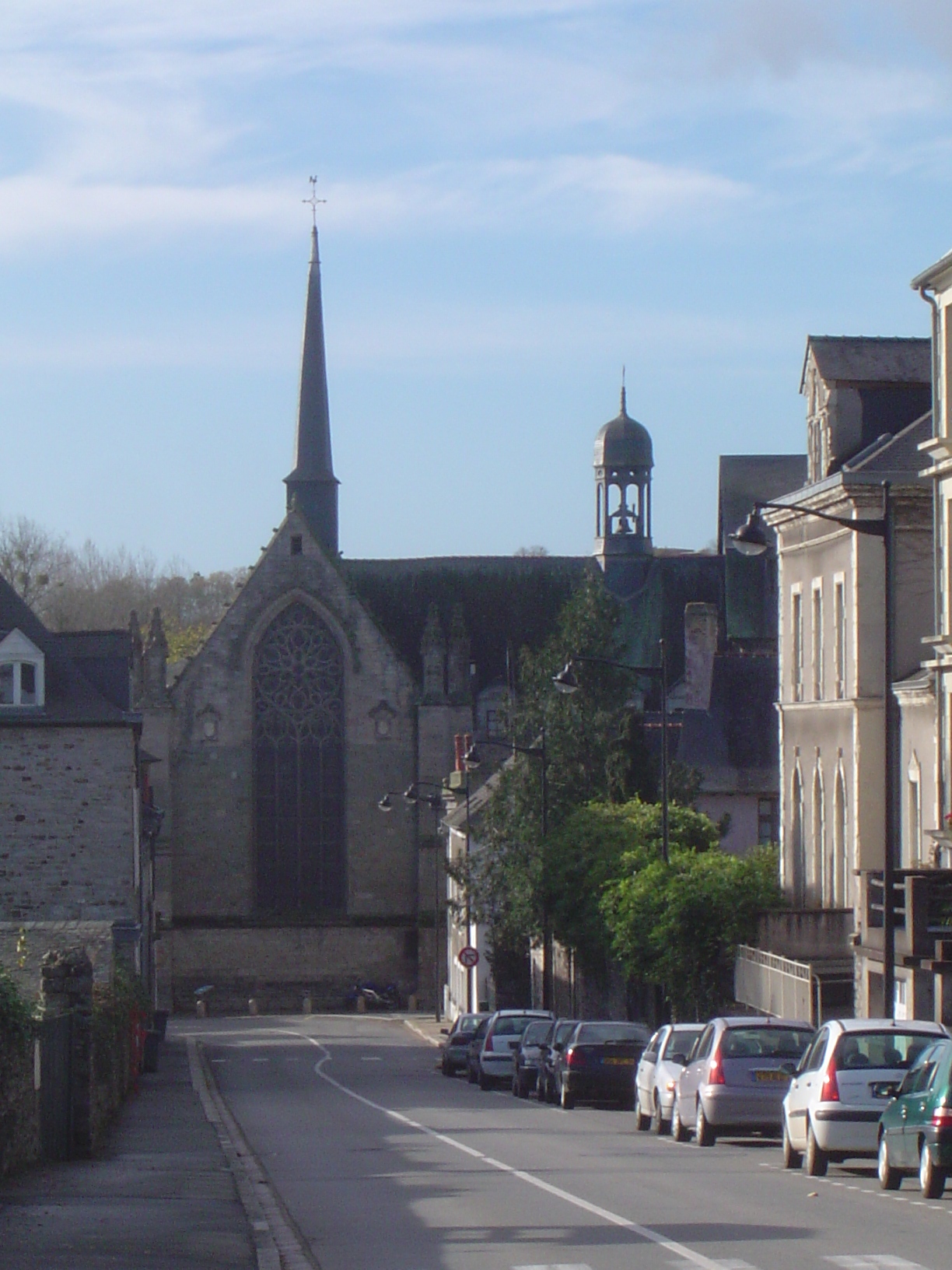
The Chapelle Saint-Nicolas de Vitré is a former hospital chapel turned sacred-art museum, standing in the old Rachapt quarter of Vitré, in the Ille-et-Vilaine department of Brittany. Its flamboyant Gothic architecture and rich collection of liturgical silverwork make it one of the more distinctive small museums in the region. How old is the chapel, and why did it move? The story begins in 1192, when Emma de Vitré founded a chapel dedicated to Saint Nicolas. By 1205 a hospice for the poor and sick had grown up around it. The original site did not last, though: in 1222, Baron André III de Vitré ordered the construction of new town ramparts, forcing the hospice to relocate to the bank of the Vilaine river, where the chapel still stands today. A small settlement called Rachapt quickly formed around the relocated hospice, already recorded under that name by 1227. What explains the flamboyant Gothic style? The building seen today largely dates from the turn of the 16th century, a period when Vitré grew wealthy on the cloth and linen trade. Robert de Grasmenil, a canon of Vitré and administrator of the hospital, had the church rebuilt, with the foundation act dated 21 July 1500. Built of slate and sandstone, the chapel displays the ornate tracery and stonework typical of flamboyant Gothic architecture, a style favored by prosperous Breton towns of the era. The building was listed as a historical monument in 1980. Who were the Augustinian sisters? In August 1655, five Augustinian sisters of Mercy arrived in Vitré and were formally admitted to run the hospital the following month, gaining the right to use the hospice chapel for worship. Construction of an adjoining convent began in 1657 on land purchased in the Rachapt quarter, and the sisters continued caring for patients there until 1974. What is inside the chapel today? In 1986 the chapel was converted into the Musée Saint-Nicolas, a museum of sacred art, and the display was expanded in 1997 into the former choir used by the Augustinian nuns. Visitors can see the tomb of Robert de Grasmenil, who died in 1500, a high altar dating from 1870, wall paintings from the 15th and 16th centuries, and a wrought-iron grille from the 17th century. The former nuns' choir now houses an exhibition tracing French religious silverwork and goldsmithing from the 17th to the 20th century, a collection significant enough to give the museum national reference status in its field. When can you visit? From 1 May to 30 September, the museum opens daily from 10am to 12:45pm and 2pm to 6pm. From 1 October to 30 April, hours shift to 10am-12:15pm and 2pm-5:30pm, and the museum is closed on Tuesdays. A standard ticket costs 4 euros, a reduced rate is 2.50 euros, and admission is free for visitors under 18 and for the unemployed. Frequently asked questions Where exactly is the Chapelle Saint-Nicolas located? In the historic Rachapt quarter of Vitré, beside the Vilaine river, in the Ille-et-Vilaine department of Brittany. How old is the chapel? The founding dates to 1192, though the current flamboyant Gothic building results from a rebuilding completed in 1500. What can visitors see inside? The Musée Saint-Nicolas, a museum of sacred art with a notable collection of French religious silverwork from the 17th to 20th centuries, plus medieval wall paintings and the tomb of Robert de Grasmenil. Is the chapel a protected monument? Yes, it has been listed as a historical monument in France since 1980.
-
abbatiale Saint-Sauveur d'Aniane
Aniane
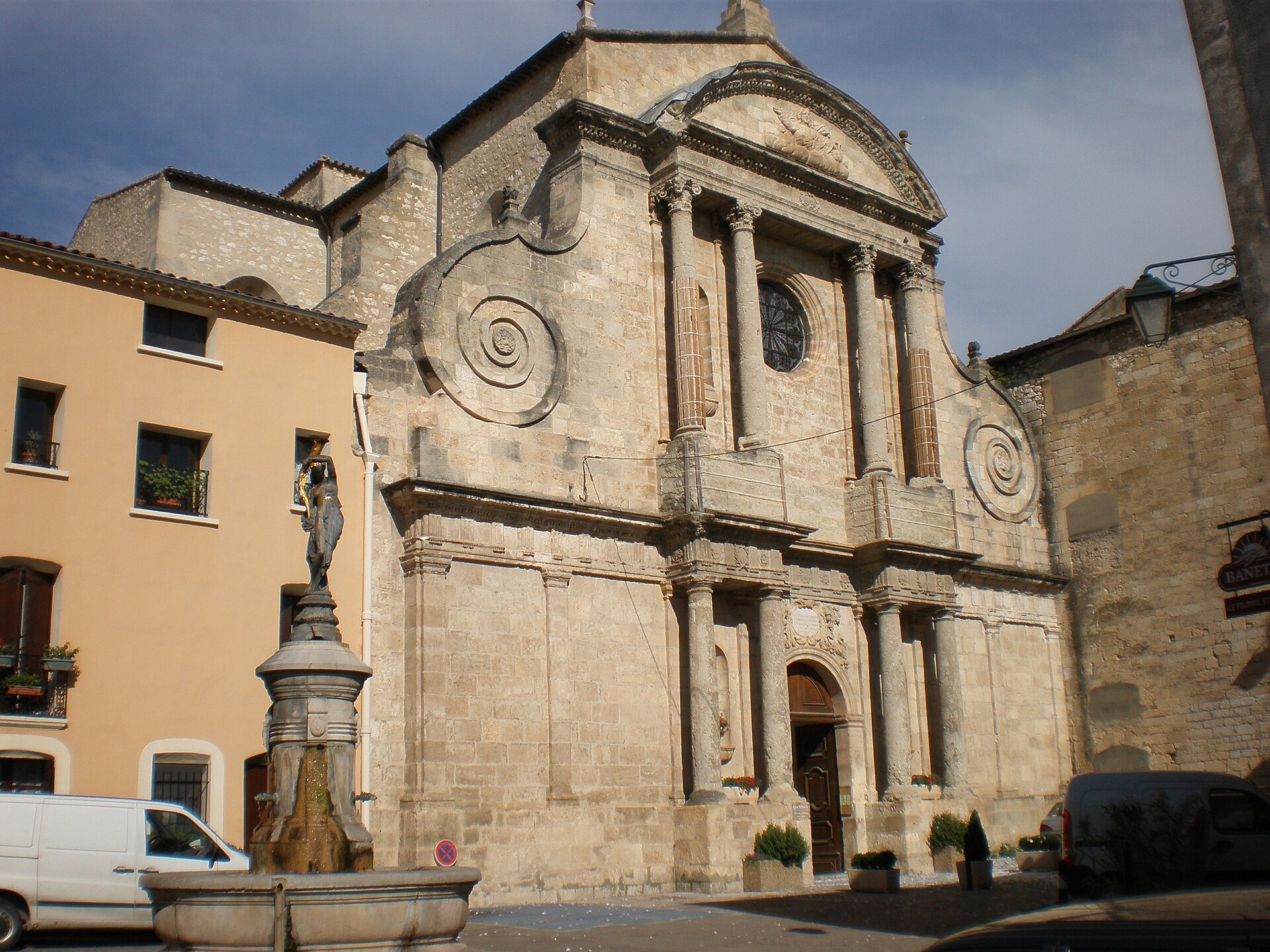
The Abbatiale Saint-Sauveur d'Aniane is a former abbey church in Aniane, a small town in the Hérault department of southern France. Once the heart of one of medieval Europe's most influential monasteries, the building still serves today as the town's parish church. Who founded the abbey, and why does it matter? The monastery's story begins with Benedict of Aniane, a Visigothic nobleman originally named Witiza who took the monastic name Benedict after entering religious life. He established the community toward the end of the 8th century, with historical accounts placing the foundation between 777 and 782, and shaped it as a model of strict observance of the Rule of Saint Benedict of Nursia. His reputation grew until he became a trusted advisor, first to Charlemagne and later to his successor, Louis the Pious. It was under Louis the Pious that the abbey received a grant of saltworks in March 822, the earliest surviving written record of the monastery. The monastic reforms developed at Aniane spread across the Carolingian Empire and shaped religious life far beyond the abbey's own walls. How prominent was the abbey in the Middle Ages? During the medieval period, Aniane ranked among the wealthiest and most influential monasteries in the region. It controlled extensive landholdings, and an entire settlement grew up around its walls under monastic jurisdiction - the nucleus of the town of Aniane as it exists today. Why does the current church date only from the 18th century? The Wars of Religion took a heavy toll on the abbey: between 1562 and 1572, its monastic buildings were almost entirely destroyed. Recovery came only decades later. In 1633, the community joined the reformed Congregation of Saint-Maur, an order of Benedictine monks dedicated to restoring discipline and former grandeur to France's older abbeys. It was the Maurists who gave Aniane the church seen today - construction of the new abbatiale Saint-Sauveur ran from 1679 to 1714, producing the imposing, classically inspired building that still stands. What stands out inside the church? Among the church's notable features is an 18th-century organ case, a decorative structure typical of the grand monastic churches of that period. The building's austere, classically composed architecture contrasts sharply with the site's turbulent history, reflecting the Maurists' ambition to restore Aniane's former stature after the destruction it had suffered. Can visitors go inside? The former abbey church remains an active Catholic parish church dedicated to the Holy Saviour, Saint-Sauveur, and is open to visitors as part of exploring Aniane's historic centre. Since 9 September 2002, the building has been listed as a monument historique, formally recognising its architectural and historical importance. Frequently asked questions Who founded the abbey at Aniane? Benedict of Aniane, a former Visigothic nobleman known as Witiza, toward the end of the 8th century. When was the current church built? The present abbatiale was constructed between 1679 and 1714 by Benedictine monks of the Congregation of Saint-Maur. Do the original monastic buildings still survive? No - they were destroyed between 1562 and 1572 during the Wars of Religion; the current church results from the later Maurist rebuilding. Is the church still used for worship? Yes, it continues to function as the parish church of Saint-Sauveur and has been listed as a monument historique since 2002.
-
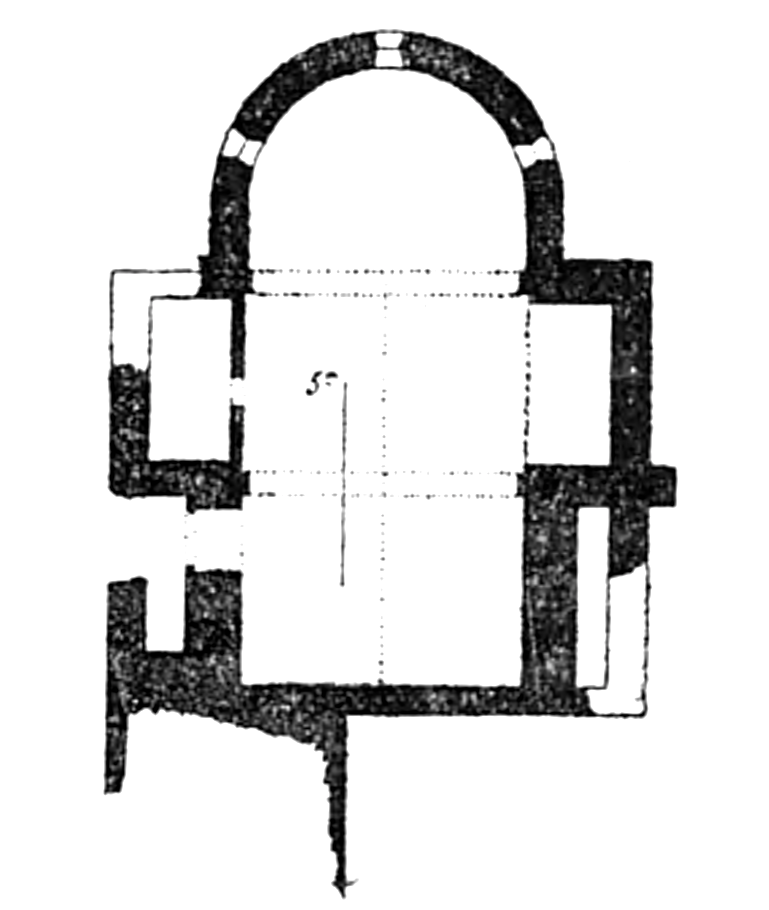
Valbonne abbey
Argelès-sur-Mer
Valbonne Abbey, in French Abbaye de Valbonne, is the ruin of a former Cistercian monastery tucked into a remote valley of the Albères massif, within the municipality of Argelès-sur-Mer in the Pyrénées-Orientales department, on France's Catalan coast. It's a quiet detour for visitors drawn to medieval ruins and hillside walking, well away from the crowded beach resorts nearby. How old is the abbey, and who founded it? The valley itself had monastic ties going back to the 9th century, when it belonged to the abbey of Saint-Cyr de Colera on the far side of the Albères ridge. The Valbonne community itself was established at the start of the 13th century by monks sent from the abbey of Sainte-Marie de Fontfroide, one of the leading Cistercian houses in the wider Languedoc region. Like other Cistercian foundations, the monks deliberately chose an isolated, hard-to-reach site, away from secular settlements. Why was the monastery abandoned? Monastic life here was interrupted more than once. The monks first left Valbonne in the 15th century. The community later returned, but the abbey was abandoned for good in 1734, mainly because the site's isolation made ordinary monastic life too difficult to sustain. From the 18th century onward the building was no longer used for worship and gradually fell into ruin. What survives on site today? The most substantial remaining structure is the vaulted nave of the monastery church — modest in size, roughly a dozen metres long, and still standing in reasonably good condition. The apse and transept have not survived. Stylistically, the building sits at the transition between late Romanesque and early Gothic, typical of 12th-century construction in the region. Visitors can also see traces of the old cloister, along with carved marble fittings from the church's liturgical furniture, including a holy water stoup and a baptismal font. The overall architecture reflects the austere simplicity typical of Cistercian building, which deliberately avoided decorative excess. Can you actually visit the abbey? The ruins now sit on the grounds of the Mas de Vallbona, a private farm property, so access to the buildings themselves is limited and depends on the landowners. Most visitors experience the site from the outside, combined with a walk through the surrounding valley — a quiet, green pocket of the Albères massif, a world away from the busy beaches of Argelès-sur-Mer. Frequently asked questions Is this the same place as the Chartreuse de Valbonne? No. These are two unrelated sites that happen to share a name. The abbey covered here sits in the Pyrénées-Orientales, within Argelès-sur-Mer, and was a Cistercian monastery. The Chartreuse de Valbonne is a much larger and better-preserved Carthusian charterhouse located in the Gard department, in a different part of France entirely. How old are the ruins? The monastic community was founded in the early 13th century, though the valley's monastic connections date back further, to the 9th century. Why did the monks leave? The valley's isolation made everyday monastic life increasingly impractical, leading to a first abandonment in the 15th century and a final one in 1734. What can visitors actually see? The vaulted nave of the former abbey church, remnants of the cloister, and marble liturgical fittings such as the holy water stoup and baptismal font, all in the plain Cistercian style.
-
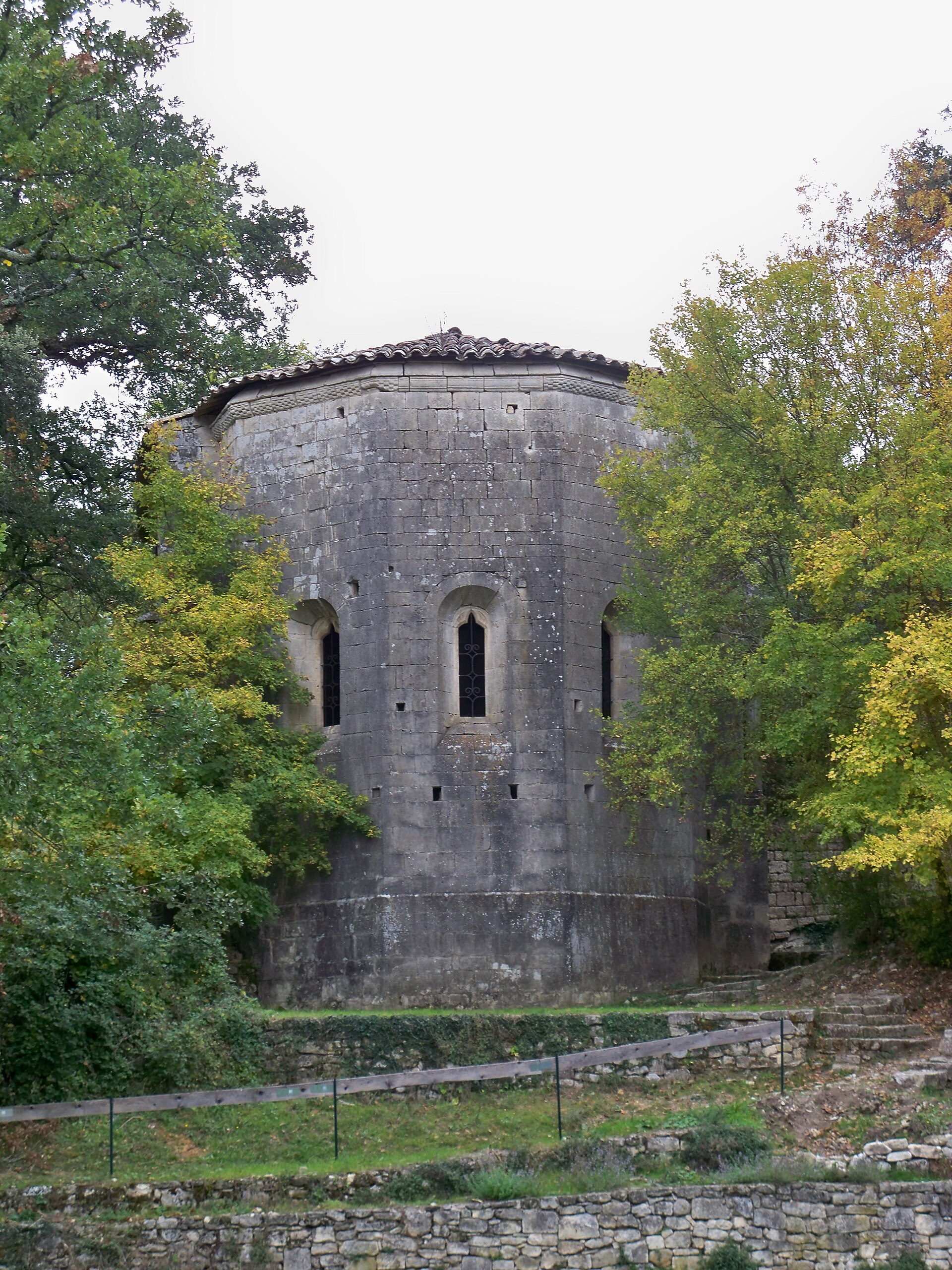
Prieuré de Carluc
Céreste-en-Luberon
Prieuré de Carluc is a small but historically dense monastic complex tucked into the hills near Céreste, in the Alpes-de-Haute-Provence department at the edge of the Luberon. It combines a Romanesque chapel, the remains of two further churches, and a necropolis of tombs carved straight into the rock — an unusually rich mix for such a modest, out-of-the-way site. Where is Prieuré de Carluc located? The priory sits in a quiet, wooded setting a short distance from the village of Céreste, surrounded by the dry, rocky slopes typical of this part of Provence. The isolation is not accidental: the site had a sacred function long before Christianity arrived, and its proximity to the ancient Via Domitia, the Roman road linking Spain to Italy, made it a natural stopping point for travelers and pilgrims through the Middle Ages. How did the site's history begin? Before the Christian priory existed, Carluc was home to a pagan sanctuary, connected to a nearby Gallo-Roman settlement known as Catuiaca. The oldest surviving document mentioning the site dates to 1011 and records a donation made to Abbot Archinric, a figure linked to the Abbey of Montmajour. According to local tradition, Archinric retired to Carluc and died there in 1021, an event that helped cement the site's reputation as a place of pilgrimage. Through the 11th century the community operated independently, receiving a steady stream of donations from the surrounding population. It was only under Pope Gelasius II, around 1118-1119, that Carluc formally became a dependent priory of the Abbey of Montmajour. Rebuilding work followed, and most of the architecture still visible today dates from this 12th-century phase. As a priory under Montmajour's authority, Carluc oversaw a dozen or so smaller rural communities scattered across Haute-Provence, a sign of its regional weight in the medieval period. What can visitors see on site today? The heart of the complex is a stone Romanesque chapel with a pentagonal apse, decorated with a checkerboard frieze and carved capitals showing bird motifs. Around the chapel spreads a necropolis of rock-cut graves — the site is thought to have functioned as a pilgrimage destination where the faithful sought burial close to the resting place of local martyr-saints. Part of the necropolis lies within a gallery carved directly into the rock face, partially vaulted and decorated with columns bearing Corinthian-style capitals, connecting straight through to the chapel. Excavations carried out in 1960-1961 uncovered further sarcophagi within this gallery, confirming that the site was used as a burial ground over an extended period. Beyond the main chapel, the ruins of two smaller churches survive nearby, partly hewn from the rock themselves — enough remains to trace the outline of the original layout, though not to reconstruct it in full. A visit to Carluc means walking among stone ruins set against Provençal woodland rather than following a curated museum circuit — the site has kept a raw, low-key character, well away from the crowds drawn to the Luberon's better-known landmarks. Frequently asked questions What is Prieuré de Carluc? It is the ruined remains of a medieval priory once dependent on the Abbey of Montmajour, featuring a Romanesque chapel and a necropolis of rock-cut tombs. When was the priory founded? The earliest document confirming a place of worship at Carluc dates from 1011; the site became a dependent priory of Montmajour around 1118-1119, under Pope Gelasius II. Why is it called a rock-cut necropolis? Because a significant part of the burial ground, along with the gallery connecting to the chapel, was carved directly out of the rock rather than built in the conventional way. Was Carluc an important pilgrimage site? Its position near the ancient Via Domitia, combined with the reputation for holiness of its founding figure, made it a notable stop for pilgrims traveling between Spain and Italy.
-
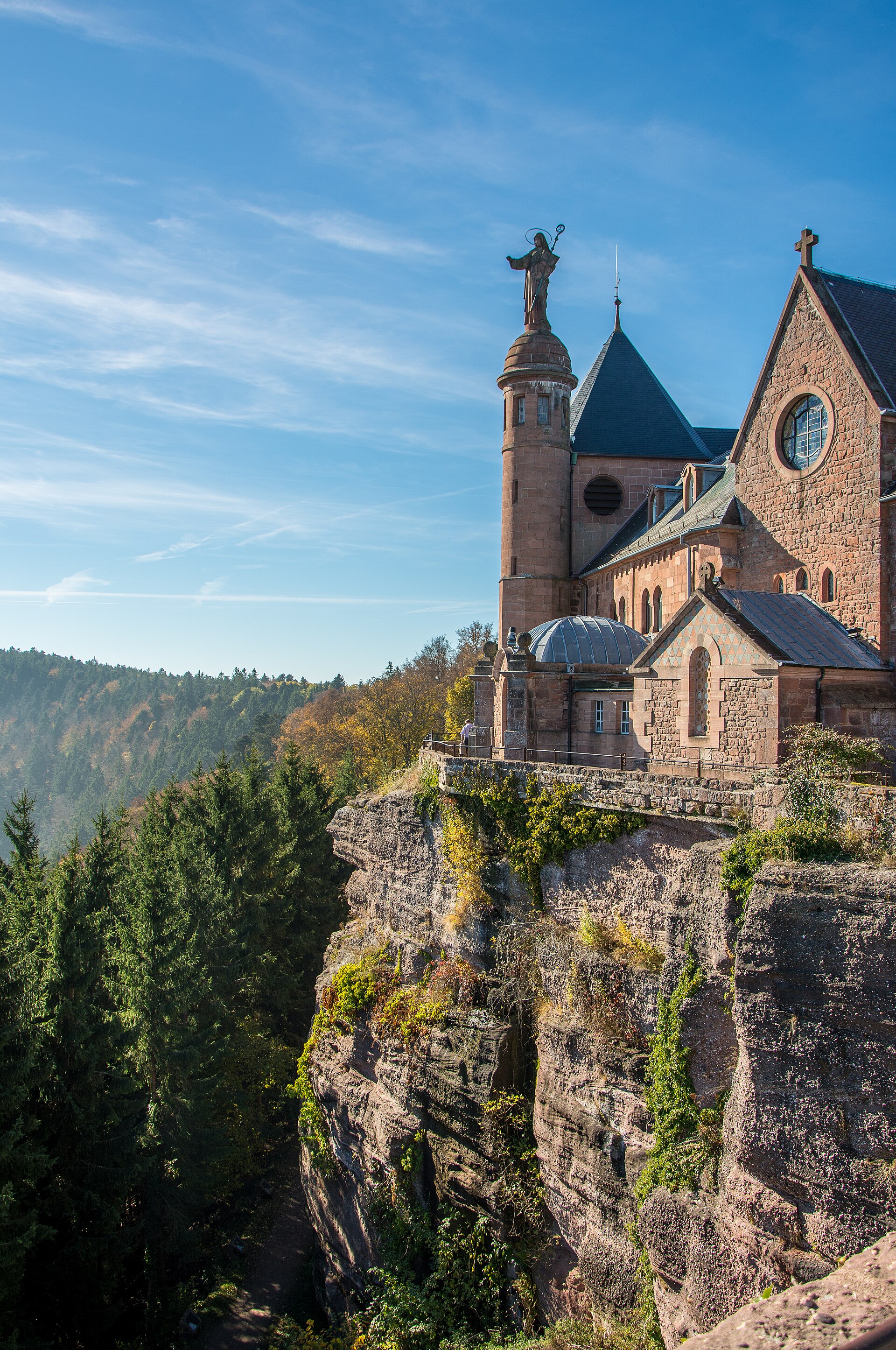
Mont Sainte-Odile Abbey
Ottrott
Mont Sainte-Odile Abbey (also called Hohenburg Abbey) crowns one of the best-known summits of the Vosges mountains, above the village of Ottrott in the Bas-Rhin department of Alsace. Perched at roughly 760 metres above sea level, the abbey has been the region's foremost pilgrimage destination for over a thousand years, forever linked to Saint Odile, the patron saint of Alsace. Where exactly is the abbey located? The abbey sits on Mont Sainte-Odile in the Vosges range, close to the towns of Ottrott and Obernai, which serve as the starting points for most walking trails up the mountain. From the terrace beside the monastery, visitors get sweeping views over the Alsace plain and the Rhine valley, and on clear days even across to the Black Forest on the German side of the border. That panorama has drawn both pilgrims and travelers here for centuries. Who was Saint Odile, and why was an abbey founded here? According to tradition, Odile was born blind at the end of the 7th century, the daughter of Adalric (Etichon), Duke of Alsace. Her father is said to have rejected her because of her blindness and her sex, so she was sent away to be raised at a monastery in Burgundy. The story goes that at age twelve she was baptized by the itinerant bishop Erhard of Regensburg, who gave her the name Odile — and that she miraculously regained her sight at the moment of her baptism. When her father later fell seriously ill, Odile returned to nurse him, and the two reconciled. Adalric is then said to have founded a monastery for his daughter at the mountain's summit, where she became the first abbess. Odile later established a second community lower down, at Niedermünster, which included a hospital for the sick. Why is Odile considered the patron saint of Alsace? Veneration of Saint Odile as protector of the region, and of the blind and those suffering from eye ailments, had already existed for centuries before Pope Pius VII formally confirmed her patronage in 1807. Her feast day falls on 13 December, observed in Alsace itself a day later, on 14 December. A spring on the abbey grounds has long been credited with healing properties, particularly for eye conditions, and remains one of the reasons pilgrims still come here seeking cures or quiet reflection. What else is worth seeing nearby? Encircling the summit of Mont Sainte-Odile is the so-called Pagan Wall (Mur Païen), a massive stone rampart roughly 10 kilometres long, built from hundreds of thousands of rock blocks. Its exact age and origin are still debated among researchers, but its sheer scale makes it a popular stop for walkers combining a hike with a visit to the abbey. The monastic complex itself, with its chapels, shrines, and viewing terrace, continues to function as a living religious community and place of prayer, rather than existing purely as a historic monument. Frequently asked questions Can visitors tour the abbey? Yes, the abbey grounds are open to the public, and the chapels remain accessible to both pilgrims and tourists. How do you get to Mont Sainte-Odile? Most visitors approach via Ottrott or Obernai; given the mountainous terrain, many choose to walk up through the forest rather than drive all the way to the top. What is the Pagan Wall? It is an extensive stone wall encircling the summit for about 10 kilometres, whose precise origin remains a subject of archaeological research. Why does Saint Odile matter so much to Alsace? Tradition holds that she founded both the abbey at the summit and the second monastery at its foot, and her cult as patron saint of the region and of those with eyesight problems has continued unbroken since the Middle Ages.
-
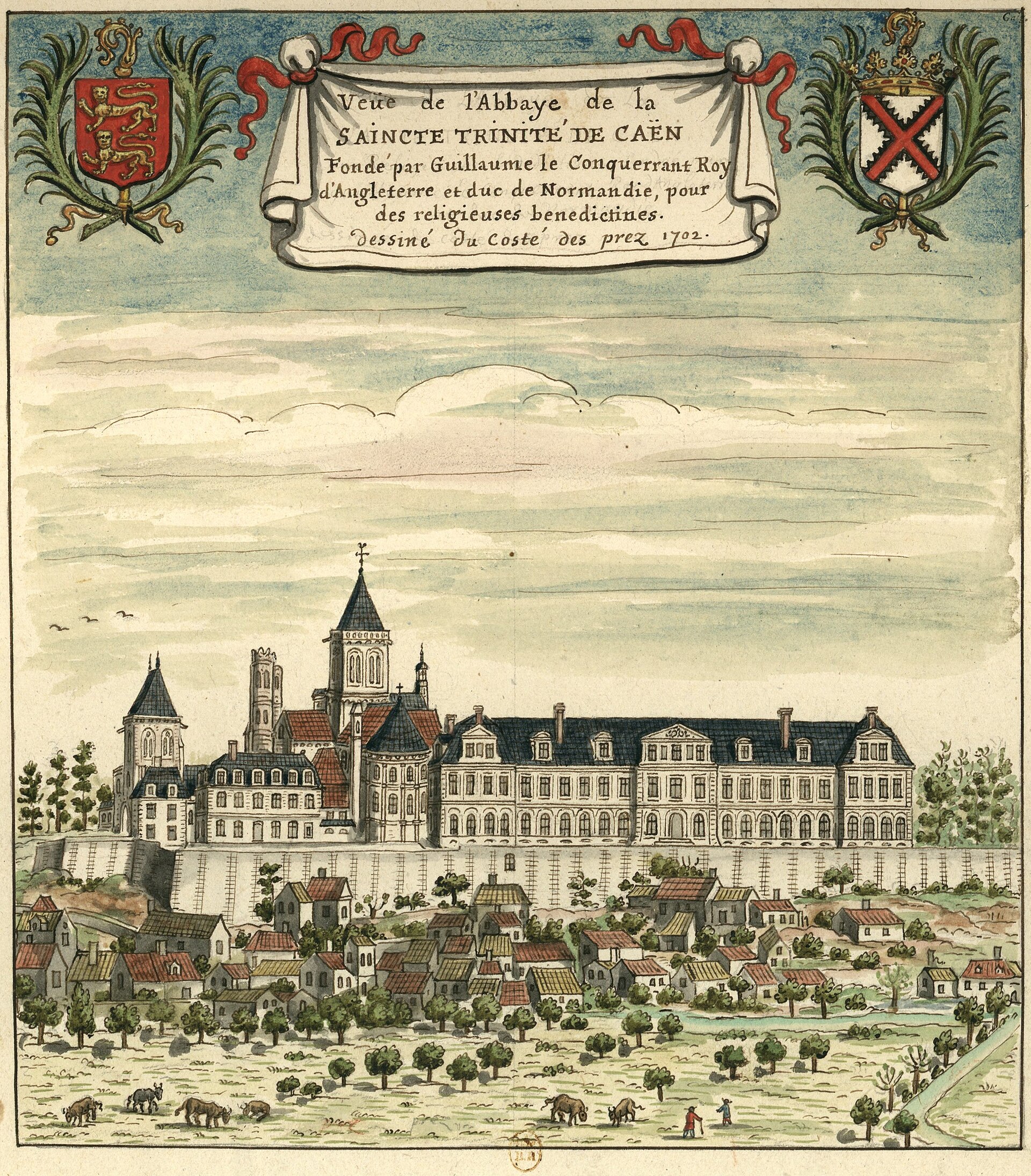
Abbey of Sainte-Trinité
Caen
Abbey of Sainte-Trinité, widely known as the Abbaye aux Dames, is a former Benedictine nunnery in Caen, Normandy, founded in the mid-11th century by Matilda of Flanders, wife of William the Conqueror. Together with its abbey church, it ranks among the finest Romanesque monuments in the region and today houses the seat of the Regional Council of Normandy. Why was the abbey founded? The abbey's origins trace back to the marriage of Duke William of Normandy and Matilda, daughter of the Count of Flanders, contracted around 1050. The union was contested by the Church on grounds of consanguinity, and Pope Leo IX is said to have threatened the couple with excommunication. Approval eventually came from Pope Nicholas II, on condition that the ducal couple atone by founding two monasteries in Caen. Around 1059-1060, William endowed the men's Abbaye Saint-Étienne (Abbaye aux Hommes), while Matilda endowed the women's Abbaye Sainte-Trinité (Abbaye aux Dames). Beyond religious penance, the two foundations also served a political purpose: Caen, closer than Rouen to the more rebellious western reaches of the duchy, gained a second stronghold of ducal authority. When was the abbey church consecrated? The abbey church, dedicated to the Holy Trinity, was consecrated on 18 June 1066, only months before William's invasion of England. The building stands as one of the most significant examples of Norman Romanesque architecture, though extensive 19th-century restoration altered parts of its original appearance. Where is Matilda of Flanders buried? Matilda died in November 1083 and was buried in the choir of the church she had founded. Her tomb, marked by a black marble slab bearing her engraved epitaph, survives to this day and remains one of the most visited points inside the church. What does the abbey building house today? The community was dissolved during the French Revolution, and the buildings passed through several later uses. Today the former monastic complex serves as the seat of the Regional Council of Normandy, making the Abbaye aux Dames an unusual case of a medieval abbey now filled with an administrative institution, while the church and parts of the cloister remain open to visitors. Where exactly is the abbey and how do you get there? The Abbaye aux Dames stands in central Caen, in the Calvados department, on the eastern edge of the historic town near the river Orne. Its central location, close to the train station and main thoroughfares, makes it an easy walk from anywhere in the city centre. Frequently asked questions Are the Abbaye aux Dames and the Abbaye aux Hommes the same place? No. They are two separate abbeys founded at the same time by the ducal couple – the men's Saint-Étienne by William and the women's Sainte-Trinité by Matilda. Both stand in Caen but in different parts of the city. Can visitors see the church interior and Matilda's tomb? Yes, the abbey church of the Holy Trinity is open to visitors, and Matilda of Flanders' tomb slab is located in the choir. Why was the abbey founded in the first place? Its foundation was tied to penance for William and Matilda's marriage, which had been contested by the Church, and it also carried political weight in securing Caen's status within the duchy. What is the abbey used for today? The former monastic buildings now house the seat of Normandy's regional government, while the church remains a historic monument open for visits.
-
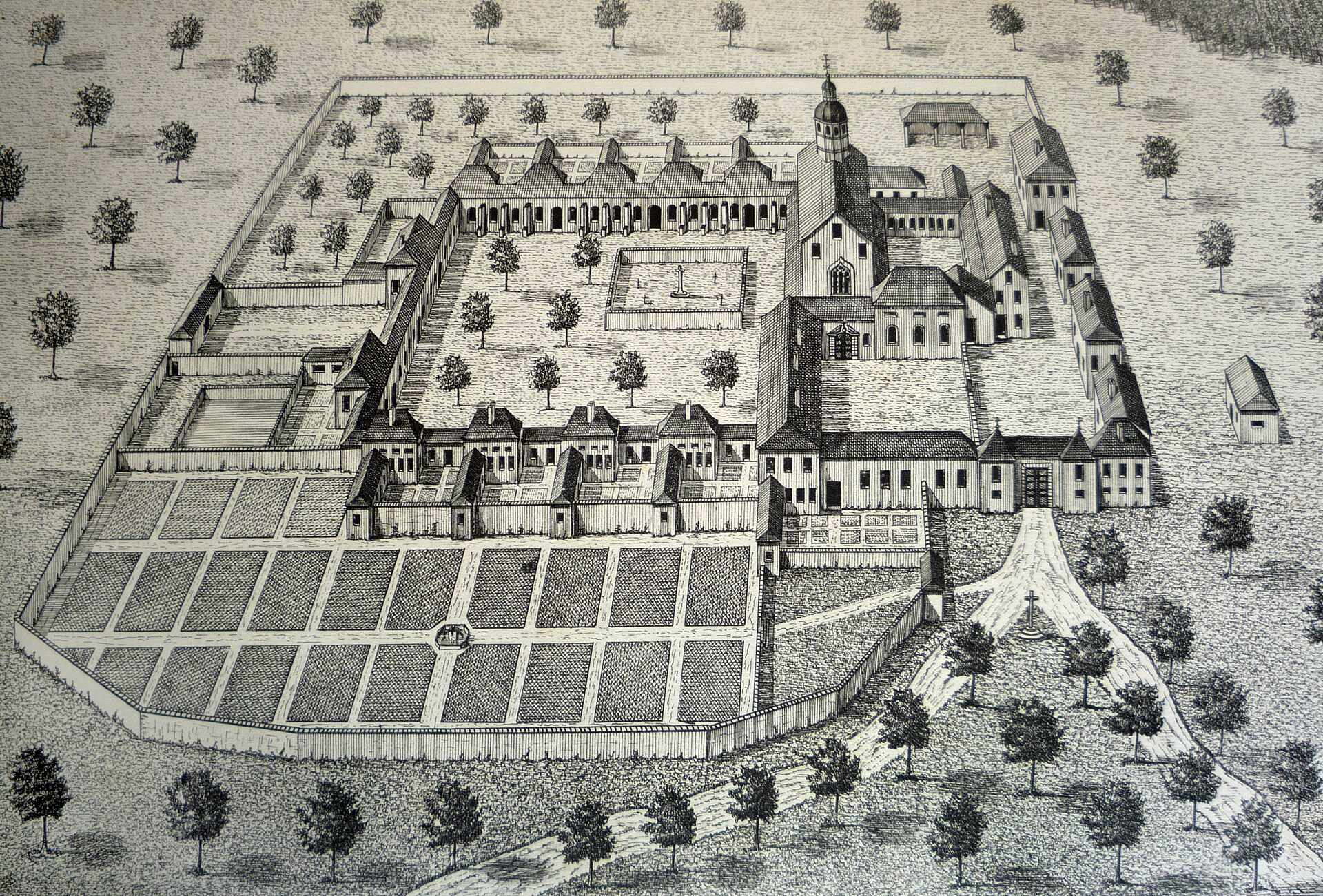
chartreuse de Meyriat
Vieu-d'Izenave
Chartreuse de Meyriat – Carthusian Monastery Ruins in Bugey Chartreuse de Meyriat is what remains of a former Carthusian monastery, tucked away in the forest above Vieu-d'Izenave, in the Ain department of the Auvergne-Rhône-Alpes region. Set deep in the Haut-Bugey countryside, away from the busiest tourist routes, the site today draws visitors mainly for its quiet, wooded setting and the weathered stones that still hint at centuries of monastic life. How did the monastery come to be founded? The charterhouse was established in 1116, when the valley of Meyriat was granted to Carthusian monks by Ponce de Balmey, a canon of Lyon who later became bishop of Belley. It became the sixth charterhouse founded by the order, belonging to the Burgundian province and falling under the diocese of Lyon. The first buildings were dedicated to Saint Stephen, and the community later grew into a larger complex dedicated to Saint Mary. How did the community's estate grow over time? Over the following centuries, the monks steadily expanded their holdings. By 1790 the monastery's domain covered more than 1,800 hectares, stretching from Izenave to Saint-Martin-du-Fresne and from Vieu-d'Izenave to Brénod. Relations with neighboring communities were not always easy, as disputes over land and forest rights recurred through the centuries. In 1424, Brénod passed under the authority of the Counts of Savoy, who expelled the monks from the area — a reminder of how closely the charterhouse's fortunes were tied to regional feudal politics. What happened to the monastery during the French Revolution? Despite earlier tensions, Meyriat continued its monastic life uninterrupted until the late eighteenth century. The French Revolution, which banned religious orders in 1791, brought centuries of Carthusian presence to an end. The community was disbanded that same year, and in 1796 the entire estate was sold off as national property. The buildings were subsequently plundered and dismantled, with much of the stone reused by local residents for other construction. Is there really a hidden treasure in the ruins? Local legend holds that in 1792, just before the monastery was finally abandoned, the prior and the sacristan walled up roughly ten chests filled with gold, silver, and jewels inside a secret underground chamber. The treasure has never been found, and the story still circulates among the people of Vieu-d'Izenave, occasionally luring curious visitors into the surrounding woods. What can visitors see on site today? Little survives of the original complex: a section of the northern boundary wall, a few remaining stone steps, and a single carved block bearing a fleur-de-lys — a modest trace of the site's former status. The ruins are slowly being reclaimed by the forest, giving the place a quiet, atmospheric feel. The site is freely accessible year-round, though visitors should keep in mind that it is unguarded and has no tourist facilities. Frequently asked questions Where exactly is Chartreuse de Meyriat located? In the forest within the commune of Vieu-d'Izenave, in the Ain department of Auvergne-Rhône-Alpes, in the historic Bugey area. When was the monastery founded? It was founded in 1116 by Ponce de Balmey. Can the ruins be visited? Yes, the site is open to the public free of charge year-round, though it has no marked paths or visitor facilities. What remains of the original monastery? A stretch of wall, some old stone steps, and a carved fleur-de-lys stone — the rest was destroyed after the estate was sold in 1796. Is the legend of the hidden treasure true? It's a local oral tradition describing chests of gold and silver walled up in 1792 that were never recovered; no historical confirmation exists.
-
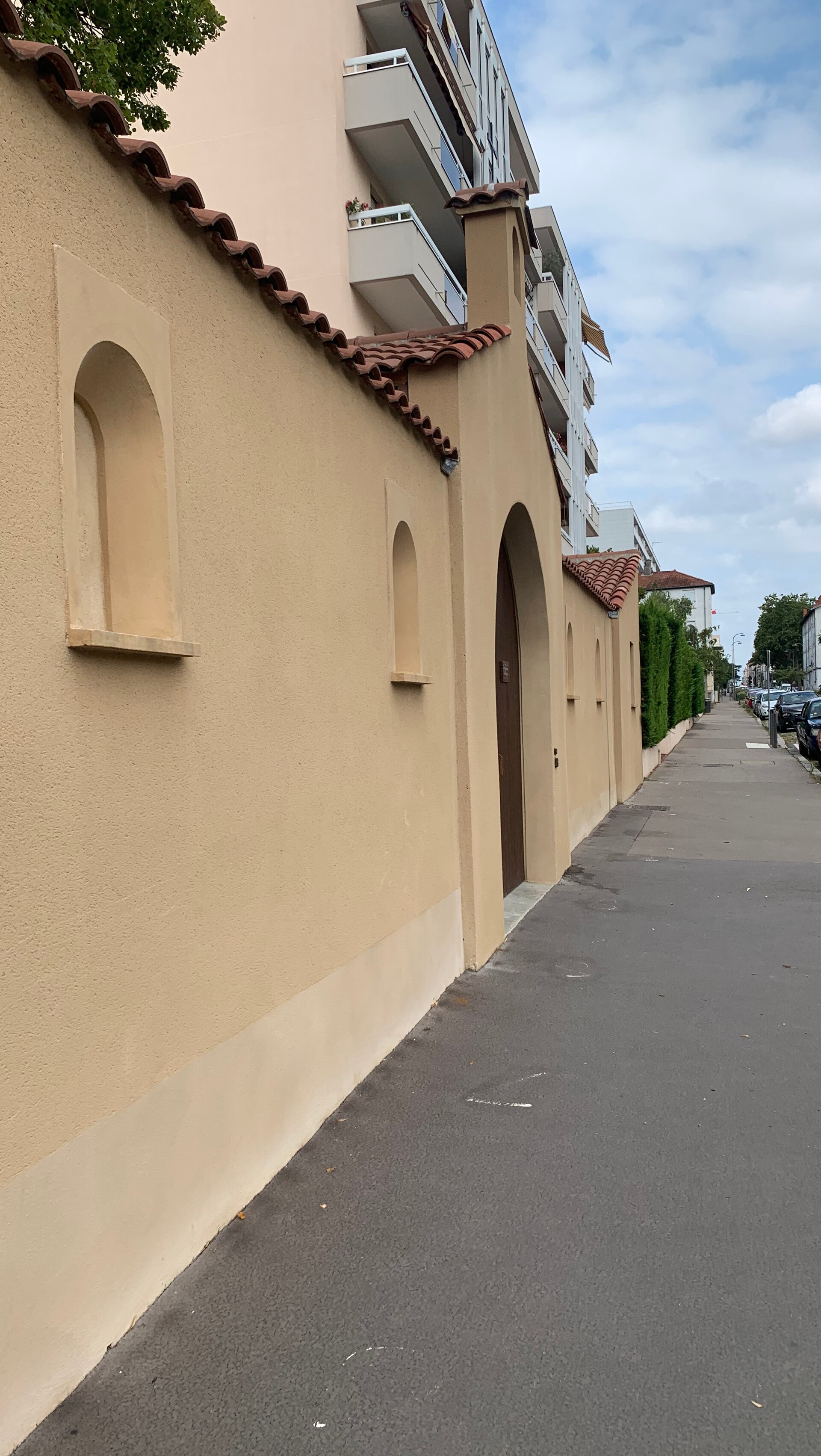
Petit monastère Lumière de l'Immaculée - Petites sœurs de l'Agneau
Lyon
Petit monastère Lumière de l'Immaculée is the small monastery of the Little Sisters of the Lamb (Petites sœurs de l'Agneau), tucked into the Croix-Rousse hill in Lyon, on rue Jacques-Louis Hénon. Built on land that once held the presbytery of the Sainte-Élisabeth church, the monastery has housed a small contemplative community since 2019, one that lives on alms and stays in close, everyday contact with its neighbors. Where exactly is the monastery? The monastery sits in Lyon's 4th arrondissement, on Croix-Rousse — a hill famous for its silk-weaving past and steep, winding streets. The 1,100-square-meter plot on which it was built was made available to the sisters on the former grounds of the Sainte-Élisabeth parish presbytery. It's a quiet residential corner of the city, away from the usual sightseeing circuit, which fits a community that deliberately keeps things modest and stays close to the people who live around it. Who are the Little Sisters of the Lamb? The community belongs to the wider Dominican family and blends a contemplative rule of life with an active presence among ordinary people. As a mendicant order, the sisters have no fixed income or salary: they live entirely on what is given to them, asking for it in person by knocking on doors or hitchhiking between visits. This daily begging round is not only how they get food — it's also how they end up in conversation with residents of whatever city they settle in. The community itself began in Vézelay in 1974 and was formally established in 1981; today it counts roughly 160 sisters and about thirty brothers, spread across Europe and the Americas. How did the Lyon monastery come about? The sisters arrived in Lyon in 2013, invited by then-Archbishop Cardinal Philippe Barbarin, who wanted their habit to be a visible presence on the city's streets. The cornerstone of the future monastery's chapel was blessed by Cardinal Barbarin on 21 October 2018. Construction was made possible by numerous donors, and the sisters moved into the finished building in 2019. What's inside, and what does community life look like? The building contains a chapel, a cloister, a refectory, individual cells, a library, and an oratory — the standard set of spaces for a small contemplative house. One distinctive feature of life here is the Saturday "open table": the sisters prepare a shared meal from whatever food has been donated to them and welcome neighbors and people in need to eat together. Since the new building was completed, the monastery can seat up to 50 people at that table. Frequently asked questions Can visitors tour the monastery? The building is first and foremost a place of prayer and religious life rather than a conventional tourist attraction. Visitors are more likely to encounter the sisters out in the Croix-Rousse neighborhood during their daily rounds asking for alms than inside the monastery itself. Why do the sisters ask for food on the street? It follows directly from their mendicant rule: the sisters give up any guaranteed income or provision on purpose, choosing instead to depend on the generosity of others, and they treat the daily begging round as a core part of their calling rather than a fallback. Since when has the community been in this building? The sisters have been present in Lyon since 2013. The building on Croix-Rousse where they now live was completed in 2019, following the blessing of the chapel's cornerstone in October 2018. What religious family do the Little Sisters of the Lamb belong to? They belong to the broader Dominican family, combining a contemplative tradition with an active, visible presence among the residents of the cities where they establish themselves.
-
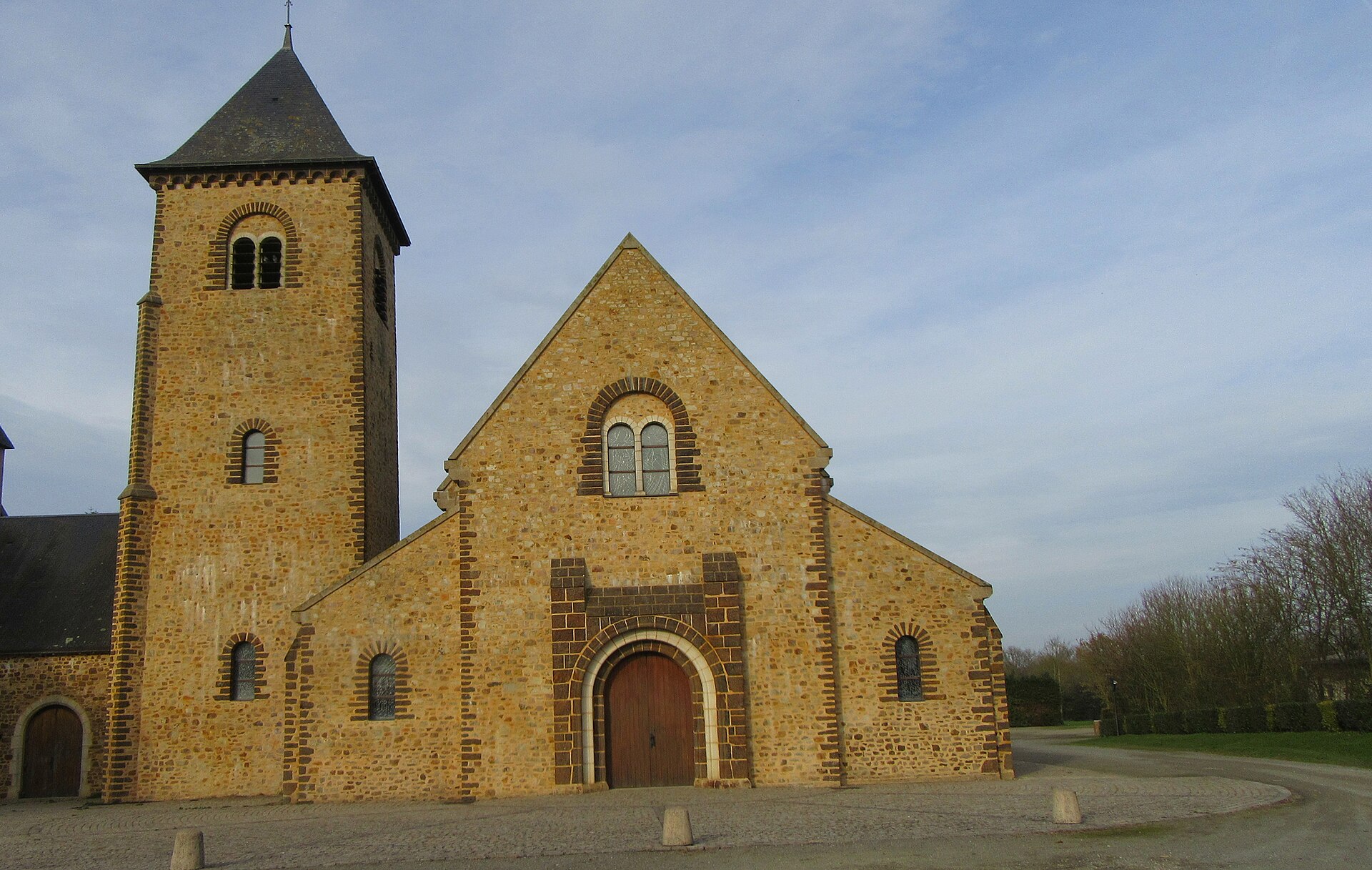
La Cotellerie
La Cotellerie is a small monastic estate in the Mayenne department of France, within the commune of Bazougers, in the Pays de la Loire region. Set in quiet farmland south of Laval, it has served for decades as a religious community's home and a retreat centre open to visitors. Where exactly is La Cotellerie? The estate sits in the commune of Bazougers, in the southern part of Mayenne, close to Meslay-du-Maine. The surrounding landscape is typically rural, with scattered farms and open fields, and La Cotellerie itself covers roughly 50 hectares of land. Access is via local roads from Laval or Château-Gontier; this is not a busy tourist site but a low-key corner of the countryside. Who lives there? A brief history The domain belongs to the community of the Little Brothers of Mary, Mother of the Redeemer — the male branch of the Providence community founded by Marie de la Croix (born Maria Nault) in Toulouse on 8 December 1939. The group later moved its base near Saint-Aignan-sur-Roë, and with the support of many friends and donors was able to acquire the Bazougers property. The brothers settled at La Cotellerie on 3 July 1971, and the site has since grown into their permanent home for community life and prayer. The church, chapel, and crypt At the heart of the estate stands a church dedicated to Saint Mary, built between 1989 and 1994 in a deliberately austere, Romanesque-inspired style — simple volumes, thick walls, and an emphasis on the interior rather than external ornament. The same church holds a crypt dedicated to the memory of the martyrs of Laval, giving the site a historical layer tied to the region's own past. Alongside the main church, a smaller chapel on the grounds is used for the community's daily services. What can visitors do there? La Cotellerie functions primarily as a retreat house. It welcomes individuals, families, and groups looking for quiet, rest, or a period of spiritual reflection, with stays ranging from a few hours to several days; on-site accommodation supports longer visits. This is not a paid-admission monument but a living religious community, and guests may take part in its prayer life or simply enjoy the calm of its extensive grounds. Frequently asked questions Which commune is La Cotellerie in? It lies within the commune of Bazougers, in the Mayenne department of the Pays de la Loire region, south of Laval. Who owns and runs La Cotellerie? It is home to the Little Brothers of Mary, Mother of the Redeemer, the male branch of the Providence community founded in Toulouse in 1939. When was the church built? The main church, dedicated to Saint Mary, was built between 1989 and 1994 in a Romanesque-inspired style. Can you stay overnight at La Cotellerie? Yes. The site offers accommodation for individuals and groups on retreat stays ranging from a few hours to several days. What is in the church's crypt? The crypt is dedicated to the martyrs of Laval, adding a historical dimension tied to the region's past.
-
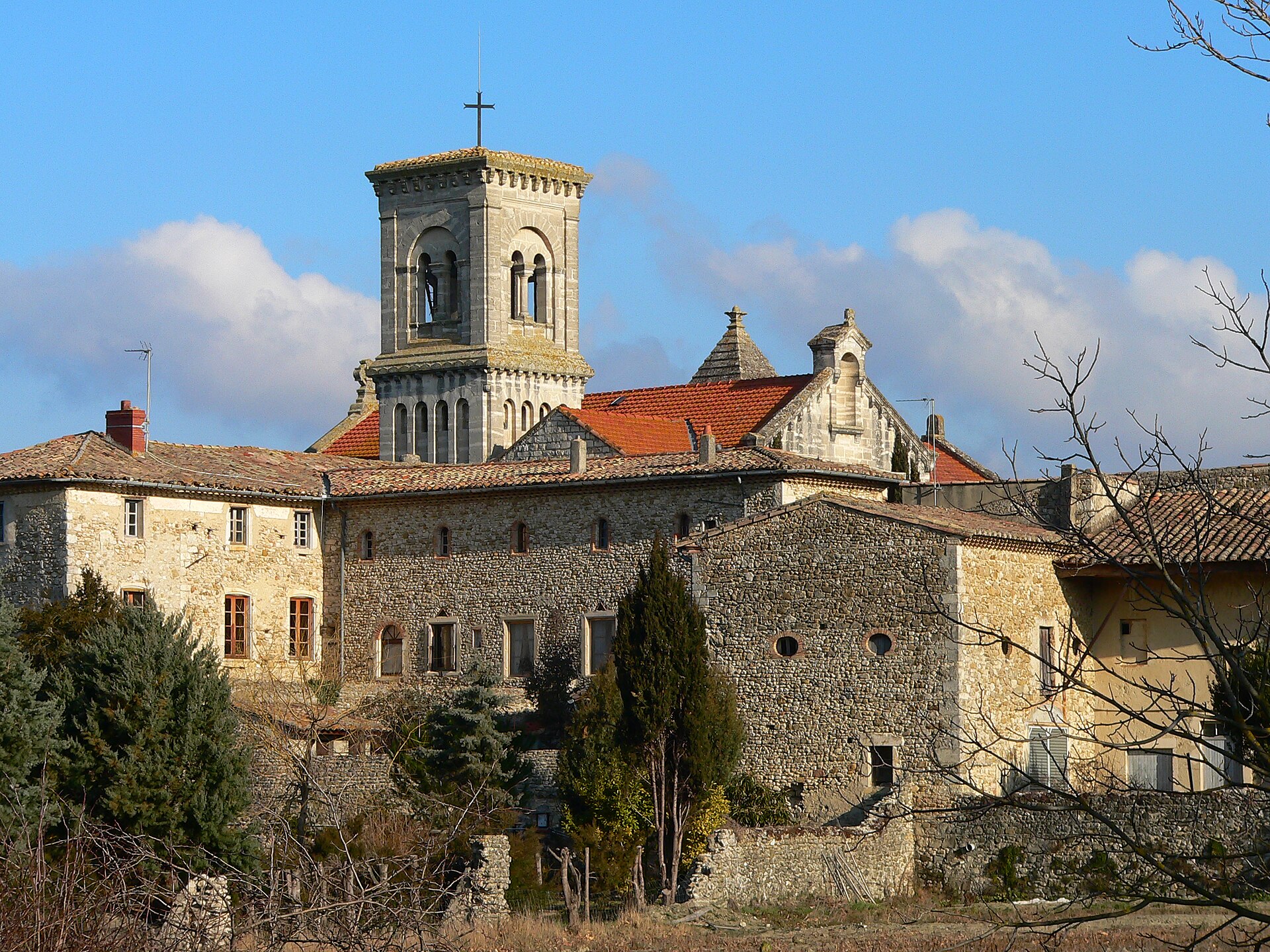
Abbaye Sainte-Anne de Bonlieu-sur-Roubion
Bonlieu-sur-Roubion
The Abbey of Sainte-Anne in Bonlieu-sur-Roubion is a former Cistercian convent in the Drôme department, in southeastern France. The small village of Bonlieu-sur-Roubion grew up directly around this religious foundation, and its church, later raised to the rank of minor basilica, remains the place's central landmark for anyone travelling through this corner of the Drôme provençale. Who founded the abbey, and when? The monastery was founded in 1171 by Countess Véronique de Marsanne, whom tradition links to the house of Poitiers, also known as Valentinois. From the outset it was a women's community, its nuns following the Cistercian rule under the authority of the abbey of Notre-Dame d'Aiguebelle. This kind of dependency was common among Cistercian foundations in the region, and it explains why Bonlieu's architecture and monastic organisation followed patterns established elsewhere in the order. What architectural style does the church show? The monastery church belongs to the Provençal Romanesque tradition and is considered a good example of Cistercian architecture that absorbed local Provençal influences. The plain volumes and restrained decoration typical of Cistercian building meet regional stonework solutions common across the south of France, giving the church a distinct, austere character. What happened to the abbey over the centuries? At the end of the 14th century, the abbey was devastated by Raymond de Turenne. The attack nevertheless spared part of the Romanesque church's fabric — the walls of the apses, the nave, and the adjoining chapter room. By the early 15th century, the ruined abbey had lost its independent status and become a simple priory attached to the Cistercian abbey of Valcroissant, near Die. Over the following centuries the buildings continued to decay and monastic life there effectively came to an end. How was the monastery brought back to life? Revival came only seven centuries after the countess of Marsanne had founded the monastery. In 1871, Marie Odiot de la Paillonne, who came from a family of the Comtat Venaissin, purchased the property, including the old church and the ruined buildings, in order to install a new religious community there. As the site was rebuilt, its religious standing grew too: Pope Leo XIII raised the church to the rank of minor basilica dedicated to Saint Anne, and it was consecrated on 11 October 1899. In the early 20th century, between 1901 and 1903, the sisters were forced to leave the monastery and withdrew to Belgium; they did not return to Bonlieu until the end of 1932. What is the site used for today? The former monastery now serves as the parish house of the Sainte-Anne de Bonlieu-sur-Roubion parish. The basilica also keeps its own religious calendar: every year on 26 July, the feast day of Saint Anne, it draws pilgrims who come specifically for the occasion. For visitors, this means the site combines the character of a historic monument with that of an active parish church. Frequently asked questions Who founded the abbey at Bonlieu-sur-Roubion? It was founded in 1171 by Countess Véronique de Marsanne as a women's Cistercian community under the authority of the abbey of Notre-Dame d'Aiguebelle. Why is the church now called a basilica? Because Pope Leo XIII raised it to the rank of minor basilica dedicated to Saint Anne; it was consecrated on 11 October 1899. What happened to the monastery in the Middle Ages? It was devastated by Raymond de Turenne at the end of the 14th century, and by the early 15th century it had become a mere priory dependent on the abbey of Valcroissant near Die. Do nuns still live at Bonlieu today? The community that rebuilt the monastery from 1871 left the site in 1901–1903 and only returned in 1932; the building today functions as the parish house rather than an active convent. When does the pilgrimage to Bonlieu-sur-Roubion take place? The annual pilgrimage to Saint Anne is held on 26 July, the liturgical feast day of the basilica's patron saint. Where exactly is the abbey located? It stands in the Drôme department, in the commune of Bonlieu-sur-Roubion, at coordinates 44.594085, 4.88045.
-
Royal abbey of Saint-Nicolas-aux-Bois
Saint-Nicolas-aux-Bois
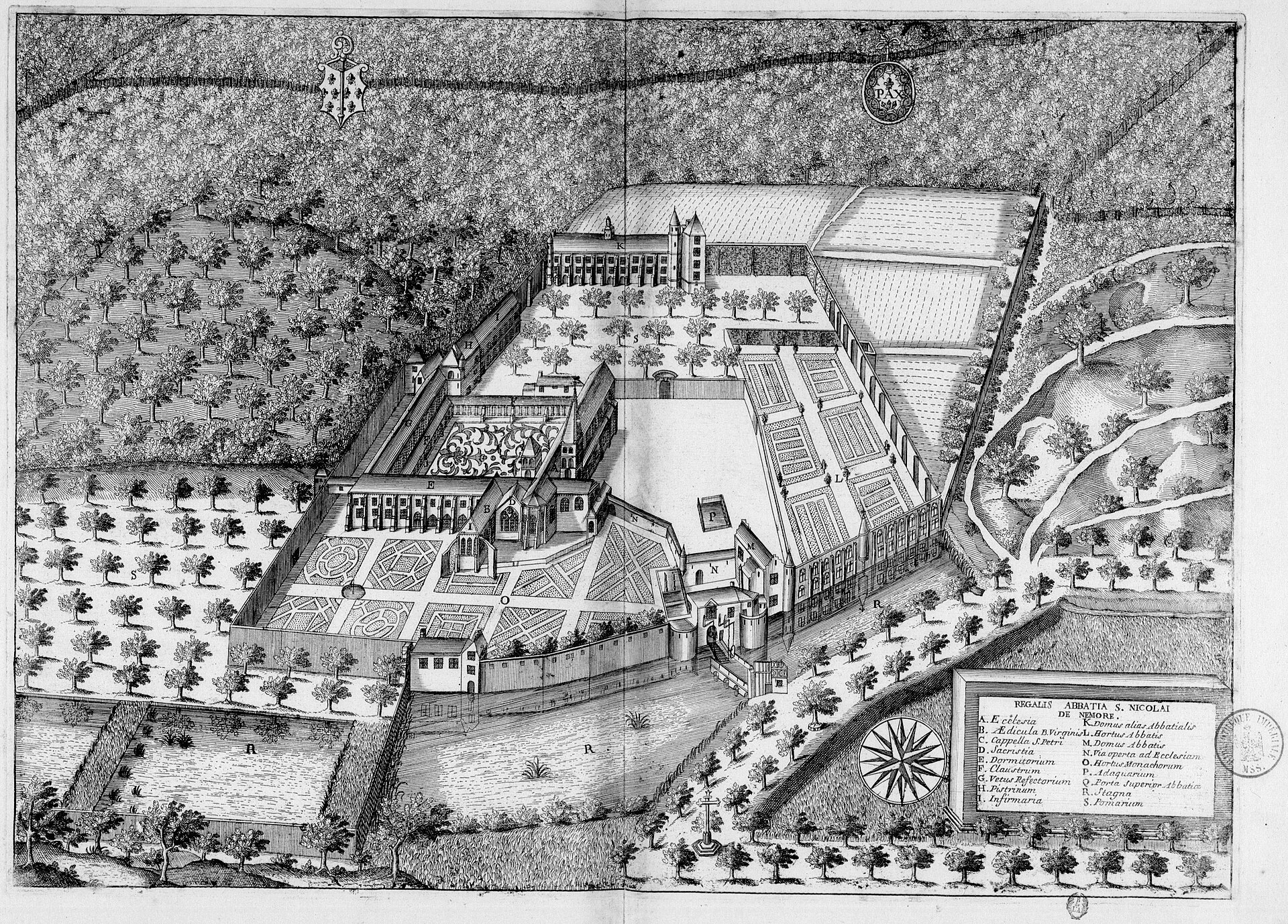
The Royal Abbey of Saint-Nicolas-aux-Bois (French: Abbaye royale de Saint-Nicolas-aux-Bois) was a Benedictine monastery hidden in the Saint-Gobain forest, near the village of Saint-Nicolas-aux-Bois in the Aisne department of northern France. For centuries it stood among the notable religious houses of the region, until the French Revolution brought its monastic life to an end. Who founded the abbey, and when? The abbey was established around 1086 by two hermits, during the reign of King Philip I of France. From its earliest years it functioned as a double monastery, housing both monks and nuns under the Rule of Saint Benedict — an arrangement that was relatively unusual for the period. How did monastic discipline evolve here? A turning point came between 1120 and 1134, when Abbot Simon, who arrived from the abbey of Saint-Nicaise in Reims, carried out a thorough reform of monastic discipline at Saint-Nicolas-aux-Bois. The stricter rule he introduced shaped community life at the abbey for generations afterward. What is the abbey's connection to Le Tortoir? A few kilometres away, within the same Saint-Gobain forest, stands the former fortified priory of Le Tortoir. Built in the 14th century on the site of an earlier chapel, it served at times as a leper hospital and operated as a dependency of Saint-Nicolas-aux-Bois — subordinate to the parent abbey rather than an independent foundation. Le Tortoir survives today as a well-preserved fortified site and is documented separately, while the abbey itself remained the senior institution of the two. What damage did the abbey suffer over the centuries? The abbey's history was far from peaceful. In 1567, during the French Wars of Religion, Protestant forces destroyed its buildings. Reconstruction followed between 1614 and 1645, led by the commendatory abbot Henri Listolfi. The complex was then almost entirely rebuilt in the 18th century, first between 1722 and 1738, and again in 1764 — work that gave it more the appearance of a stately residence than an austere medieval cloister. Why did the abbey cease to exist? The French Revolution ended the community's existence. On 13 February 1790, the National Constituent Assembly abolished monastic vows and suppressed religious orders across France, forcing the monks of Saint-Nicolas-aux-Bois into exile. Stripped of its religious function, the abbey gradually fell into ruin. What remains to see today? Only fragments of the abbot's residence survive, including a square tower dating from the late Middle Ages. Set deep within the forest, away from major tourist routes, the site offers a quiet, low-key encounter with centuries of monastic history rather than a fully restored monument. Frequently asked questions When was the Abbey of Saint-Nicolas-aux-Bois founded? Around 1086, during the reign of King Philip I, by two hermits. Which religious order ran the abbey? The Benedictines — initially as a double monastery of monks and nuns. What destroyed the abbey in the 16th century? Protestant forces burned it in 1567, during the French Wars of Religion. When did the abbey stop functioning? In 1790, after the National Constituent Assembly abolished monastic vows during the French Revolution. Is Le Tortoir part of the abbey? Le Tortoir is a separate fortified priory that was a dependency of Saint-Nicolas-aux-Bois, located in the same forest a few kilometres away. What survives of the abbey today? Remnants of the abbot's residence, including a Gothic-era tower — the rest of the complex did not survive.
-
Chartreuse de Bourgfontaine
Villers-Cotterêts
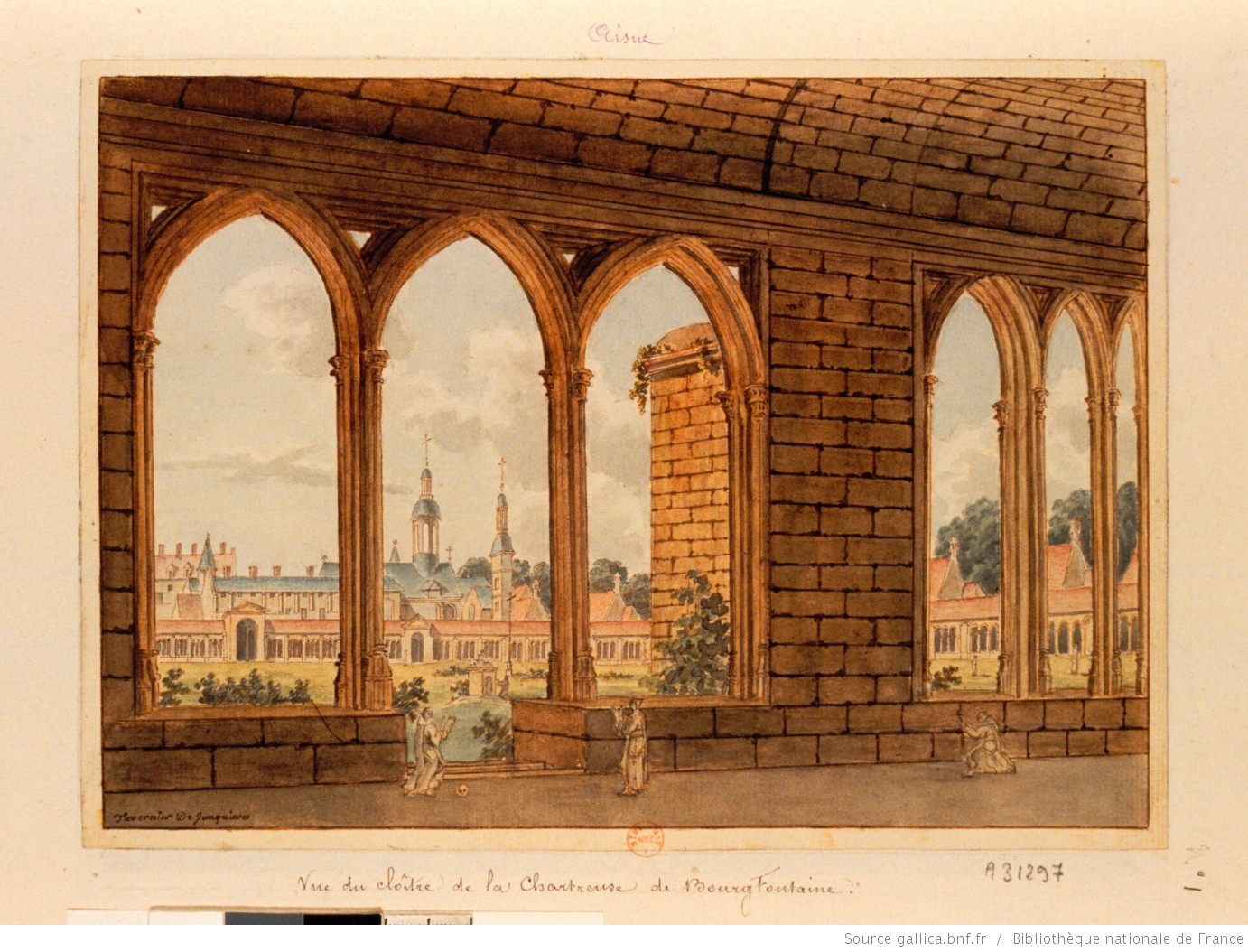
Chartreuse de Bourgfontaine is a former Carthusian monastery tucked away inside the Forêt de Retz, a short distance from the town of Villers-Cotterêts in the Aisne department of northern France. For anyone interested in medieval French history away from the main tourist routes, this quiet forest site offers a rare glimpse into a monastic community founded by royalty. Who founded the monastery, and when? The founding charter was signed in 1316 by Charles of Valois, brother of King Philip IV the Fair, at Villers-Cotterêts itself. His goal was twofold: to establish a place of religious retreat and to reinforce his family's presence in the surrounding Valois territory. Construction began in 1323, but Charles died before the monastery was finished. The project was completed by his son Philip, who became King Philip VI of France in 1328, with the buildings finished by 1330. What was Philip VI's connection to Bourgfontaine? Philip VI kept a lasting attachment to the monastery his father had started. When he died on 22 August 1350, he asked in his will that his heart be placed at the Chartreuse de Bourgfontaine rather than buried with the rest of his body — a striking sign of how much the site meant to the first Valois king of France. How did the buildings change over the centuries? The monastery was not built in a single phase, and its surviving structures reflect several distinct periods of construction. Elements dating from the 15th or 16th century include a guest chapel and an entrance gate. The 17th century added a building on the eastern side of the courtyard along with the prior's residence, while the 18th century contributed the church façade and a passage linking the two courtyards. This layered building history makes Bourgfontaine a useful case study in how a monastic complex evolved architecturally over roughly four hundred years. What happened to the monastery after the French Revolution? Like many religious communities across France, the Carthusians of Bourgfontaine did not survive the Revolution. The property was sold in 1793, and much of the religious quarters, along with part of the outbuildings, were demolished. What remained was repurposed as an ordinary farm for a long stretch of the 19th and 20th centuries. Restoration work only began in earnest during the second half of the 20th century, and the site has been open to visitors since October 1997. Where exactly is Bourgfontaine located? The monastery sits in a large clearing within the Forêt de Retz, one of the largest forest areas in France at around 13,000 hectares, shaped like a crescent with Villers-Cotterêts at its center. Reaching the site typically means driving into the forest and then continuing on foot along woodland tracks — a quiet, unhurried approach that suits the setting. Frequently asked questions Can you visit Chartreuse de Bourgfontaine today? Yes. The site has been open to the public since 1997, though only a portion of the original monastic buildings has survived. When was the monastery built? The founding charter dates to 1316, construction started in 1323, and the buildings were completed in 1330 under Philip VI. Why is Philip VI connected to this specific site? He felt a strong personal attachment to the monastery founded by his father, and specified in his will that his heart be interred there after his death in 1350. How do you get to the site? Bourgfontaine lies within the Forêt de Retz, in the commune of Villers-Cotterêts in the Aisne department; visitors usually drive to the edge of the forest and walk the final stretch along forest paths.
-
La Clarté-Dieu
Saint-Paterne-Racan
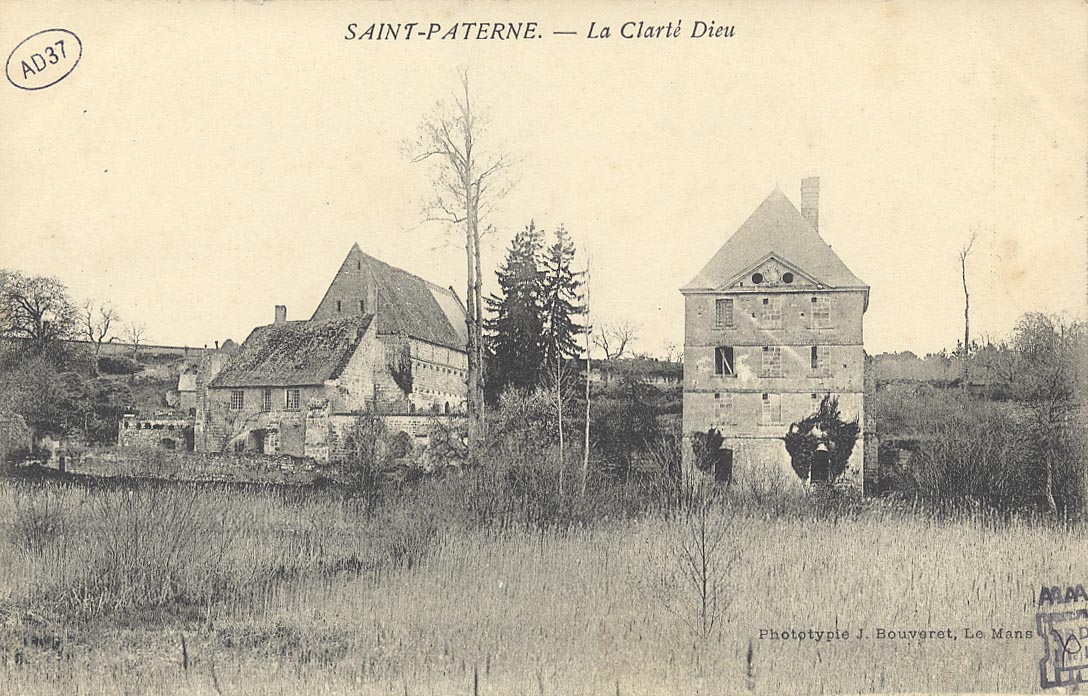
La Clarté-Dieu is the ruined site of a Cistercian abbey in the commune of Saint-Paterne-Racan, in the Indre-et-Loire department of central France. Its history links rural Touraine directly to medieval England, through a bishop who wanted to leave his mark on both sides of the Channel. Who founded the abbey, and why? The founder was Peter des Roches, a native of Touraine who built an extraordinary career in England, rising to become Bishop of Winchester and one of the most powerful men in the kingdom during the reign of Henry III. He planned to endow a pair of Cistercian monasteries - one in England, one in his home region of France - intending them as a lasting monument to his own name. He died in 1238 before the project was carried out, but the executors of his estate completed it using the funds he had set aside, roughly 3,000 gold écus. A group of twelve monks reached the site on 22 July 1240. La Clarté-Dieu became the twenty-fifth, and ultimately the last, direct daughter house of the mother abbey at Cîteaux. What was its English twin abbey? The other monastery from Peter des Roches's plan was Netley Abbey in Hampshire, also Cistercian, founded the same year, 1239. The two houses had very different fates. Netley survived until the sixteenth century, when Henry VIII seized it during the Dissolution of the Monasteries and handed it to a Tudor politician who converted the buildings into a private mansion. La Clarté-Dieu remained an active community for much longer, though it did not escape the wars that swept through the region. What destroyed the abbey? The heaviest blow came during the Hundred Years' War. On 11 February 1364, troops under Amaury de Trôo looted and set fire to the buildings. The cost of rebuilding weighed on the small community for decades afterward. Even so, the abbey continued to function until the French Revolution, when it was closed and sold off along with every other monastery in France. Successive lay owners then dismantled the remaining structures piece by piece, reusing the stone to build houses in the surrounding countryside. What survives today? Despite centuries of demolition, the original layout is still legible on the ground: the outer enclosure wall, a north gate, an inner precinct wall, a south gate and bridge, outbuildings, the lay brothers' building, the foundations of the refectory's south wing, a later classical pavilion, and a former guest lodging. The most striking surviving structure is the lay brothers' dormitory, built in 1274, with its monumental timber roof frame, alongside a vaulted lower hall whose design shows clear English influence - a physical trace of the abbey's ties across the Channel. Can visitors see the ruins today? The site has been privately owned since 2002, and the owners work with the association Amis de la Clarté-Dieu on conservation and restoration. The chapel known as the chapelle des étrangers was listed as a historic monument in 2006, and the wider monastic enclosure received full protected status in 2011. The ruins are occasionally opened to the public during heritage events, so it is worth checking local listings before planning a visit. Frequently asked questions When was La Clarté-Dieu founded? The first monks arrived on 22 July 1240, though the founder, Bishop Peter des Roches, had planned the project years earlier, before his death in 1238. Why is it called Netley Abbey's twin? Both abbeys were endowed by the same man as part of a single project: a matched pair of Cistercian houses, one in England and one in France. What caused the abbey's decline? Destruction during the Hundred Years' War, including a raid and fire in 1364, followed eventually by the French Revolution, which ended monastic life at the site for good. Where exactly are the ruins located? In the commune of Saint-Paterne-Racan, in the Indre-et-Loire department, in the Centre-Val de Loire region of France.
-
Chartreuse de Parménie
Beaucroissant
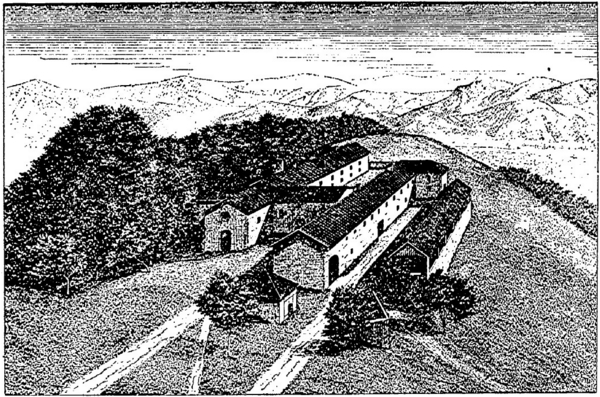
Chartreuse de Parménie is a former Carthusian monastery perched on a hilltop above the Isère valley, in the commune of Beaucroissant in the Isère department of France, at an altitude of roughly 749 metres. Its history spans medieval religious life, the mystical experience of Béatrix d'Ornacieux, and dramatic events of the Second World War. How did the monastery come into being? The hill of Parménie has been inhabited since antiquity. A chapel dedicated to the Holy Cross, built in the 12th and 13th centuries, drew pilgrims from the surrounding region. Around the middle of the 13th century, at the initiative of Falcon, bishop of Grenoble, the existing priory of Notre-Dame de Parménie - until then home to Augustinian canons regular - was converted into a Carthusian house. Nuns from the nearby Chartreuse de Prémol settled the new community. Who was Béatrix d'Ornacieux, and what was her connection to Parménie? Béatrix (Beatrice) d'Ornacieux was born around 1260 at the castle of Ornacieux in the Dauphiné, near La Côte-Saint-André. She entered the convent at Parménie at the age of thirteen and became known for mystical visions that reinforced the site's religious reputation. In 1300, three nuns from Parménie, together with sisters from elsewhere, left to found a new charterhouse at Eymeux in the Drôme. Béatrix joined this new foundation, where she lived in extreme poverty until her death on 25 November 1303. Pope Pius IX beatified her on 15 April 1869. What happened to the site after the Carthusian nuns left? Toward the end of the 14th century, the nuns abandoned Parménie for Revesti, in the commune of La Rivière. The former priory then continued as a convent under the name Sainte-Marie-du-Mont. How did Parménie fare during the Second World War? During the German occupation of France, the monastery buildings - by then in the hands of the Olivetan order - were occupied by Resistance fighters (the maquis) in 1943. The following year, in 1944, German forces attacked and burned the monastery. What is Parménie today? The site was rebuilt in 1965 through the efforts of Brother Léo Burkhard (1922-2007) of the Brothers of the Christian Schools (the Lasallian order). It is now run by the Centre lasallien de Parménie, which hosts formation sessions and retreats. No longer a contemplative monastery, the former charterhouse remains a place for reflection and gathering, set within the hills of the Bièvre-Valloire landscape. Frequently asked questions Where exactly is Chartreuse de Parménie located? On a hilltop in the commune of Beaucroissant, in the Isère department of France, at an altitude of about 749 metres, overlooking the Isère valley. Is it still an active Carthusian monastery? No. The Carthusian nuns left at the end of the 14th century. The site is now managed by the Centre lasallien de Parménie, a formation centre rather than a contemplative religious community. Who was Béatrix d'Ornacieux? A Carthusian nun associated with Parménie, known for her mystical visions, who later helped found the charterhouse of Eymeux and was beatified in 1869. Do the original buildings still stand? Not entirely - the monastery was burned by German forces in 1944 and was not rebuilt until 1965. What can visitors do at Parménie today? The site functions as a retreat and formation centre, open to groups and individuals seeking a quiet, mountain setting for reflection.
-
Prieuré de Pouilly-lès-Feurs
Pouilly-lès-Feurs
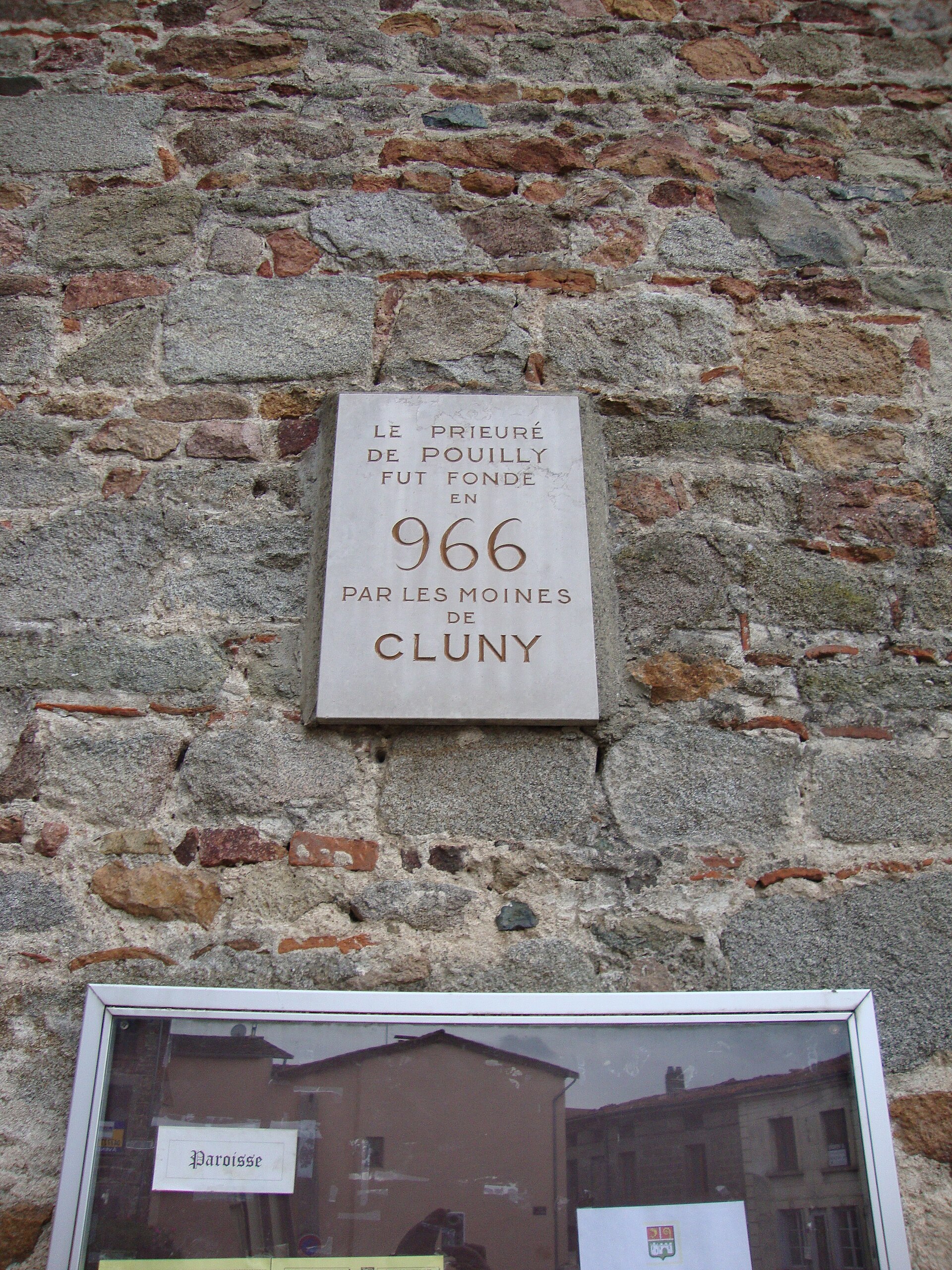
The Prieuré de Pouilly-lès-Feurs is a medieval monastic complex at the heart of the Forez region, in the Loire department of eastern France. Founded by Benedictine monks from Cluny, this former priory served as a religious and economic hub for more than seven centuries. Today it belongs to the commune of Pouilly-lès-Feurs and opens its doors to visitors every summer. Who founded the priory, and when? Monks from the abbey of Cluny settled in Pouilly-lès-Feurs around 966, at the very end of the 10th century. They built the Romanesque church in stages across the 11th and 12th centuries, followed by the priory buildings themselves, which took shape between the 12th and 15th centuries. The church, dedicated to Saint Peter, was listed as a French historic monument (monument historique) in 1911. How did the complex grow over the centuries? Construction proceeded in clear phases, and the different wings still show that layered history today. The earliest core of the priory and the church date from around the turn of the 11th century. Stables and a grain store followed in the 13th century, a courtroom with an attached prison in the 14th century, and a large kitchen together with a stair tower and the main keep in the 15th century. The overall plan directly echoes Cluny Abbey itself: buildings enclose a square courtyard, at the center of which sits a well dating back to Gallo-Roman times. Why was the priory fortified? Around 1385, during an unsettled period for the region, the community was enclosed within high walls reinforced by ten towers. These fortifications were meant to protect the monks and the priory's assets from the threats typical of the era. They stood for several centuries before being demolished under the reign of Louis XIII, once the need for defense had passed. What was the priory's role on the road to Santiago de Compostela? Pouilly-lès-Feurs lay along one of the pilgrimage routes to Santiago de Compostela, and the priory served travelers accordingly. Pilgrims who stopped for the night were given a bowl of wine and a piece of bread both in the evening and again the following morning. A small carved rose window on one of the priory's windows is thought to be a lasting trace of this tradition, marking the site as a welcoming stop for pilgrims. What can visitors see inside the priory today? Several features draw particular attention during a visit: imposing fireplaces, the former courtroom together with its prison cells, and 16th-century graffiti scratched into the walls, likely by residents or prisoners of the time. One fireplace carries a popular nickname, the "cuckold's chimney," a detail guides enjoy pointing out. Walking through the courtyard, towers, and utility rooms gives visitors a tangible sense of the different stages of monastic life here. When did the priory stop being a working monastery? Monks lived at the priory continuously from the year 1000 until 1715. After the French Revolution, the building was sold as national property and passed through the hands of three successive private owners. It was only in 1992 that the commune of Pouilly-lès-Feurs acquired the site, allowing it to be protected and opened for visits. Frequently asked questions Where exactly is the priory located? In the village of Pouilly-lès-Feurs, in the Forez region of the Loire department, eastern France. Can the priory be visited? Yes. In July and August it is open Wednesday through Sunday, from 10 a.m. to 6 p.m. Outside the summer season, groups can arrange a visit by contacting the town hall in advance. Is a visit free of charge? Yes. Self-guided tours of the village and priory, using printed materials available at the town hall and tourist office, are free, as is the audio guide through the izi TRAVEL app. What is the priory's main attraction? Its layout modeled on Cluny Abbey, the 16th-century graffiti, the former courtroom with its prison cells, and the surviving fireplaces, including the so-called "cuckold's chimney." Does the priory have a connection to pilgrimage routes? Yes — it stood along the road to Santiago de Compostela and hosted pilgrims, offering them lodging, wine, and bread.
-
Abbaye de Jovilliers
Stainville
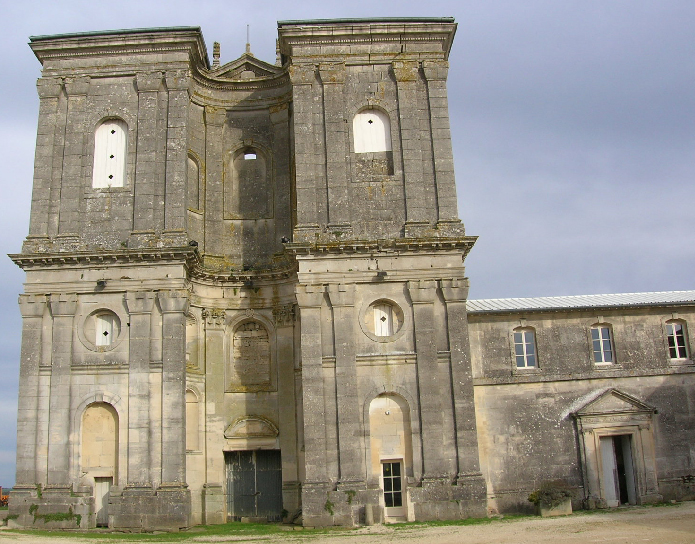
Abbaye de Jovilliers is a former Premonstratensian abbey standing in the commune of Stainville, in the Meuse department of northeastern France, between the villages of Ménil-sur-Saulx and Juvigny-en-Perthois. Though little known outside the region, the site has been protected as a Historic Monument since 1995 and remains one of the more evocative religious ruins of the Meuse countryside. When was the abbey founded? The abbey's origins go back to 1132, when Geoffroy III, seneschal of Champagne and lord of Joinville, granted the farm of Jovillaris to Herbert, abbot of Rieval, so that a monastic community could be established there. The bishop of Toul, Henri of Lorraine, confirmed the gift in 1141, and construction of the first monastery began the following year. The community followed the Premonstratensian rule, and its canons farmed the surrounding land they received as donations. The abbey church, dedicated to Saints Peter and Paul, doubled as the parish church for the farming families settled in the abbey's lower courtyard. How did the Wars of Religion affect the abbey? The community's fortunes turned during the Wars of Religion. In 1592, Huguenot forces set fire to the church nave and part of the monastic buildings. Recovery proved short-lived: renewed fighting and a second Huguenot incursion in 1611 undid what restoration had been achieved. The abbey only began to recover its standing from 1672 onward, first spiritually, through a return to the stricter Ancienne Rigueur observance, and then materially, once a full reconstruction of the buildings started in 1720 using stone quarried at nearby Savonnières-en-Perthois. What happened after the French Revolution? An inventory of the abbey's property was drawn up on 5 May 1790, and by October of that year the monks had left the site for good. The church was dismantled down to its facade, and the rest of the estate was converted into a working farm. Little has changed since: no trace of the original twelfth-century buildings survives today, and everything still standing dates from the classical-style rebuilding of 1720. What can visitors see today? The most striking survival is the church facade, framed by two massive square towers and decorated with Corinthian and Ionic pilasters in a restrained neoclassical style, along with a small cherub carved on a corbel. Beyond the facade, the site retains its farm outbuildings, a covered well, vaulted cellars, and sections of the monastic quarters, including the cloister and the former abbot's residence, with several handsomely proportioned rooms. The abbey's eastern range, which once held the sacristy, scriptorium, chapter room, refectory, large kitchen, and dormitory, has vanished entirely, replaced by farm sheds. A garden of medicinal and aromatic herbs has been laid out in the courtyard next to the cloister, echoing the plants once grown there by the canons. How can the abbey be visited? Since 1988, the association Jovilliers Échanges et Culture has worked to bring the site back to life, organizing cultural events on the grounds throughout the year. Guided tours, lasting about ninety minutes, are offered on the first Sundays of July and August. Frequently asked questions Where is the Abbaye de Jovilliers located? In the commune of Stainville, in the Meuse department, between Ménil-sur-Saulx and Juvigny-en-Perthois. Which religious order lived at the abbey? Premonstratensian canons regular. Do any medieval buildings survive? No — everything standing today dates from the 1720 classical reconstruction; nothing remains of the original twelfth-century abbey. When was the abbey listed as a Historic Monument? On 17 November 1995. When are guided tours available? On the first Sundays of July and August, in tours lasting around an hour and a half, organized by a local heritage association.
-
Prieuré Saint-Louis de Poissy
Poissy
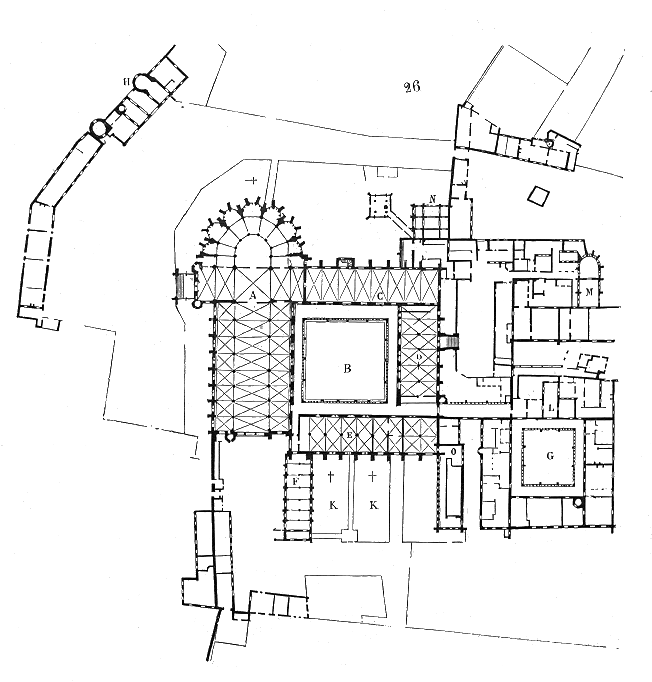
Prieuré Saint-Louis de Poissy, also known as the royal abbey of Poissy, refers to the surviving remnant of a former Dominican convent built in the early 14th century in the town of Poissy, in the Yvelines department west of Paris. The priory was founded to honor King Louis IX of France, better known as Saint Louis, shortly after his canonization in 1297, and the choice of location was deliberate: Poissy was where the future saint had been born and baptized. Why was the priory built in Poissy specifically? The foundation was ordered by Philip the Fair, grandson of Louis IX, not long after his grandfather's canonization. He picked Poissy precisely because it was Saint Louis's birthplace and baptismal town, and had the new convent erected on the very spot once occupied by the castle where Louis IX was born on April 25, 1214 — the old castle was torn down to make way for it. The formal foundation charter dates from July 1304, and the priory became operational that same year. The baptism itself had taken place a few days after the birth at the nearby collegiate church of Notre-Dame de Poissy, whose baptismal font was later venerated as a relic once Louis IX was canonized. What happened to the priory over the following centuries? The community quickly grew into one of the wealthiest convents in France, home to Dominican nuns. In September 1561, between the 9th and the 26th, its refectory hosted the Colloquy of Poissy, a theological conference bringing together Catholic and Calvinist representatives in an attempt to ease the religious tensions of the French Wars of Religion. The building itself did not escape disaster: on July 11, 1695, it was struck by lightning, and the vaults and roofs collapsed. Louis XIV ordered its reconstruction, entrusting the work to the architect Jules Hardouin-Mansart, who rebuilt it in a Gothic style. What happened to the priory during the French Revolution? The Revolution brought the institution to an end. The community was evacuated in 1792, and the buildings were dismantled and sold off in separate lots between 1790 and 1797. The demolition of the spires and any remaining royal emblems was put out to tender in December 1793, and the church itself finally disappeared from the townscape in the early 19th century. What can visitors still see in Poissy today? Of the entire monastic complex, only the gatehouse has survived. It was listed as a historic monument in 1933 and remains the sole tangible trace of the former priory. The gatehouse today houses the Musée du Jouet de Poissy, the town's toy museum. It stands in the town center, close to the collegiate church of Notre-Dame de Poissy where Louis IX was baptized, making it easy to combine both sites connected to the saint-king's history during a single walk through the old town. Frequently asked questions What was the Prieuré Saint-Louis de Poissy? It was a Dominican convent founded in 1304 by Philip the Fair to commemorate his grandfather, Louis IX of France. Why was it built in Poissy? Because Louis IX was born there in 1214 and baptized there, and the new priory was raised on the exact site of the castle where he was born. What took place at the priory in 1561? The Colloquy of Poissy, a meeting of Catholic and Calvinist theologians aimed at easing religious conflict in France, was held there from September 9 to 26. What survives of the priory today? Only the gatehouse remains, listed as a historic monument since 1933 and now home to a toy museum. Can the site be visited? Yes, the gatehouse and the museum inside it are open to visitors, though the rest of the original monastic complex no longer exists, having been demolished after the French Revolution.
-
Longpont Abbey
Longpont
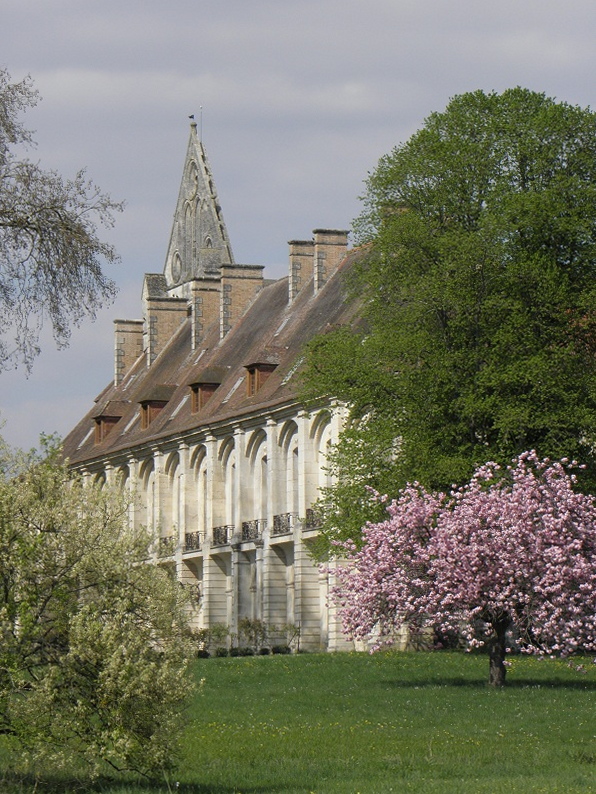
Longpont Abbey is the ruin of a former Cistercian monastery standing at the heart of the small village of Longpont, on the edge of the Retz Forest in the Aisne department, halfway between Soissons and Villers-Cotterêts. Its Gothic facade, rising forty meters with an empty rose window framed by the surrounding park trees, is one of the most photographed sights in the Hauts-de-France region. Who founded the abbey? The monastery was established in 1131 at the initiative of Bernard of Clairvaux, who sent twelve monks to the valley of the Savière river under the leadership of a prior from Clairvaux. The foundation came at the request of Josselin de Vierzy, the bishop of Soissons, who wanted a Cistercian community settled in this marshy valley on the edge of his diocese. The first mass was celebrated at Easter 1132, though the earliest buildings were modest and provisional, later replaced by permanent stone construction. Why is the abbey a Gothic ruin today? Stone building work began in earnest toward the end of the twelfth century. The centerpiece was the Gothic abbey church, raised over roughly thirty years in the early thirteenth century to a scale comparable with Soissons Cathedral. It was consecrated in 1227 in the presence of the young King Louis IX, who stopped at Longpont on his way back from his coronation at Reims. For the following five and a half centuries, the abbey remained an active religious community at the heart of the region. What happened during the French Revolution? The Revolution brought the monastic community to an end. Its property was confiscated, and the abbey church, seen as a symbol of the old religious order, was marked for demolition and quarried for its stone. Ironically, tearing the church down took nearly forty years, longer than it had taken to build in the Middle Ages. What survived is the main facade with its empty rose window, along with sections of outer walls and buttresses — the striking silhouette visitors see today. Who owns the abbey now? The surviving buildings were bought in 1804 by Count Henri de Montesquiou, and his descendants have maintained the property ever since. Longpont Abbey therefore remains privately owned, a status that has not stopped it from welcoming visitors and hosting private events, including weddings, in its historic setting. What can visitors see on site? A visit takes in the ruined Gothic abbey church and its rose window, the former monks' cellar with its cross-ribbed vaulting and large hearth, an eighteenth-century vestibule with a wrought-iron staircase, the cloister courtyard, and an English-style landscaped park. The abbey opens seasonally, typically on weekends from mid-March to late October, so checking opening times before a visit is worthwhile since hours shift with the season. Is the village of Longpont worth exploring too? Home to just over two hundred residents, the village that grew up around the abbey has its own charm, including a surviving medieval fortified gate, an old wash house, and an ice house. In 2025, Longpont was named a finalist in a national television competition for France's favorite village, bringing fresh attention to this quiet corner of Aisne. Frequently asked questions When was Longpont Abbey founded? In 1131, on the initiative of Bernard of Clairvaux and at the request of Josselin de Vierzy, bishop of Soissons. Why is the abbey in ruins? The abbey church was demolished after the French Revolution, treated as a religious symbol and used as a stone quarry; the demolition itself took nearly forty years. Can the abbey be visited? Yes, it is open to the public seasonally, mainly on weekends from spring through autumn. Who owns the abbey today? The Montesquiou family, who purchased it in 1804 and still maintain it. What else is there to see besides the abbey? The village of Longpont itself, with its medieval gate, plus the surrounding Retz Forest.
-
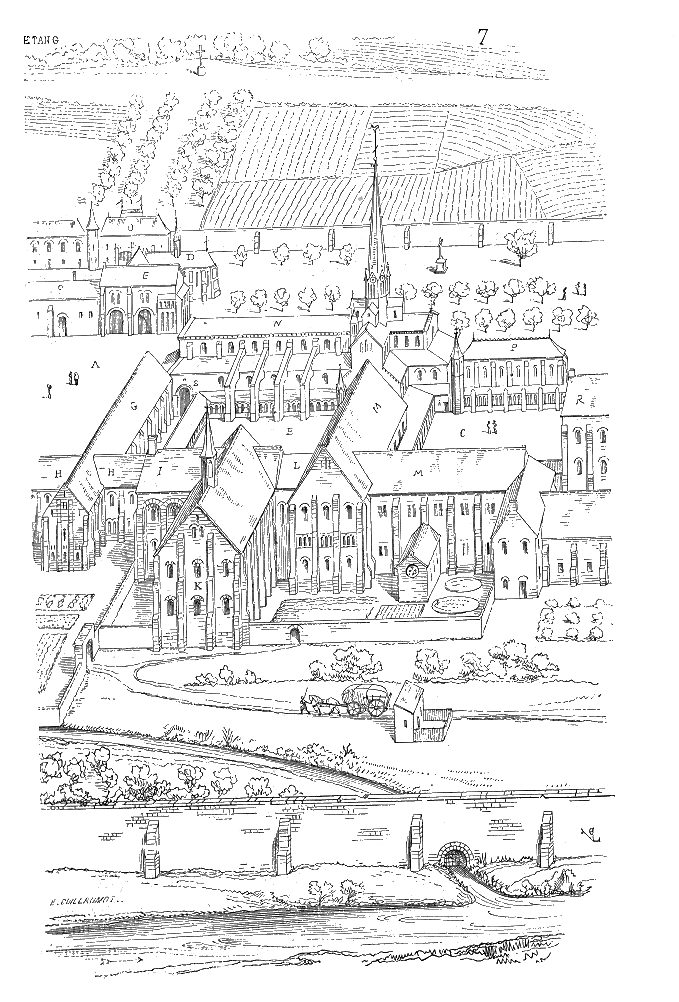
Cîteaux Abbey
Saint-Nicolas-lès-Cîteaux
Cîteaux Abbey is the birthplace of the entire Cistercian order, founded in 1098 in the small village of Saint-Nicolas-lès-Cîteaux, tucked between Dijon and Beaune in Burgundy. Monastic life never really stopped here: since 1898 the abbey has been home to Trappist monks, the branch of the Cistercians following the strictest observance of the rule. Who founded the abbey, and why? Cîteaux was established in 1098 by Robert of Molesme, a Benedictine abbot who felt that the great Cluniac monasteries of his time had drifted too far from monastic discipline. Together with a small group of companions, he set out to return to the original Rule of Saint Benedict, built on prayer, poverty and manual labour. His successor, Alberic, tightened the rule further and introduced the white habit that would become the visual trademark of Cistercian monks everywhere. The third abbot, Stephen Harding, wrote the Charter of Charity, the founding text that set out shared customs binding Cîteaux to every daughter house created afterwards. What is the abbey's connection to Saint Bernard of Clairvaux? A turning point came in 1112, when a young nobleman named Bernard of Fontaine arrived at Cîteaux with thirty companions. Within three years he had gone on to found Clairvaux, the third daughter abbey of Cîteaux, and would become one of the most influential religious figures of the Middle Ages. By the time Bernard died in 1153, Cîteaux stood at the head of a vast monastic family of more than three hundred daughter abbeys spread across Europe. Who lives at the abbey today? The French Revolution interrupted monastic life at Cîteaux and left the buildings substantially altered. Monks returned for good in 1898, this time as Trappists, and the community has lived and worked there ever since, following a routine of prayer, silence and manual labour rooted in the Rule of Saint Benedict. What can visitors see on a tour? Cîteaux can be visited on a guided tour lasting roughly an hour and a quarter. The route takes in surviving fifteenth-century buildings, including the restored cloister once used by the monastery's manuscript copyists and its library, along with exhibits on the art of manuscript illumination and bookbinding. The visit closes with a short film on the daily life of the monks who still live at the abbey today. Why is Cîteaux famous for cheese? The abbey is well known well beyond monastic circles for its cheese, a pressed cow's-milk cheese with a distinctive, mildly fruity flavour. The monks make it from the milk of their own herd of red-and-white Montbéliarde cattle, raised on the abbey's land. Cîteaux cheese is sold directly at the abbey shop, alongside honey and handcrafted nativity scenes made by the community. Frequently asked questions Who founded Cîteaux Abbey? Robert of Molesme founded it in 1098, seeking a stricter return to the Rule of Saint Benedict. What is the abbey's link to Saint Bernard of Clairvaux? Bernard arrived at Cîteaux in 1112 and founded Clairvaux three years later, one of the daughter houses that made Cîteaux the mother house of the whole Cistercian order. Are there still monks living at Cîteaux? Yes. Trappist monks have lived there continuously since 1898, following a life of prayer and work. What can you buy at the abbey shop? The best-known product is Cîteaux cheese, made from the milk of the monks' own Montbéliarde cows, alongside honey and handmade nativity scenes. How long does a visit to the abbey take? A guided tour runs about an hour and fifteen minutes and covers the fifteenth-century buildings and historical exhibits.
-

Vincennes Synagogue
Vincennes
The Vincennes Synagogue stands at 30 rue Céline Robert in Vincennes, a town just outside the eastern edge of Paris, within the Val-de-Marne department of the Île-de-France region. It's a small stone house of worship that has served the local Jewish community for well over a century. How do you get to the synagogue in Vincennes? Vincennes sits right on Paris's border, so reaching it from central Paris by public transport typically takes somewhere between fifteen and twenty-five minutes. The town is well connected to the capital by metro and bus lines, and the synagogue itself sits in a quiet residential pocket of Vincennes, within easy walking distance of the town's better-known landmarks, including its castle and the large park bordering the town. Approaching on foot from the town center is a pleasant option, since the surrounding streets are calm and easy to navigate. What's the story behind the building? The synagogue was designed by architect Victor Tondu, with funding provided by Daniel Iffla, a French philanthropist known for backing numerous public and religious institutions around the turn of the twentieth century. Built of stone, the synagogue opened in 1907. It went up at a time when the Jewish community around Paris was growing and increasingly needed permanent places of worship beyond the capital itself — Vincennes, sitting right at Paris's edge, was a natural spot for such a project. What will you see when you visit? From the outside, the synagogue is a modest stone building, in keeping with the small houses of worship built in Paris-area suburbs during that period — not monumental in scale, but carrying the architectural detailing typical of its era. The building remains an active synagogue and place of worship for the local community rather than a museum piece, so visiting the interior generally depends on service times and the customs expected at active religious sites. Visitors interested in religious architecture can still approach and take in the façade and surroundings while respecting the building's role as a working place of worship. When is the best time to visit? Since the synagogue functions primarily as a place of worship rather than a tourist site with fixed visiting hours, it's worth checking locally in advance if seeing the interior is the goal. The surrounding area — Vincennes's quiet streets, its castle, and its municipal park — is pleasant to explore at any time of year, and a walk toward the synagogue pairs easily with a look at the town's other attractions. Frequently asked questions Where exactly is the synagogue located? At 30 rue Céline Robert in Vincennes, in the Val-de-Marne department of the Île-de-France region, right at the edge of Paris. Who designed the building and when was it built? Architect Victor Tondu designed it, and Daniel Iffla funded its construction. The stone synagogue opened in 1907. Can visitors go inside the synagogue? It remains an active place of worship for the local Jewish community, so interior access depends on service times and the customs observed at religious sites — it's best to check ahead of a visit. Are there other attractions nearby? Yes — Vincennes is home to a royal castle and a large municipal park, so a stop at the synagogue can easily be combined with further sightseeing in the town.
-
Synagogue Mondorf-les-Bains
Mondorf-les-Bains
The Synagogue of Mondorf-les-Bains is a small but significant heritage site in this Luxembourg spa town, standing as one of the last physical traces of a Jewish community that once thrived here. The building sits at 25 rue du Moulin and today serves as a cultural venue rather than a house of worship. How do you get there? Mondorf-les-Bains lies in southeastern Luxembourg, right on the border with France, roughly 20 minutes by car from Luxembourg City. The former synagogue stands in a quiet part of town, a short walk from the well-known Mondorf Domaine Thermal spa and the town center. The easiest way in is by car or regional bus, since the town is well connected to the capital. What will you see? The building blends Art Nouveau design with Moorish-inspired decorative elements, a combination typical of synagogues built across Europe around the turn of the 20th century. It was formally consecrated on 26 September 1908, in the presence of Rabbi Fuchs. Its construction reflected the growth of small but organized Jewish communities in Luxembourg's provincial towns — similar synagogues went up around the same period in Ettelbruck and Esch-sur-Alzette. The building suffered serious damage during the First World War. The fate of Luxembourg's Jewish community in the following decades was harsh: between 1940 and 1943, under occupation, many of the country's synagogues were desecrated or destroyed. The Mondorf building survived into the present day, though for decades it no longer served its original religious purpose. Since 1995 the site has been maintained and administered by the local municipality. It underwent a thorough restoration and reopened as a cultural space in December 2016. That same year, on 5 December, the association "Les Amis de l'Ancienne Synagogue de Mondorf" (Friends of the Old Synagogue of Mondorf) was founded; it has since organized concerts, readings, conferences, and other cultural events inside the building. The structure is often described as a "stone witness" to the Jewish community once established in Mondorf-les-Bains. It's worth noting that Jewish presence in Luxembourg goes back much further — the earliest documented reference dates to 1276. The community grew over the centuries and numbered around 3,500 people on the eve of the Second World War. When should you visit? Since the synagogue now functions as a cultural center rather than a museum with fixed hours, it's best to check the association's current events calendar before visiting — concerts, readings, and conferences run seasonally rather than as a permanent exhibition. A visit pairs naturally with a stay in Mondorf-les-Bains, which draws visitors year-round for its thermal baths and park grounds. Frequently asked questions Is the synagogue in Mondorf-les-Bains still used for worship? No. The building has not served a religious function for decades; today it operates as a cultural center run by the municipality and a local association. When was the synagogue built? It was consecrated on 26 September 1908, in a style combining Art Nouveau with Moorish architectural motifs. Can visitors enter the building? Yes, though access is generally tied to specific events organized by "Les Amis de l'Ancienne Synagogue de Mondorf" — it's worth checking their program ahead of a visit. Is there other Jewish heritage to see in Mondorf-les-Bains? The synagogue is the main physical remnant of this history in town. The broader story of Jewish presence in the region dates back to the 13th century and also touches other Luxembourg towns such as Ettelbruck and Esch-sur-Alzette.
-
synagogue of Bar-le-Duc
Bar-le-Duc
The synagogue of Bar-le-Duc is a small Jewish house of prayer in the prefecture town of the Meuse department in eastern France. The building stands in the historic core of the town and remains one of the few active synagogues still serving a congregation in this part of Lorraine. Where is it located? Bar-le-Duc sits on the Ornain river, in the Grand Est region (historically Lorraine), and serves as the administrative capital of the Meuse department. The synagogue is located in the lower town (Ville Basse), a short walk from the main shopping streets and the central market square. How do you get there? The easiest way to reach Bar-le-Duc is by train — the town has its own station on a line connecting Paris with eastern France, with regular services from Paris-Est and Nancy. Drivers can reach the town via the national roads linking Meuse with the Marne and Lorraine regions; Bar-le-Duc lies close to the A4 motorway. The synagogue itself is within walking distance of both the town centre and the railway station, so no local transport is needed once you arrive. When should you visit? The building keeps set opening hours through the week: Mondays from 10:00 to 12:30 and 13:30 to 18:00, Tuesday to Friday from 8:00 to 12:30 and 13:30 to 18:00, and shorter hours on Saturdays, from 9:00 to 12:00. It is closed on Sundays. Weekday mornings tend to be the most reliable time to visit, and it's worth double-checking the hours before setting off, since small religious buildings like this one can adjust their schedule seasonally. What else is worth seeing nearby? Bar-le-Duc is best known for its Ville Haute, the upper town — a well-preserved district of Renaissance and Baroque townhouses that survived largely intact and gives a strong sense of the wealth the town enjoyed in the 16th and 17th centuries. The church of Saint-Étienne holds the famous "Transi" sculpture, also known as "The Skeleton," by sculptor Ligier Richier, one of the best-known funerary artworks in the region. The town is also associated with a distinctive local speciality: redcurrant jelly made from berries seeded by hand with a goose quill, a craft still practised here today. Pairing a visit to the synagogue with a walk through the old town and a coffee stop near the market square makes for a good half-day itinerary. What should you know before visiting? The synagogue is an active place of worship serving the local community, not a museum, so visitors should keep a respectful and low-key manner, particularly if a service or gathering happens to be underway. Modest dress, quiet conversation, and switching phones to silent are the standard courtesies expected when visiting small-town houses of worship like this one. Frequently Asked Questions Is the synagogue of Bar-le-Duc open to visitors? Yes, it keeps regular weekday opening hours, though as an active place of worship access may be limited during services. How long does a visit take? It's a small building, so a visit usually takes between fifteen and thirty minutes, depending on whether you combine it with a walk around the neighbourhood. Is there an entrance fee? There is no indication of a mandatory entrance fee; as with many small synagogues in France, any contribution is typically voluntary. What else can you see in Bar-le-Duc during the same trip? The Renaissance-era Ville Haute and the church of Saint-Étienne with Ligier Richier's famous "Skeleton" sculpture are the closest highlights and pair well with a visit to the synagogue.
Earn badges for the places you visit
Download NextOnTrip, discover new places and check off your trails.