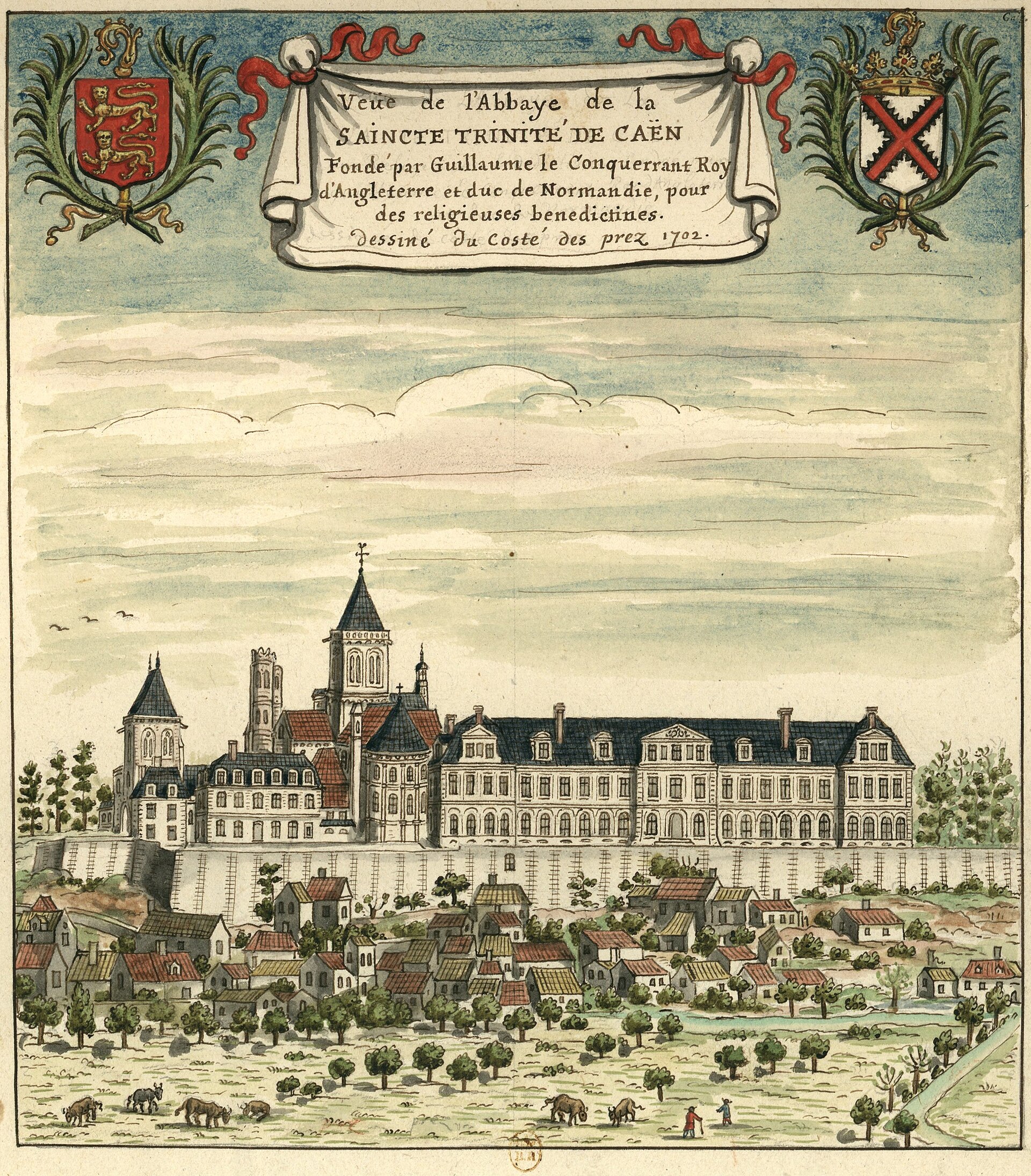
About this place
Abbey of Sainte-Trinité, widely known as the Abbaye aux Dames, is a former Benedictine nunnery in Caen, Normandy, founded in the mid-11th century by Matilda of Flanders, wife of William the Conqueror. Together with its abbey church, it ranks among the finest Romanesque monuments in the region and today houses the seat of the Regional Council of Normandy.
Why was the abbey founded?
The abbey's origins trace back to the marriage of Duke William of Normandy and Matilda, daughter of the Count of Flanders, contracted around 1050. The union was contested by the Church on grounds of consanguinity, and Pope Leo IX is said to have threatened the couple with excommunication. Approval eventually came from Pope Nicholas II, on condition that the ducal couple atone by founding two monasteries in Caen. Around 1059-1060, William endowed the men's Abbaye Saint-Étienne (Abbaye aux Hommes), while Matilda endowed the women's Abbaye Sainte-Trinité (Abbaye aux Dames). Beyond religious penance, the two foundations also served a political purpose: Caen, closer than Rouen to the more rebellious western reaches of the duchy, gained a second stronghold of ducal authority.
When was the abbey church consecrated?
The abbey church, dedicated to the Holy Trinity, was consecrated on 18 June 1066, only months before William's invasion of England. The building stands as one of the most significant examples of Norman Romanesque architecture, though extensive 19th-century restoration altered parts of its original appearance.
Where is Matilda of Flanders buried?
Matilda died in November 1083 and was buried in the choir of the church she had founded. Her tomb, marked by a black marble slab bearing her engraved epitaph, survives to this day and remains one of the most visited points inside the church.
What does the abbey building house today?
The community was dissolved during the French Revolution, and the buildings passed through several later uses. Today the former monastic complex serves as the seat of the Regional Council of Normandy, making the Abbaye aux Dames an unusual case of a medieval abbey now filled with an administrative institution, while the church and parts of the cloister remain open to visitors.
Where exactly is the abbey and how do you get there?
The Abbaye aux Dames stands in central Caen, in the Calvados department, on the eastern edge of the historic town near the river Orne. Its central location, close to the train station and main thoroughfares, makes it an easy walk from anywhere in the city centre.
Frequently asked questions
Are the Abbaye aux Dames and the Abbaye aux Hommes the same place? No. They are two separate abbeys founded at the same time by the ducal couple – the men's Saint-Étienne by William and the women's Sainte-Trinité by Matilda. Both stand in Caen but in different parts of the city.
Can visitors see the church interior and Matilda's tomb? Yes, the abbey church of the Holy Trinity is open to visitors, and Matilda of Flanders' tomb slab is located in the choir.
Why was the abbey founded in the first place? Its foundation was tied to penance for William and Matilda's marriage, which had been contested by the Church, and it also carried political weight in securing Caen's status within the duchy.
What is the abbey used for today? The former monastic buildings now house the seat of Normandy's regional government, while the church remains a historic monument open for visits.
Nearby places

Earn badges for the places you visit
Download NextOnTrip, discover new places and check off your trails.