About this place
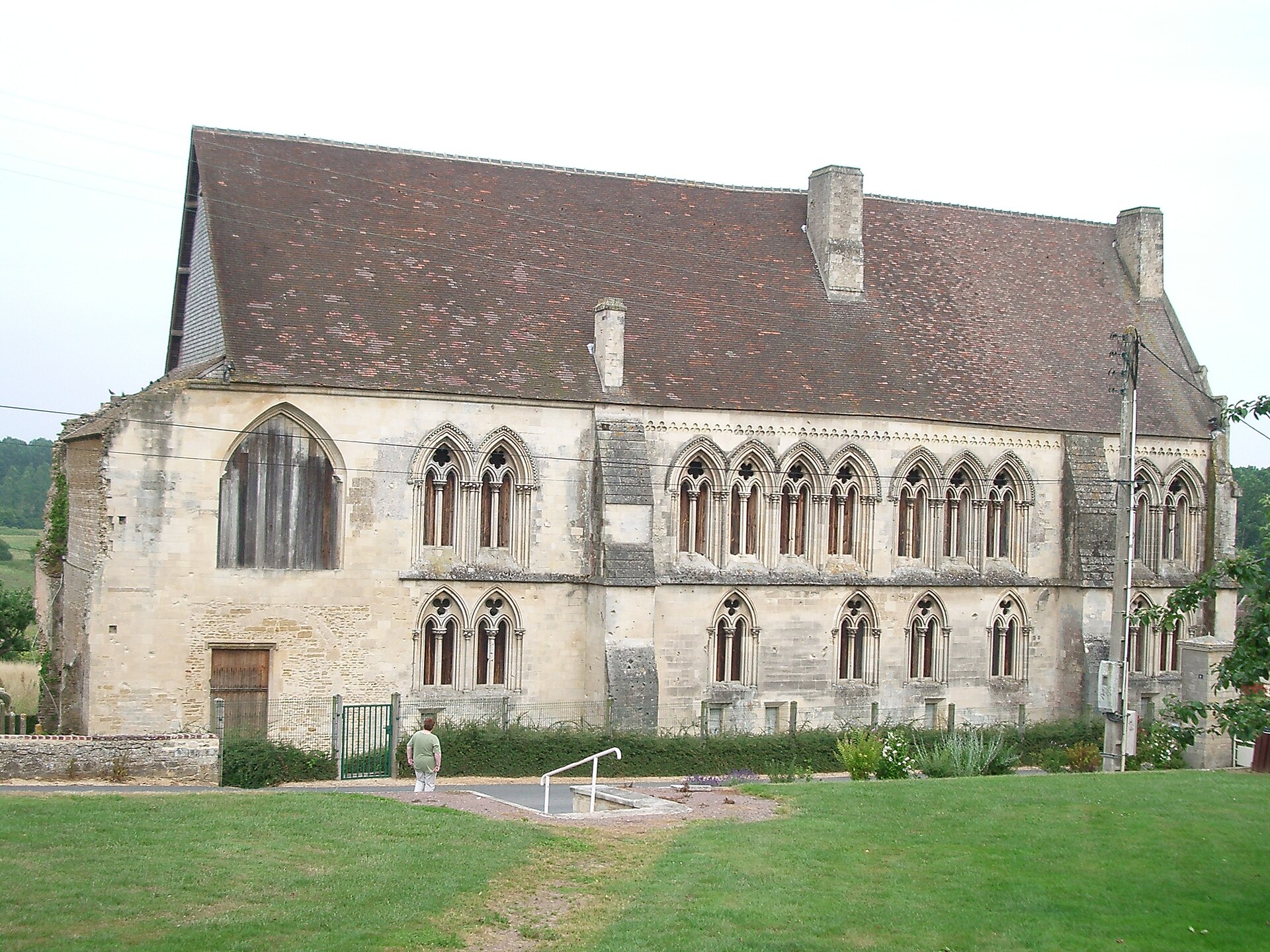
Prieuré Notre-Dame-des-Moutiers is a modest but historically interesting former Benedictine priory tucked away outside the village of Cagny, in the Calvados department of Normandy. Only the chapel survives from the original monastic complex, now standing within the grounds of a working farm that took over the land after the monks departed. It's a quiet, off-the-beaten-path stop for visitors curious about the smaller, lesser-known religious foundations that once dotted the Norman countryside, well away from the crowds drawn to the region's larger abbeys.
How did the priory come to be?
The story begins in the early 12th century. Around 1109, Hélie de Cagny, a vassal of the powerful Bellême family, granted the Benedictine monks of Troarn Abbey four churches located in Cagny, one of which was dedicated to Our Lady. It wasn't until 1173–1178, however, that the site actually became home to a resident monastic community — a small group of three priests and one deacon. That modest religious presence endured for centuries, continuing until roughly the middle of the 16th century, when monastic life at Cagny finally came to an end.
What survives today?
The chapel still standing on the site is very likely the same building the first monks raised when they settled there, which is exactly what makes it noteworthy for anyone interested in the region's early religious architecture. Once the community disbanded, the priory's land was absorbed into a farm, and the old chapel now sits within that farm's courtyard. The building is set apart from the village center, near a road linking Cagny to neighboring communities, not far from the national road running through this part of Calvados.
Is the site legally protected?
Yes. The remains of the former priory church were listed as a protected historic monument by decree on 7 August 1974. That listing recognizes the surviving religious architecture as a tangible link to nearly nine centuries of local history, even though the priory itself never grew to rival Normandy's major abbeys, such as those in Caen or Bec.
Why is it worth a visit?
Cagny sits on the Norman plain near Caen, a part of Calvados shaped by the era of the Norman dukes and by the rapid growth of Benedictine monastic networks in the 11th and 12th centuries. Prieuré Notre-Dame-des-Moutiers, modest as it is next to the grand abbeys of that period, offers a clear window into how smaller religious communities actually lived — supported by local nobility and tied administratively to a larger mother house, in this case Troarn.
Frequently asked questions
When was the priory in Cagny founded? Its origins trace back to the early 12th century, and it functioned as an active monastic community from 1173–1178 until roughly the middle of the 16th century.
Who founded it? Hélie de Cagny, a vassal of the Bellême family, granted the land and churches to the Benedictine monks of Troarn around 1109.
How many monks lived there? Records describe a small community of three priests and one deacon.
What can visitors see today? The surviving chapel, standing on the grounds of a private farm, believed to be the same structure built by the first monks.
Is it a protected heritage site? Yes, the remains of the priory church were listed as a historic monument by decree on 7 August 1974.
Nearby places

Earn badges for the places you visit
Download NextOnTrip, discover new places and check off your trails.