About this place
Abbaye de Sainte-Barbe-en-Auge marks the site of a former community of Augustinian canons in the commune of Mézidon Vallée d'Auge, in the Calvados department of Normandy. Set in the valley of the Dives river, the site has carried the cult of Saint Barbara for nearly a thousand years and remains one of the more telling traces of medieval monastic settlement in this part of Normandy.
When was the community founded?
The story begins around 1055, when Odon Stigand, a Norman lord holding Mézidon, established a college of canons next to the chapel of Saint-Martin-d'Écajeul, on the right bank of the Dives. Local tradition links the foundation to the healing of Odon's son, an event attributed to the intercession of Saint Barbara. The founding charter is dated 1058, and Duke William of Normandy, the future William the Conqueror, confirmed it in 1060. Six secular canons were installed at the outset.
How did the community change over time?
Around 1127-1128, Odon's son-in-law, Rabel de Rancarville, replaced the original secular canons with regular canons brought from the abbey of Eu, placing the house under Augustinian rule. Around the same period, Odon's younger son Robert is said to have brought relics of Saint Barbara from Byzantium, reinforcing the cult that had grown up around the site. Over the following centuries, the modest original foundation developed into a fully established abbey within the diocese of Lisieux, drawing income from land holdings and tithes across nearby parishes.
What happened to the abbey during the French Revolution?
The canons remained in place until the Revolution. Jean-Baptiste Le Christ, the last prior, also served as parish priest of Mézidon. The community was dissolved and the canons left the premises in 1792. Revolutionary authorities had already ordered, on 26 November 1790, that the abbey be sold as national property, a decision that led to the demolition of much of the monastic complex and the reuse of its stone as building material.
What remains today?
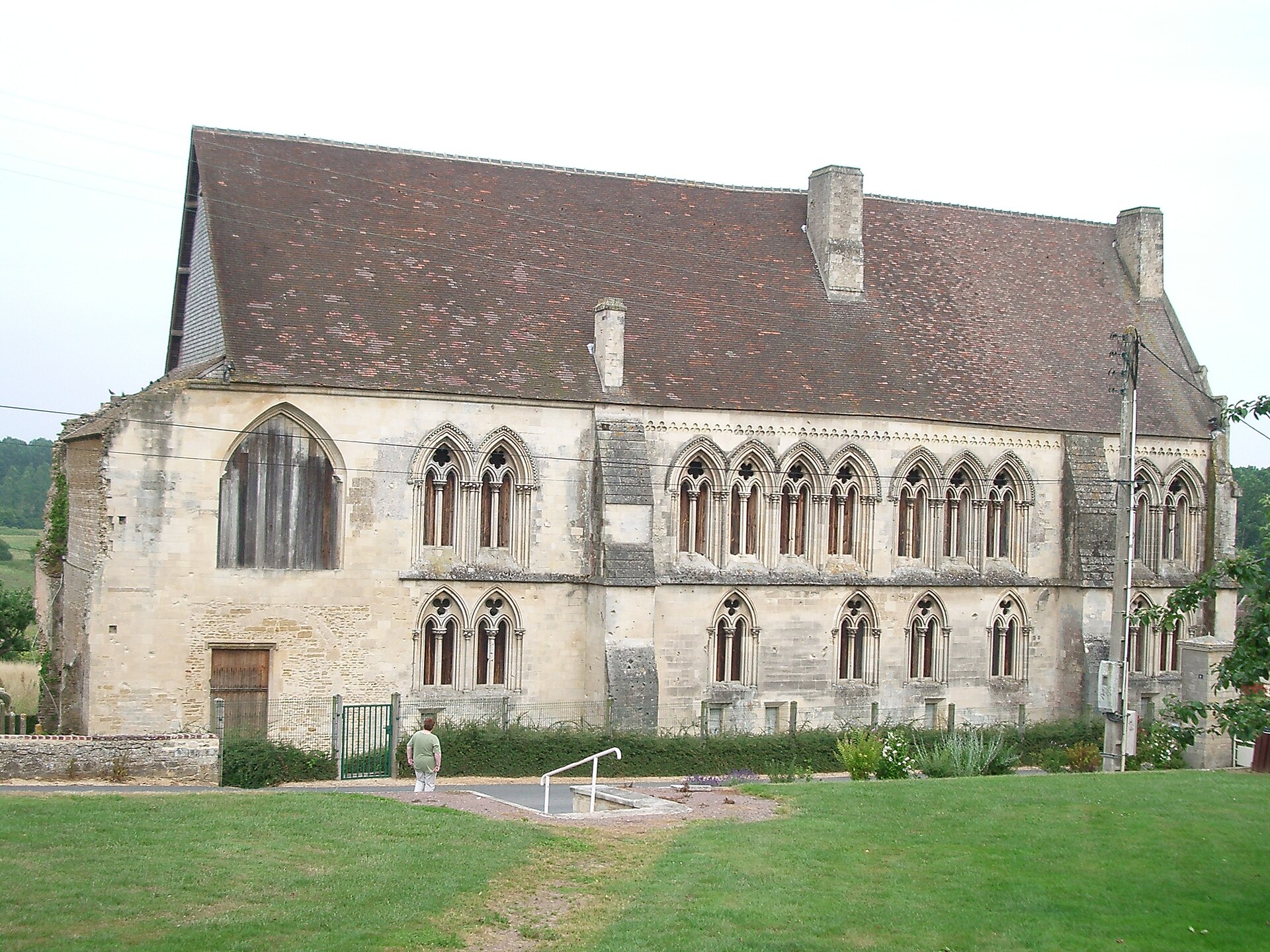
Only part of the former monastic complex survives, chiefly outbuildings connected with the abbey's agricultural role. Among them, the tithe barn (grange dîmière) has been a listed historic monument since 23 December 1981. The former abbey grounds, set in the quiet Dives valley, still draw visitors interested in Norman religious history and rural architecture, even though little remains of the church itself.
Where exactly is the abbey located?
The site lies within the commune of Mézidon Vallée d'Auge, in the heart of Calvados, in an area that once belonged to the diocese of Lisieux, close to the Dives river. Its approximate coordinates are 49.08 N, -0.05 E.
Frequently asked questions
Who founded the abbey of Sainte-Barbe-en-Auge? Odon Stigand, a Norman lord of Mézidon, founded a college of canons at the chapel of Saint-Martin-d'Écajeul around 1055.
Why is the abbey dedicated to Saint Barbara? The dedication stems from a tradition about the miraculous healing of the founder's son, later reinforced by relics of the saint that his son Robert reportedly brought from Byzantium.
When did the religious community come to an end? The canons left the abbey in 1792, after revolutionary authorities ordered its sale as national property in 1790.
What can visitors see there today? Mainly the surviving outbuildings of the former abbey, including the tithe barn, protected as a historic monument since 1981.
Where is the abbey situated? In the commune of Mézidon Vallée d'Auge, in the Calvados department of Normandy, along the Dives river.
Nearby places

Earn badges for the places you visit
Download NextOnTrip, discover new places and check off your trails.