About this place
Prieuré d'Ardevon is a former monastic farmstead in the village of Ardevon, now part of the commune of Pontorson in the Manche department of Normandy, France. It sits only a few kilometres from the Mont-Saint-Michel bay, and its history has been tied to the great abbey on the rock ever since it was founded.
When was the priory built, and by whom?
For a long time local tradition credited Rollo, the first Duke of Normandy, with founding the priory. The dates don't add up, though: construction is generally placed around 966, roughly three decades after Rollo's death. Most historians now point instead to Richard I of Normandy as the more likely founder. The monks of Mont-Saint-Michel were granted this estate, a dozen or so kilometres from their island abbey, and it served from the outset as a kind of mainland outpost for a community whose home was cut off by the tides.
How did the buildings change over time?
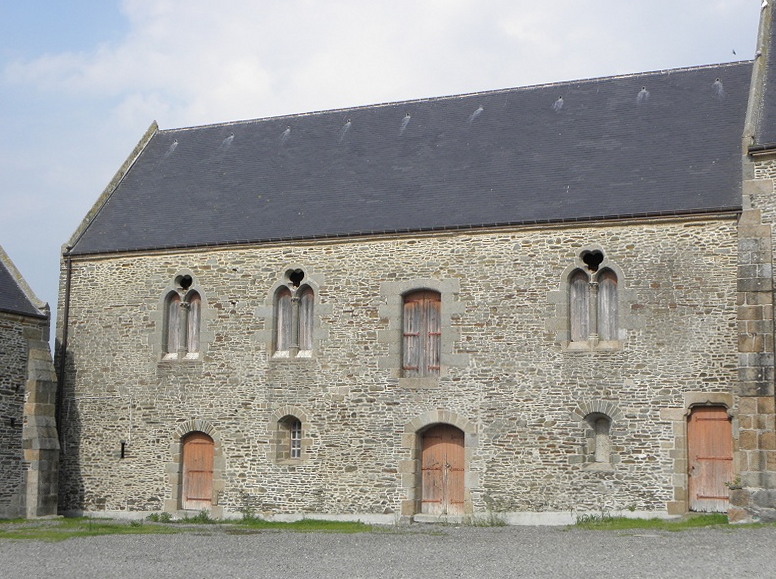
Almost nothing of the original structures survives, since the priory was substantially rebuilt in the 12th and 14th centuries. The most striking building on the site today is the Gothic tithe barn, raised around 1400 and reinforced with twenty side buttresses — a structure once said to hold as many as fifteen thousand sheaves of grain. Roughly a decade later, the monks also rebuilt the main residential quarters from the ground up.
What role did the priory play for the abbey?
From the 14th century onward, Ardevon became almost the exclusive residence of the abbot of Mont-Saint-Michel and the storage point for tithes collected across the monastery's estates. The monks also carried out substantial land reclamation here: between the 12th and early 14th centuries they drained the brackish marshland of the bay, using a slight rise in the terrain reaching about twelve metres and partly redirecting the Sée and Sélune rivers. That work turned the low-lying ground around Ardevon into farmland that fed the abbey's economy.
What happened to the estate after the French Revolution?
The Revolution scattered the monastery's holdings, and the buildings themselves fell into serious disrepair. It wasn't until the mid-20th century that the estate passed to the Manche departmental council, which used it as the headquarters of the Syndicat mixte de la baie du Mont-Saint-Michel, the body overseeing the bay, until 2013. The site's heritage value was recognised earlier still, when it was listed as a monument historique by decree on 15 September 1937.
What is the priory used for today?
Since 2014, the former farmstead has taken on a new role: welcoming pilgrims on their way to Mont-Saint-Michel. Across three hectares of grounds, it now offers a campsite and simple lodging used by scouts, families, parish groups, and individual pilgrims arriving on foot, by bicycle, or by car.
Frequently asked questions
How far is Ardevon from Mont-Saint-Michel? The priory stands about five kilometres from the abbey, on the mainland edge of the bay.
Who founded the priory, and when? It was most likely founded around 966 by Richard I, Duke of Normandy — not by Rollo, as older tradition claimed.
Can visitors stay overnight at the priory today? Yes. The site now functions as a pilgrim reception area, with a campsite and lodging available for both groups and individual travellers.
What is the most notable building on site? The Gothic tithe barn built around 1400, supported by twenty buttresses, is the standout structure, alongside the residential building rebuilt in the following decades.
Nearby places

Earn badges for the places you visit
Download NextOnTrip, discover new places and check off your trails.