About this place
Hambye Abbey is the ruin of a medieval Benedictine monastery set in the valley of the river Sienne, within the commune of Hambye in the Manche department of Normandy. Roofless stone arches rise straight into open sky here, and the quiet of the valley says more about the place than any guidebook could.
Who founded the abbey, and when?
The monastery was founded around 1145 by William Painel, lord of Hambye, with the involvement of Algare, bishop of Coutances. Painel brought in a community of Benedictine monks from the abbey of Tiron, in the Perche region of south-eastern Lower Normandy. The monks followed Benedictine rule but leaned toward an austere, almost Cistercian ideal of discipline, a spirit that later shaped the building itself.
When were the surviving buildings actually built?
The structures visitors see today were raised later than the founding date, in the late 12th and early 13th centuries. The abbey church that dominates the site is an early Gothic building, sober and restrained, blending Romanesque solidity with the ribbed vaulting and tall windows of the emerging Gothic style. The community reached its high point in the 13th century, functioning as a significant religious and economic centre for the surrounding region.
Why did the monastery fall into ruin?
After its 13th-century peak, the abbey entered a long decline that stretched across several centuries. Monastic life at Hambye ended for good in the 1780s, just before the French Revolution. The heaviest damage, though, came afterward: starting in 1810, the abandoned church was treated as a convenient stone quarry, and its walls were dismantled piece by piece throughout the 19th century. That slow demolition is what left the roofless, partially collapsed structure standing today.
How was the abbey saved from disappearing entirely?
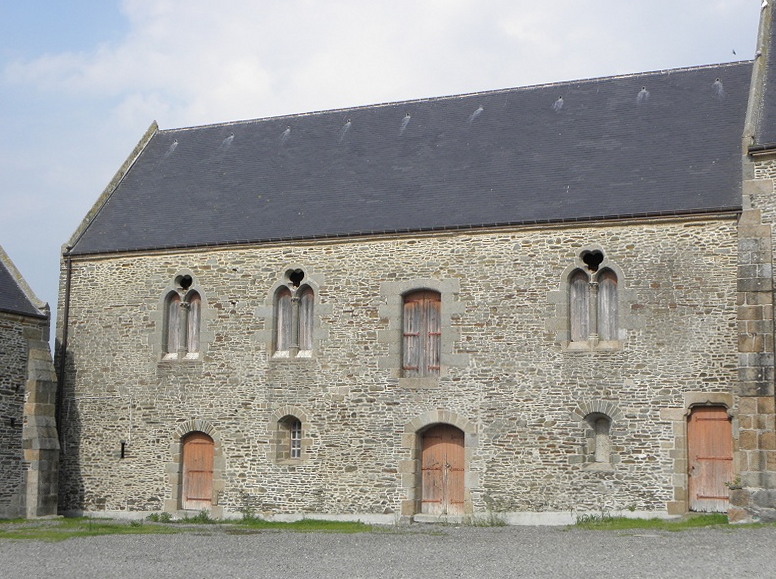
The turning point came in 1956, when the property was bought by Mr and Mrs Beck, halting further deterioration of the monastic buildings. A second decisive step followed in 1964, when the abbey church, the gatehouse and the lay brothers' building passed into the hands of the Manche departmental council. Conservation work to stabilise and restore the remaining structures has continued since then.
What is there to see and do at the abbey today?
The site now combines heritage visiting with cultural programming. The old gatehouse houses a permanent exhibition on the abbey's history and on the historic Hambye textiles, while other monastic buildings host temporary exhibitions by contemporary artists. The space once occupied by the cloister galleries has been turned into a landscaped garden framed by the surrounding conventual buildings, and the wider grounds are now open for walking along a network of marked paths.
Throughout the year the abbey hosts storytelling performances, treasure-hunt activities for children, stone-carving workshops, summer concerts, theatre productions and talks. It is open daily except Tuesdays from April through the autumn school holidays, with opening hours varying depending on the school holiday period.
Frequently asked questions
When was Hambye Abbey founded? The monastery was founded around 1145 by William Painel, lord of Hambye, with the support of Algare, bishop of Coutances.
What architectural style are the ruins built in? The surviving abbey church dates from the late 12th and early 13th centuries and is early Gothic in style, austere in character and close to Cistercian sobriety.
Why is the abbey a ruin today? Monastic life ended in the 1780s, and from 1810 the abandoned church was dismantled for building stone, leaving the structure roofless and partly destroyed.
Who saved the abbey from further destruction? Mr and Mrs Beck bought the property in 1956, and in 1964 the Manche departmental council acquired the church, gatehouse and lay brothers' building to carry out conservation work.
What can visitors do besides view the ruins? Visitors can see permanent and temporary exhibitions, walk the gardens and grounds on marked trails, and attend seasonal cultural events such as concerts, plays and workshops.
Nearby places

Earn badges for the places you visit
Download NextOnTrip, discover new places and check off your trails.