About this place
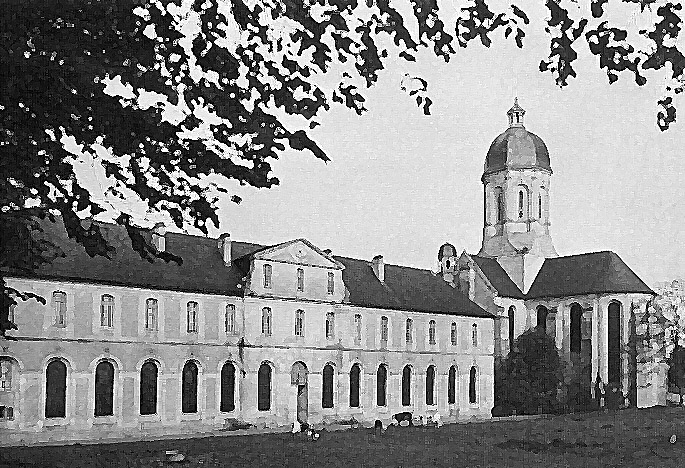
Couvent de Blon is a former convent in the commune of Vire Normandie, in the Calvados department of Normandy, France. It sits in the area of the former commune of Vaudry, on the hillside known as Les Monts de Vaudry — a quiet rural setting far from the region's main tourist circuits.
Where exactly is the convent located?
The site lies in the hills around Vaudry, in typical Calvados countryside marked by narrow lanes, hedgerows and scattered farmhouses. Its approximate coordinates are 48.8362 N, -0.8781 W. Because it is tucked away from major roads, it remains a low-key stop rather than a heavily visited landmark.
What makes this convent notable to visitors?
The main draw is not the convent buildings themselves but a granite gateway that stands at the entrance to the grounds. This portal has a longer and more layered history than the site it now occupies, having been moved twice before reaching Blon.
Where did the gateway originally come from?
The portal was built at the end of the 17th century, in 1682, as part of the convent of the Benedictine nuns of Vire. It did not stay in place for long: in 1822 it was dismantled and re-erected in front of the former Ursuline convent in Vire, a building that by then served as the Saint-Louis hospice. Reusing carved stonework from one religious institution to embellish another was not unusual in that period, especially as older convents changed hands or purpose after the Revolution.
How did the gateway end up at Blon?
The portal's journey continued in 1847, when it was taken down once more. In 1853, the Sisters of the Immaculate Heart of Mary, a congregation established earlier in the 19th century, acquired it and had it installed at its present location in Blon. It has remained there ever since, marking the entrance to what became the sisters' convent grounds.
Is the gateway protected as a historic monument?
Yes. The granite portal of Couvent de Blon was officially listed as a monument historique on 22 September 1986. The protection applies specifically to the gateway as an architectural element, reflecting its recognized heritage value independent of the surrounding buildings.
Is Couvent de Blon worth visiting?
This is a destination for travelers interested in local history and the traces left by religious congregations across Calvados, rather than a site with a developed visitor infrastructure. It suits those who enjoy discovering smaller heritage features tucked into the Norman countryside, in contrast to the region's better-known cathedrals and castles. The grounds are also occasionally used today for private gatherings, including weddings, giving the former convent a continued role in local life beyond its historical significance.
Frequently asked questions
What is Couvent de Blon? A former convent in Vire Normandie, Calvados, linked since the mid-19th century to the Sisters of the Immaculate Heart of Mary and best known for its historic granite gateway.
Where did the gateway come from originally? It was built in 1682 for the Benedictine convent in Vire and only reached Blon in 1853, after two earlier relocations.
Is the gateway a protected monument? Yes, it has been listed as a monument historique since 22 September 1986.
Which town is the convent located in? In Vire Normandie, within the area of the former commune of Vaudry, Calvados department.
Can events be held there today? The grounds are sometimes used for private events such as weddings, though it remains a modest heritage site rather than a fully developed tourist attraction.
Nearby places

Earn badges for the places you visit
Download NextOnTrip, discover new places and check off your trails.