About this place
Chartreuse de Meyriat – Carthusian Monastery Ruins in Bugey
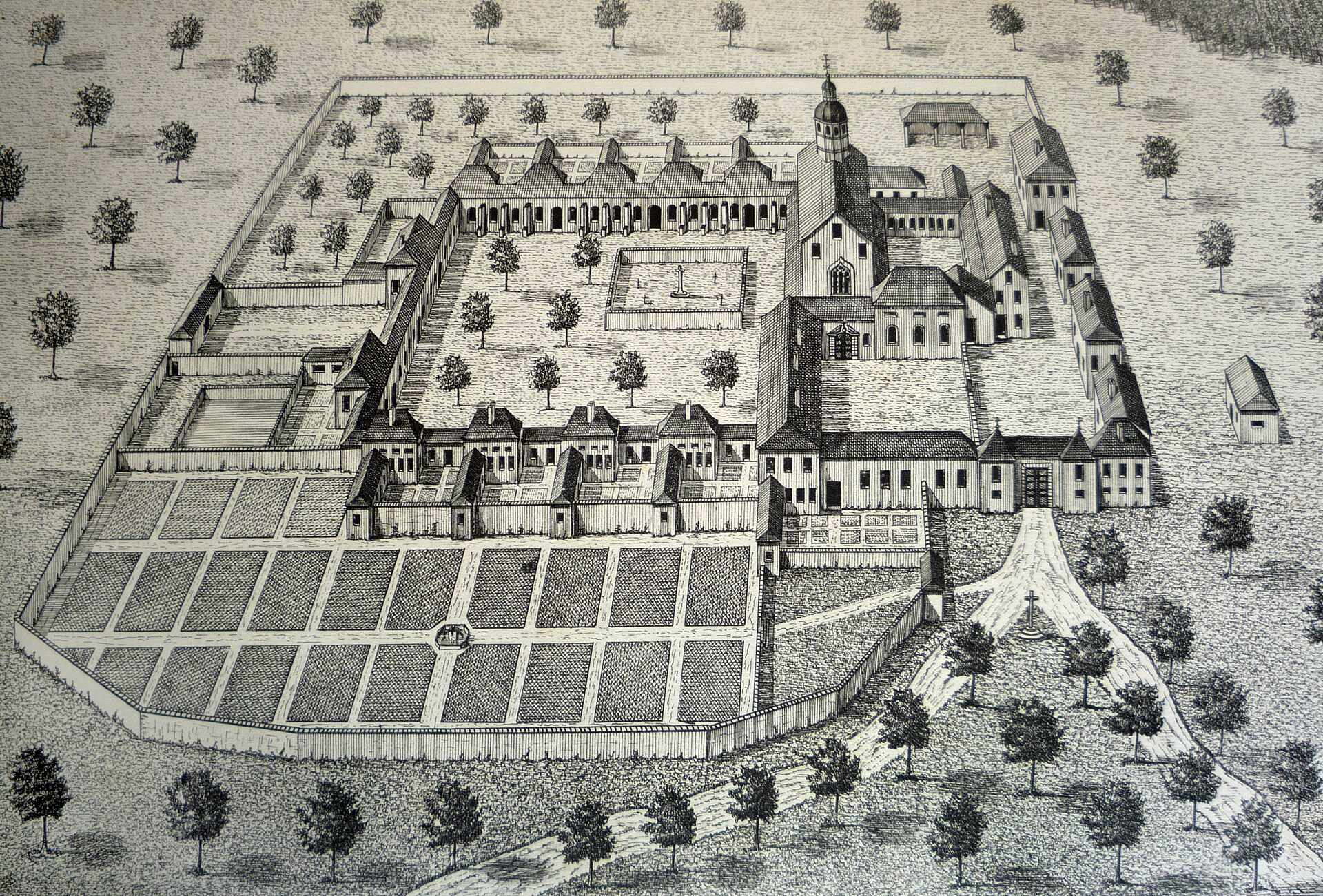
Chartreuse de Meyriat is what remains of a former Carthusian monastery, tucked away in the forest above Vieu-d'Izenave, in the Ain department of the Auvergne-Rhône-Alpes region. Set deep in the Haut-Bugey countryside, away from the busiest tourist routes, the site today draws visitors mainly for its quiet, wooded setting and the weathered stones that still hint at centuries of monastic life.
How did the monastery come to be founded?
The charterhouse was established in 1116, when the valley of Meyriat was granted to Carthusian monks by Ponce de Balmey, a canon of Lyon who later became bishop of Belley. It became the sixth charterhouse founded by the order, belonging to the Burgundian province and falling under the diocese of Lyon. The first buildings were dedicated to Saint Stephen, and the community later grew into a larger complex dedicated to Saint Mary.
How did the community's estate grow over time?
Over the following centuries, the monks steadily expanded their holdings. By 1790 the monastery's domain covered more than 1,800 hectares, stretching from Izenave to Saint-Martin-du-Fresne and from Vieu-d'Izenave to Brénod. Relations with neighboring communities were not always easy, as disputes over land and forest rights recurred through the centuries. In 1424, Brénod passed under the authority of the Counts of Savoy, who expelled the monks from the area — a reminder of how closely the charterhouse's fortunes were tied to regional feudal politics.
What happened to the monastery during the French Revolution?
Despite earlier tensions, Meyriat continued its monastic life uninterrupted until the late eighteenth century. The French Revolution, which banned religious orders in 1791, brought centuries of Carthusian presence to an end. The community was disbanded that same year, and in 1796 the entire estate was sold off as national property. The buildings were subsequently plundered and dismantled, with much of the stone reused by local residents for other construction.
Is there really a hidden treasure in the ruins?
Local legend holds that in 1792, just before the monastery was finally abandoned, the prior and the sacristan walled up roughly ten chests filled with gold, silver, and jewels inside a secret underground chamber. The treasure has never been found, and the story still circulates among the people of Vieu-d'Izenave, occasionally luring curious visitors into the surrounding woods.
What can visitors see on site today?
Little survives of the original complex: a section of the northern boundary wall, a few remaining stone steps, and a single carved block bearing a fleur-de-lys — a modest trace of the site's former status. The ruins are slowly being reclaimed by the forest, giving the place a quiet, atmospheric feel. The site is freely accessible year-round, though visitors should keep in mind that it is unguarded and has no tourist facilities.
Frequently asked questions
Where exactly is Chartreuse de Meyriat located? In the forest within the commune of Vieu-d'Izenave, in the Ain department of Auvergne-Rhône-Alpes, in the historic Bugey area.
When was the monastery founded? It was founded in 1116 by Ponce de Balmey.
Can the ruins be visited? Yes, the site is open to the public free of charge year-round, though it has no marked paths or visitor facilities.
What remains of the original monastery? A stretch of wall, some old stone steps, and a carved fleur-de-lys stone — the rest was destroyed after the estate was sold in 1796.
Is the legend of the hidden treasure true? It's a local oral tradition describing chests of gold and silver walled up in 1792 that were never recovered; no historical confirmation exists.
Nearby places

Earn badges for the places you visit
Download NextOnTrip, discover new places and check off your trails.