About this place
Abbaye de Saint-Sulpice is the ruined remains of a medieval Cistercian abbey in the commune of Plateau d'Hauteville (formerly the village of Thézillieu), in the Ain department, on the edge of the Bugey region. Set among the quiet meadows and woodland of the plateau, it's a rewarding stop for travelers who enjoy history away from the usual crowds.
How do you get there?
The abbey lies within the commune of Plateau d'Hauteville, a short distance from Hauteville-Lompnes, the area's main town. A car is the easiest way to reach it — local roads lead straight to the village of Thézillieu, from where the ruins are clearly signposted. Parking near the site is limited, so expect a short walk from wherever you leave your vehicle. The nearest larger town is Belley, and the wider region is roughly an hour's drive from Lyon.
What will you see?
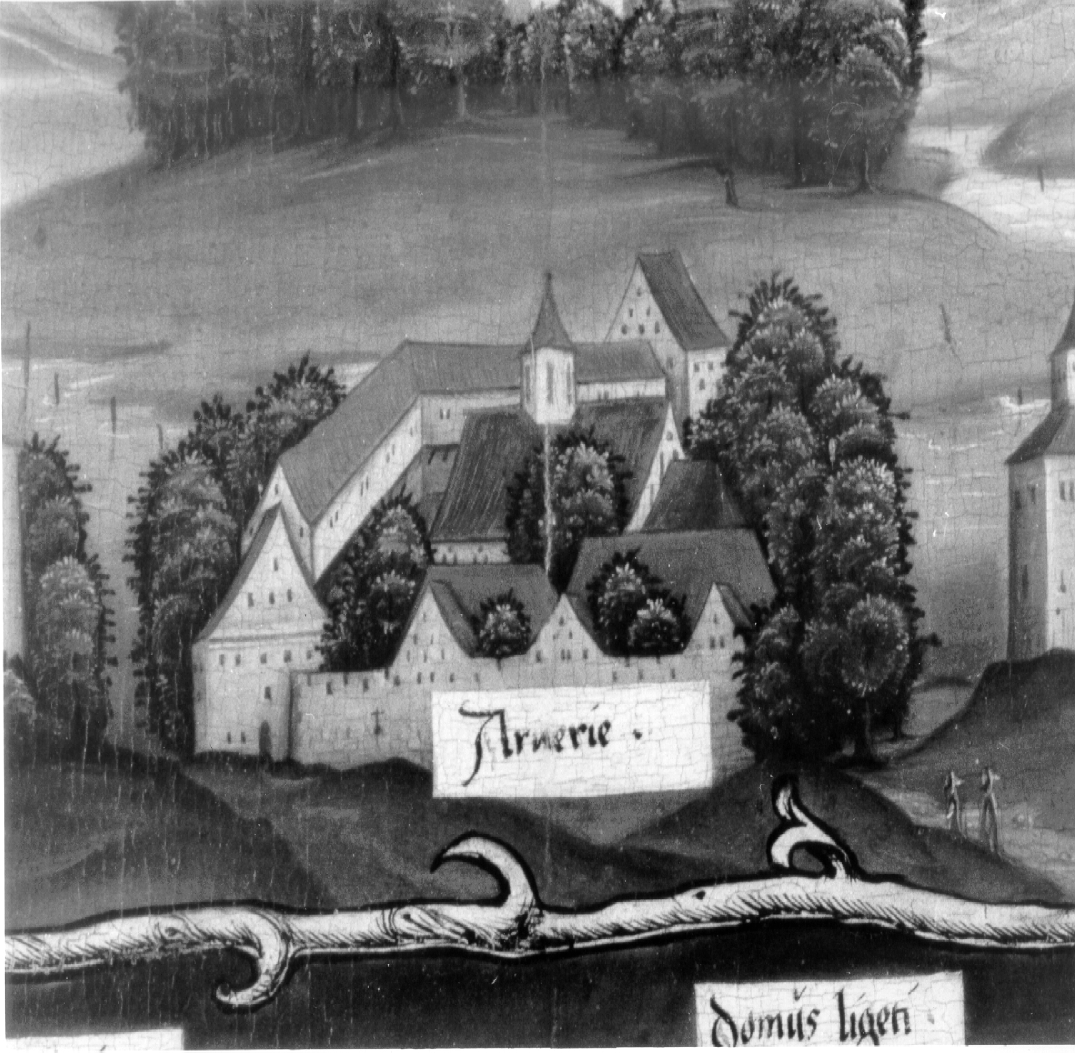
Two churches survive on the site, in varying states of ruin. The older is a small Romanesque chapel with a single nave closed by a semicircular apse; it was altered in the 16th century and used for burials. The second, much larger structure is the abbey church, built at the turn of the 12th and 13th centuries: a five-bay nave flanked by two side aisles, a projecting transept, and a flat-ended choir bordered by two square chapels. Although the buildings are largely in ruins today, the surviving layout and proportions still convey the scale of the original monastic complex. The site is a protected historic monument, and archaeological work carried out here has helped researchers piece together its original appearance.
What's the history behind it?
The community's origins trace back to a Cluniac priory: Prior Humbert received land from Amadeus III of Savoy, allowing the monastic settlement to take root. Around 1130–1133, strengthened by monks arriving from the abbey of Pontigny — one of the earliest daughter houses of Cîteaux — the community joined the Cistercian order. Between the 13th and 15th centuries the abbey built up considerable economic influence and was instrumental in founding several nearby villages, including Hostiaz, Prémillieu, and Thézillieu itself.
From the 17th century onward, the abbey came under the commende system, whereby its revenues were assigned to appointed figures outside the resident community, and it began a steady decline. Its buildings were later put to secular use — a stud farm was installed on the grounds, and part of the abbey church became a fodder store, leaving the monks only a portion of the choir for worship. After the French Revolution the abbey lost its religious function entirely, and its stonework was stripped for use as building material, hastening the ruin of what remained. Archaeological excavations between 1968 and 1980 shed further light on the site's layout and construction phases, and the ruins were officially listed as a historic monument in 1994.
When's the best time to visit?
May through September offers the most reliable weather on the plateau, with the surrounding meadows and forest at their most scenic. Autumn can also be appealing for visitors who enjoy quieter, atmospheric landscapes, while winter access can be more difficult given the site's altitude and the local mountain climate.
Frequently asked questions
Can you visit the abbey ruins freely? The ruins stand on open ground and can be viewed from the outside at any time; as a historic site, visitors should avoid climbing on unstable sections of the remaining walls.
Is there a guide or information panels on site? Some historical markers are present, but tourist infrastructure is minimal — this is a destination for travelers who enjoy discovering history without crowds or amenities.
How long does a visit take? Most visitors spend around 30 to 60 minutes exploring the ruins, depending on their interest in the architecture and history.
Are there other attractions nearby? Yes — Plateau d'Hauteville and the surrounding Bugey region offer hiking trails, scenic viewpoints, and other examples of rural and religious architecture, making it easy to combine the abbey with a longer day out in the area.
Nearby places

Earn badges for the places you visit
Download NextOnTrip, discover new places and check off your trails.