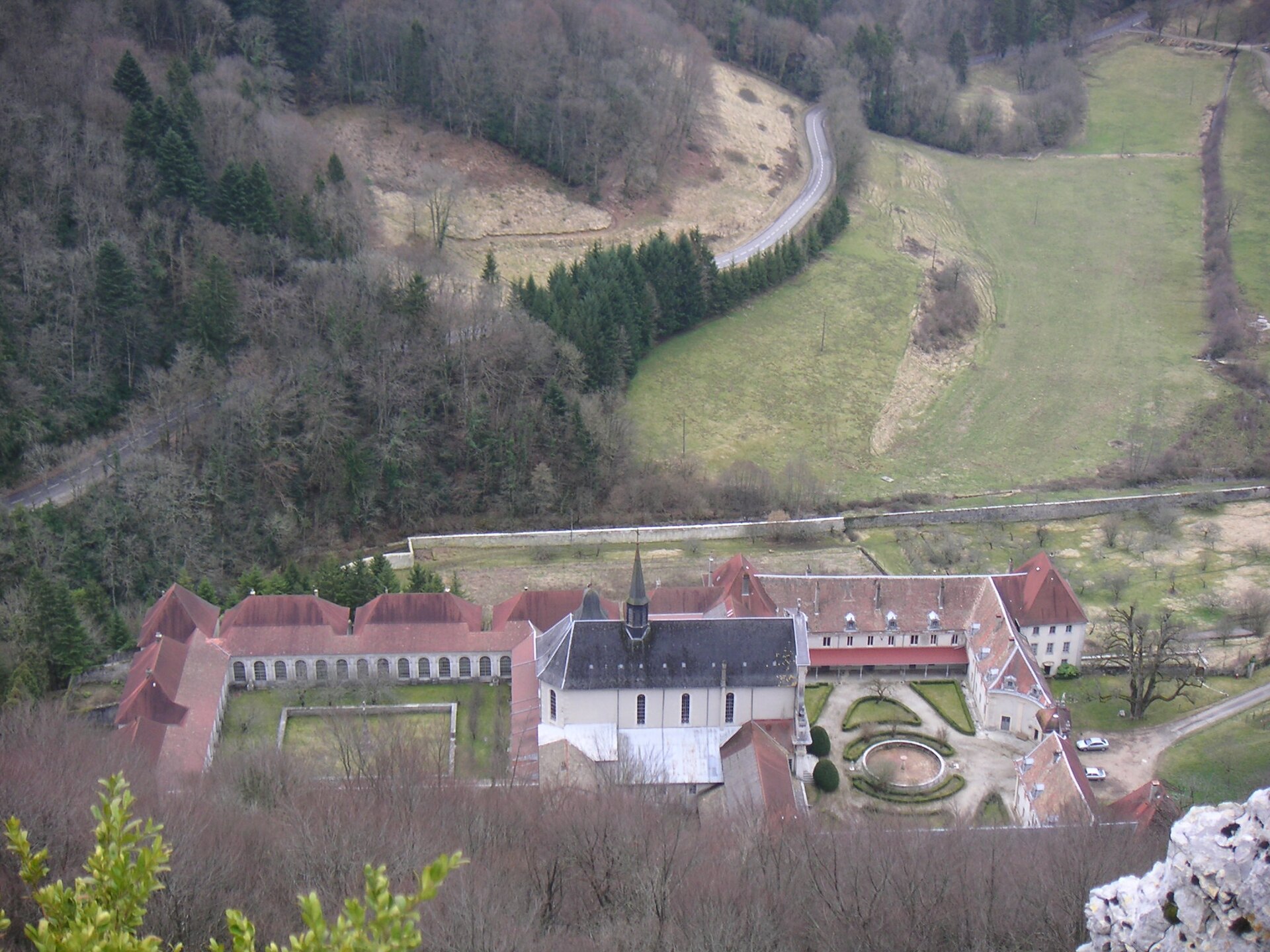
About this place
Chartreuse de Sélignac is a former Carthusian monastery tucked into the woods on the first rises of the Jura mountains, in the commune of Simandre-sur-Suran in the Ain department. Founded more than eight hundred years ago, it has survived plague, fire and revolution, and today still offers a place of retreat, even though monks no longer live there.
Where is Sélignac located?
The monastery sits in a deliberately remote spot, surrounded by roughly 180 hectares of forest not far from Bourg-en-Bresse. Isolation was never an accident: Carthusian houses were always built away from towns, in keeping with an order whose rule centers on solitude and silence. Reaching Sélignac still means driving through wooded hills before the buildings come into view.
How did the monastery come to be founded?
The story begins in 1202, when Hugues II de Coligny, a local lord about to leave on crusade, granted the Carthusian monks of nearby Seillon the land needed to build a new house at Sélignac. Hugues never saw the project completed — he died in Macedonia during the crusade — and it fell to his brother to carry the foundation forward roughly a decade later. Sélignac became the 39th house founded within the Carthusian order, an early addition to a network that would eventually spread across Europe.
What hardships did the community face over the centuries?
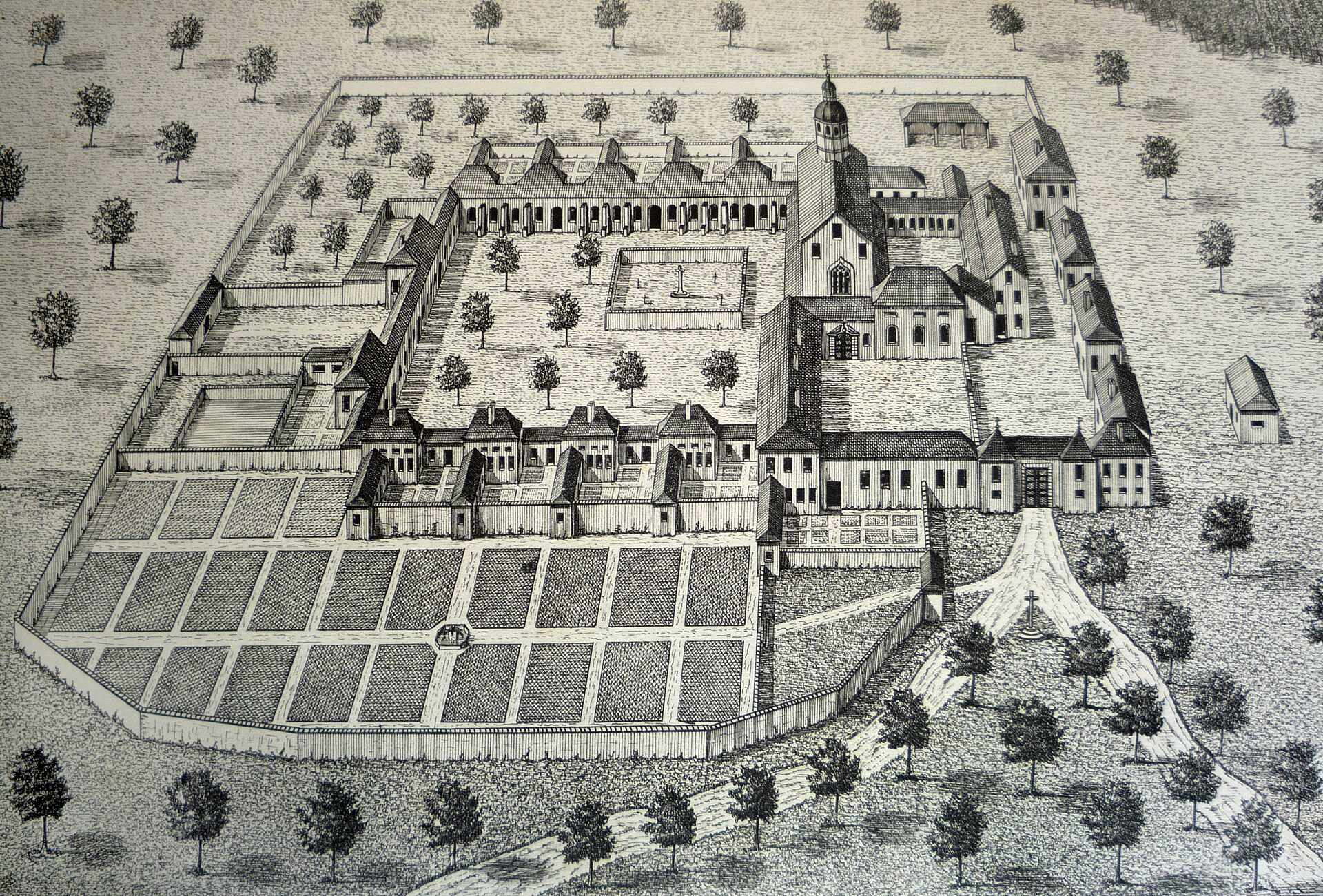
Sélignac's history was far from tranquil. The 14th century brought recurring waves of plague, endemic across France from 1348 onward, along with agricultural crises and famine so severe that local people came daily to the monastery gates seeking food. In 1636, during clashes with troops from neighboring Franche-Comté, the buildings were burned. Reconstruction did not happen until the end of the 17th century, and it is largely that rebuilt monastery whose outline survives today.
Monks lived at Sélignac without interruption from its founding until the French Revolution forced them out in 1792. The community later returned during the 19th century, only to face a fresh setback when anti-congregation laws passed in 1901 required religious orders to seek state authorization. The Carthusians refused, the monastery was put up for sale, and the monks went into exile in Switzerland. A decade later, a benefactress named Louise Tardy bought the property and handed it back to the order. The Carthusians resettled permanently in 1928.
What is Sélignac used for today?
In 2001, the general chapter of the Carthusian order decided to close the monastic community at Sélignac. The site was not abandoned, however: it was entrusted to a group of lay people who chose to live according to the spirituality of Saint Bruno, founder of the Carthusian order, under the spiritual authority of the order's Father General. Known today as the Maison Saint-Bruno, the former monastery now welcomes individuals and groups for retreats, quiet days and periods of rest. Around the cloister, the old monks' hermitages — small individual houses with their own gardens — still stand, offering visitors a taste of the solitude at the heart of Carthusian tradition.
Frequently asked questions
Are there still monks living at Sélignac? No. The Carthusian community left in 2001 by decision of the order's general chapter. The site is now run by lay people living in the Carthusian spirit.
Can visitors go on retreat there? Yes. The Maison Saint-Bruno hosts individuals and groups for spiritual retreats and quiet stays centered on silence and prayer.
How old is the monastery? The foundation dates to 1202, making Sélignac more than eight centuries old, with gaps caused by the French Revolution and the anti-congregation laws of the early 20th century.
What is there to see around the monastery? The site is surrounded by about 180 hectares of forest open for walking, and most of the surviving buildings date from the reconstruction that followed the 1636 fire.
Nearby places

Earn badges for the places you visit
Download NextOnTrip, discover new places and check off your trails.