About this place
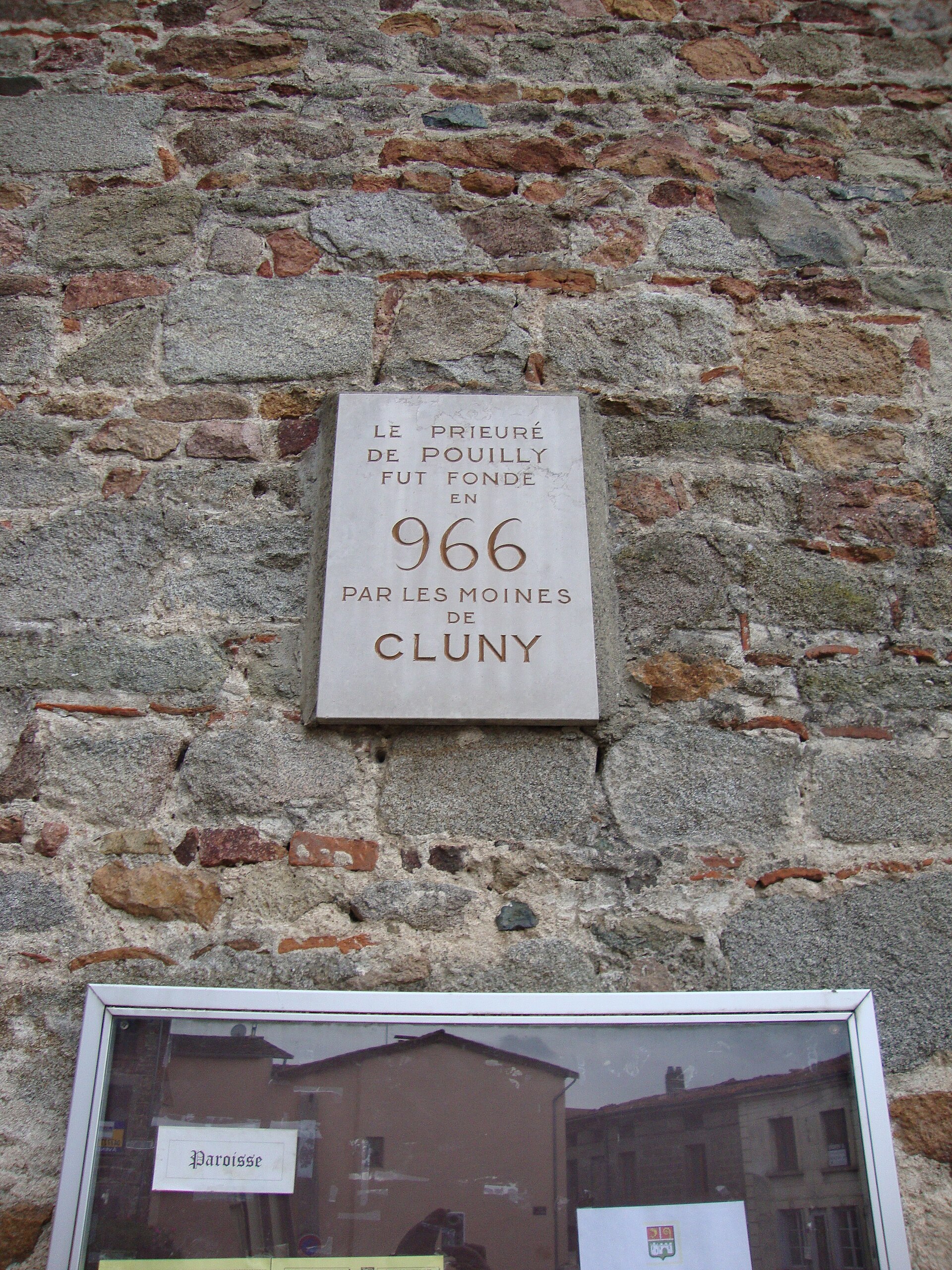
The Prieuré de Pouilly-lès-Feurs is a medieval monastic complex at the heart of the Forez region, in the Loire department of eastern France. Founded by Benedictine monks from Cluny, this former priory served as a religious and economic hub for more than seven centuries. Today it belongs to the commune of Pouilly-lès-Feurs and opens its doors to visitors every summer.
Who founded the priory, and when?
Monks from the abbey of Cluny settled in Pouilly-lès-Feurs around 966, at the very end of the 10th century. They built the Romanesque church in stages across the 11th and 12th centuries, followed by the priory buildings themselves, which took shape between the 12th and 15th centuries. The church, dedicated to Saint Peter, was listed as a French historic monument (monument historique) in 1911.
How did the complex grow over the centuries?
Construction proceeded in clear phases, and the different wings still show that layered history today. The earliest core of the priory and the church date from around the turn of the 11th century. Stables and a grain store followed in the 13th century, a courtroom with an attached prison in the 14th century, and a large kitchen together with a stair tower and the main keep in the 15th century. The overall plan directly echoes Cluny Abbey itself: buildings enclose a square courtyard, at the center of which sits a well dating back to Gallo-Roman times.
Why was the priory fortified?
Around 1385, during an unsettled period for the region, the community was enclosed within high walls reinforced by ten towers. These fortifications were meant to protect the monks and the priory's assets from the threats typical of the era. They stood for several centuries before being demolished under the reign of Louis XIII, once the need for defense had passed.
What was the priory's role on the road to Santiago de Compostela?
Pouilly-lès-Feurs lay along one of the pilgrimage routes to Santiago de Compostela, and the priory served travelers accordingly. Pilgrims who stopped for the night were given a bowl of wine and a piece of bread both in the evening and again the following morning. A small carved rose window on one of the priory's windows is thought to be a lasting trace of this tradition, marking the site as a welcoming stop for pilgrims.
What can visitors see inside the priory today?
Several features draw particular attention during a visit: imposing fireplaces, the former courtroom together with its prison cells, and 16th-century graffiti scratched into the walls, likely by residents or prisoners of the time. One fireplace carries a popular nickname, the "cuckold's chimney," a detail guides enjoy pointing out. Walking through the courtyard, towers, and utility rooms gives visitors a tangible sense of the different stages of monastic life here.
When did the priory stop being a working monastery?
Monks lived at the priory continuously from the year 1000 until 1715. After the French Revolution, the building was sold as national property and passed through the hands of three successive private owners. It was only in 1992 that the commune of Pouilly-lès-Feurs acquired the site, allowing it to be protected and opened for visits.
Frequently asked questions
Where exactly is the priory located? In the village of Pouilly-lès-Feurs, in the Forez region of the Loire department, eastern France.
Can the priory be visited? Yes. In July and August it is open Wednesday through Sunday, from 10 a.m. to 6 p.m. Outside the summer season, groups can arrange a visit by contacting the town hall in advance.
Is a visit free of charge? Yes. Self-guided tours of the village and priory, using printed materials available at the town hall and tourist office, are free, as is the audio guide through the izi TRAVEL app.
What is the priory's main attraction? Its layout modeled on Cluny Abbey, the 16th-century graffiti, the former courtroom with its prison cells, and the surviving fireplaces, including the so-called "cuckold's chimney."
Does the priory have a connection to pilgrimage routes? Yes — it stood along the road to Santiago de Compostela and hosted pilgrims, offering them lodging, wine, and bread.
Nearby places
-

Prieuré de Salt-en-Donzy
Salt-en-Donzy
-
Prieuré de Champdieu
Champdieu
-
Couvent de la Visitation de Montbrison
Montbrison
-
Couvent des Oratoriens de Montbrison
Montbrison
-
Couvent des ursulines de Saint-Bonnet-le-Château
Saint-Bonnet-le-Château
-
Petit monastère Lumière de l'Immaculée - Petites sœurs de l'Agneau
Lyon
Earn badges for the places you visit
Download NextOnTrip, discover new places and check off your trails.