About this place
La Clarté-Dieu is the ruined site of a Cistercian abbey in the commune of Saint-Paterne-Racan, in the Indre-et-Loire department of central France. Its history links rural Touraine directly to medieval England, through a bishop who wanted to leave his mark on both sides of the Channel.
Who founded the abbey, and why?
The founder was Peter des Roches, a native of Touraine who built an extraordinary career in England, rising to become Bishop of Winchester and one of the most powerful men in the kingdom during the reign of Henry III. He planned to endow a pair of Cistercian monasteries - one in England, one in his home region of France - intending them as a lasting monument to his own name. He died in 1238 before the project was carried out, but the executors of his estate completed it using the funds he had set aside, roughly 3,000 gold écus. A group of twelve monks reached the site on 22 July 1240. La Clarté-Dieu became the twenty-fifth, and ultimately the last, direct daughter house of the mother abbey at Cîteaux.
What was its English twin abbey?
The other monastery from Peter des Roches's plan was Netley Abbey in Hampshire, also Cistercian, founded the same year, 1239. The two houses had very different fates. Netley survived until the sixteenth century, when Henry VIII seized it during the Dissolution of the Monasteries and handed it to a Tudor politician who converted the buildings into a private mansion. La Clarté-Dieu remained an active community for much longer, though it did not escape the wars that swept through the region.
What destroyed the abbey?
The heaviest blow came during the Hundred Years' War. On 11 February 1364, troops under Amaury de Trôo looted and set fire to the buildings. The cost of rebuilding weighed on the small community for decades afterward. Even so, the abbey continued to function until the French Revolution, when it was closed and sold off along with every other monastery in France. Successive lay owners then dismantled the remaining structures piece by piece, reusing the stone to build houses in the surrounding countryside.
What survives today?
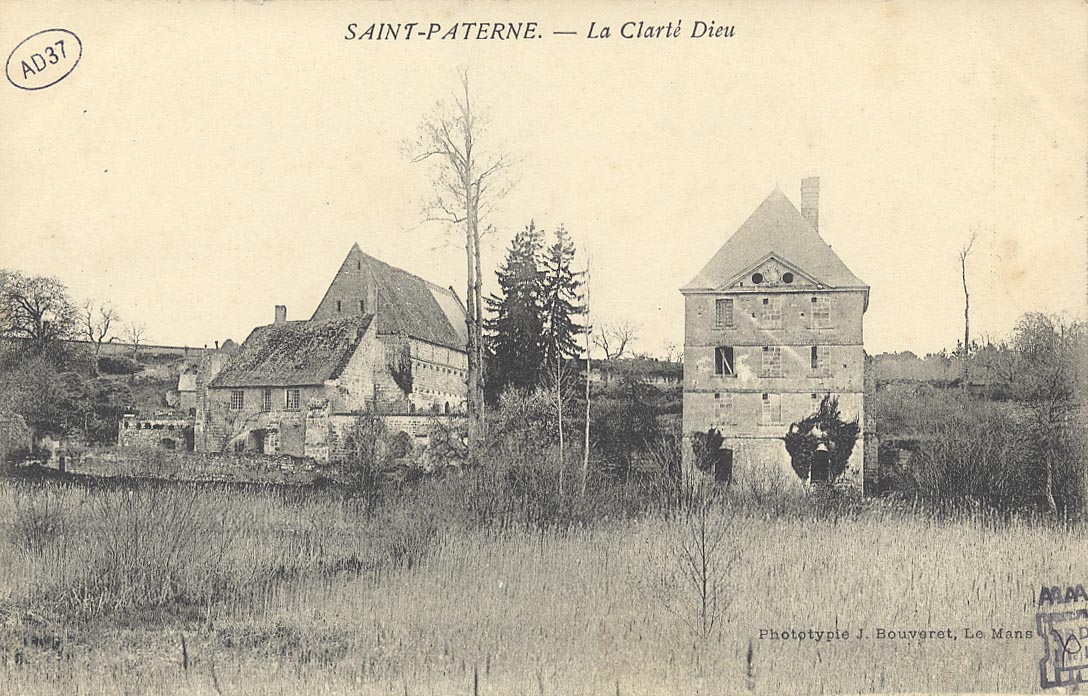
Despite centuries of demolition, the original layout is still legible on the ground: the outer enclosure wall, a north gate, an inner precinct wall, a south gate and bridge, outbuildings, the lay brothers' building, the foundations of the refectory's south wing, a later classical pavilion, and a former guest lodging. The most striking surviving structure is the lay brothers' dormitory, built in 1274, with its monumental timber roof frame, alongside a vaulted lower hall whose design shows clear English influence - a physical trace of the abbey's ties across the Channel.
Can visitors see the ruins today?
The site has been privately owned since 2002, and the owners work with the association Amis de la Clarté-Dieu on conservation and restoration. The chapel known as the chapelle des étrangers was listed as a historic monument in 2006, and the wider monastic enclosure received full protected status in 2011. The ruins are occasionally opened to the public during heritage events, so it is worth checking local listings before planning a visit.
Frequently asked questions
When was La Clarté-Dieu founded? The first monks arrived on 22 July 1240, though the founder, Bishop Peter des Roches, had planned the project years earlier, before his death in 1238.
Why is it called Netley Abbey's twin? Both abbeys were endowed by the same man as part of a single project: a matched pair of Cistercian houses, one in England and one in France.
What caused the abbey's decline? Destruction during the Hundred Years' War, including a raid and fire in 1364, followed eventually by the French Revolution, which ended monastic life at the site for good.
Where exactly are the ruins located? In the commune of Saint-Paterne-Racan, in the Indre-et-Loire department, in the Centre-Val de Loire region of France.
Nearby places

Earn badges for the places you visit
Download NextOnTrip, discover new places and check off your trails.