About this place
Abbaye de Gastines stands near the village of Villedômer, in the Indre-et-Loire department, at the heart of the Loire Valley. It is one of those quiet monastic remains that trace the region's religious history back to the Romanesque and Gothic centuries, while also showing how such sites survived war, revolution and centuries of change as scattered but still legible fragments.
Who founded the abbey?
The abbey was established in 1137 on the initiative of Hugues, Archbishop of Tours, who installed canons following the Rule of Saint Augustine. The foundation belonged to a broader twelfth-century wave of monastic renewal along the Loire, when bishops and local lords endowed new religious communities with land and privileges. From the outset Gastines functioned as a house of regular canons rather than strictly cloistered contemplative monks, which shaped its layout: alongside the church and cloister, working farm buildings were needed to sustain the community.
What happened to the abbey over the centuries?
A fire at the end of the twelfth century destroyed much of the original complex. Thibault de Blois financed the rebuilding, and the new church was consecrated in 1207 — a date that marks the start of a more stable period, from which the oldest surviving architectural elements date. The Wars of Religion brought further destruction: Protestant forces pillaged the abbey, forcing a thorough restoration in 1564. By the eighteenth century the buildings had again fallen into disrepair, so in 1737 a new residence for the canons and a separate pavilion for the abbot were built — these eighteenth-century additions still stand today next to the much older medieval walls.
How did the abbey's religious life come to an end?
The French Revolution ended the community's religious use of the site: in 1791 Gastines was sold as national property. From that point the complex shifted from a monastic to a secular character, passing through private ownership outside any church structure. Despite this change of function, a substantial part of the historic fabric survived, which later allowed the ensemble to be placed under heritage protection in the twentieth century.
What can visitors see today?
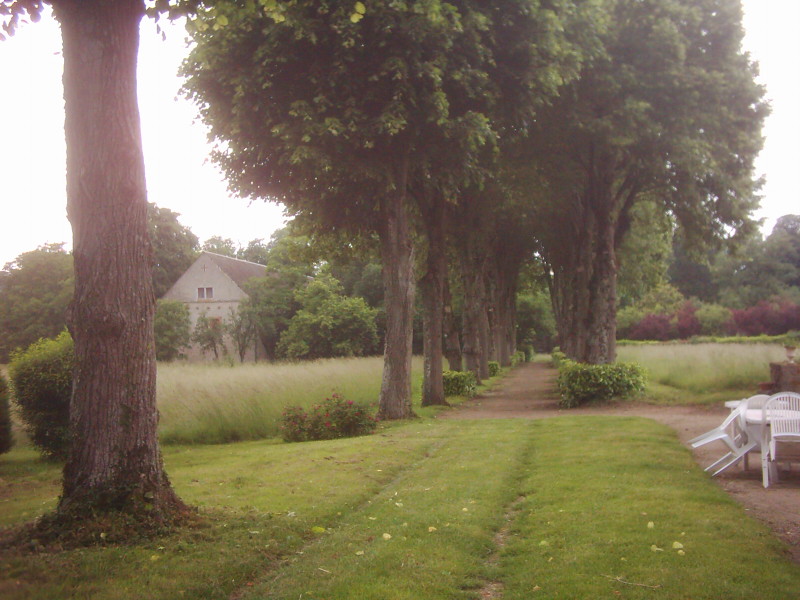
Surviving elements include the twelfth-century gable wall of the church's south aisle, the west wing of the former cloister, a barn, and a thirteenth-century outbuilding that was altered in the fifteenth century. Standing alongside these older remains are the eighteenth-century monastic buildings raised during the last major rebuilding before the Revolution. The ensemble — with the exception of the monastic building itself — has been listed as a monument historique since 1948, confirming its place among the protected architectural heritage of Indre-et-Loire.
Today, the Abbaye de Gastines bears witness to several distinct building periods layered on top of one another: a Romanesque-to-Gothic church begun in the early thirteenth century, a post-Wars-of-Religion restoration, and a classical eighteenth-century wing. For anyone interested in the monastic history and architecture of the Loire Valley, it brings together several centuries of building history in a single, compact site.
Frequently Asked Questions
When was the Abbaye de Gastines founded? It was founded in 1137 by Hugues, Archbishop of Tours, for canons following the Rule of Saint Augustine.
What happened to the abbey during the Wars of Religion? It was pillaged by Protestant forces, which led to a full restoration in 1564.
Which parts of the abbey have survived to today? Among the surviving elements are the twelfth-century south aisle wall of the church, the west wing of the cloister, a barn, a thirteenth/fifteenth-century outbuilding, and the eighteenth-century monastic buildings.
Is the Abbaye de Gastines a protected historic monument? Yes, the ensemble — apart from the monastic building — has been listed as a monument historique since 1948.
Nearby places

Earn badges for the places you visit
Download NextOnTrip, discover new places and check off your trails.