About this place
Valbonne Abbey, in French Abbaye de Valbonne, is the ruin of a former Cistercian monastery tucked into a remote valley of the Albères massif, within the municipality of Argelès-sur-Mer in the Pyrénées-Orientales department, on France's Catalan coast. It's a quiet detour for visitors drawn to medieval ruins and hillside walking, well away from the crowded beach resorts nearby.
How old is the abbey, and who founded it?
The valley itself had monastic ties going back to the 9th century, when it belonged to the abbey of Saint-Cyr de Colera on the far side of the Albères ridge. The Valbonne community itself was established at the start of the 13th century by monks sent from the abbey of Sainte-Marie de Fontfroide, one of the leading Cistercian houses in the wider Languedoc region. Like other Cistercian foundations, the monks deliberately chose an isolated, hard-to-reach site, away from secular settlements.
Why was the monastery abandoned?
Monastic life here was interrupted more than once. The monks first left Valbonne in the 15th century. The community later returned, but the abbey was abandoned for good in 1734, mainly because the site's isolation made ordinary monastic life too difficult to sustain. From the 18th century onward the building was no longer used for worship and gradually fell into ruin.
What survives on site today?
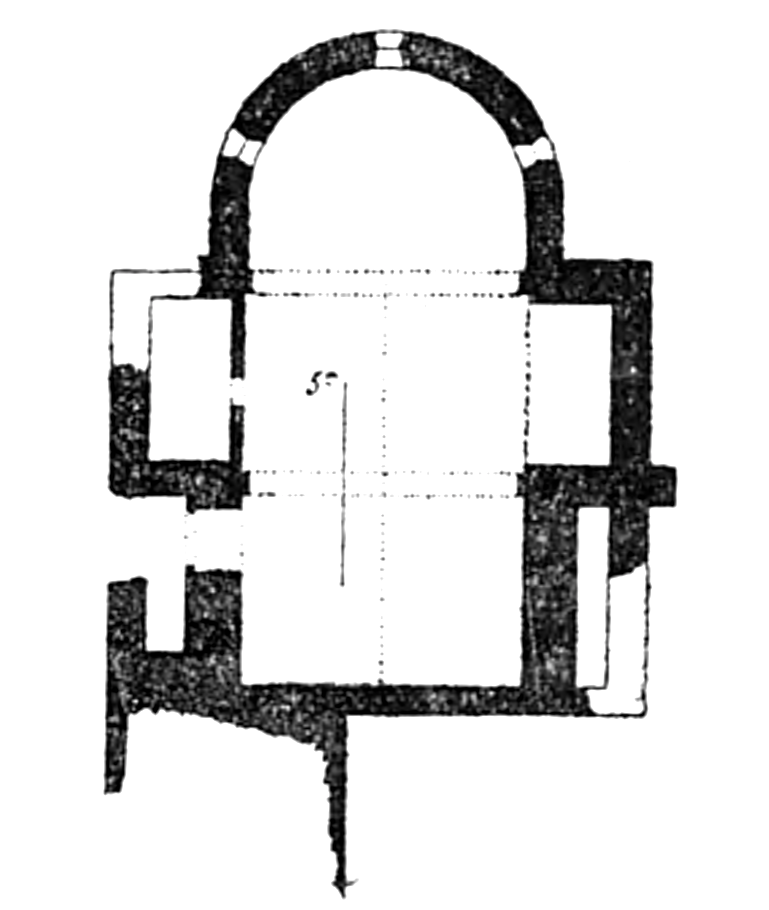
The most substantial remaining structure is the vaulted nave of the monastery church — modest in size, roughly a dozen metres long, and still standing in reasonably good condition. The apse and transept have not survived. Stylistically, the building sits at the transition between late Romanesque and early Gothic, typical of 12th-century construction in the region. Visitors can also see traces of the old cloister, along with carved marble fittings from the church's liturgical furniture, including a holy water stoup and a baptismal font. The overall architecture reflects the austere simplicity typical of Cistercian building, which deliberately avoided decorative excess.
Can you actually visit the abbey?
The ruins now sit on the grounds of the Mas de Vallbona, a private farm property, so access to the buildings themselves is limited and depends on the landowners. Most visitors experience the site from the outside, combined with a walk through the surrounding valley — a quiet, green pocket of the Albères massif, a world away from the busy beaches of Argelès-sur-Mer.
Frequently asked questions
Is this the same place as the Chartreuse de Valbonne? No. These are two unrelated sites that happen to share a name. The abbey covered here sits in the Pyrénées-Orientales, within Argelès-sur-Mer, and was a Cistercian monastery. The Chartreuse de Valbonne is a much larger and better-preserved Carthusian charterhouse located in the Gard department, in a different part of France entirely.
How old are the ruins? The monastic community was founded in the early 13th century, though the valley's monastic connections date back further, to the 9th century.
Why did the monks leave? The valley's isolation made everyday monastic life increasingly impractical, leading to a first abandonment in the 15th century and a final one in 1734.
What can visitors actually see? The vaulted nave of the former abbey church, remnants of the cloister, and marble liturgical fittings such as the holy water stoup and baptismal font, all in the plain Cistercian style.
Nearby places

Earn badges for the places you visit
Download NextOnTrip, discover new places and check off your trails.