About this place
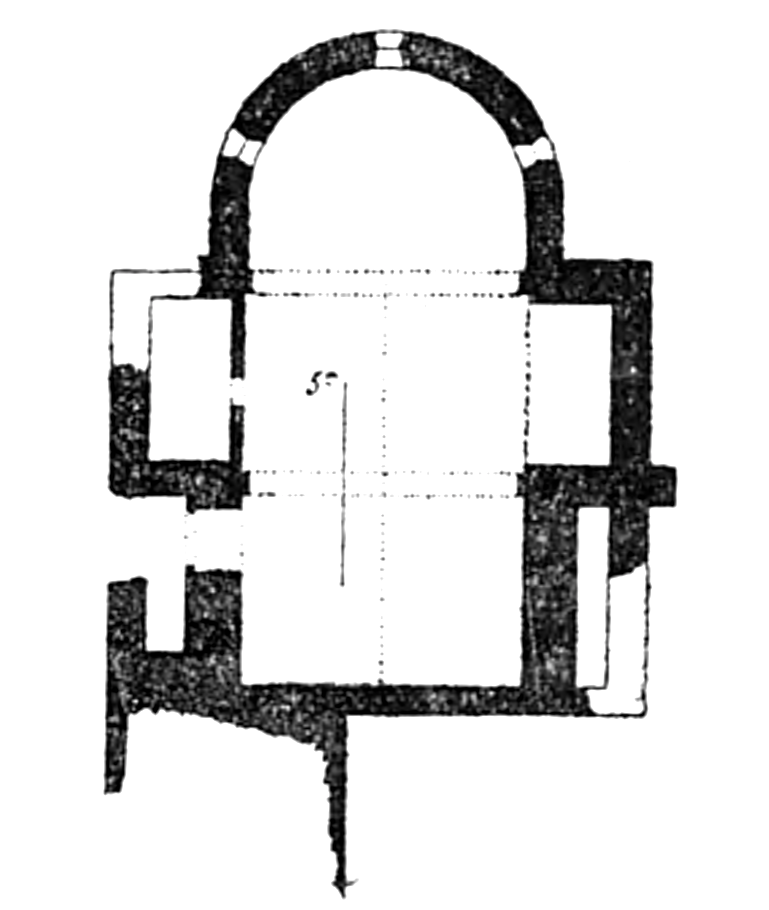
Sant Miquel de Freixe is the ruined remains of a small Romanesque church in the municipality of Espolla, in Catalonia, Spain (Alt Empordà, Girona province). It stands in the northern part of the municipality, within the old territory of Baussitges, right in the heart of the Serra de l'Albera mountain range, next to the abandoned Freixe farmhouse, in the valley of the river of the same name.
What is the history behind this church?
Sant Miquel de Freixe first appears in written records in the Middle Ages: in 1219, Pope Honorius III issued a papal bull confirming that the church belonged to the possessions of the monastery of Sant Quirc de Colera, run by monks. The building itself is older, dating from the early Romanesque period, most likely the 11th century, when it served as a modest rural church for the scattered farmsteads scattered across this mountain valley.
In 1362, the church lost its independent parish status and was merged with the nearby church of Sant Martí de Baussitges into a single ecclesiastical unit. This was a common fate for the small mountain churches of the Albera range, as the population of these isolated valleys gradually declined. Today only ruins remain — the church was destroyed by a landslide, a hazard that is far from unusual on the steep, rugged terrain of the Albera massif.
How do you get to Sant Miquel de Freixe?
Reaching the ruins takes some effort, and this is not a destination for anyone looking for a quick, easy outing. The starting point is the village of Espolla, from where you follow the track toward Baussitges — a dirt path passable only by certain off-road vehicles, so it is safest on foot or by mountain bike. The route heads north, following the course of the Orlina river for around 5 km to the Corbera farmhouse. From there, another path continues north for roughly 2.5 km until it reaches the abandoned Freixe farmhouse, right next to which the church ruins stand.
The full one-way distance adds up to more than 7 km, crossing the mountainous, partly wooded terrain of the Serra de l'Albera, so it is worth setting aside a full day, wearing proper hiking boots, and carrying water and a map or GPS app — signage in this part of the range can be sparse.
What will you see there?
On site you will find a small, partially collapsed structure with a simple Romanesque layout, typical of the modest rural churches built in this part of the Pyrenees in the 11th century. The surroundings are wild and rarely visited: the abandoned Freixe farmhouse, a river valley, and the dense scrub typical of the interior of the Albera massif. This is a spot for hiking enthusiasts and lovers of regional history rather than travellers chasing dramatic architecture — the appeal of Sant Miquel de Freixe lies in its authenticity and isolation more than in its state of preservation.
When is the best time to visit?
Given the length and character of the route, spring and autumn are the best seasons, when temperatures across the Albera range are mild and vegetation does not obstruct the path. In summer the trail can be exposed and hot, while in winter, after heavy rain, the dirt sections can become harder to walk.
Frequently asked questions
Can you drive right up to the ruins? No. The final stretch is only accessible on foot or by bike, with the section up to the Corbera farmhouse passable only by off-road vehicles.
How long does the walk from Espolla take? The route covers around 7 to 7.5 km one way from the centre of Espolla, so it is best to plan the whole outing to take several hours.
Is the church in good condition? No — it is a ruin, destroyed by a landslide. Fragments of Romanesque-style walls have survived.
Which parish or diocese did the church belong to? From 1362 onward it formed a single parish unit together with Sant Martí de Baussitges; before that it was tied to the possessions of the Sant Quirc de Colera monastery.
Nearby places

Earn badges for the places you visit
Download NextOnTrip, discover new places and check off your trails.