About this place
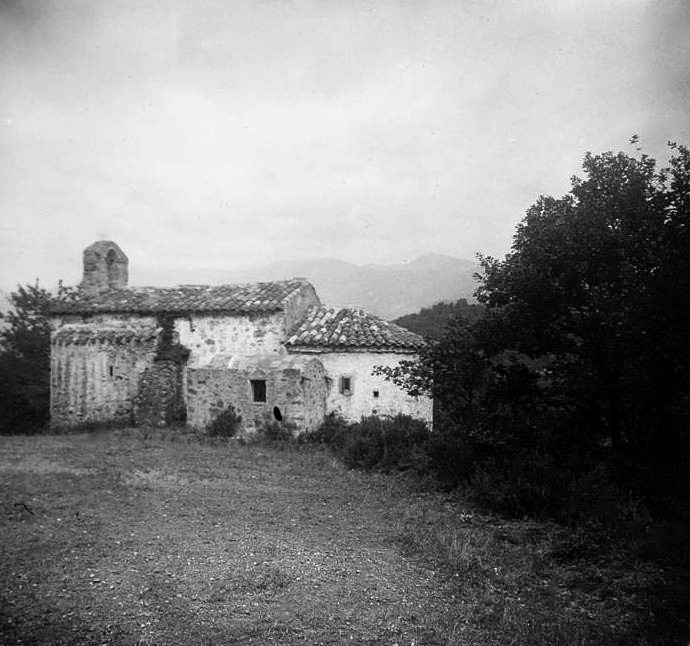
Sant Jaume de Canadal is a pre-Romanesque church in the village of la Jonquera, in the Alt Empordà region of Catalonia, listed in Catalonia's inventory of architectural heritage. The building stands in the hamlet of Canadal, set apart from the main built-up area of la Jonquera, and combines two clearly distinct construction periods spanning from the early Middle Ages to the early modern era.
How old is the church, and what was it originally called?
The church's history goes back to the 8th–9th centuries, the period to which its nave and vault belong — old enough that the building is sometimes classified as pre-Romanesque, predating the classic Romanesque style typical of Catalan rural churches. The oldest section, on the western side, may date from the 10th century or even earlier, and is notable for its horseshoe-shaped vault, a feature not commonly found in this part of Catalonia. Interestingly, the church at Canadal was originally dedicated to Santa Cristina, only later taking on its current dedication to Saint James (Sant Jaume).
What can visitors see today?
The eastern part of the church — the transept, sacristy, and chancel — was added much later, after the Romanesque period, between the 15th and 17th centuries. These additions are visibly different in style from the plain, austere original nave, so visitors can trace several centuries of religious architecture almost within a single building. This pattern — an older, simple nave paired with a more elaborate later eastern end — is typical of many rural churches in Alt Empordà, which were extended over the centuries to suit the needs of the local community rather than being rebuilt from scratch.
The church remains in good condition and continues to serve as an important reference point for the surrounding community. Until recently, summer night gatherings were held here around the feast of Saint James, a local custom that highlights the site's significance for the community's identity beyond its architectural value alone.
What else is worth knowing about the area?
Sant Jaume de Canadal stands close to the site of the former medieval Castell de Canadal — today only scant traces of the castle remain, but the name of the hamlet still recalls the old defensive-religious arrangement in which a church and a fortification stood side by side. This layout was common across medieval Catalonia, where parish churches were frequently built in the shadow of local fortifications that offered protection to the surrounding population.
La Jonquera itself is best known as a border town on the crossing into France, but its surroundings hide a number of smaller, less obvious religious monuments — Sant Jaume de Canadal is one of them, and a good example of how it can pay off to step off the region's main tourist routes to uncover traces of its early medieval past.
Frequently Asked Questions
What is Sant Jaume de Canadal? It is a pre-Romanesque church in the hamlet of Canadal near la Jonquera, whose oldest parts — the nave and vault — date from the 8th–9th centuries, possibly even earlier.
What was the church originally dedicated to? The church was originally dedicated to Santa Cristina, and only later adopted its current dedication to Saint James (Sant Jaume).
Which parts of the building are the oldest, and which are the newest? The western section, with its nave and distinctive horseshoe-shaped vault, is the oldest part (8th–10th centuries), while the transept, sacristy, and chancel on the eastern side were added much later, between the 15th and 17th centuries.
Are there other historic sites nearby? Yes — the remains of the medieval Castell de Canadal once stood close by, reflecting the traditional pairing of a church and a local fortification found throughout this part of Catalonia.
Nearby places

Earn badges for the places you visit
Download NextOnTrip, discover new places and check off your trails.