About this place
Santa Maria d'Agullana is a Romanesque parish church standing right on the main square of Agullana, a village in the Alt Empordà region of Catalonia, close to the French border. Modest from the outside, it remains one of the best-preserved religious monuments in this part of the Girona province and a natural landmark for anyone exploring the area.
Where does this church come from?
The earliest written record of the church dates back to 1019, appearing in the so-called Llibre Verd (Green Book) of the Girona Cathedral, where Bishop Rotger donated the Ecclesiam Sanctae Mariae de Aguliana to the Girona canonry. The building as it stands today is dated to the 12th–13th centuries, and for centuries it fell under the jurisdiction of the Diocese of Girona. In 1984 a decree published in the Catalan official gazette (DOGC) granted it protected status as a Cultural Property of National Interest.
What will you see inside and out?
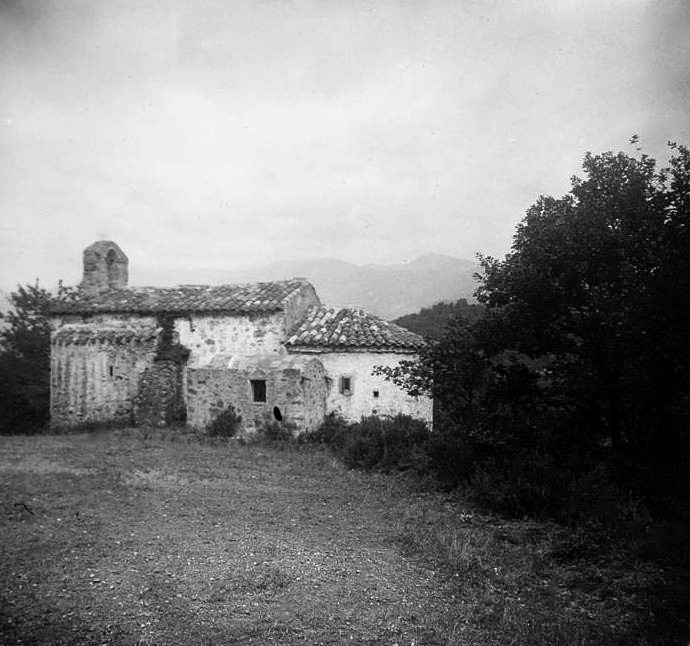
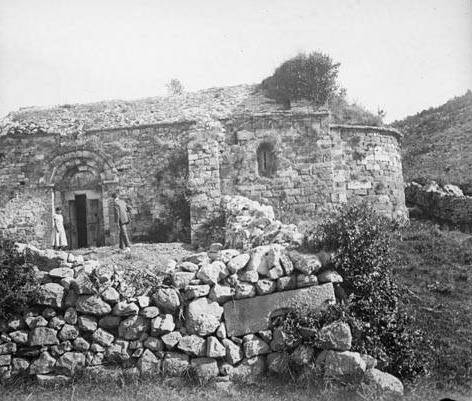
The church has a single nave covered by a pointed, continuous vault, without the transverse arches typically found in Romanesque architecture. Along the side walls you can spot traces of a subtle, not very pronounced false transept. The most decorative element is the semicircular apse, adorned with a frieze of arched corbels with serrated edges — a motif that repeats around the windows of both the apse and the nave. The entrance portal is formed by five recessed semicircular arches, and above the façade rises a slender bell gable holding five bells, considered one of the more elegant examples of this type of structure in the region.
How well preserved is the building?
The church is in very good condition, both inside and out. The only significant intervention over time has been a reinforcement of the walls, meant to protect the vault while also serving a defensive purpose — a common feature in many churches across this region, which historically doubled as shelters for villagers during turbulent periods.
How do you get there?
Agullana sits in Alt Empordà, close to the mountain passes leading into France, not far from the better-known resort towns of the Costa Brava. The church stands right at the heart of the village, on its main square, so the easiest approach is by car, parking near the village center and covering the last stretch on foot. It makes a natural stop on routes connecting Girona with the Pyrenean border crossings.
When should you visit?
Spring and early autumn bring the mildest temperatures to Alt Empordà, when the surrounding hills and vineyards look their best. Summers can get hot, but this is also when local festivals bring the village to life. In winter, the church and the square in front of it offer a quiet, intimate scene that architecture photographers will appreciate.
Frequently asked questions
Can visitors go inside the church? As an active parish church, interior access depends on service times and local arrangements — it's worth checking locally or with the town hall before visiting.
How old is the building? The structure as it stands dates from the 12th–13th centuries, though the parish itself is first documented in 1019.
What is the most distinctive architectural feature? The arched corbel frieze running around the apse, echoed in the window surrounds, together with the five-arch portal and the multi-bell gable holding five bells.
Is the church a protected monument? Yes, it has been listed as a Cultural Property of National Interest since 1984, under a decree issued by the Catalan Generalitat.
Nearby places

Earn badges for the places you visit
Download NextOnTrip, discover new places and check off your trails.