- Sacred Monuments
- Religious monuments
Royal abbey of Saint-Nicolas-aux-Bois
About this place
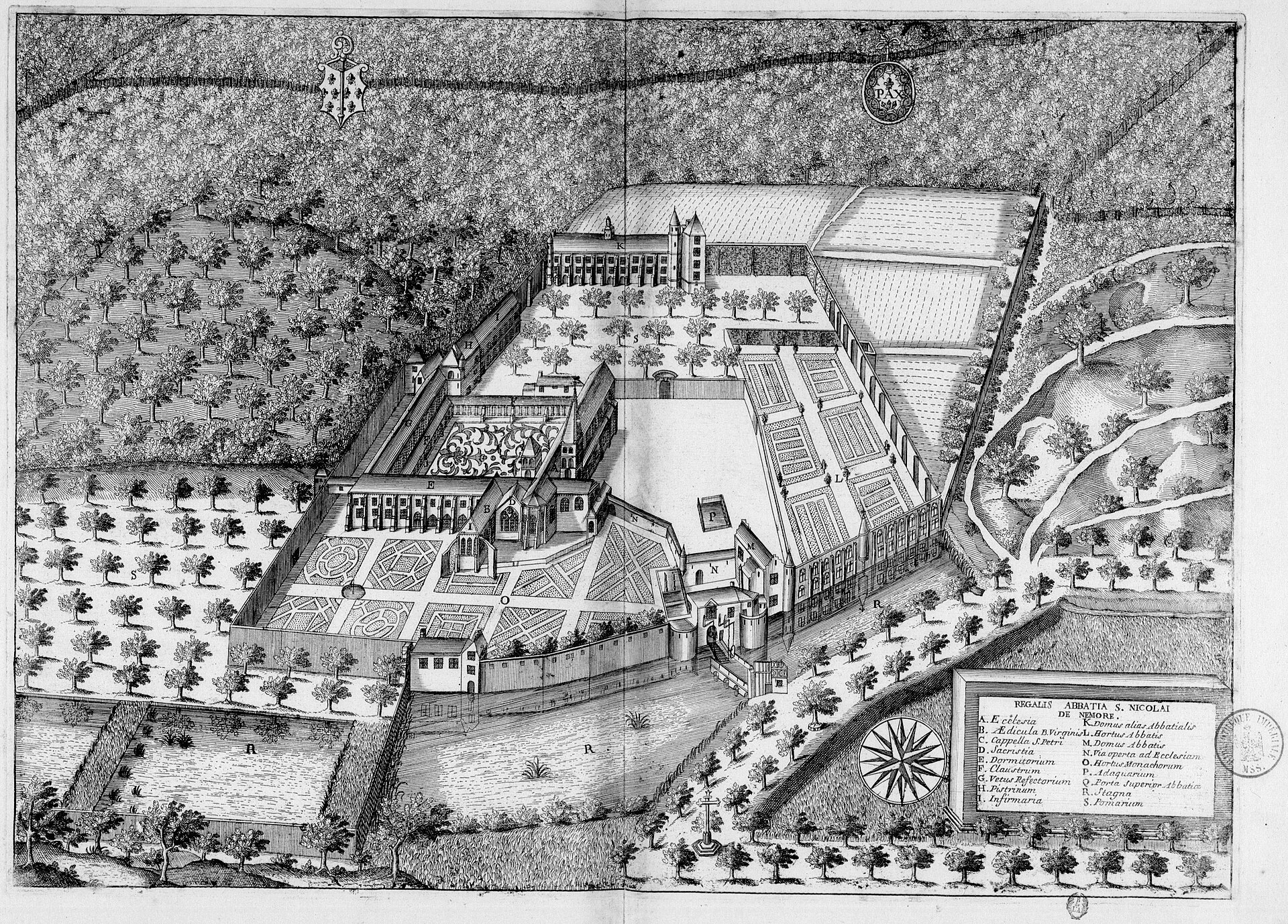
The Royal Abbey of Saint-Nicolas-aux-Bois (French: Abbaye royale de Saint-Nicolas-aux-Bois) was a Benedictine monastery hidden in the Saint-Gobain forest, near the village of Saint-Nicolas-aux-Bois in the Aisne department of northern France. For centuries it stood among the notable religious houses of the region, until the French Revolution brought its monastic life to an end.
Who founded the abbey, and when?
The abbey was established around 1086 by two hermits, during the reign of King Philip I of France. From its earliest years it functioned as a double monastery, housing both monks and nuns under the Rule of Saint Benedict — an arrangement that was relatively unusual for the period.
How did monastic discipline evolve here?
A turning point came between 1120 and 1134, when Abbot Simon, who arrived from the abbey of Saint-Nicaise in Reims, carried out a thorough reform of monastic discipline at Saint-Nicolas-aux-Bois. The stricter rule he introduced shaped community life at the abbey for generations afterward.
What is the abbey's connection to Le Tortoir?
A few kilometres away, within the same Saint-Gobain forest, stands the former fortified priory of Le Tortoir. Built in the 14th century on the site of an earlier chapel, it served at times as a leper hospital and operated as a dependency of Saint-Nicolas-aux-Bois — subordinate to the parent abbey rather than an independent foundation. Le Tortoir survives today as a well-preserved fortified site and is documented separately, while the abbey itself remained the senior institution of the two.
What damage did the abbey suffer over the centuries?
The abbey's history was far from peaceful. In 1567, during the French Wars of Religion, Protestant forces destroyed its buildings. Reconstruction followed between 1614 and 1645, led by the commendatory abbot Henri Listolfi. The complex was then almost entirely rebuilt in the 18th century, first between 1722 and 1738, and again in 1764 — work that gave it more the appearance of a stately residence than an austere medieval cloister.
Why did the abbey cease to exist?
The French Revolution ended the community's existence. On 13 February 1790, the National Constituent Assembly abolished monastic vows and suppressed religious orders across France, forcing the monks of Saint-Nicolas-aux-Bois into exile. Stripped of its religious function, the abbey gradually fell into ruin.
What remains to see today?
Only fragments of the abbot's residence survive, including a square tower dating from the late Middle Ages. Set deep within the forest, away from major tourist routes, the site offers a quiet, low-key encounter with centuries of monastic history rather than a fully restored monument.
Frequently asked questions
When was the Abbey of Saint-Nicolas-aux-Bois founded? Around 1086, during the reign of King Philip I, by two hermits.
Which religious order ran the abbey? The Benedictines — initially as a double monastery of monks and nuns.
What destroyed the abbey in the 16th century? Protestant forces burned it in 1567, during the French Wars of Religion.
When did the abbey stop functioning? In 1790, after the National Constituent Assembly abolished monastic vows during the French Revolution.
Is Le Tortoir part of the abbey? Le Tortoir is a separate fortified priory that was a dependency of Saint-Nicolas-aux-Bois, located in the same forest a few kilometres away.
What survives of the abbey today? Remnants of the abbot's residence, including a Gothic-era tower — the rest of the complex did not survive.
Nearby places

Earn badges for the places you visit
Download NextOnTrip, discover new places and check off your trails.