About this place
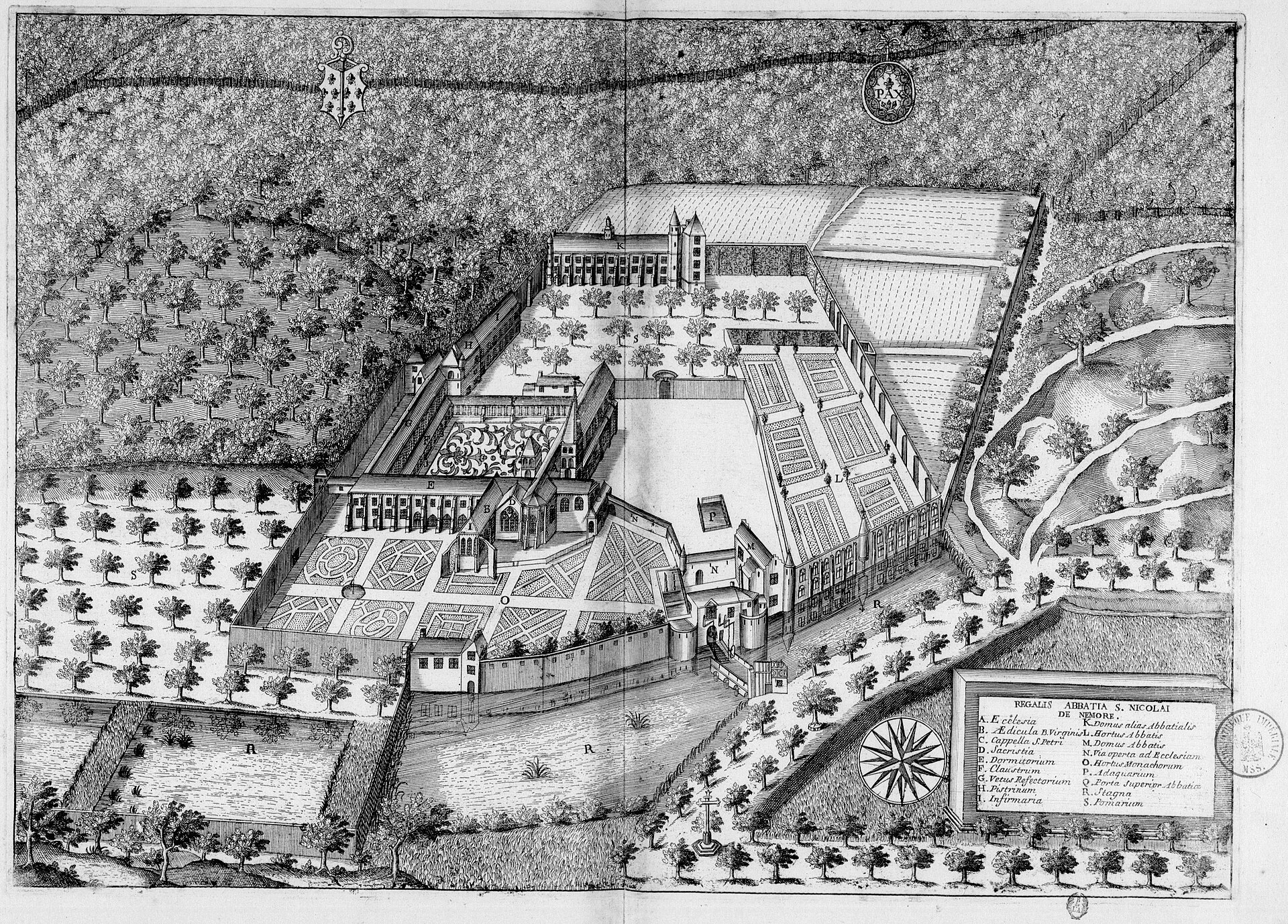
Le Tortoir is a fortified former priory tucked into the Saint-Gobain forest, in the commune of Saint-Nicolas-aux-Bois in the Aisne department of northern France. For centuries it operated as a dependent farming estate of the nearby Abbey of Saint-Nicolas-aux-Bois, itself founded around 1080 under King Philip I.
Where does the name come from?
The land was handed to the abbey by Guy, treasurer of the cathedral chapter of Laon, in return for an annual payment. A charter issued in 1139 by Barthélemy, Bishop of Laon, confirms the gift and records the place under its Latin name, "villa de Tortorium" — the root of the modern name Le Tortoir. An earlier transfer, in 1130, saw the Laon chapter grant the site to the abbey specifically for farming and forestry use: contemporary sources are careful to note it was neither a leper hospital (maladrerie) nor an abbot's residence, but a working grange.
How did the site change over the centuries?
In 1567, Protestant forces ransacked the Abbey of Saint-Nicolas-aux-Bois during the Wars of Religion. No surviving record describes what happened at Le Tortoir specifically, but historians consider it likely the buildings suffered the same fate as the mother abbey. From 1604 the estate was leased out to tenant farmers. The French Revolution brought a bigger break: church property was secularized in 1791, and Le Tortoir passed into the hands of a farming family who held it until 1883. It then continued as an ordinary farm until 1925, when a Belgian industrialist purchased the property and used it for agricultural experimentation.
What does the architecture look like?
The surviving buildings form a roughly square layout. On the south side stands a chapel of two bays covered by ribbed vaulting; according to a 1646 plan, it once connected to a residential building on the west side. A larger utilitarian structure occupies the east side. Much of the present fabric is thought to date from the first quarter of the 14th century, associated with the tenure of Abbot Thierry II, also known as Theodoric de Suisy. Despite repeated alterations over the centuries, the complex retains clearly medieval features, which led to its listing as a monument historique on 1 August 1912.
Can visitors go inside today?
Le Tortoir is now privately owned and functions as a working farm, so access to the buildings and grounds is limited. Most visitors experience it from the outside, walking the forest tracks around Saint-Gobain — the setting, deep in woodland, is what draws people interested in regional history and architecture, rather than a formal museum visit with posted opening hours. Because it remains a private estate rather than a heritage attraction, anyone planning a visit should treat it as a landmark to admire from public paths rather than a site with scheduled tours.
Frequently asked questions
What was Le Tortoir originally used for? It served as a farming and forestry estate dependent on the Abbey of Saint-Nicolas-aux-Bois, not as an independent monastery or abbot's residence.
When were the current buildings constructed? The oldest surviving elements are believed to date from the first quarter of the 14th century, during the tenure of Abbot Thierry II.
Is Le Tortoir a listed monument? Yes, it has been protected as a monument historique since 1 August 1912.
Can the interior be visited? No — it is private property and an active farm, so interior visits are not generally available.
Where exactly is Le Tortoir located? In the Saint-Gobain forest, within the commune of Saint-Nicolas-aux-Bois, in the Aisne department.
Nearby places

Earn badges for the places you visit
Download NextOnTrip, discover new places and check off your trails.