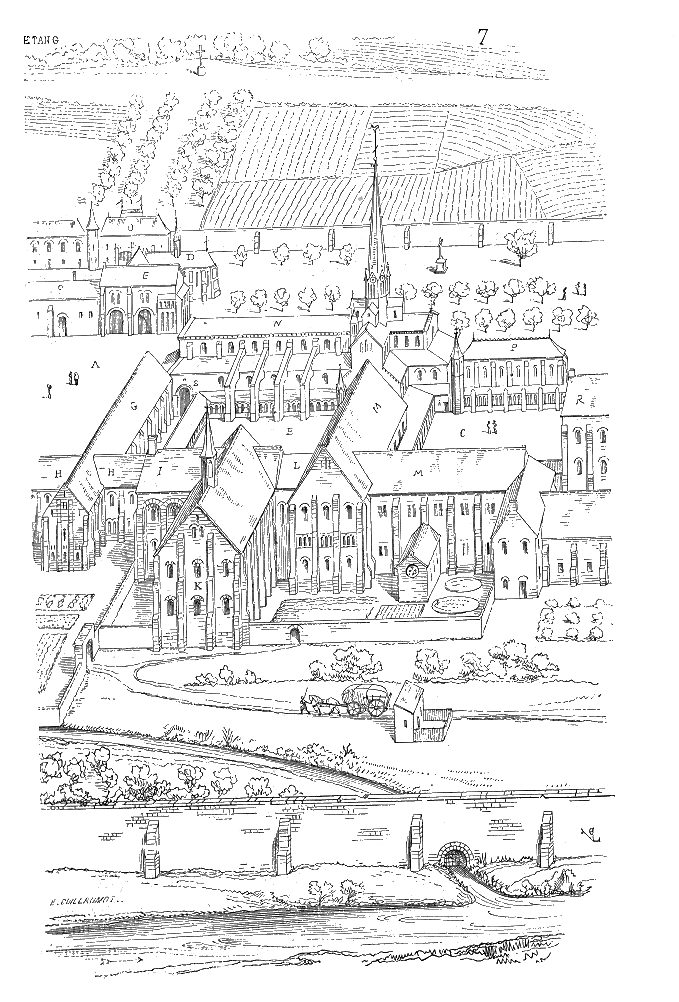
About this place
Cîteaux Abbey is the birthplace of the entire Cistercian order, founded in 1098 in the small village of Saint-Nicolas-lès-Cîteaux, tucked between Dijon and Beaune in Burgundy. Monastic life never really stopped here: since 1898 the abbey has been home to Trappist monks, the branch of the Cistercians following the strictest observance of the rule.
Who founded the abbey, and why?
Cîteaux was established in 1098 by Robert of Molesme, a Benedictine abbot who felt that the great Cluniac monasteries of his time had drifted too far from monastic discipline. Together with a small group of companions, he set out to return to the original Rule of Saint Benedict, built on prayer, poverty and manual labour. His successor, Alberic, tightened the rule further and introduced the white habit that would become the visual trademark of Cistercian monks everywhere. The third abbot, Stephen Harding, wrote the Charter of Charity, the founding text that set out shared customs binding Cîteaux to every daughter house created afterwards.
What is the abbey's connection to Saint Bernard of Clairvaux?
A turning point came in 1112, when a young nobleman named Bernard of Fontaine arrived at Cîteaux with thirty companions. Within three years he had gone on to found Clairvaux, the third daughter abbey of Cîteaux, and would become one of the most influential religious figures of the Middle Ages. By the time Bernard died in 1153, Cîteaux stood at the head of a vast monastic family of more than three hundred daughter abbeys spread across Europe.
Who lives at the abbey today?
The French Revolution interrupted monastic life at Cîteaux and left the buildings substantially altered. Monks returned for good in 1898, this time as Trappists, and the community has lived and worked there ever since, following a routine of prayer, silence and manual labour rooted in the Rule of Saint Benedict.
What can visitors see on a tour?
Cîteaux can be visited on a guided tour lasting roughly an hour and a quarter. The route takes in surviving fifteenth-century buildings, including the restored cloister once used by the monastery's manuscript copyists and its library, along with exhibits on the art of manuscript illumination and bookbinding. The visit closes with a short film on the daily life of the monks who still live at the abbey today.
Why is Cîteaux famous for cheese?
The abbey is well known well beyond monastic circles for its cheese, a pressed cow's-milk cheese with a distinctive, mildly fruity flavour. The monks make it from the milk of their own herd of red-and-white Montbéliarde cattle, raised on the abbey's land. Cîteaux cheese is sold directly at the abbey shop, alongside honey and handcrafted nativity scenes made by the community.
Frequently asked questions
Who founded Cîteaux Abbey? Robert of Molesme founded it in 1098, seeking a stricter return to the Rule of Saint Benedict.
What is the abbey's link to Saint Bernard of Clairvaux? Bernard arrived at Cîteaux in 1112 and founded Clairvaux three years later, one of the daughter houses that made Cîteaux the mother house of the whole Cistercian order.
Are there still monks living at Cîteaux? Yes. Trappist monks have lived there continuously since 1898, following a life of prayer and work.
What can you buy at the abbey shop? The best-known product is Cîteaux cheese, made from the milk of the monks' own Montbéliarde cows, alongside honey and handmade nativity scenes.
How long does a visit to the abbey take? A guided tour runs about an hour and fifteen minutes and covers the fifteenth-century buildings and historical exhibits.
Nearby places

Earn badges for the places you visit
Download NextOnTrip, discover new places and check off your trails.