About this place
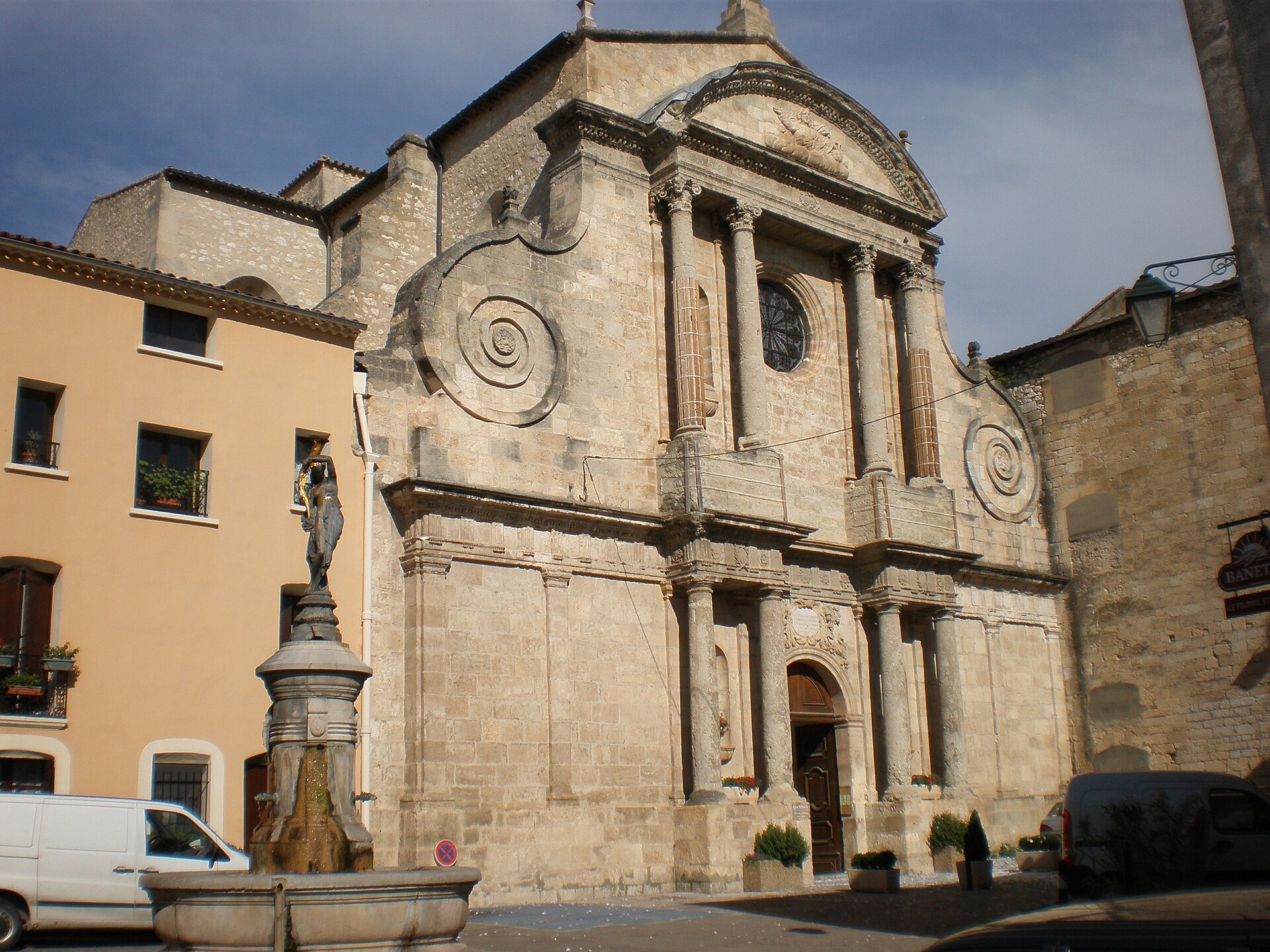
The Abbatiale Saint-Sauveur d'Aniane is a former abbey church in Aniane, a small town in the Hérault department of southern France. Once the heart of one of medieval Europe's most influential monasteries, the building still serves today as the town's parish church.
Who founded the abbey, and why does it matter?
The monastery's story begins with Benedict of Aniane, a Visigothic nobleman originally named Witiza who took the monastic name Benedict after entering religious life. He established the community toward the end of the 8th century, with historical accounts placing the foundation between 777 and 782, and shaped it as a model of strict observance of the Rule of Saint Benedict of Nursia. His reputation grew until he became a trusted advisor, first to Charlemagne and later to his successor, Louis the Pious. It was under Louis the Pious that the abbey received a grant of saltworks in March 822, the earliest surviving written record of the monastery. The monastic reforms developed at Aniane spread across the Carolingian Empire and shaped religious life far beyond the abbey's own walls.
How prominent was the abbey in the Middle Ages?
During the medieval period, Aniane ranked among the wealthiest and most influential monasteries in the region. It controlled extensive landholdings, and an entire settlement grew up around its walls under monastic jurisdiction - the nucleus of the town of Aniane as it exists today.
Why does the current church date only from the 18th century?
The Wars of Religion took a heavy toll on the abbey: between 1562 and 1572, its monastic buildings were almost entirely destroyed. Recovery came only decades later. In 1633, the community joined the reformed Congregation of Saint-Maur, an order of Benedictine monks dedicated to restoring discipline and former grandeur to France's older abbeys. It was the Maurists who gave Aniane the church seen today - construction of the new abbatiale Saint-Sauveur ran from 1679 to 1714, producing the imposing, classically inspired building that still stands.
What stands out inside the church?
Among the church's notable features is an 18th-century organ case, a decorative structure typical of the grand monastic churches of that period. The building's austere, classically composed architecture contrasts sharply with the site's turbulent history, reflecting the Maurists' ambition to restore Aniane's former stature after the destruction it had suffered.
Can visitors go inside?
The former abbey church remains an active Catholic parish church dedicated to the Holy Saviour, Saint-Sauveur, and is open to visitors as part of exploring Aniane's historic centre. Since 9 September 2002, the building has been listed as a monument historique, formally recognising its architectural and historical importance.
Frequently asked questions
Who founded the abbey at Aniane? Benedict of Aniane, a former Visigothic nobleman known as Witiza, toward the end of the 8th century.
When was the current church built? The present abbatiale was constructed between 1679 and 1714 by Benedictine monks of the Congregation of Saint-Maur.
Do the original monastic buildings still survive? No - they were destroyed between 1562 and 1572 during the Wars of Religion; the current church results from the later Maurist rebuilding.
Is the church still used for worship? Yes, it continues to function as the parish church of Saint-Sauveur and has been listed as a monument historique since 2002.
Nearby places
-

chapelle d'Argelliers
-
chapelle Notre-Dame de Baillarguet
Montferrier-sur-Lez
-
convent of the Ursulines of Montpellier
Montpellier
-
priory Saint Pierre of Montaubérou
Montpellier
-
Église de Saint-Pierre-de-Neyran
Saint-Gervais-sur-Mare
-
commandery des Hospitalers in Sainte-Eulalie-de-Cernon
Sainte-Eulalie-de-Cernon
Earn badges for the places you visit
Download NextOnTrip, discover new places and check off your trails.