About this place
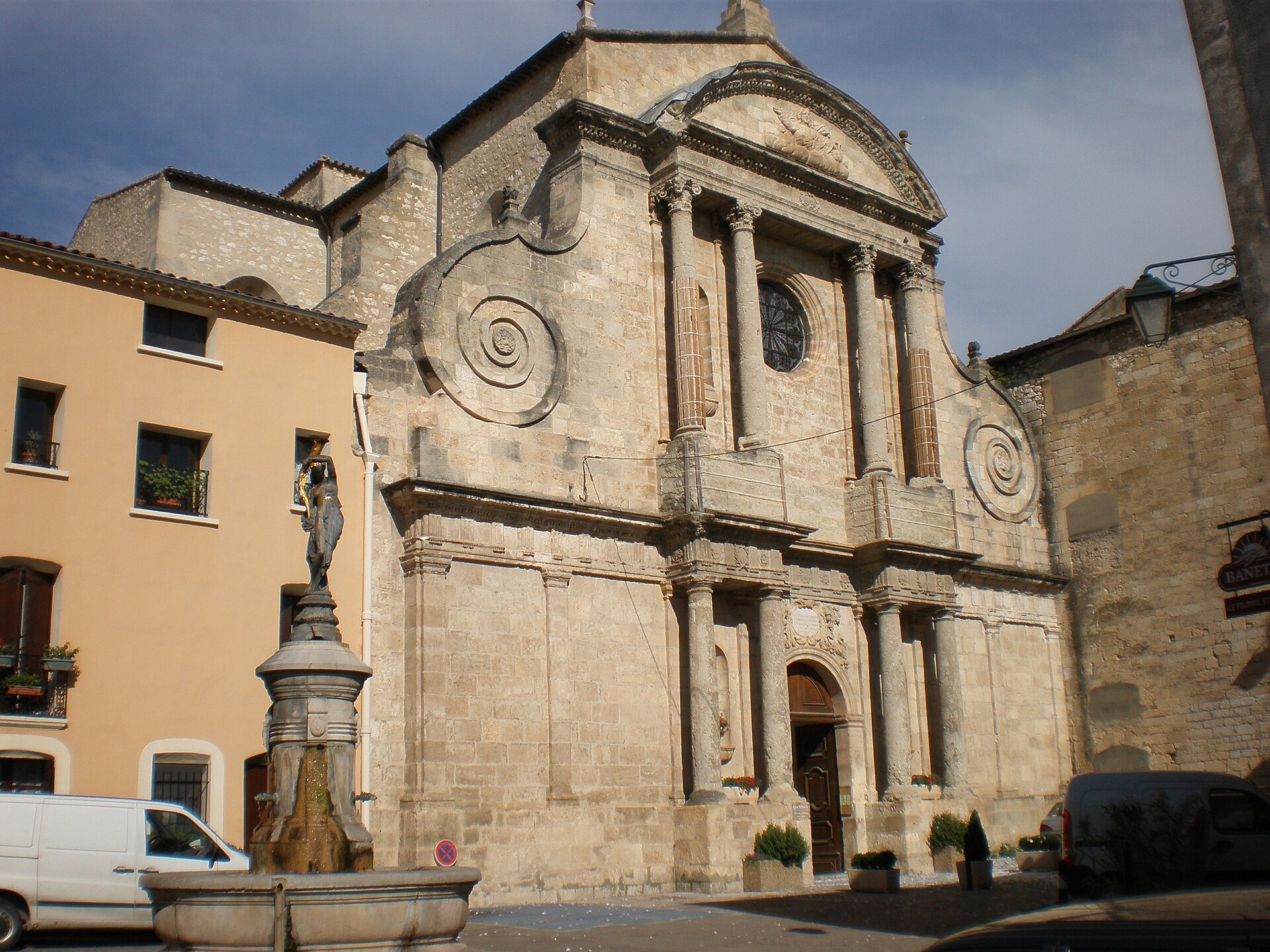
Couvent des Ursulines (Convent of the Ursulines) is a former religious complex in Montpellier, in the Hérault department of southern France, whose story spans nearly four centuries - from a convent devoted to teaching and charity, through a prison and military barracks, to a present-day home for contemporary dance.
When was the Convent of the Ursulines built?
The site, on what is now rue Sainte-Ursule, had a monastic history well before the Ursulines arrived: nuns linked to the cult of Saint Catherine and Saint Gilles had settled there as early as 1357. The Ursuline congregation itself established its convent in 1641, with a mission to educate girls and to care for the sick and the poor of the city. Construction unfolded in stages: between 1647 and 1653 the nuns progressively purchased neighbouring plots and buildings, and in 1660 the mason Jean Bonnassier resumed the building work. The convent church itself was not completed until 1785, and its marble interior decoration was finished just before the Revolution, in 1789.
What happened to the building after the French Revolution?
The Revolution ended the convent's religious life: the building was seized and converted into a women's prison. It later changed use again, becoming a military barracks known as the Caserne Grossetti. Its darkest period came during the Second World War, when German occupying forces used the former convent as a Gestapo interrogation centre.
How did the convent become a dance centre?
By the mid-twentieth century the building had fallen into disrepair and was at one point slated for demolition. It was saved when the city of Montpellier purchased it in 1980. Rather than tearing it down, the municipality converted the former convent into the seat of the Centre Chorégraphique National and the Montpellier Danse festival. The result is L'Agora, cité internationale de la danse - the International City of Dance - which today combines performance space, rehearsal studios and a meeting point for the local dance community. The convent's facades were listed as a historic monument (monument historique) in 1991, protecting the historic exterior even as the interior now serves an entirely new purpose.
Where is the Couvent des Ursulines located?
The complex stands in a historic quarter of Montpellier, on rue Sainte-Ursule, close to the old town centre. Its coordinates are approximately 43.614°N, 3.878°E.
What can visitors see there today?
Visitors mainly come to admire the convent's historic facades, the one element still protected as a listed monument. The interior, adapted for L'Agora, now hosts performances, dance rehearsals and events tied to the Montpellier Danse festival, one of Europe's leading contemporary dance festivals.
Frequently asked questions
When was the Couvent des Ursulines founded? The Ursuline convent was established in 1641, although the site's monastic use dates back to 1357, and its church was only added in 1785.
Who built the convent? Construction was carried out by mason Jean Bonnassier, who resumed the works in 1660 after an earlier phase of land acquisition.
Is the building still used by a religious order? No. After the French Revolution it became a prison, then a barracks, and since 1980 it has housed the Centre Chorégraphique National and L'Agora, cité internationale de la danse.
Is the convent a protected monument? Yes, its facades were listed as a monument historique in 1991.
What is L'Agora? L'Agora is the name given to the former convent after its conversion into an international centre for dance, combining performance, rehearsal and festival functions linked to Montpellier Danse.
Nearby places

Earn badges for the places you visit
Download NextOnTrip, discover new places and check off your trails.