About this place
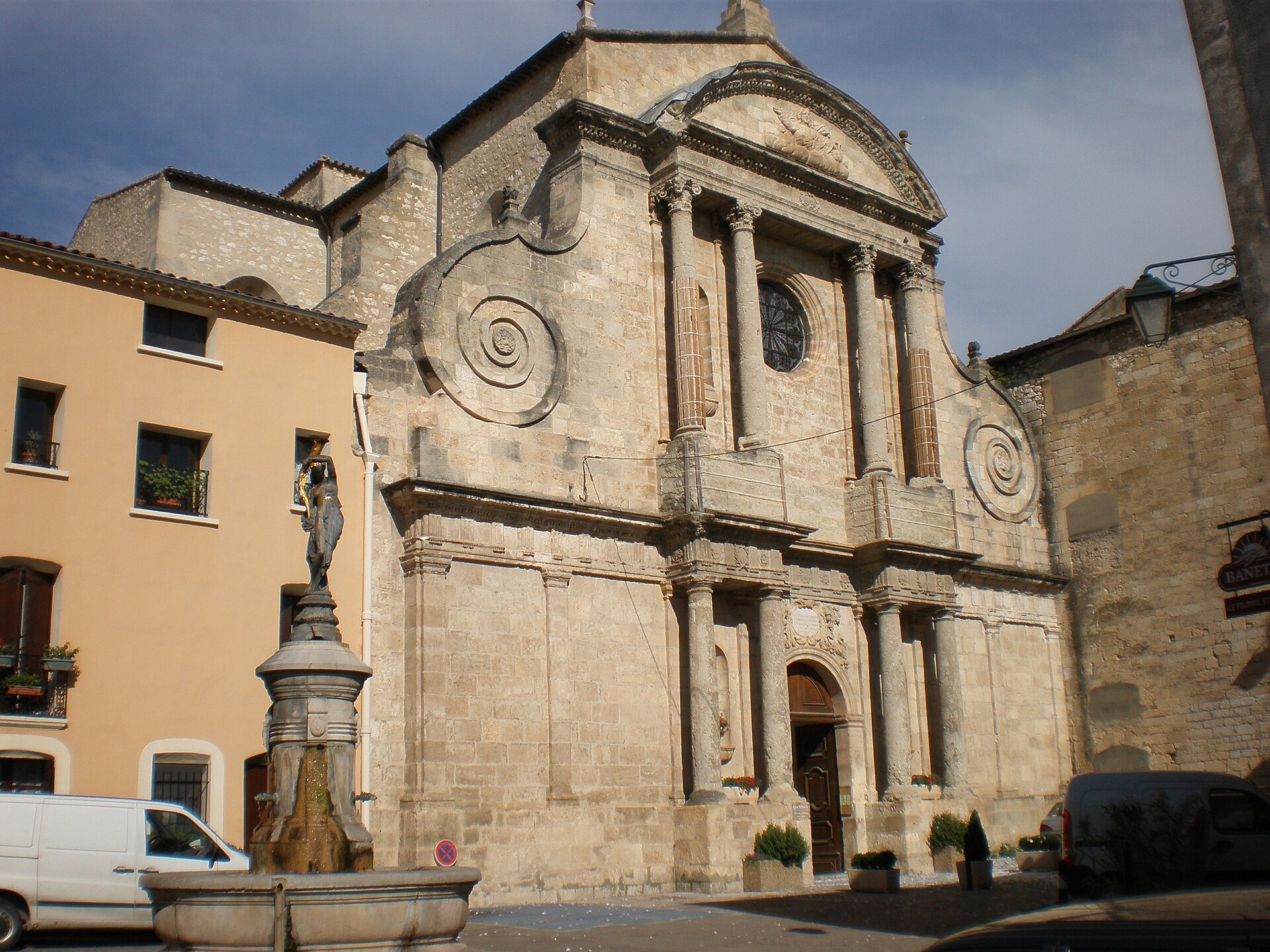
The Priory of Saint-Pierre de Montaubérou is a former monastery on the eastern edge of Montpellier, one of the few surviving complexes in France built by the Order of Grandmont. Its Romanesque church, dating from the early twelfth century, still stands today alongside later conventual buildings on Avenue Albert Einstein and is listed as a French historic monument.
Where does the name Montaubérou come from?
The name derives from a place recorded in Latin as Monte arbedone, later rendered as Montaubéron or Montaubérou. In the second half of the twelfth century, Raymond V, Count of Toulouse and Melgueil, granted the site to hermits of the Order of Grandmont, a monastic community originally founded in the Limousin region by Saint Stephen of Muret. The location itself had an earlier religious history: as far back as 1095, a chapel there was attached to the cathedral chapter of Maguelone, decades before the Grandmontine hermits took over the site in the 1170s.
What did the church and priory look like in the Middle Ages?
The priory church is a Romanesque building with a sculpted west facade dated to around 1100. Its chapel was consecrated on 21 November 1225 by Bernard de Mèze, Bishop of Maguelone, and the community formally attained the status of a priory in 1317. Over time, conventual buildings grew up around the church, including rooms in the Gothic style and sections dated to the fifteenth century, possibly with some parts going back to the second half of the fourteenth century. In the fifteenth century, a prior's residence (logis du prieur) was added on the south side of the church.
What happened to the priory after the Middle Ages?
The building's later history reflects the turbulence of the region. At one point the church lost its religious function and was used as a sheepfold, before being reconsecrated on 3 July 1655. The French Revolution marked a real turning point: on 4 January 1791, Montaubérou was sold as a bien national (national property). It was bought by the Marquis Charles Louis de Fregeville, who kept it until 1821. In 1867, the estate passed to Étienne Bouisson, a professor at the Montpellier Faculty of Medicine. After his death, his widow bequeathed the property to the Faculty of Medicine on 8 September 1893, on condition that a chapel be built there.
Who looks after the site today?
The city of Montpellier acquired the priory in 1979. Today the complex is registered as a historic monument under reference PA00103534, and its former parish church is dedicated to Saint-Pierre-de-Montaubérou. The site sits on Avenue Albert Einstein, in the area of the university campus on the eastern outskirts of Montpellier, away from the historic city center but still within municipal boundaries.
Why does the Order of Grandmont matter here?
The Order of Grandmont, to which the priory originally belonged, was one of medieval France's lesser-known eremitic orders, distinct from both the Benedictines and the Cistercians. Its houses, known as "celles" (cells), were marked by a strict rule and modest architecture. Montaubérou is one of the few examples of such a foundation in southern France, giving the site historical significance that goes beyond its architecture alone.
Frequently asked questions
What was the Priory of Saint-Pierre de Montaubérou? A former monastery of the Order of Grandmont, founded in the second half of the twelfth century by Count Raymond V, with a church consecrated in 1225.
Where is it located? On Avenue Albert Einstein in Montpellier, in the eastern part of the city.
Can visitors see it? The site is listed as a historic monument, but public access depends on the current use of the buildings, which now belong to the city — it is worth checking local information before visiting.
Who owns it today? The city of Montpellier has owned the priory since 1979.
What survives from the original complex? The Romanesque church with its sculpted facade, along with parts of the conventual buildings, including Gothic-style rooms and the fifteenth-century prior's residence.
Nearby places

Earn badges for the places you visit
Download NextOnTrip, discover new places and check off your trails.