About this place
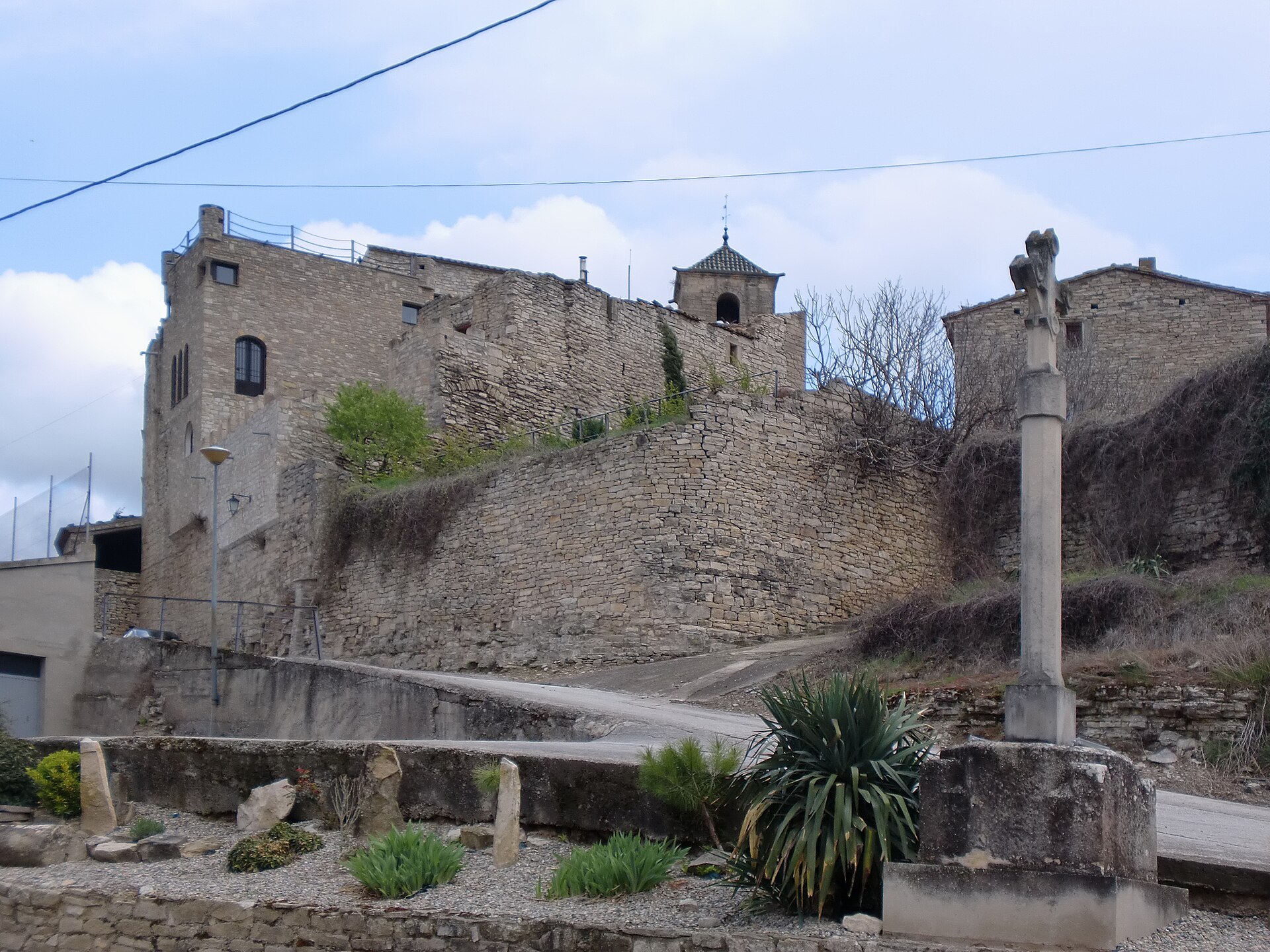
Castell d'Albió is a medieval castle ruin in the village of Llorac, in the Conca de Barberà region of Tarragona province, Catalonia.
Where is it located?
The hamlet and castle remains sit on a low hill above the right bank of the Corb river, in the westernmost part of the municipality of Llorac. The surrounding landscape is typical of Conca de Barberà - rolling hills, orchards and vineyards, well away from Catalonia's main tourist routes.
How do you get there?
A car is by far the easiest option - local roads connect Llorac with neighbouring villages, but public transport in this part of Conca de Barberà is minimal and not something to rely on for a day trip. From the centre of Llorac, a local road leads toward Albió, and the final stretch to the ruins has to be covered on foot along a dirt track - there is no marked hiking trail, so comfortable footwear is worth packing.
What will you actually see?
Don't expect a standing tower or intact walls. What remains today is mostly foundations and scattered stonework, folded into the small cluster of houses that grew up around the old castle. A few decades ago the base of a square tower was still visible, but it was lost when a television relay mast was built on the site. Despite the modest remains, the site carries historical weight - it is listed as a cultural property of national interest on Catalonia's heritage register.
A brief history
The earliest written reference to Albió dates back to 1075, in a donation deed through which Guillem, son of Mir, granted property to his wife Ermengarda. Nearly a century later, in 1170, Berenguer de Montargull handed the settlement and its castle over to the Knights Templar, who spent the following decades expanding and consolidating their holdings in the area. When the Templar order was dissolved in 1317, the estate passed to the Hospitallers (later the Knights of Malta), who held it right up until the end of the old feudal order. By the time of a priory inspection in 1602, the castle was already recorded as demolished - meaning the building had fallen into ruin long before modern times.
When to visit?
Inland Catalonia can get very hot in summer, so spring or autumn are better seasons for exploring the ruins, when temperatures are milder and the surrounding fields and orchards look their best. The site is open year-round, with no admission fee and no need to book ahead.
Frequently asked questions
How old is Castell d'Albió? The oldest surviving document mentioning Albió dates from 1075, though the castle itself may be older - that document is simply the earliest written trace we have, not the date it was built.
Who controlled the castle? Local feudal lords first, then the Knights Templar from 1170, and after 1317 the Hospitallers, who administered the estate until the old feudal order was abolished.
Can you actually visit the ruins? Yes, the site is freely accessible, but visitors should expect modest remains - foundations and isolated wall fragments rather than a preserved building with a standing tower.
Can you reach it without a car? It's difficult - public transport options in this part of Conca de Barberà are very limited, so travelling by car is by far the more practical choice.
Nearby places

Earn badges for the places you visit
Download NextOnTrip, discover new places and check off your trails.