About this place
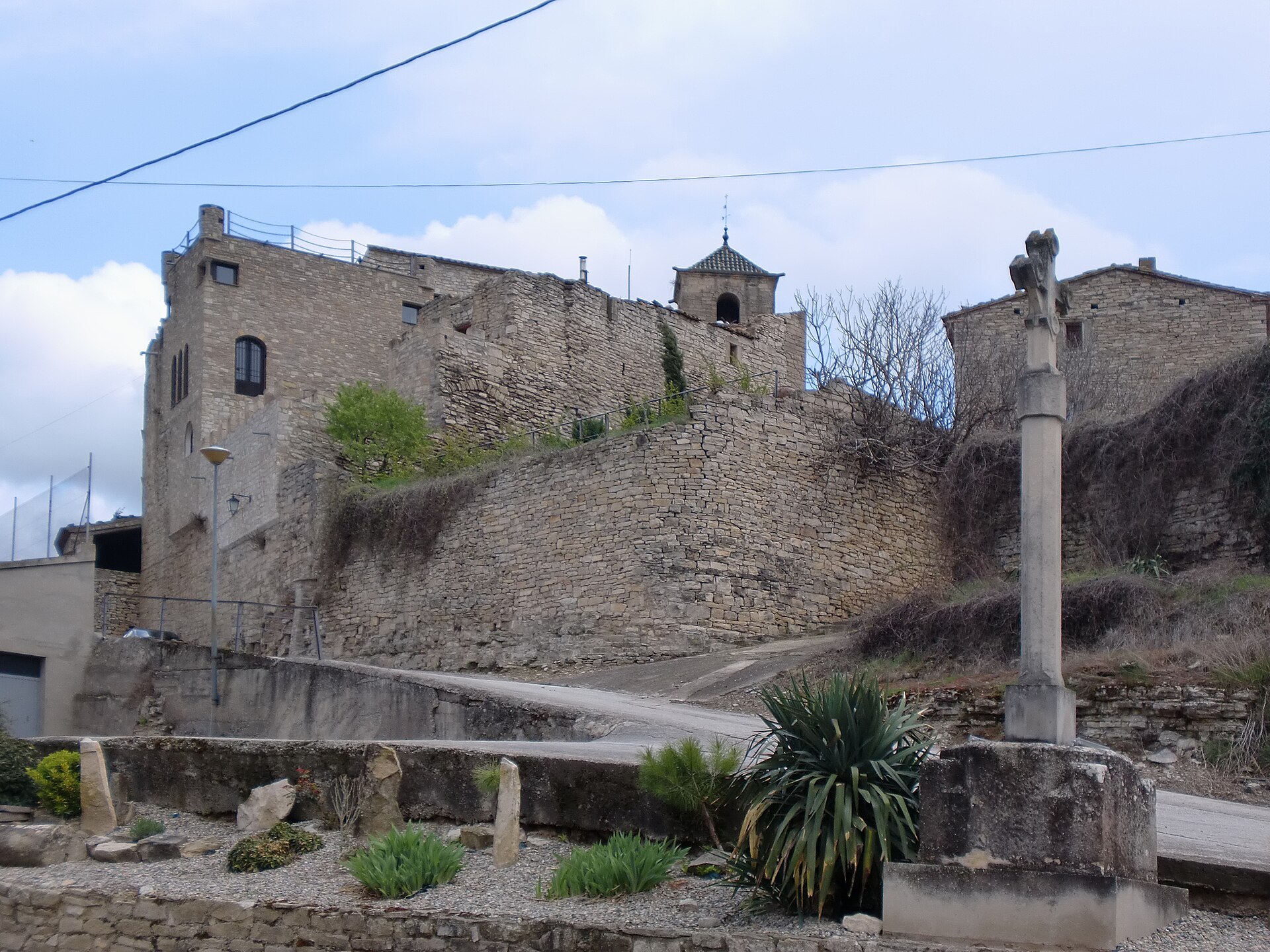
Castell de Llorac is a medieval fortification standing on a low rise beside the village of Llorac, in the Conca de Barberà region of Catalonia. Little remains of the original structure today, but the site is still protected as a national cultural heritage asset and draws visitors interested in the feudal history of inland Catalonia.
Where exactly is the castle located?
The ruins sit on a small elevation southwest of the village core (coordinates: 41.555326, 1.306025), overlooking the surrounding countryside. This kind of position — a modest hill rather than a dramatic crag — was typical for defensive residences in the area, where overseeing fields and roads mattered more than access to water or trade routes.
What is the history behind Castell de Llorac?
The earliest records of both the village and the castle date to the 12th century, when the estate was held by Guifré Bonfill. In 1140, his grandson handed the castle over, together with the church of Santa Maria de Llorac, to the Order of the Hospitallers — the Knights of St John likely established one of their houses in Llorac around this time.
By the end of the 12th century, in 1196, records mention Gombau d'Oluja, lord of Vallfogona de Riucorb, pledging the revenues of the castle and the village to the Knights Templar. Handing over income to a military order in exchange for financial backing or protection was a common arrangement among lesser Catalan nobility of the period.
From the 16th century onward, Llorac passed into the hands of the Guimerà family, who held lordship over the village until the old feudal regime was abolished. For several centuries, it was this family that shaped the fate of both the settlement and the castle.
What did the building look like, and what survives today?
Castell de Llorac was not a classic towered fortress with a moat, but rather a fortified house — a type known locally as "força" or "sala": a simpler structure combining residential and defensive functions, common among smaller feudal estates. The building is dated to around the 12th–13th centuries.
Of the original construction, only the north façade survives along with parts of the east and west façades. The rest was lost over the centuries, and the remaining stones and wall sections were reused to build a large shed that now occupies the site. In practice, this means visitors will find traces of the old structure embedded in a more recent agricultural building rather than an imposing standalone ruin.
Why is it worth a stop?
Castell de Llorac appeals to travelers looking for authentic, low-key traces of medieval Catalonia, away from the crowds and visitor infrastructure of the region's larger castles. The view from the rise over the hills of the Conca de Barberà is reason enough for a short stop, and knowing the site's history — its ties to the Hospitallers, the Templars, and the Guimerà family — adds real context to what at first glance looks like a few stone walls attached to a farm building.
Frequently asked questions
How much of the castle has survived? Only the north façade and fragments of the east and west façades of the original building remain; other stones were reused when a later shed was built on the site.
Who controlled the castle in medieval times? Guifré Bonfill and his descendants first, then the Hospitallers from 1140, with castle revenues pledged to the Templars in 1196. From the 16th century, the village belonged to the Guimerà family.
What type of building was it? A fortified house of the "força" or "sala" type — a simpler defensive structure than a classic towered castle, typical of smaller feudal estates in the region, dated to the 12th–13th centuries.
Is the castle officially protected? Yes, Castell de Llorac is listed as a cultural property of national interest (Catalan BCIN), even though only fragments of the original structure remain.
Nearby places

Earn badges for the places you visit
Download NextOnTrip, discover new places and check off your trails.