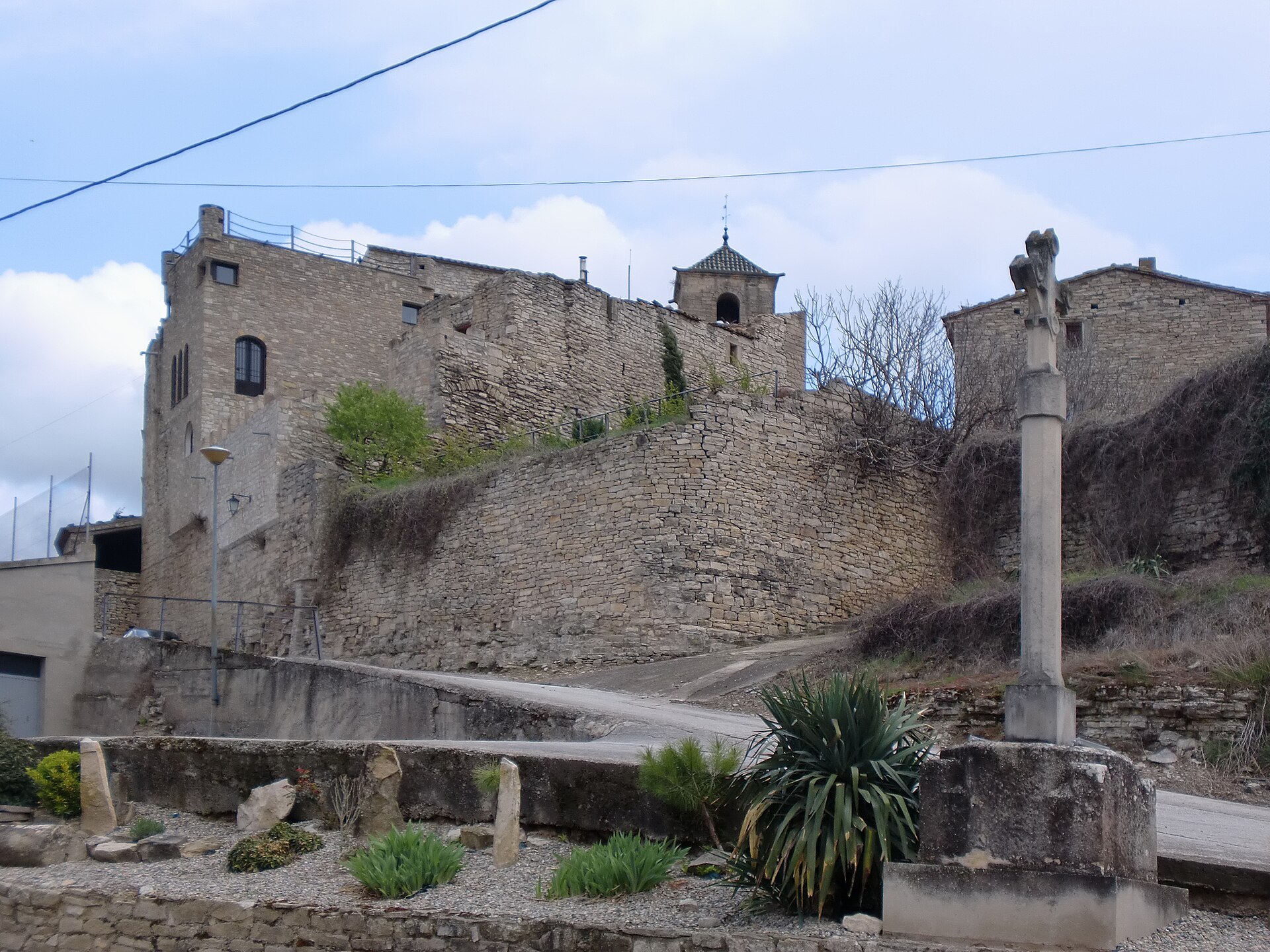
About this place
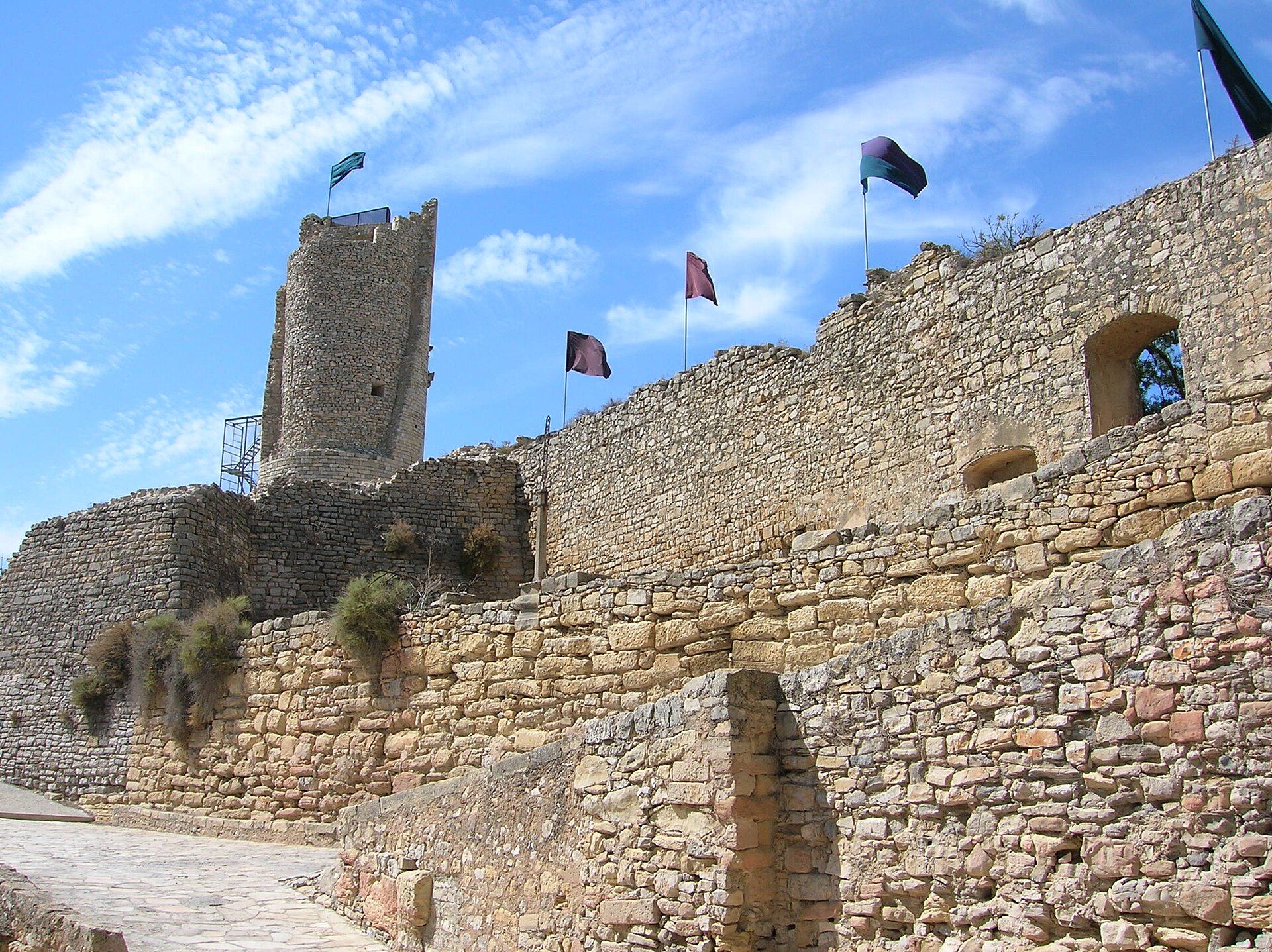
Castell de Vallfogona is a medieval fortress standing above the small town of Vallfogona de Riucorb, in the Conca de Barberà region of Catalonia. Listed as a Catalan cultural asset of national interest (Bé Cultural d'Interès Nacional), the castle carries nearly a thousand years of layered history — from a Romanesque frontier stronghold to a residence of two military-religious orders.
What is the history behind the castle?
The fortress was most likely built around the mid-11th century, right as the surrounding lands were being reclaimed from Muslim rule. Concrete documentary evidence, however, only appears from the 12th century onward, with the earliest surviving record dating to 1116. At that time the castle belonged to the Oluja family and formed part of a chain of strongholds guarding the frontier of the county of Manresa against Saracen incursions.
A turning point came in 1191, when Gombau d'Oluja and his wife Ermessenda granted the castle and the entire town of Vallfogona to the Knights Templar. From then until the 19th-century Madoz disentailment, the building served as the seat of a religious-military commandery — first under the Templars (1191–1212), and then, after the order's suppression, under the Knights Hospitaller (1318–1855). This more than six-century presence of chivalric orders left a lasting mark on the building's character and its regional importance.
What will you see on site?
The castle's present appearance is the result of centuries of rebuilding: the original Romanesque structure was largely absorbed into a later, much larger residence that replaced the austere defensive fortress. Despite these many alterations, elements dating back to the Romanesque period can still be traced within the building, hinting at its original defensive purpose.
Visiting Vallfogona de Riucorb, it's worth seeing the castle not just as an isolated monument but as part of the town's wider historic layout, which grew for centuries in the shadow of the commandery. The view over the surrounding hills of the Conca de Barberà from the castle's hilltop terrace is reason enough to linger.
How do you get to Vallfogona de Riucorb?
The town sits deep in Catalonia's interior, in the province of Tarragona, within the Conca de Barberà comarca. The easiest way to reach it is by car — the nearest larger towns are Montblanc and Tàrrega, from which local roads lead up into the hills. Public transport in this area is sparse, so having your own vehicle makes it much easier to explore the surroundings, including nearby villages known for their Cistercian monasteries and rural architecture.
When is the best time to visit?
Spring (April–June) and early autumn (September–October) are the best times to come, when temperatures in Catalonia's interior are mild and the landscape around the castle is at its most scenic. Summers here can get quite hot, which may make longer walks up the hill less comfortable.
Frequently asked questions
Can you go inside the castle? The building now functions as a private residence built on the base of the former castle, so access to the interior may be limited. It's worth checking locally or with tourist information beforehand.
Who built the castle in Vallfogona de Riucorb? The original fortress was built around the mid-11th century, and its earliest documented owners were the Oluja family, first recorded in a source from 1116.
Why is the castle associated with the Knights Templar? In 1191, Gombau d'Oluja granted the castle to the Knights Templar, who made it the seat of a commandery — a role it kept until the mid-19th century, first under the Templars and later under the Knights Hospitaller.
What else is worth seeing nearby? Vallfogona de Riucorb lies in the Conca de Barberà region, known for its Cistercian monasteries (including Poblet and Vallbona de les Monges) and picturesque stone villages, making it a good base for a longer trip through Catalonia's interior.
Nearby places

Earn badges for the places you visit
Download NextOnTrip, discover new places and check off your trails.