About this place
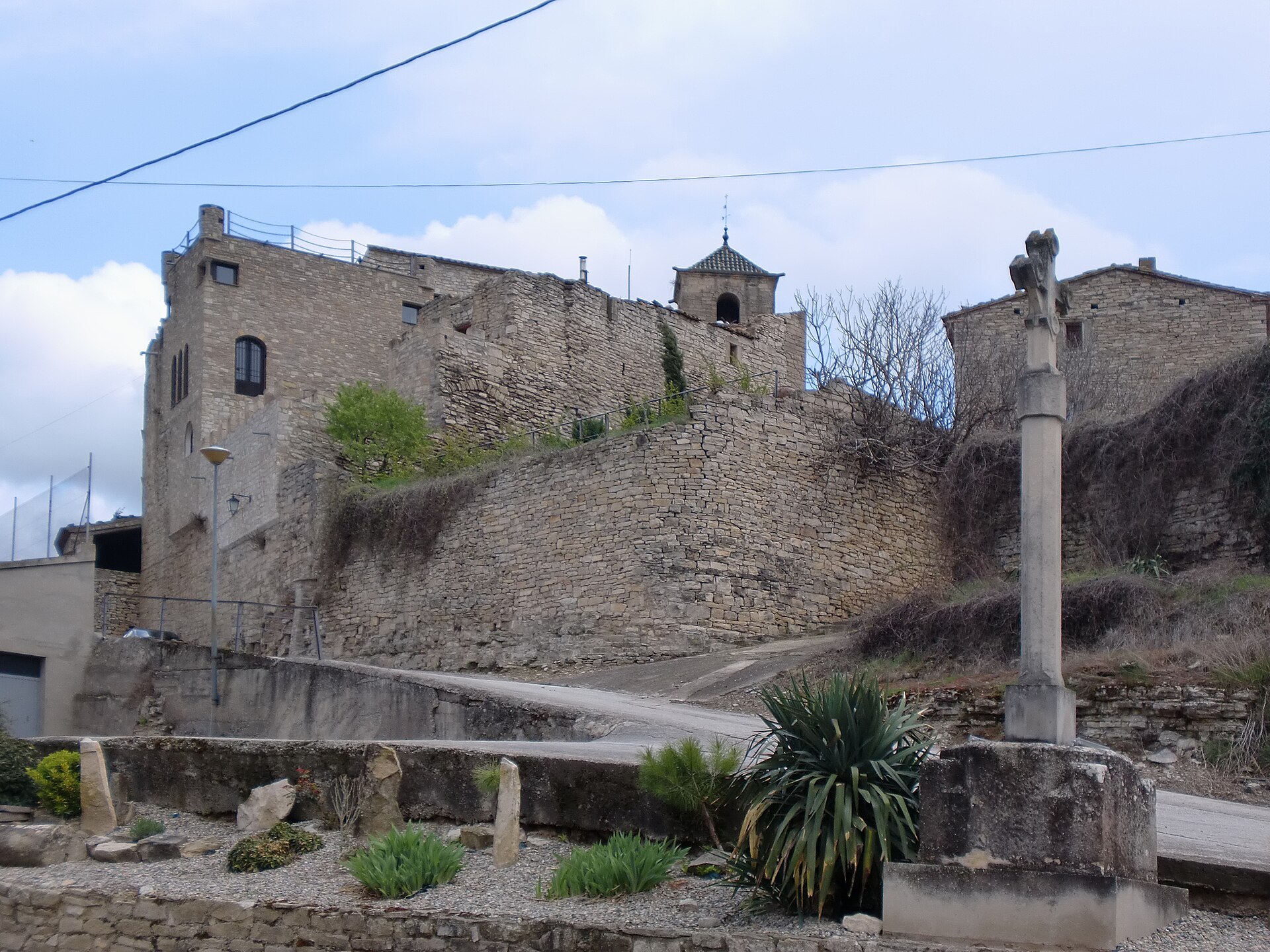
Castell de Segura is a ruined medieval castle standing above the hamlet of Segura, part of the municipality of Savallà del Comtat in the Conca de Barberà region of Tarragona, Catalonia. Perched at roughly 784 metres above sea level, the site has been listed as a cultural asset of national interest (bé cultural d'interès nacional).
Where is the castle located?
Segura is a small settlement administratively attached to Savallà del Comtat, tucked into the hilly, wine-growing interior of the Conca de Barberà comarca. The castle ruins sit on high ground overlooking the village and are visible from some distance, even though little of the original structure has survived.
How old is Castell de Segura, and who owned it?
Written records mention the castle as early as 1123, making it one of the older documented strongholds in the region. Throughout most of the 12th century, lordship over Segura belonged to the Cervera family. In his will, dated 14 July 1182, Ramon de Cervera bequeathed the "castrum de Secura" to his son Guillem — a document historians still cite as proof of the family's control over the site.
Ownership shifted in the mid-13th century. A court ruling in 1251 awarded the castle to Marquesa and her daughter Gueraua, who in 1261 and 1266 transferred their rights over the fortress to the Order of the Hospital (the Knights Hospitaller), folding Segura into that military order's network of holdings across Catalonia.
What remains of the castle today?
Only two heavily damaged exterior walls survive from the original 12th-century structure. One of them still shows the jambs and arch of what was once the castle's entrance portal, later sealed up — the single most recognisable feature left standing. The rest of the perimeter walls that once enclosed both the castle and the village survive only in scattered fragments.
Is it worth visiting?
Castell de Segura is not a restored monument geared toward mass tourism — it is an authentic, largely forgotten ruin, and that raw, untouched quality is exactly its appeal. It suits travellers who prefer quiet historical sites over crowded attractions, hikers exploring the rural landscape of Conca de Barberà, and photographers drawn to weathered stone. Conservation is poor and worsening: weather, encroaching vegetation, and years of neglect are accelerating the decay of what remains, so visitors should move carefully around the exposed masonry.
How do you get there?
Segura sits inland, amid the rolling countryside typical of Conca de Barberà, within reasonable reach of larger regional towns such as Montblanc and Santa Coloma de Queralt. Access is via local municipal roads, with the final stretch up to the ruins covered on foot.
Frequently Asked Questions
When was Castell de Segura built? The castle is documented from 1123, though no single source pins down an exact construction date — it ranks among the earliest recorded fortifications in Conca de Barberà.
Who controlled the castle in the Middle Ages? For most of the 12th century it belonged to the Cervera family, confirmed by Ramon de Cervera's 1182 will. Following a mid-13th-century legal dispute, rights passed to Marquesa and her daughter Gueraua, and then to the Order of the Hospital.
Can you still visit the ruins? Yes, though only two damaged exterior walls remain, including a sealed entrance portal. The structure is in poor condition, so visiting requires caution.
Is the site legally protected? Yes, it is registered as a cultural asset of national interest, recognising its historical value despite its advanced state of ruin.
Nearby places

Earn badges for the places you visit
Download NextOnTrip, discover new places and check off your trails.