Sacred Monuments in Norway
A guide to 67 Sacred Monuments in Norway — with descriptions, photos and traveler visits from the NextOnTrip community. Locations spread across 35 cities and towns. Most visited by the community: Innset Church, Munkeby Abbey, Gravberget Church.
-
Old Aker Cemetery
Oslo
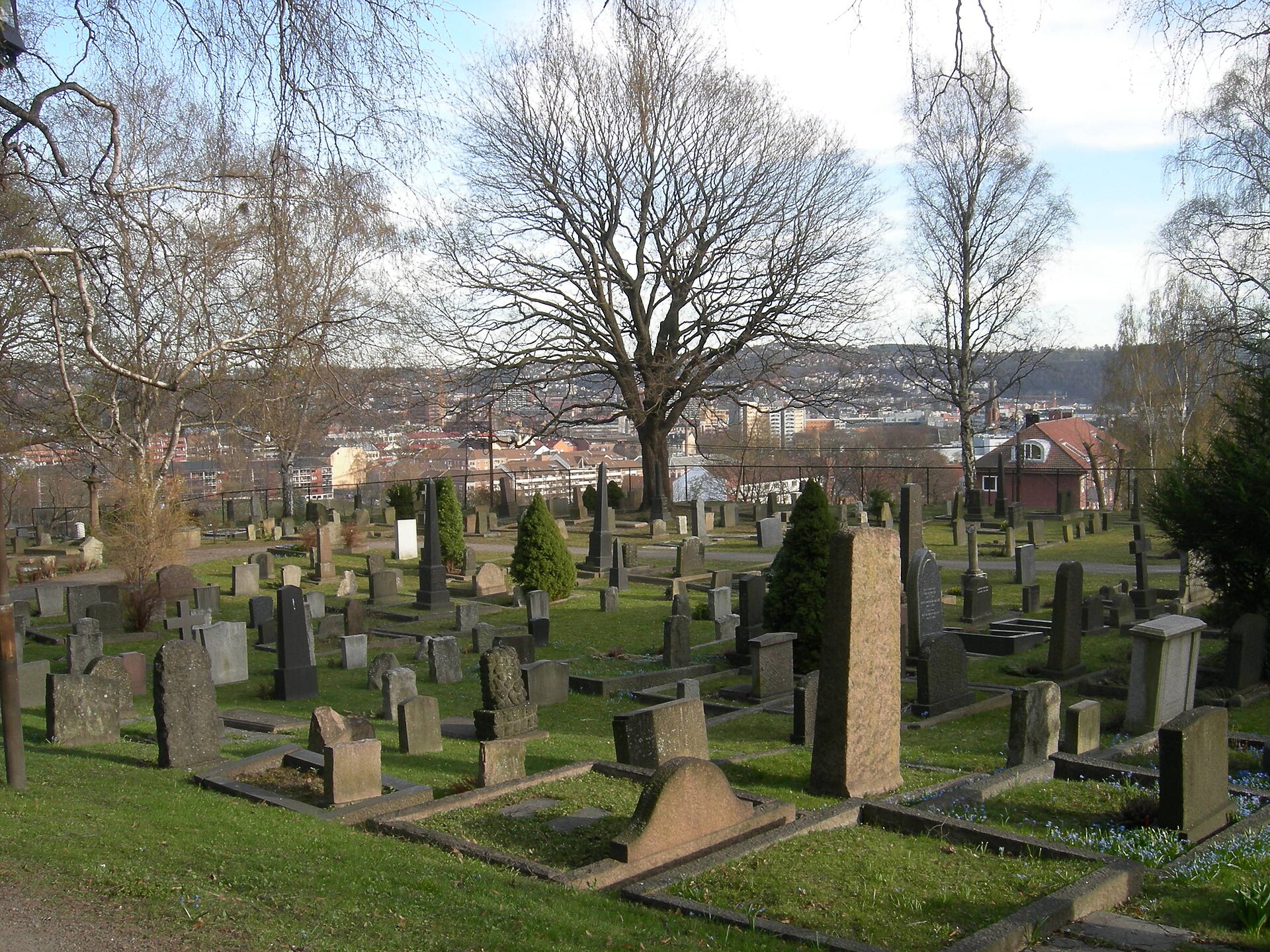
Old Aker Cemetery (Gamle Aker kirkegård) is one of the quietest historic corners of central Oslo. It surrounds Old Aker Church, the oldest surviving building in the Norwegian capital, and both the burial ground and the church trace their origins to the Middle Ages. What is Old Aker Cemetery? The cemetery is an active churchyard that wraps around a medieval parish church. The church is still used by its parish, so the site feels like a living part of the city rather than a closed monument. Walking among the graves, you move through several centuries of Oslo's history, with the old stone church as the anchor of the whole area. Why is it worth visiting? Few places in Oslo let you stand beside a building that has outlasted nearly everything else from the medieval period. The combination of the ancient church, old gravestones and mature surroundings makes it a good stop for anyone interested in history, architecture or simply a calm break from the busy streets. It is a short, easy visit and works well as part of a wider walk through the city. How did the cemetery grow? The oldest part lies around the church. A southern section was added later: in 1837 the municipality of Aker set aside land there for people who died in a cholera outbreak. The cemetery was expanded in 1918 and again in 1929, and its newest burial grounds date from the 1940s. Next door lies the Cemetery of Our Saviour, which opened in 1808, so two historic burial grounds sit side by side. Who is buried here? Several well-known Norwegians rest in Old Aker Cemetery. Examples include: Axel Aubert (1873-1943), a chemical engineer who served as director-general of Norsk Hydro from 1926 to 1941. Theodor Hesselberg (1885-1966), for many years director of the Meteorological Institute. Lars Holst (1848-1915), editor-in-chief of the newspaper Dagbladet from 1883 to 1898. Johannes Haarklou (1847-1925), a composer, organist and conductor. Petter Moen, a member of the resistance whose urn was placed here in autumn 1945. He is remembered for his diary, published after his death as Petter Moens dagbok. These names are examples, not a complete list of those buried here. Can people still be buried here? Burial is now restricted. Only people with a connection to someone already buried in the cemetery, or to the Gamle Aker parish, can be interred, and only as urn burials. This keeps the grounds peaceful and limits change to the historic site. Visiting tips Treat it as a place of remembrance: keep voices low and stay on the paths. Combine the visit with a look at Old Aker Church itself, the oldest existing building in Oslo. The neighbouring Cemetery of Our Saviour makes a natural addition to the same walk. The cemetery is easy to reach from the city centre, so no special planning is needed. Frequently asked questions Is Old Aker Cemetery still in use? Yes, but only for urn burials of people connected to existing graves or to the Gamle Aker parish. What is next to the cemetery? Old Aker Church stands in the middle of it, and the Cemetery of Our Saviour, opened in 1808, lies alongside. How old is the site? Both the church and the cemetery date back to the Middle Ages. Are there famous graves? Yes. Among others, the industrialist Axel Aubert, the editor Lars Holst, the composer Johannes Haarklou and the resistance member Petter Moen are buried here. Is it a good place for a short visit? Yes. It is compact, calm and rich in history, which makes it ideal for a short stop in Oslo.
-
Vår Frelsers gravlund
Oslo
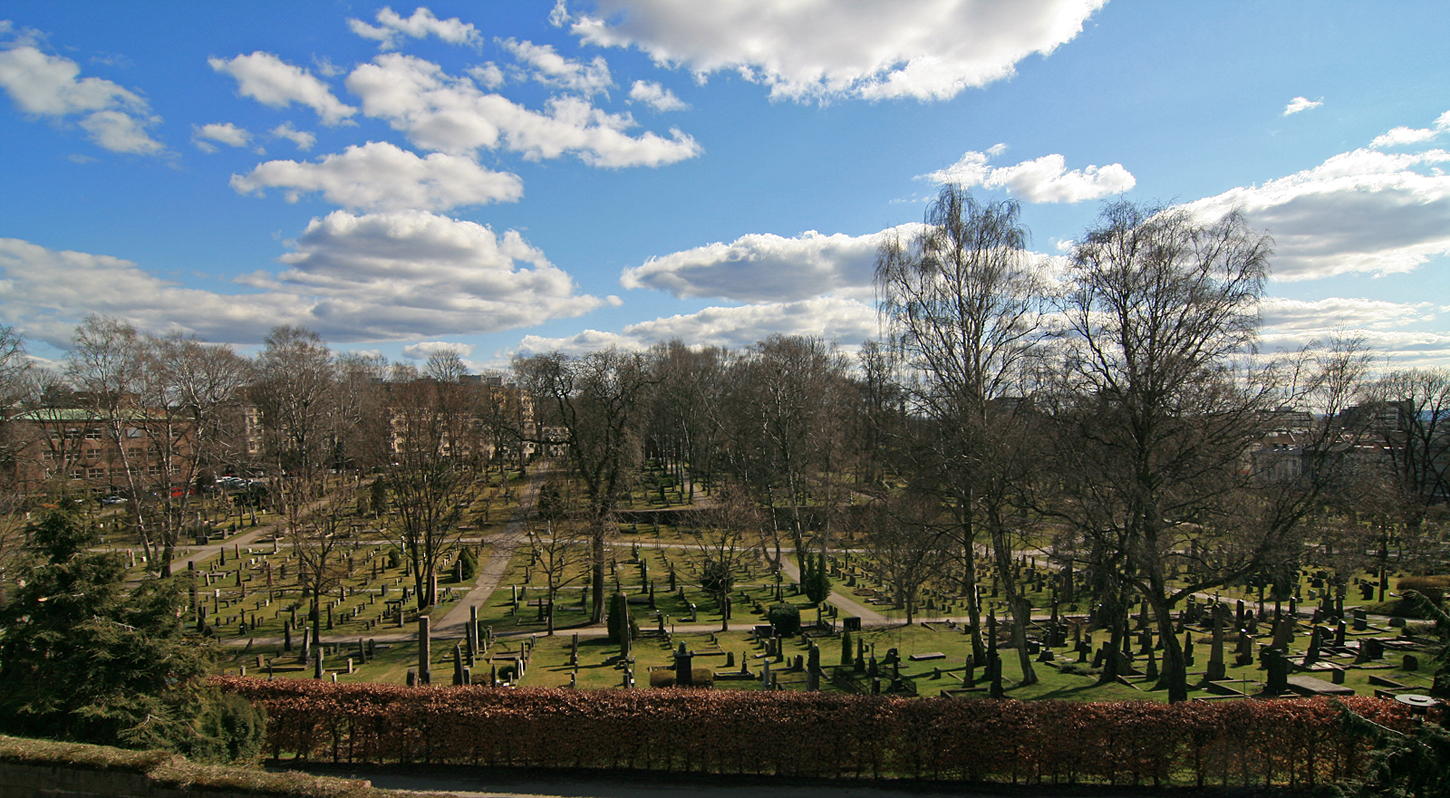
Cemetery of Our Saviour in Oslo (Norwegian: Vår Frelsers gravlund) is one of the most significant burial grounds in Norway, set in the historic centre of the capital in the Gamle Aker district. Founded in the early 19th century, it is the final resting place of many people who shaped Norwegian culture and public life. When was the cemetery founded? The year 1808 is the commonly cited founding date, although the Oslo municipality says the ground was laid out in 1807 and first used that summer. It was created during the hard years of the Napoleonic Wars, marked by famine and disease, when the city needed a new place to bury its dead. At first it served mostly wealthier residents, since only they could buy a plot before their death. What is the Garden of Honour? In the late 1890s the idea emerged of setting aside a section for people of special national importance. This became the Garden of Honour (Æreslunden). The painter Hans Gude was the first person buried there, in 1903. Not every prominent Norwegian lies within its boundaries, though, and many famous graves are just outside it. Who is buried here? For many visitors, the main draw is the list of great names: Henrik Ibsen – the playwright behind "Brand" and "Peer Gynt", Scandinavia's best-known and most controversial writer. Edvard Munch – the painter whose works "The Scream" and "Madonna" brought him worldwide fame. Bjørnstjerne Bjørnson – author and poet; the graves of Ibsen, Bjørnson and Munch lie only a few metres apart. Others buried here include composers Rikard Nordraak and Johan Halvorsen, painter Christian Krohg, politician Martin Tranmæl and writer Alf Prøysen. How to visit The cemetery is open to everyone and feels like a calm park in the middle of the city. Take a slow walk along the paths, look for the headstones of famous figures and admire the sculpted monuments. Remember that this is still a working cemetery where funerals take place and families come to visit loved ones, so keep a respectful tone. Frequently asked questions Are new burials still held here? Burials are heavily restricted. The Garden of Honour is closed to new graves, and burials mostly concern existing family graves. Can I see the graves of Ibsen and Munch? Yes, both are in the Garden of Honour, close to each other. Who is this place for? Readers and art lovers, history fans, and anyone who wants a peaceful walk in central Oslo. How much time should I plan? About an hour is usually enough for an unhurried walk and finding the most famous graves.
-
Løken gamle kirkegård
Løken
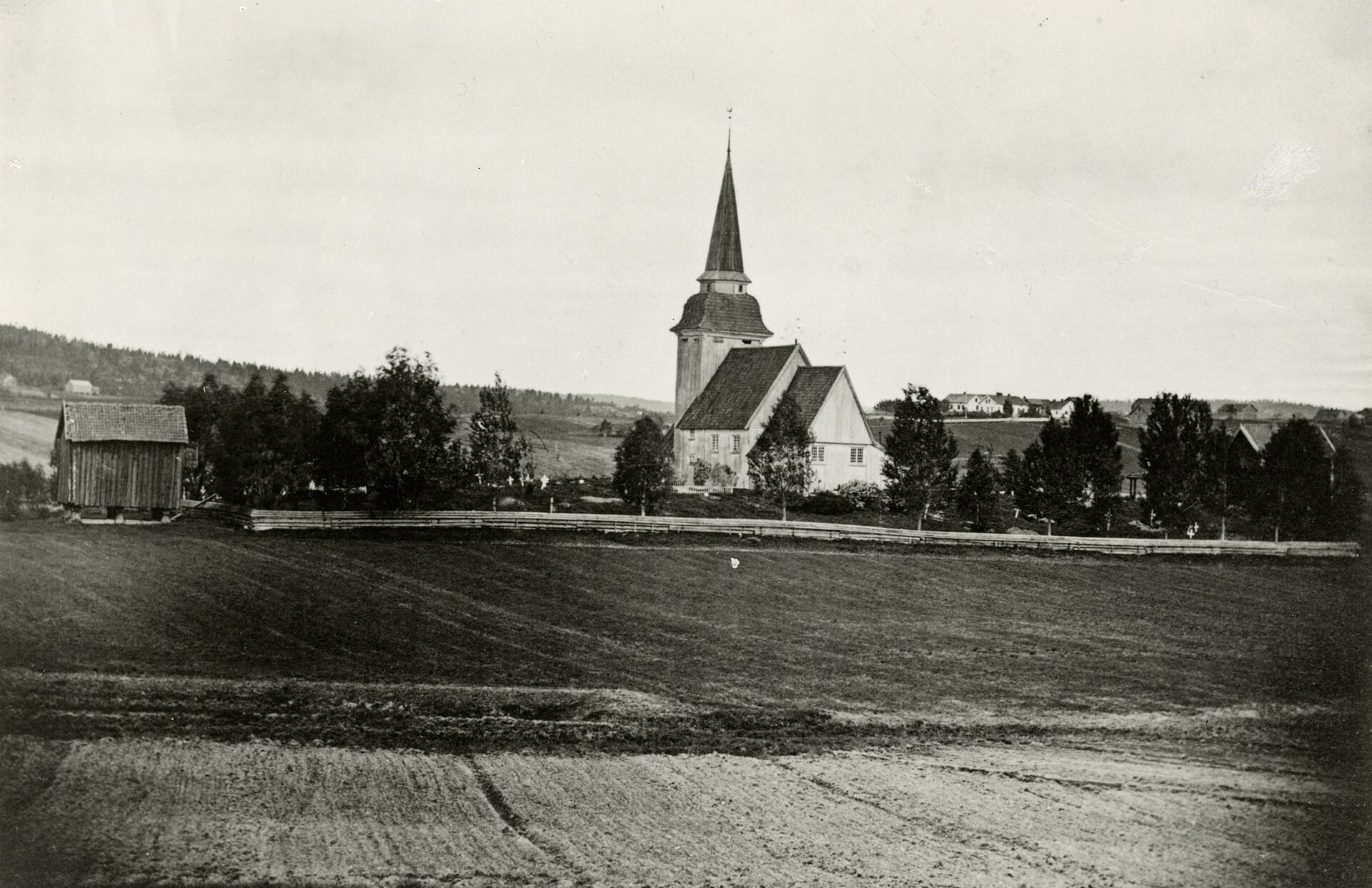
Løken gamle kirkegård (the old churchyard of Løken) is a historic burial ground in the village of Løken, in Aurskog-Høland municipality, Norway. A sacristy from 1789 still stands here, surrounded by many old grave monuments. The site recalls a church that served as the spiritual centre of the area for centuries. What can you see at the old churchyard in Løken? The oldest standing building is the sacristy, dated 1789, a remnant of the former church. The church itself is gone, but the sacristy and the numerous grave monuments help you picture how the place once looked. Walking among the graves offers a glimpse of local family names and burial customs in rural Norway. Just below the churchyard stands a bauta, a standing memorial stone, raised in honour of Colonel Ulrik Christian Kruse. In 1716 he fought bravely against Charles XII during the Great Northern War. It ties this quiet cemetery to the wider history of the region and of Scandinavia. How old is the churchyard? The first church at Løken was a stave church from the 1200s. It appears in documents from 1311, 1348 and 1356, which shows its importance in the Middle Ages. The present Løken church, built in 1883, is the third church in the village. It stands roughly 500 metres from the site of the old medieval church. An estimated 12,000 to 15,000 people may have been buried in the old churchyard, although the exact number is unknown. A figure that large shows how long and how heavily the ground was used by local people. What is known about the medieval part? The extent of the medieval churchyard is not known, and it cannot be determined from observing the landscape alone. For that reason the churchyard was laser scanned ahead of a zoning plan for the centre of Løken, and the resulting report was published by the municipality among its cultural heritage planning documents. This shows the site is treated as a valuable monument that must be considered as the village develops. Who is it for? The old churchyard suits visitors interested in Norwegian history, local church history and genealogy. It is a quiet stop on a trip through Aurskog-Høland, and it pairs well with a look at the present church from 1883. It is not an attraction with extensive facilities. Its value lies in its history, its calm and the traces of the past visible in stone. Frequently asked questions Is the old church still standing? No. Only the sacristy from 1789 remains from the earlier buildings. The current church, built in 1883, stands about 500 metres away. How many people are buried here? Estimates range from 12,000 to 15,000, but the exact number is unknown. Who was Colonel Kruse? An officer who fought against Charles XII in 1716. His memorial stone stands just below the churchyard. How old is the first church at Løken? It dates from the 1200s and is mentioned in documents from 1311, 1348 and 1356.
-
Rokoberget kirkeruin
Løten
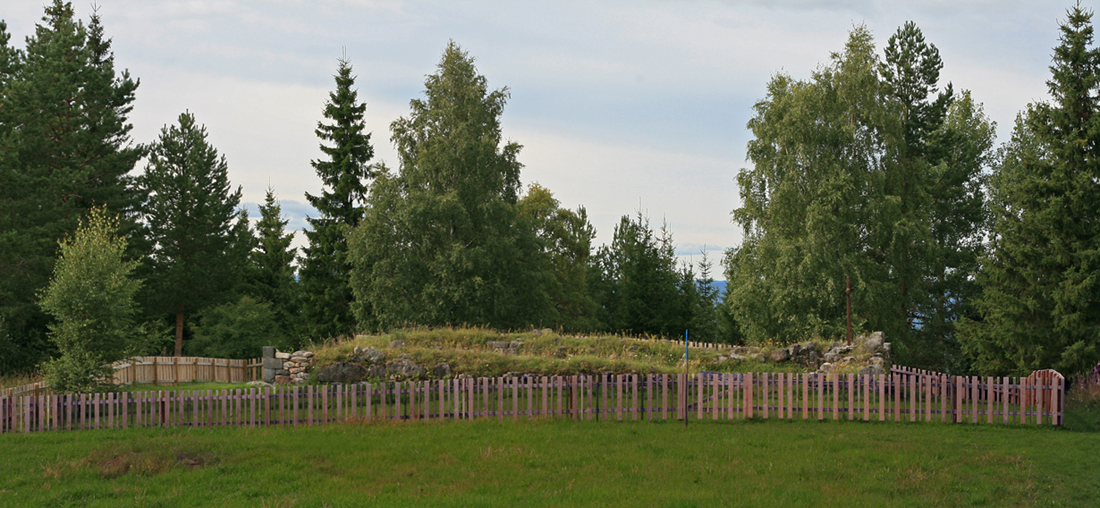
Rokoberget kirkeruin is the ruin of a medieval St. Michael's church on a ridge in Løten municipality, Innlandet county, Norway. It lies a few kilometres southeast of Løten village, south of Lake Rokosjøen, and is tied to the old pilgrim route to Nidaros. What is this place? The church at Rokoberget was dedicated to the archangel Michael. The year it was built is unknown. The earliest mention is a papal letter from 1254, so the church was clearly in existence by the 13th century. What remains today are ruins uncovered by excavations in 1906–1907. Part of the building was made of limestone, which was probably brought from Furuberget near Hamar, so construction involved hauling stone over some distance. Why is it a ruin? It is believed the church fell out of use after the Reformation and gradually decayed. Archaeological work in the early 20th century revealed its outline and tidied the site. A sacred site for centuries The ridge is said to have been a holy place since pagan times, with sacrifices made here. The Christian church therefore stands on ground that already held religious meaning. In the Catholic period, pilgrims on their way to Nidaros Cathedral (today's Trondheim) spent the night at Rokoberget while travelling to the shrine of St. Olav. The site is now listed among the points of interest on the Norwegian pilgrim route (Pilegrimsleden). What to do here Walk to the ruins – the hill is a popular short-trip destination, and the Hamar and Hedmarken tourist association has organised several outings here. See the church outline – the wall lines uncovered a century ago can be made out on the ground. Follow the pilgrim trail – a fitting stop for anyone interested in the route to Nidaros. Attend a service – a mass is still held at the old ruins on St. Olav's Day. Frequently asked questions Is Rokoberget kirkeruin an active church? No. It is a ruin, but an open-air service is held once a year on St. Olav's Day. How old is the church? The construction date is unknown. The oldest record is a papal letter from 1254. Who was it dedicated to? The archangel St. Michael. When were the ruins excavated? In 1906–1907. Where is it? In Løten municipality, about 5 km southeast of the village, on a ridge south of Lake Rokosjøen. Is it connected to a pilgrim route? Yes. In the Middle Ages pilgrims heading for Nidaros stayed overnight at Rokoberget, and the site is described among the attractions of the pilgrim route today. Who is it for? History lovers, those interested in archaeology and pilgrimage, and anyone seeking a quiet walk in Norwegian countryside. The ruin is modest in size, but it offers a feeling of continuity with centuries of tradition. Wear comfortable shoes and leave time to enjoy the silence among the old walls.
-
Kroken Church
Tromsø
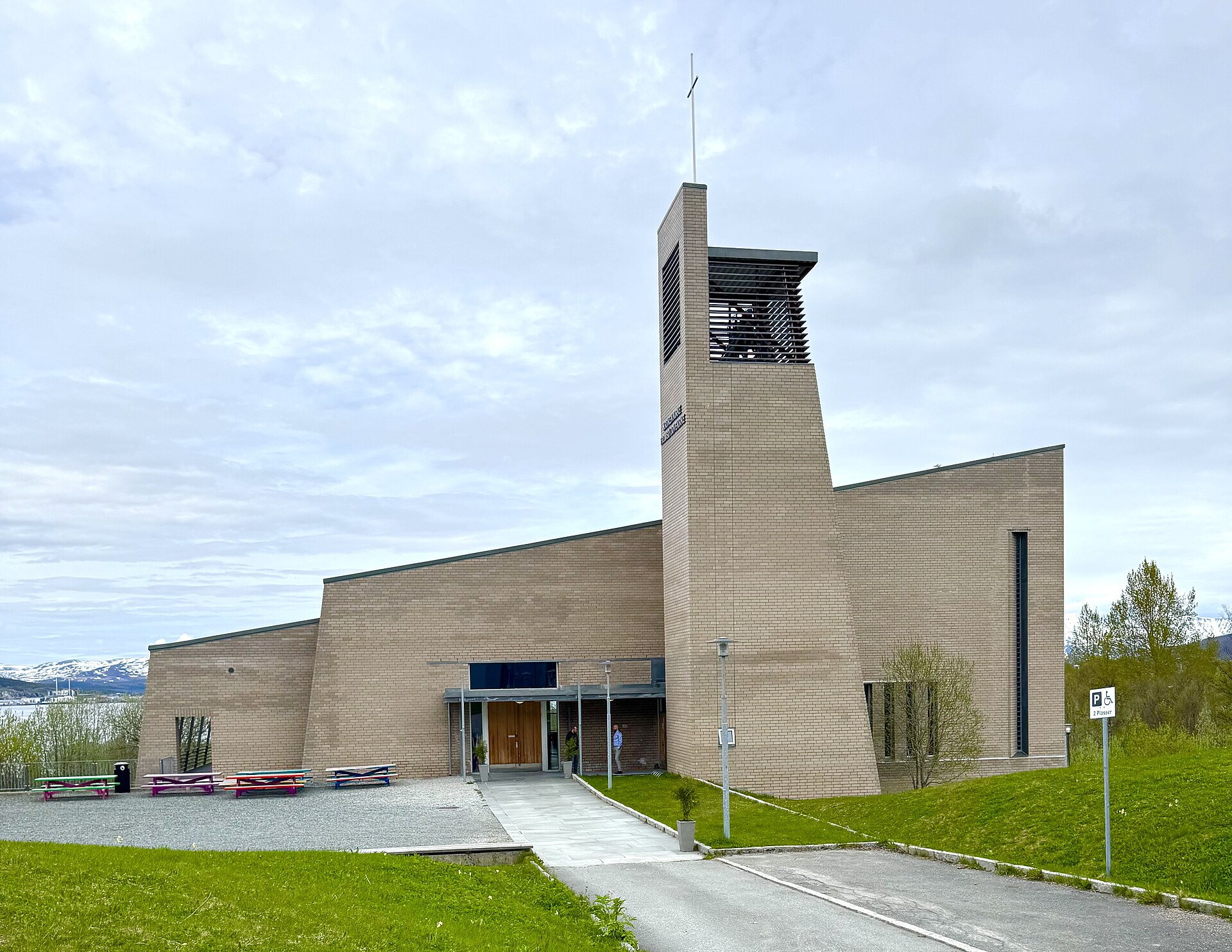
Kroken Church (Kroken kirke) is a modern parish church in the Kroken district of Tromsø, in northern Norway. Completed in 2006, it is a brick building with a distinctive fan-shaped layout, and it serves a residential neighbourhood rather than the historic city centre. What is Kroken Church? It is a parish church of the Church of Norway, belonging to the Kroken parish. That parish is part of the Tromsø arch-deanery (domprosti) within the Diocese of Nord-Hålogaland, the church region that covers much of northern Norway. Services, parish activities and community events are organised here, so visitors will find a living congregation rather than a museum. When was it built and who designed it? Kroken became its own parish in 1979, but it took years before a church was actually approved: the decision to build came only in 2003. The church was finished in 2006 to designs by the architect Nikolai Alfsen. Norwegian sources note that the work was carried out together with the architecture firm Lille Frøen arkitekter, with Alfsen as the lead architect. Alfsen also designed the baptismal font, so the interior details follow the same hand as the building itself. What does the church look like? The first thing most people notice is the colour: the church is built of brown brick. Its fan-shaped plan spreads out from the chancel, which gathers the seating around the altar area. This is a contemporary take on the church form, quite unlike the wooden churches typical of older Norwegian towns. The altarpiece and other artwork inside are by the artist Tor Lindrupsen, and the organ comes from the Ryde & Berg organ-building workshop and has 20 stops. Who else uses the building? The lower level houses Tromsø Deaf Church (Tromsø døvekirke), a congregation for deaf people. That makes the building a meeting point for more than one community. How many people does it hold? Sources disagree on the exact capacity. English-language references mention roughly 600 seats, while Norwegian sources give a smaller figure, so treat any single number with caution if you are planning a larger event. Where is it? Kroken lies on the island of Tromsøya's side of the city, a residential area with everyday amenities rather than major sights. The church stands at approximately 69.68 N, 19.06 E. Frequently asked questions Is Kroken Church old? No. It dates from 2006, which makes it one of the newer churches in Tromsø. Who was the architect? Nikolai Alfsen, working with Lille Frøen arkitekter. Which denomination does it belong to? The Church of Norway, in the Diocese of Nord-Hålogaland. What makes it unusual? Its brown brick walls and fan-shaped plan, plus the fact that a deaf congregation shares the building. Is it a tourist attraction? It is mainly a working parish church. It suits visitors interested in modern Nordic church architecture, who can combine it with a look at the neighbourhood and the better-known landmarks of Tromsø, such as the Arctic Cathedral. Practical note Because this is an active parish church, opening hours depend on services and events. Check the parish's own announcements before visiting, and be respectful if a service or a gathering is under way.
-
Elverhøy Church
Tromsø
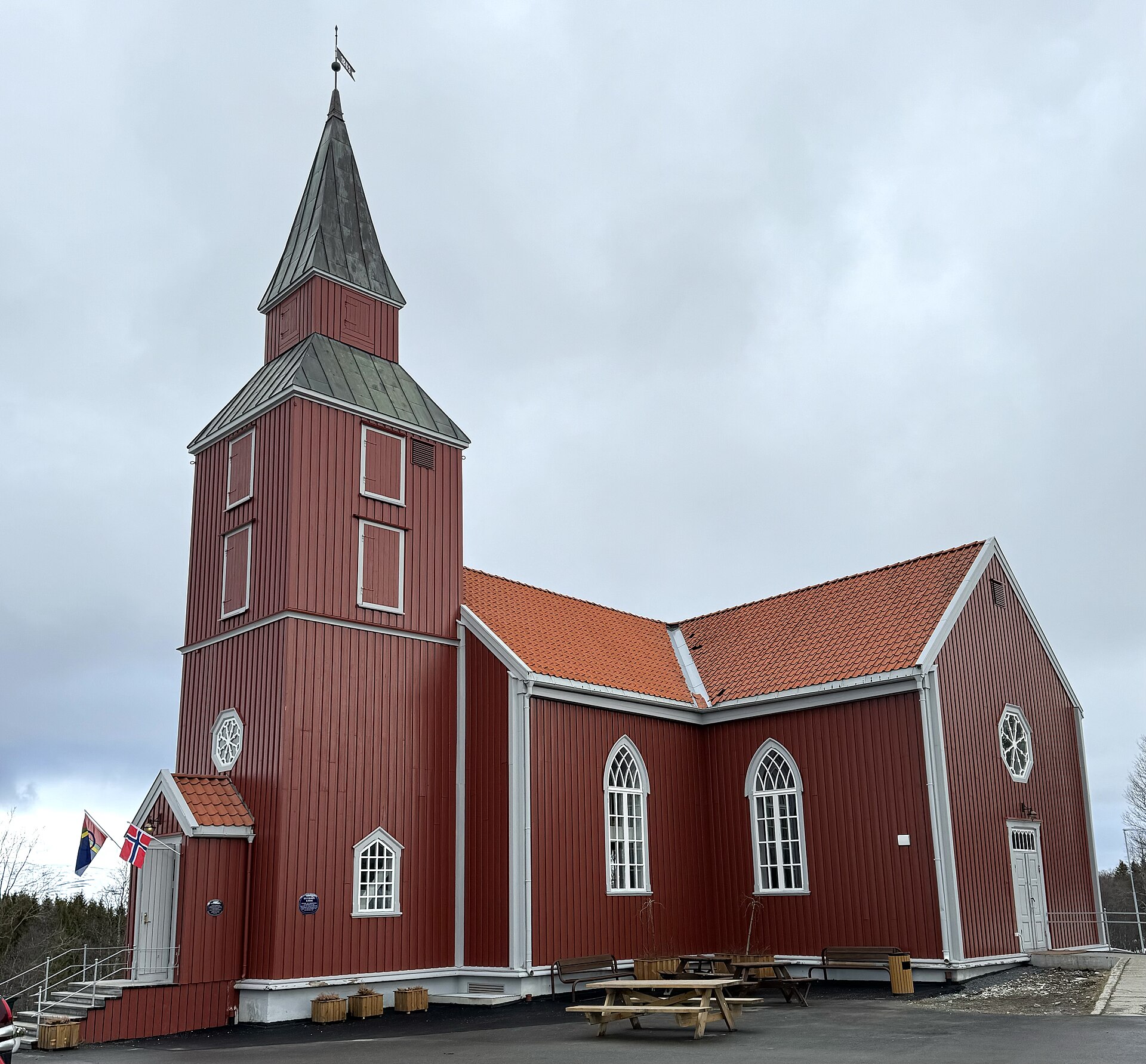
Elverhøy Church (Elverhøy kirke) is a wooden parish church in Tromsø, northern Norway, belonging to the Church of Norway. Its story is unusual: the building has been moved wholesale from one site to another, and its origins reach back to the early 19th century. Today it serves the Elverhøy parish and is a rewarding stop for anyone interested in northern timber architecture. What is Elverhøy Church? It is the church of the Elverhøy parish, part of the Tromsø arch-deanery (domprosti) in the Diocese of Nord-Hålogaland. It stands on the island of Tromsøya, in the city of Tromsø in Troms county. The nave seats about 435 people, which makes it a mid-sized church, suited to Sunday services as well as larger family occasions. Where did this church come from? The original timber building went up in the early 1800s, around 1803, replacing an even older church from the early 18th century. It stood on the spot where Tromsø Cathedral stands today. When the cathedral was completed in 1861, the old church was taken down there and moved to a site south of the town centre. It was reconsecrated in 1863 under the name Tromsøysund kirke. The second move came in the 1970s. Preparations began in the late 1960s, the foundation stone for the new site at Elverhøy was laid in 1973, and dismantling and reassembly continued until the middle of the decade. Sources differ on details: some give 1974 as the year of the move to the present site, others 1975. The church was reconsecrated in late 1975. What does the building look like? The church is built of timber using log construction and clad in vertical panelling. A sturdy steeple is integrated into the half-timbered framework. The nave roof is covered in clay tiles, and the top of the tower in copper. The walls are painted bright red with white trim, and the windows have white lancet-arched frames. Against winter snow, that colour is especially striking. What is inside? The interior holds items much older than the church's current location. The altarpiece dates from 1689 and was donated by Jon Steffenssøn Kiil, and the pulpit is from 1711. These are valuable traces of the region's earlier churches that survived each relocation. Practical information Where: Elverhøy district on Tromsøya island, within the city of Tromsø. Capacity: about 435 seats. Status: active parish church; the building is protected. Best for: fans of wooden architecture, Norwegian history and the unusual fates of historic buildings. Frequently asked questions Is Elverhøy Church very old? The structure dates from the early 19th century, and some fittings are older still. It has stood on its present site since the mid-1970s. Is it the same church that once stood where the cathedral is now? Yes. The original early-1800s church stood on the site of today's Tromsø Cathedral and was moved twice. How many people does it hold? About 435. Can I visit it? It is a working parish church, so check service and opening times with the parish before you go. What was it called before? After its first relocation it was known as Tromsøysund kirke. Elverhøy proves that wooden churches in Norway can travel: this one passed through two locations before settling in its current home in Tromsø. If you are exploring beyond the cathedral and the best-known landmarks, add it to your route as an example of local heritage.
-
Råde Church
Karlshus
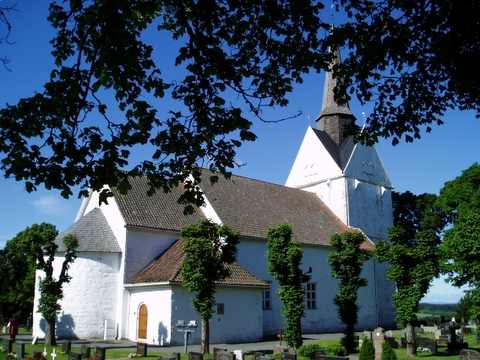
Råde Church – a medieval Romanesque church in Østfold Råde Church (Norwegian: Råde kirke) is a Romanesque church from the late 12th century, standing in Råde in Norway's Østfold county, close to Karlshus. One encyclopedic entry gives 1185 as the year of construction. It is among the oldest surviving buildings in the area and a rewarding stop for anyone interested in Norwegian church architecture. What does the church look like? The building is made of brick and stone. Its plan is the classic Romanesque layout: a rectangular nave, a narrower choir and a semicircular apse. The church is oriented east to west, following the medieval custom of placing the altar at the eastern end. Most medieval churches in Østfold share the Romanesque style, so Råde is a good illustration of the region's architecture. How has it changed over the centuries? The church is more than its original shape. After a fire caused by lightning, major repairs were needed. Over time, parishioners found the interior dark and cold, so the original north entrance was closed and more windows were added. Further major repairs were carried out in 1860–1862, and restoration work began in the late 1950s. What is there to see inside? The furnishings include several notable pieces: The altarpiece, dated 1638 and attributed to Knut Billedsnider. It was painted over in 1862 and 1918, and restored between 1950 and 1960. The baptismal bowl, which dates from the 1500s. These pieces show that the church was kept in use and added to across different eras, rather than surviving only as a historic shell. Frequently asked questions When was Råde Church built? In the late 12th century. One source gives the year 1185. What style is it? Romanesque, typical of medieval churches in Østfold. Can I go inside? The church is open during services, and otherwise by appointment. Why does the interior have more windows than a Romanesque plan would suggest? Parishioners found the original interior dark and cold, so windows were added and the north entrance was closed. Is it part of a pilgrim route? It is presented as a cultural heritage point on the Pilegrimsleden pilgrim trail website. Who is it for? Råde Church suits lovers of medieval architecture, travellers exploring Østfold, and anyone who likes to pause at a landmark with nearly eight hundred years of history. Plan your visit in advance, since entry outside services requires an appointment. The building itself and its surroundings can be seen from outside regardless.
-
Ilen Church
Trondheim
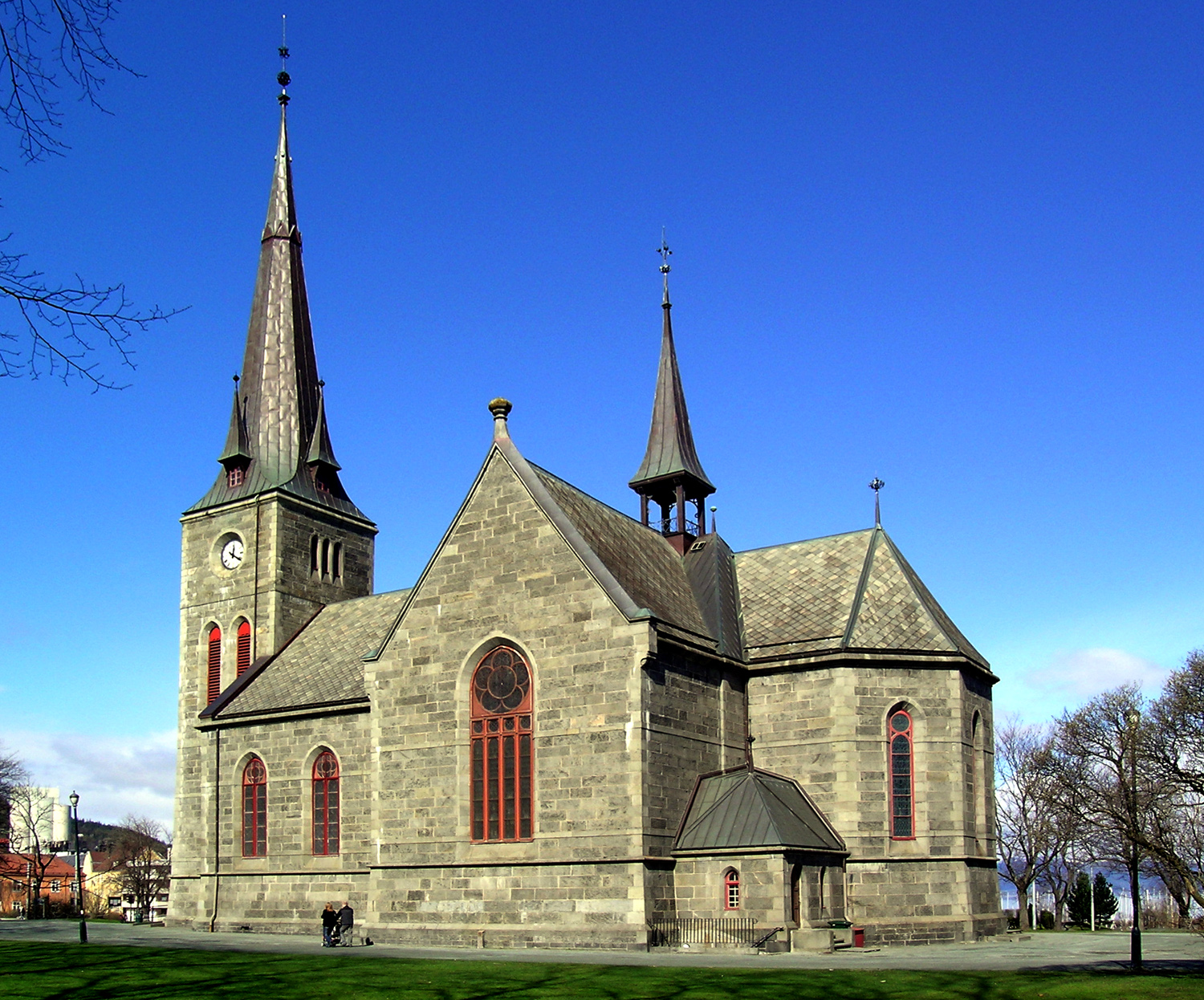
Ilen Church (Ilen kirke, also called Ila Church) is a gray stone parish church in the Ila district of Trondheim, Norway. Finished in 1889, it is one of the city's best-known nineteenth-century churches and still serves an active congregation. Where is Ilen Church? The church stands in Ila, a part of Trondheim in Trøndelag county, on a narrow isthmus about 250 metres (820 ft) wide. The river Nid runs on one side and the Trondheimsfjord on the other, so the area sits between river and sea. The coordinates are roughly 63.4299, 10.3763. The parish cemetery lies a short distance away at Ilsvika, also in Ila. How was the church built? The plans took shape in the 1880s. The graveyard was established in 1883, and a building permit for a church was granted by royal resolution the same year. An architectural competition followed in 1885. The commission went to the Trondheim-based architect Eugene Sissenére, who designed a neo-Gothic building. The local building company of Jacob Digre carried out the construction. The church has a cruciform plan, with stone walls and a wooden roof. It was consecrated on 7 June 1889. Its organ dates from the year of construction and was made by Claus Jensen, an organ builder from Denmark. What is the church like inside? Today Ilen Church seats about 550 people. When it opened, it had room for around 900. The seating was reduced later to meet fire regulations, which is why the present capacity is so much smaller than the original one. The building is protected as a cultural heritage monument and was restored several times during the twentieth century. Which parish does it belong to? Ilen is a parish church of the Church of Norway. The Ilen parish belongs to the Heimdal og Byåsen deanery (prosti) in the Diocese of Nidaros, the diocese centred on Trondheim. Frequently asked questions When was Ilen Church built? It was finished in 1889 and consecrated on 7 June of that year. Who designed it? Architect Eugene Sissenére of Trondheim. The builder was the local firm of Jacob Digre. How many people does it seat? About 550 today. Originally it held about 900. What style is the church? It is a neo-Gothic stone church built on a cruciform plan, with a wooden roof. Is it still in use? Yes. It is the church of the Ilen parish in the Church of Norway. Where exactly is it? In the Ila area of Trondheim, on the isthmus between the river Nid and the Trondheimsfjord. Visiting Ilen Church is easy to combine with a walk through Ila and along the nearby river and fjord shores. As a working parish church, its interior is best visited outside services. Check the parish's own notices for opening hours and events before you go, since these can change from week to week.
-
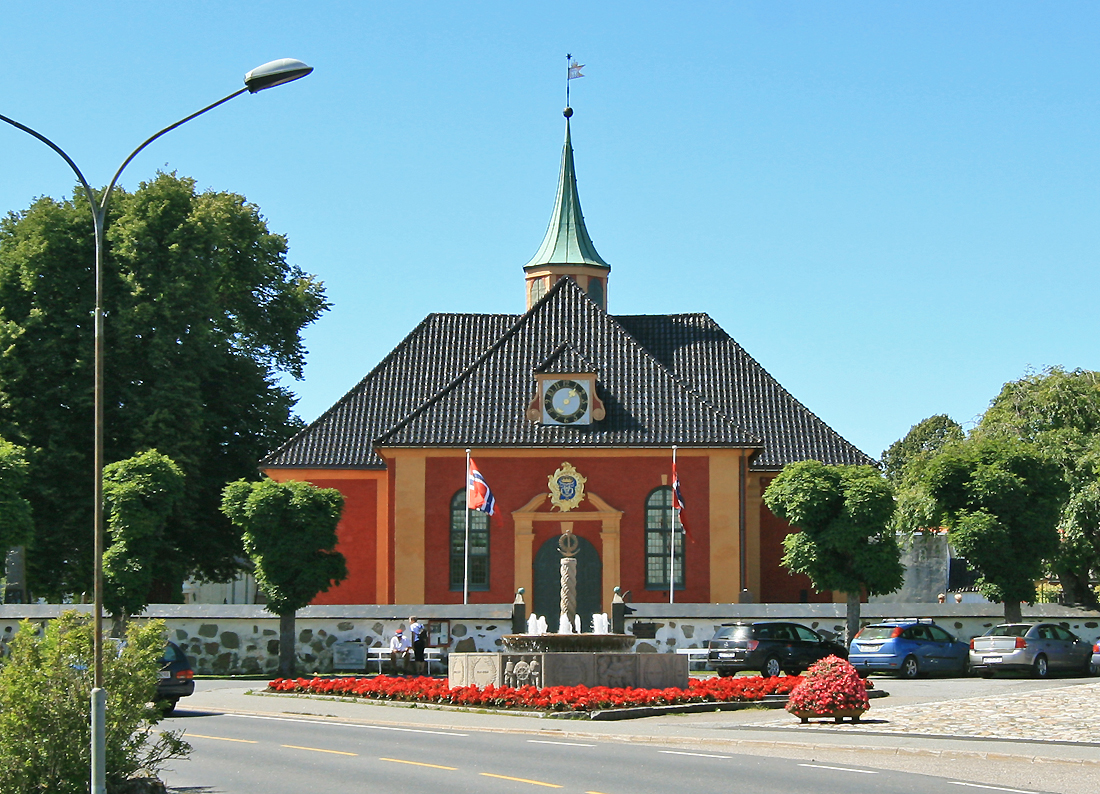
Fredriksvern Church
Stavern
Fredriksvern Church (Fredriksvern kirke) is a red brick church from the mid-18th century in Stavern, a seaside town in Larvik Municipality, Vestfold county, southern Norway. It was built together with the naval base around it and remains one of the oldest landmarks in town. What is Fredriksvern Church? It is a parish church of the Church of Norway. It serves the Stavern parish, which belongs to the Larvik deanery (prosti) in the Diocese of Tunsberg. The building is made of red brick, follows a cruciform plan, and seats about 350 people. Its style is rococo. Who designed it, and when was it built? The architect was Michael Johan Herbst, and construction was completed in 1756. Herbst was also commander of the base and head of the dockyard at Fredriksvern, so he oversaw the project at close range. The church was consecrated on 31 March 1756, the king's birthday. Soon afterwards Herbst moved to Copenhagen to take up the prestigious post of head of Holmen, the main base of the Danish-Norwegian fleet. How is the church linked to the naval base? Stavern grew up around a Danish-Norwegian navy dockyard. The decision to found it was made in 1748, and the yard began operating in 1750 under the name Fredriksvern. The church was built for this military and maritime community and is regarded as the first garrison church in Norway. Until 1799 the churchyard was reserved for the military. Civilians buried their dead at the nearby Tanum Church. In 1799 Stavern split from the Tanum parish and became part of the Fredriksvern parish. Where does the name come from? The church was first called Fredriksvern kirke. Once the settlement took the name Stavern, people began to call it Stavern kirke. After a public meeting in 2019 it was decided that the official name should again be Fredriksvern kirke. If you meet both names in guidebooks or on maps, they refer to the same building. What should you know before visiting? Location: the church stands in Stavern, in Larvik Municipality, at roughly 58.997° N, 10.034° E. Architecture: red brick, cross-shaped plan, rococo character from the Danish-Norwegian era. History: the site is tied to the former Fredriksvern naval dockyard, so it fits well into a walk tracing the town's maritime past. Restoration: sources mention a restoration in 2004. Use: it is still an active parish church, so access to the interior depends on services and parish events. Check opening hours with the parish before you go. Frequently asked questions When was Fredriksvern Church built? It was completed and consecrated on 31 March 1756. Who designed it? Architect Michael Johan Herbst, commander of the base and head of the dockyard at Fredriksvern. How many people does it hold? About 350. Is it the same church as Stavern kirke? Yes. The name Stavern kirke came into common use, and since 2019 the official name has again been Fredriksvern kirke. Why is it considered the first garrison church in Norway? It was built for the military and naval community of the Fredriksvern base, and until 1799 its churchyard served only the military.
-
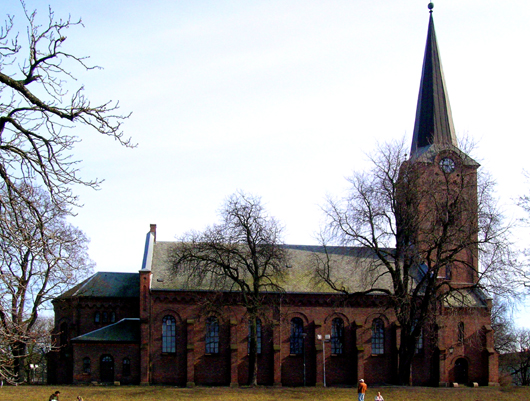
Sofienberg Church
Oslo
Sofienberg Church (Sofienberg kirke) is a red-brick Lutheran church in Oslo's Sofienberg district, set beside Sofienbergparken. It dates from 1877 and remains one of the recognisable landmarks of this part of the Norwegian capital. Where is Sofienberg Church? The church stands in Oslo, Norway, in the Sofienberg neighbourhood, within the Sofienbergparken area. Its green setting makes it an easy stop on a walk through the district. The coordinates are roughly 59.9225 N, 10.7661 E. Who designed it and when was it built? The plans were drawn by Danish-born architect Jacob Wilhelm Nordan. The church was built in red brick in 1877. Christiania municipality had bought the plot back in 1857, with construction following some two decades later. The nave holds about 500 people, which is a generous capacity for a neighbourhood congregation. Why has the church had several names? The building was first called Paulus kirke. In 1892 it was renamed Petrus kirke, and it received its present name, Sofienberg kirke, in 1962. Older sources may therefore refer to the same building under different names. What can you see inside? Altarpiece – painted in 1879 by Otto Sinding, a well-known Norwegian painter. Stained glass – windows by Enevold Thømt (1920) and Maria Vigeland (1951). Organ – an instrument from 2013 built by the German firm Eule. The mix of nineteenth-century architecture and later artworks shows how the interior has been added to over the decades. Is the church protected, and are there concerts? Norway's Directorate for Cultural Heritage protects the church as a valuable monument. It also serves as a concert venue, and its acoustics and newer organ attract performers of sacred and classical music. Check the parish's current programme before you go. Frequently asked questions Is it a Catholic church? No. It is a Protestant, Lutheran church belonging to the Church of Norway. When was Sofienberg Church built? In 1877, to designs by Jacob Wilhelm Nordan. Is there an entrance fee? The available sources describe no standing sightseeing fee. Opening hours and event dates are best confirmed with the parish, as they depend on services and concerts. Why did the church have different names? It began as Paulus kirke, became Petrus kirke in 1892, and has been called Sofienberg kirke since 1962. Who painted the altarpiece? Otto Sinding, in 1879. What else is nearby? Sofienbergparken itself, which surrounds the church, is a pleasant place to rest after your visit and a convenient starting point for exploring other Oslo districts. Who is it for? The church suits lovers of nineteenth-century architecture, sacred art and organ music. Even if you do not go inside, the brick building in the park is a worthwhile stop on a stroll through a less touristy corner of the Norwegian capital.
-
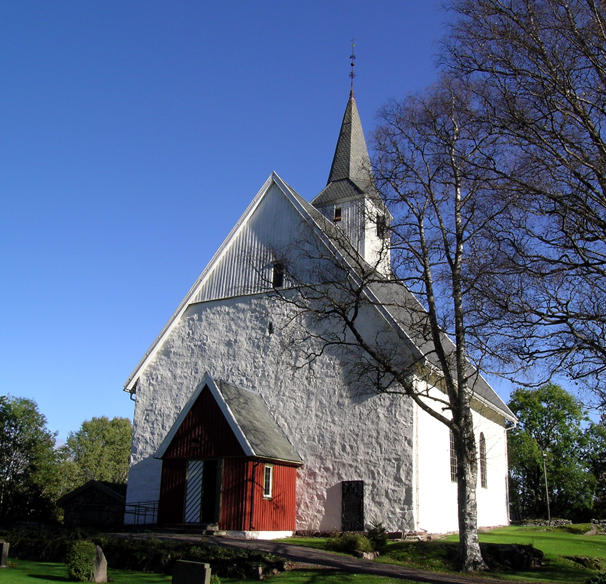
Andebu Church
Andebu
Andebu Church (Andebu kirke) Andebu Church is a white stone parish church in the village of Andebu, in Sandefjord Municipality, Vestfold county, Norway. It belongs to the Church of Norway and serves the Andebu parish, part of the Sandefjord deanery in the Diocese of Tunsberg. It is one of the oldest buildings in the area and is still used for worship. How old is Andebu Church? The church was built around the year 1100 to plans by an unknown architect, and its oldest sections date to the twelfth century. The earliest surviving written record of it only appears in 1314, so the construction date is an approximation rather than an exact year. When it was raised, Christianity in Norway was only a few generations old. What does the building look like? It was built as a "long church": a simple nave with a narrower eastern end, rather than an elaborate cross-shaped plan. This is a typical Romanesque way of building small rural churches in medieval Norway. The pale stone walls stand out against the surrounding countryside. Inside there is room for about 300 people, a generous figure for a village church that reflects its importance for the local community. What changed over the centuries? After the Reformation the building fell into disrepair. In 1673 it became part of the county of Jarlsberg, to which it belonged until 1769. It was restored in 1686, when it received a ridge turret and wider windows. A storm destroyed that turret in 1701, and a new one was put up in its place. Repairs like these are why the medieval church has survived to the present day. Interior Among the medieval elements inside is a baptismal font carved from soapstone, a favourite sculpting material in Norway. Later furnishings add further layers of history to the old walls. Who will enjoy a visit? Fans of Romanesque architecture and medieval Scandinavian churches. Anyone interested in the history of Vestfold and the former county of Jarlsberg. Travellers looking for something beyond the coastal attractions of Sandefjord. Practical tips The church stands in the inland village of Andebu in Sandefjord Municipality. Because it is an active parish church, opening hours and access depend on services and parish arrangements, so check the parish's current information before you go. Inside, keep quiet and be respectful, especially during services and ceremonies. The exterior is best photographed in good daylight, when the white walls contrast nicely with the sky. Frequently asked questions When was Andebu Church built? Around the year 1100; the earliest surviving record of it dates from 1314. How many people does it seat? About 300. Is it still in use? Yes, it is the church of the Andebu parish in the Diocese of Tunsberg, within the Church of Norway. Which municipality is Andebu in? Sandefjord Municipality, in Vestfold county. Who designed the church? The architect is unknown; it was built in the long-church design. Has it been rebuilt? It was restored in 1686 with a new ridge turret and wider windows, and after a storm destroyed the turret in 1701 a new one was built.
-
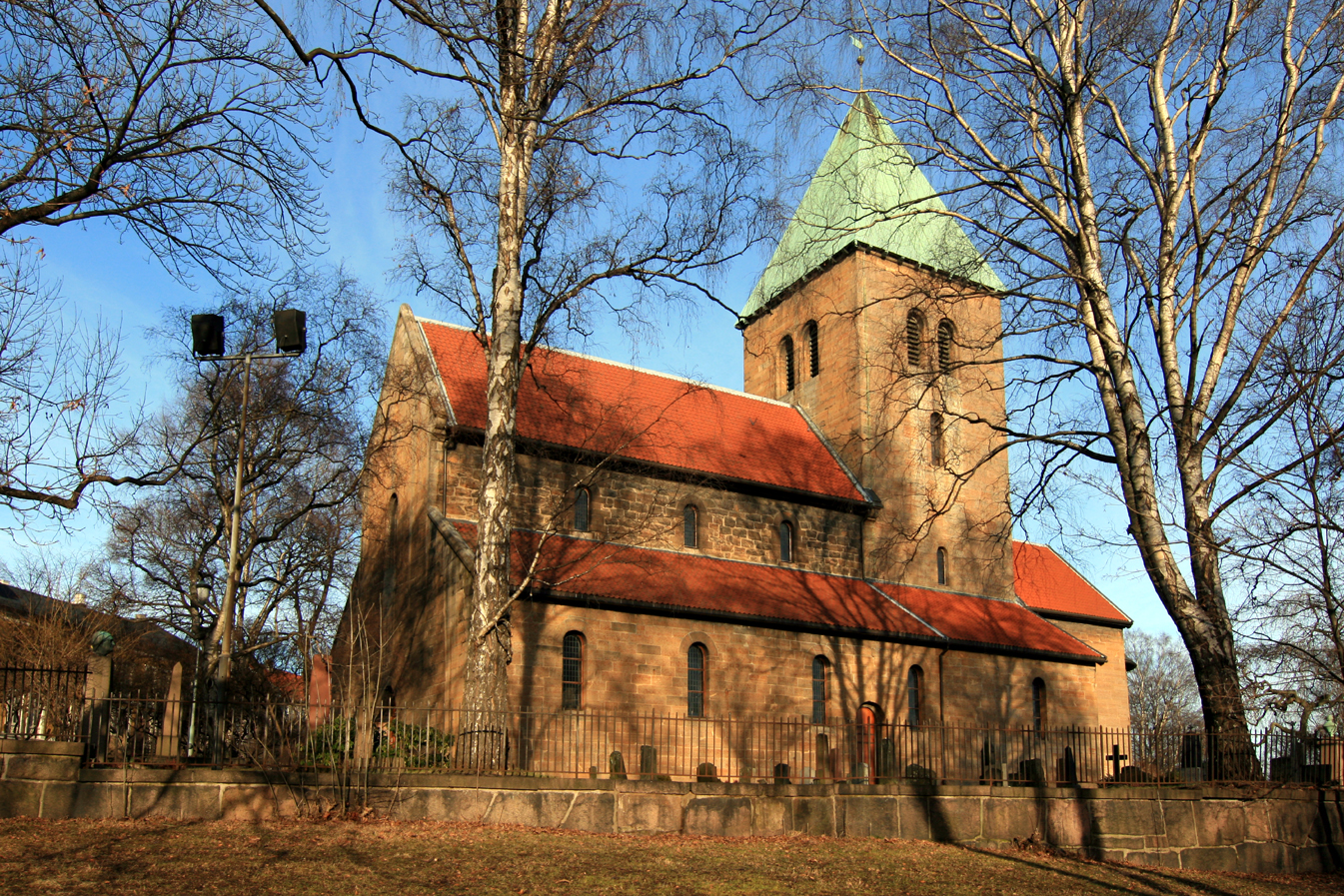
Old Aker Church
Oslo
Old Aker Church (Gamle Aker kirke) is the oldest surviving building in Oslo, a Romanesque stone church that still serves as an active parish church. It stands in the Aker district north of the city centre, surrounded by the quiet grounds of Old Aker Cemetery. What is Old Aker Church? It is a medieval church in the Norwegian capital and, by common agreement, the oldest standing structure in the city. Services are still held here, so it is a living place of worship rather than a museum. The church gave its name to the wider Aker area, which was once a separate rural parish before being absorbed into Oslo. How old is it? The exact date is debated. One tradition credits King Olav Kyrre with building it around 1080. Other sources are more cautious and place the stone church in the early 12th century, with the visitor guide for Oslo pointing to roughly 1150. In practice this means you are looking at a building that is around 900 years old, which is remarkable in a city where fires erased most of the medieval townscape. It is thought that the stone church replaced an earlier wooden stave church on the royal Aker estate, a common pattern in Norway as Christianity became established and communities moved to more durable materials. What does it look like? The church is a three-aisled basilica in the Romanesque style, built of limestone. Thick walls, rounded arches and a sturdy, compact outline give it a solid, unadorned character that contrasts with the later Gothic and neoclassical churches elsewhere in Oslo. It is often described as having been modelled on the lost St. Hallvard's Cathedral, which once stood in medieval Oslo and is no longer preserved. What happened to it over the centuries? The church has had a hard history. It suffered fire damage in 1592 and again in 1703, and in the middle of the 19th century it came close to being pulled down. It was saved and restored, and the tower dates from 1861. Because of these repairs, what you see is a layered building, with medieval fabric combined with later work. What can you see around it? The church exterior and the stone walls, best appreciated by walking all the way around. Old Aker Cemetery, a calm green space where many notable Norwegians are buried and where the atmosphere is far from the bustle of downtown. The surrounding Aker neighbourhood, with its mix of old and newer city architecture. The church is also noted as a point on the Pilgrim's Way (Pilegrimsleden) route through Oslo, so you may meet walkers passing through. Practical tips The church is not always open for walk-in visits, and some listings have mentioned temporary closures, so check current opening times with Visit Oslo before you go. Allow around 30 to 45 minutes if you want to see the exterior and stroll through the cemetery. Because it is an active parish church, keep voices low and respect any services or ceremonies. Frequently asked questions Is Old Aker Church the oldest building in Oslo? Yes. It is widely recognised as the oldest existing building in the city. Is it still used for services? Yes, it is an active parish church. When was it built? Sources differ. Estimates range from around 1080 to the early or mid 12th century. What style is it? Romanesque, a three-aisled limestone basilica. Is there an entrance fee? Check with Visit Oslo for current details, as opening arrangements can change.
-
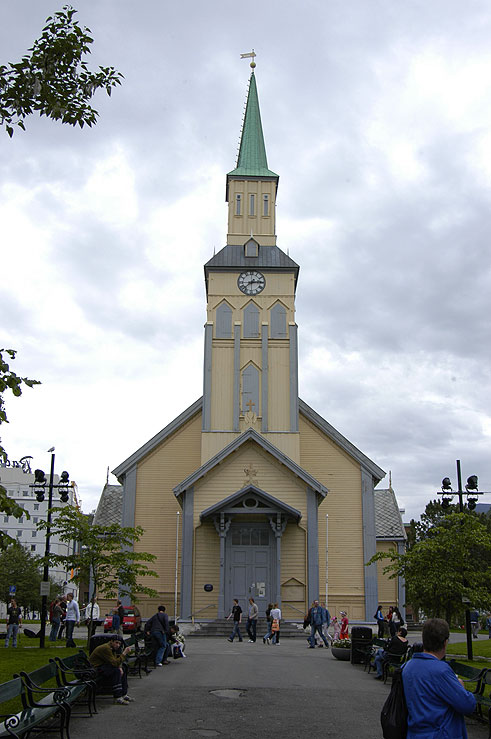
Tromsø Cathedral
Tromsø
Tromsø Cathedral (Norwegian: Tromsø domkirke) is a wooden church in the middle of the city and the main church of the Diocese of Nord-Hålogaland. It was completed in 1861 and designed by architect Christian Heinrich Grosch (1801–1865), one of the notable figures of nineteenth-century Norwegian architecture. What makes Tromsø Cathedral stand out? It is a large, elongated timber building in the Gothic Revival style. For visitors from southern Europe the material itself can be a surprise: in Norway wood has been the backbone of building for centuries, including church building, and this cathedral shows that the material can carry real cathedral status. Its slender, pointed forms echo Gothic architecture, yet they are realised in boards and beams rather than stone. What is the history of the church? The current building stands on the site of earlier churches. Norwegian sources mention a predecessor, a timbered cross church from 1803, and some accounts suggest a church stood here much earlier, back in the Middle Ages, although the dating is debated. The 1861 church was built for a growing congregation in a town that expanded quickly in the nineteenth century thanks to trade and Arctic shipping. Why is it a cathedral? The church gained cathedral status with the organisation of the dioceses of northern Norway. Since 1952 it has served as the main church of the Nord-Hålogaland diocese; it was originally built with the Hålogaland diocese in mind. Besides regular parish services, this means important church events for the wider region take place here. How many people does it hold? Figures differ between sources. According to some, there were originally around a thousand seats, and over the years many benches were removed, making the interior more spacious; today it seats a little over six hundred. Other sources give different numbers, so treat them as approximate. Visiting the cathedral The cathedral stands in the centre of Tromsø, a short walk from the main streets, the harbour and most cafés, so it fits easily into a walking tour of the city. It looks good from the outside against the backdrop of downtown buildings, and inside you can see a bright wooden interior. Opening hours change with the season and depend on church events, so check the parish's current information before you go. If you are interested in architecture and religion in the city, you can pair the cathedral with other churches in Tromsø to see how varied sacred buildings look in the far north. Frequently asked questions Who designed Tromsø Cathedral? Most often Christian Heinrich Grosch is named. Some sources also mention a local co-designer, so attribution varies. What is it built from? It is a wooden building, completed in 1861. Is it a Catholic cathedral? No. It is a Church of Norway building, the main church of the Nord-Hålogaland diocese, not a Catholic cathedral, despite the name. Since when has it been the cathedral of Nord-Hålogaland? Since 1952, after being built originally for the Hålogaland diocese. Is it worth a visit? Yes, if you enjoy timber architecture and want to see what a cathedral looks like in the far north. A visit is usually short, so it is easy to include in a walk through the centre.
-
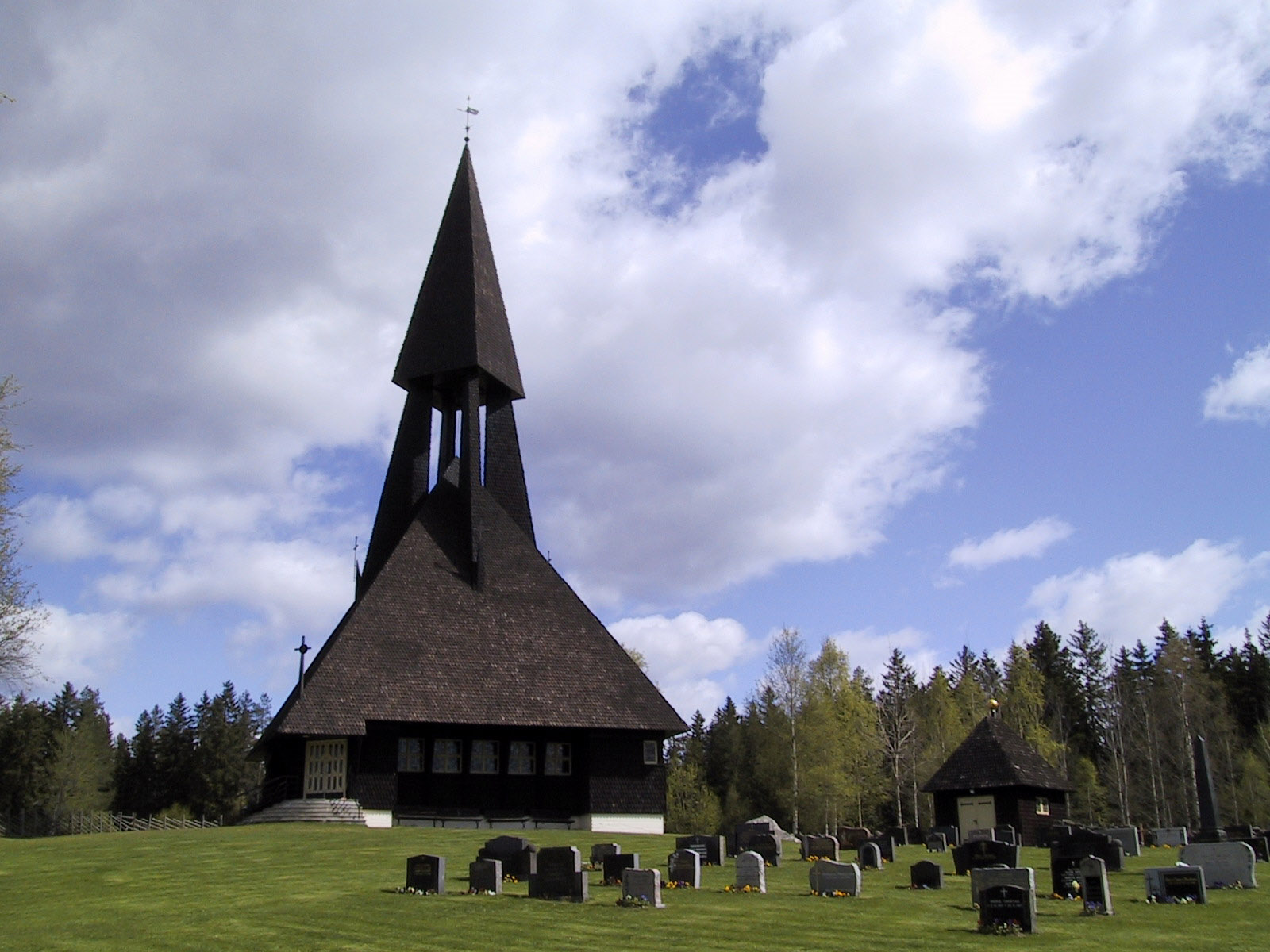
Gravberget Church
Våler
Gravberget Church is a wooden parish church in Våler Municipality, in Norway's Innlandet county. Completed in the mid-1950s, it is a modest modern building whose interior opens out like a hand fan. It is a rewarding stop for anyone interested in Norwegian church architecture who wants to see something different from the classic stave-church image. Where is Gravberget Church? The church stands in the village of Gravberget, in Våler, in south-eastern Norway's Solør region. The surroundings are forested and quiet, and local life has long been tied to forestry. The church belongs to the Gravberget parish, part of the Solør, Vinger og Odal deanery in the Diocese of Hamar. It is an active Church of Norway parish church rather than a museum piece. Who designed it and when was it built? The architect was Magnus Poulsson, a prominent Norwegian designer known for public buildings and interiors in the Nordic classicist and functionalist traditions. The commission came in the early 1950s and construction was finished in 1955. The forestry company Borregaard paid for the project and handed the finished church over to the municipality, an arrangement that was not unusual in Norwegian communities built around the timber industry. What does the building look like? The church is built of timber and painted a deep brown. Its most distinctive feature is the fan-shaped layout: pews are set at an angle so that everyone faces the altar and has a clear view of the chancel. The outer form rests on a plan close to a square and is said to echo the shape of a spruce tree, which suits the woodland setting. Inside, the artwork reflects the mid-century period. Arnold Haukeland made the altarpiece sculpture in 1955, while Dag Frogner and Thorstein Rittun painted the friezes. Poulsson himself drew the baptismal font, so the whole interior reads as one coherent composition. How many people does it hold? The church is small, with seating for about 150 people. That gives the interior an intimate feel, and the closeness to the altar suits services and small concerts alike. Frequently asked questions Is Gravberget Church a medieval monument? No. It dates from 1955 and belongs to post-war architecture, not to medieval building traditions. Why is it fan-shaped? The plan angles the pews towards the altar, so the congregation sits closer together and sees the chancel better than in a traditional long nave. Who designed it? Magnus Poulsson, one of the important Norwegian architects of the twentieth century. Who paid for it? The forestry company Borregaard covered the cost and gave the finished church to the municipality. Is it worth visiting? Yes, if you enjoy modern timber architecture and the quiet Solør countryside. You can combine it with other wooden churches in Våler, and its small scale means a visit is short. It is worth checking in advance whether the interior is open, as the building serves first of all its parish. Who is it for? Lovers of twentieth-century architecture, photographers of wooden buildings, and travellers exploring rural Norway who want to learn about local stories tied to the forestry industry. Gravberget Church shows how, in the 1950s, builders combined the Norwegian timber tradition with a fresh approach to liturgical space.
-

Lillehammer Northern Civil Cemetery
Lillehammer
Lillehammer Northern Civil Cemetery (Nordre gravlund) is a municipal cemetery in the northern part of Lillehammer, Norway, on Gausdalsgata. For most visitors it is above all a place of remembrance for the soldiers who fell in April 1940, during the fighting around Lillehammer and the Gudbrandsdalen valley. How did the cemetery come about? The grounds were laid out in the late 1930s but were not consecrated until September 1940, when Norway was already under German occupation. The first person buried here was a Norwegian soldier, Alf Haugen, who died in the fighting at Gausdal in April 1940. The stone wall around the oldest section was built by Russian prisoners of war. The cemetery was later extended with a newer area called Bjørkelunden. Are there war graves here? Yes. The original section holds 35 graves of Allied soldiers from the Second World War. Most are British servicemen who fell in the Norwegian campaign of spring 1940, when British troops tried to support the Norwegians and slow the German advance north. The graves are cared for as Commonwealth war graves and are listed in war-memorial registers. Every year on 17 May, Norway's Constitution Day, a memorial ceremony is held at the graves. It is a good moment to see how the local community remembers soldiers from far-away countries. Who else is buried here? The cemetery is also the resting place of well-known Norwegians, including cross-country skier Arne Rustadstuen (1905-1978) and politician Oskar Skogly (1908-1988), who served as a minister in Einar Gerhardsen's third government. They show that Nordre gravlund is not only a war memorial site but also an ordinary, still-active cemetery for the people of Lillehammer. Who runs the cemetery? It is managed by the administration of Lillehammer kirkelige fellesråd, the joint parish council that looks after all of the town's churchyards. Local cemetery regulations apply, so keep quiet and show respect, as at any working cemetery. Who is it for? Anyone interested in the Second World War and the 1940 Norwegian campaign. Families and researchers looking for the graves of British soldiers. Visitors who want a quiet look at a less obvious side of Lillehammer, best known for the 1994 Winter Olympics. Frequently asked questions Where is Nordre gravlund? In the northern part of Lillehammer, on Gausdalsgata, north of the town centre. How many war graves are there? The original section contains 35 graves of Allied soldiers from the Second World War. Can visitors enter the cemetery? It is an active municipal cemetery, so you can visit as long as you stay quiet and respect mourners. Current rules are published by the Lillehammer cemetery administration. When is the annual ceremony? On 17 May, Norway's national day, a memorial ceremony is held at the war graves.
-
Trondheim-Havstein German war cemetery
Trondheim
Trondheim-Havstein German war cemetery is one of five central burial grounds for German soldiers in Norway, set on the Byåsen hillside in Trondheim, close to Havstein church. It is a quiet, well-kept place of remembrance that speaks to the scale of the occupation of Norway between 1940 and 1945 and to the people who died serving in the Wehrmacht. What is Havstein cemetery? It is a war cemetery founded in 1943 by the German military. At that time it was called the Trondheim-Byåsen military cemetery and was used to bury soldiers who fell or died in the Trøndelag area. Today it is maintained by the Volksbund Deutsche Kriegsgräberfürsorge, the German organisation that cares for war graves abroad. What happened after the war? In the 1950s, authorities decided to gather German war graves scattered across Norway into a few large cemeteries. Havstein was chosen as the permanent burial ground for the Trondheim region. Between 1954 and 1955, almost two thousand dead were moved here from smaller, temporary sites. The enlarged cemetery was formally dedicated on 25 August 1960. How many people are buried here? According to the Volksbund, 2,992 people rest at Havstein. Some remains were earlier returned to Germany, which is why older publications sometimes give lower figures. Those buried include soldiers from various units as well as people who died in captivity or in accidents. What does the site look like? The layout is restrained and calm. Grave slabs are set flat into the lawn, each one marking two people. Six large stone slabs list the places from which graves were relocated. There are no monumental memorials or propaganda-style features, only the green slope of Byåsen around you. Who should visit? The cemetery appeals to people interested in the Second World War, in remembrance culture, and in the landscape of wartime memory in Scandinavia. It also works as a quiet stop on a walk through western Trondheim. Usual cemetery etiquette applies: keep voices low, be respectful, and avoid photography that undermines the seriousness of the place. Frequently asked questions Where is Havstein cemetery? In the Byåsen district of Trondheim, near Havstein church, by the road Havsteinbakken. Is there an entrance fee? No. It is a publicly accessible cemetery and the sources mention no charges. Who looks after it? The German Volksbund Deutsche Kriegsgräberfürsorge, working with Norwegian authorities. When was it established? In 1943, and it took its present form when dedicated in 1960. Is it the only one of its kind in Norway? No. Norway has five consolidated German war cemeteries, and Havstein serves the Trondheim region. How long does a visit take? Usually half an hour to an hour is enough for a calm walk and a read of the tablets naming the original burial sites. This is a place for reflection rather than entertainment. It pairs well with other Trondheim sites tied to the occupation and to postwar memory, which help show how the city lived through the war and how it remembers it today.
-
Gamlebyen gravlund
Oslo
Gamlebyen gravlund is a cemetery in Oslo's Gamlebyen (Old Town) district, on Ekebergveien. It layers two chapters of local history: a nineteenth-century city burial ground and a much older section that reaches back to the mid-1500s. For anyone curious about Oslo's past, it is a quiet place for a short, respectful walk. How did the cemetery begin? The cemetery was consecrated on 14 October 1874 under the name Anefeltløkkens kirkegaard. In 1894 it became Oslo gravlund, and since 1925 it has carried its present name. A burial chapel went up in 1877 and was rebuilt in 1934–1935. The grounds were extended in 1939. What is the oldest part? The oldest section visible today dates from around 1550. It first belonged to a Franciscan monastery. After Oslo Hospital took over the monastery in 1538, the land passed to the hospital, and in 1624 it was laid out afresh as the hospital's cemetery. The City of Oslo bought this plot, about 0.8 hectares, in 1961 and merged it into Gamlebyen gravlund. Who is buried here? Burials include bishops Jens Lauritz Arup and Frederik Julius Bech, Christian Magnus Falsen, a delegate at the Eidsvoll constitutional assembly, the painter Adolph Tidemand and the writer Jon Bing. There are also graves of railway employees, and a separate field holds sailors' graves. Is it open to all faiths? Yes. A Muslim burial field was laid out in 1972, and anyone may be buried here regardless of religion. Options include urn graves, coffin graves and an anonymous memorial grove. How many graves are there? The city reports about 7,000 graves, roughly 200 of which are regarded as worth preserving. Why visit? The cemetery shows how Oslo changed over time. Traces of a medieval monastery, a seventeenth-century hospital and the nineteenth-century city sit side by side. The names on the headstones tell of politicians, clergy, artists, sailors and railway workers, a cross-section of the capital's society. The Muslim field is a reminder that the city has long been multicultural. Photographers and local-history fans will find plenty of detail: the late-1870s chapel, weathered headstones and well-kept greenery. Many people use it as a calm green space, though it remains first and foremost a place of remembrance. How to visit This is a working cemetery, so keep voices low and give mourners room. Pair the visit with a stroll around Gamlebyen, the oldest part of Oslo, where the medieval town once developed. Frequently asked questions When was the cemetery founded? The main part was consecrated in 1874, while the oldest sections go back to around 1550. Can I see the graves of famous people? Yes, including the painter Adolph Tidemand and Eidsvoll delegate Christian Magnus Falsen. Is it open to all religions? Yes. A Muslim field dates from 1972, and anyone may be buried here. How many graves are there? About 7,000, of which around 200 are considered worth preserving.
-
Fredrikstad military cemetery
Fredrikstad
Fredrikstad Military Cemetery (Norwegian: Fredrikstad militære kirkegård, also called Krigskirkegården or Garnisonskirkegården) is the resting place of soldiers and sailors who died in the two world wars. It is the main Commonwealth war graves site in southeastern Norway, maintained to the standards of the Commonwealth War Graves Commission. What kind of place is it? The cemetery lies in the city of Fredrikstad in Østfold county, where the Glomma river meets the Oslofjord. Wikidata classes it as a military churchyard in Norway. It is not a ticketed attraction with guides and displays but a quiet, well-kept burial ground where remembrance comes before sightseeing. What is its history? The cemetery's story starts in the First World War. The first British plot was created after the Battle of Jutland in 1916 and held 18 seamen, only seven of whom could be identified by name. The sea carried bodies to the Norwegian coast, and local people saw to their burial. In 1961, British First World War graves from all over Norway were moved to Fredrikstad. They had previously lain in small, scattered burial grounds and church plots. Bringing them together made lasting care of the graves easier. A memorial stone at Eivindvik marks one of the original sites. Who is buried here? Most of those buried here were lost at Jutland or in ship sinkings in Norwegian waters. They include crews of British vessels such as HMS India, sunk by a submarine in the Vestfjord in 1915, and the destroyers HMS Mary Rose, HMS Strongbow, HMS Marmion and HMS Partridge, all lost in 1917. Figures differ between institutions depending on how they count. The Commonwealth War Graves Commission lists 31 identified First World War casualties, while the Norwegian register Krigsgraver.no reports 84 people from both wars, including two Soviet soldiers from the Second World War. Why visit? It shows a lesser-known side of the First World War: how naval warfare in the North Sea left its mark on the Norwegian coast. The uniform headstones and careful upkeep are typical of Commonwealth war cemeteries. A visit combines well with exploring Fredrikstad, including its fortified Old Town. Frequently asked questions Is there an entrance fee? No. It is a working cemetery open to visitors. How should I behave? As in any cemetery: stay quiet, show respect, and do not walk on the graves. Is it only a British cemetery? Commonwealth First World War graves dominate, but according to the Norwegian register two Soviet soldiers from the Second World War are also buried here. How long does a visit take? Usually 20 to 30 minutes of a quiet walk among the graves is enough. Sources for the facts: CWGC, Krigsgraver.no.
-
Vestre Fredrikstad gravlund
Fredrikstad
Vestre Fredrikstad gravlund is a cemetery at Teglverksveien 36 in Fredrikstad, in south-eastern Norway. It is among the city's older burial grounds, and a quiet stop for anyone interested in local history, Norwegian cemetery culture, or simply a calm green corner of town. What is the history of the cemetery? The grounds began as the churchyard of Vestre Fredrikstad church, a building now known as Fredrikstad Cathedral. The cemetery was consecrated in 1877, so it has served local families for nearly a century and a half. Walking its paths, you can see how headstones, inscriptions and ways of remembering the dead have changed over the generations. How big is it and what is on site? The area covers about 45 mål, roughly 4.5 hectares. Sources give room for around 6,500 coffin graves and about 500 urn graves. The Vestre Fredrikstad chapel stands on the grounds and hosts funeral services. A bell tower was added in 1990, so a much newer structure sits alongside the nineteenth-century layout. Are there anonymous burial options? Yes. The cemetery has an anonymous memorial grove for urns, where individual graves are not marked. Traditional urn and coffin graves are also available, allowing families to choose the form of burial that suits them. Is it worth visiting as a traveller? This is not a ticketed attraction with guided routes. It is a working cemetery, so visit respectfully: keep voices low, give funerals space, and do not photograph mourners. A walk along the paths still gives a sense of Fredrikstad's character and how the town looks after its places of remembrance. For people tracing Norwegian family roots, it may also be where ancestors rest; Norwegian online grave registers can help pinpoint a specific plot. Frequently asked questions Where is the cemetery? At Teglverksveien 36 in Fredrikstad, in the Østfold region. When was it consecrated? In 1877. Is there a chapel? Yes, the Vestre Fredrikstad chapel is on the grounds. Can an urn be buried anonymously? Yes, in the anonymous memorial grove. Who runs the cemetery? Cemeteries in Fredrikstad are handled by the Church of Norway; contact details for the grave site manager are listed on the local parish council's page. Practical tips Visit during daytime and avoid times when services are being held in the chapel. Norwegian weather can change quickly, so wear comfortable, water-resistant shoes. If you plan a longer walk, combine the visit with the centre of Fredrikstad and its cathedral, whose history is tied to that of the cemetery.
-
Krist kirkegård
Oslo
Krist kirkegård is a protected memorial park in central Oslo, on Grubbegata in the Hammersborg area. Today it is a quiet green pocket of the city, but in the 17th century it was a burial ground for plague victims. It suits visitors who enjoy Oslo's history and prefer calmer spots to the usual sightseeing stops. How did Krist cemetery begin? After the great fire of 1624, the city was moved to the area around Akershus Fortress. In 1626 a small wooden chapel, Christkirken, was built there. The cemetery beside it was established in 1654, during a plague epidemic. The first person buried was a soldier, Arne Sigvaldssøn from Vang. Because the cemetery mostly served the military, locals called it "Krigs kirkegård", the War Cemetery. The nickname stuck and reflects the garrison link. What can you see here? The key monument is the Peststøtten, a 1654 memorial to those who died of the plague. It is the oldest public monument in Oslo. Around it you will find old gravestones, mature trees and short paths that make a small, intimate space amid dense urban buildings. Those buried here include Nicolay Johan Krog, Andreas Samuel Krebs, August Friedrich von Wackenitz, Niels Treschow and Palle Rømer Fleischer. Edvard Munch's mother is also buried here. How did it change over time? The cemetery was enlarged in 1835, 1840 and 1856, eventually reaching Møllergata. Burials ended in 1924. In 1946 Grubbegata was built and split the grounds in two. The lower part became Kristparken in 1964. In 1999 the small cemetery was restored and reopened as a memorial park. Frequently asked questions Are burials still held at Krist kirkegård? No. It stopped being a burial site in 1924 and is now a memorial park. What is the Peststøtten? A monument from 1654 honouring plague victims, regarded as the oldest public monument in Oslo. Where exactly is it? On Grubbegata in Hammersborg, close to Margaretakyrkan church and the former Deichman library. How long does a visit take? A short walk of a quarter of an hour is usually enough, and it combines easily with a stroll through the city centre. Is there an entrance fee? No. It is an open public park, where quiet and respect for the dead are expected. Who is it for? History lovers, travellers looking for a quiet moment in the city, and anyone curious about a less obvious side of Oslo will enjoy it. With a little attention you can read traces of several eras here, from the 17th-century plague to 20th-century city building. Keep in mind that it remains a place of remembrance for the people who rest here.
-
Tjøtta International War Cemetery
Tjøtta
Tjøtta International War Cemetery is a war cemetery on the island of Tjøtta in Alstahaug municipality, on the Helgeland coast of Northern Norway. Established in 1970, it commemorates the victims of one of the deadliest maritime disasters of the Second World War in Norwegian waters: the sinking of the ship Rigel. What kind of place is it? This is a quiet, contemplative site overlooking the Norwegian coast. There is no elaborate architecture and there are no rows of named headstones. All the graves are anonymous, and a memorial stone in the shape of a cross marks the site. It is a place for reflection rather than a typical sightseeing stop. What happened to the Rigel? On 27 November 1944 the Rigel sank. Wikipedia puts the death toll at some 2,500 people, while other sources give somewhat lower figures, roughly 2,300 to 2,450, so the exact number depends on the source. On board were Soviet, Polish and Serbian prisoners of war, Norwegian prisoners, German deserters, German soldiers and Norwegian crew members. The wreck lay partly submerged off the island of Rosøya for decades. It was removed around the time the cemetery was created, about 1970. Who is buried here? The bodies could no longer be identified, which is why the graves carry no names. Those buried here are mainly prisoners of war from Russia, Serbia and Poland, along with Norwegian prisoners and German deserters. According to the Norwegian local-history wiki, just over a thousand victims of the disaster were buried at Tjøtta, while the rest were lost at sea. Germans who died in the same disaster are also buried here. The neighbouring cemetery Next door lies a separate Soviet war cemetery, known locally as "Russerkirkegården", holding nearly five thousand Soviet prisoners of war. The Rigel graves are on its southern side. Together, the two cemeteries show the scale of suffering among prisoners in Northern Norway during the occupation. Visiting Tjøtta is in the Helgeland region, near Sandnessjøen. There is no ticket and no guided tour; visitors come in silence and respect. Remember that people of many nationalities, including Poles, are buried here. Frequently asked questions When was the cemetery established? In 1970. Are the graves marked with names? No. The victims could not be identified, so all graves are anonymous, and a cross-shaped memorial stone stands on the site. How many people died when the Rigel sank? Wikipedia says some 2,500; other sources give similar but slightly lower figures. Were Poles among the victims? Yes. Polish prisoners of war were on board alongside Soviet and Serbian prisoners. Where is it? On the island of Tjøtta in Alstahaug municipality, Northern Norway.
-
Bekkelaget graveyard
Oslo
Bekkelaget graveyard (Norwegian: Bekkelaget urnelund) is an urn cemetery in the Nordstrand district of Oslo. It sits on a wooded ridge between Ekebergsletta and Holtet, and it is a place of quiet rather than a conventional sight. It suits travellers who enjoy calm green corners of the Norwegian capital and are curious about how Norwegians design spaces for remembrance. What is Bekkelaget urnelund? It is a cemetery reserved for urn burials only. Bekkelaget is one of just two municipal cemeteries in Oslo with no coffin graves (the other is Ris), while most of the city's cemeteries offer both coffin and urn plots. According to the city's information, each urn grave has room for six urns. How did it develop? The cemetery was opened in 1937 and enlarged several times: in 1963, 1967 and 1975. It began with a terraced layout, and later sections were built up with added soil, which is why the site is often described as an urnelund, or "urn grove". No new plots were created from 2013, but new urn graves became available again from 1 January 2021. What does it look like? The grounds are wooded and gently shaped. Some graves stand in neat rows, while others are placed freely among the trees. The result feels closer to a park than to a classic necropolis with broad avenues. An anonymous memorial grove was created here in 1993, and a named memorial grove followed in 2012. The names of those interred appear on plaques fixed to several pillars. This kind of arrangement is increasingly common in Norway, as it allows a person to be remembered without an individual gravestone. Who is buried here? Those laid to rest include police officer Gunnar Eilifsen, author Sigurd Evensmo, advertising pioneer Robert Millar and organist Arild Sandvold. The site is known less for monuments than for the local history of the district. Is it worth a visit? If you are near Ekebergparken or Nordstrand, it makes a short, peaceful walk. Remember that this is a working cemetery: keep quiet, avoid photographing people visiting graves and stay on the paths. Frequently asked questions Can coffin burials take place at Bekkelaget? No. The cemetery is for urns only. When was it founded? In 1937, and it was extended in 1963, 1967 and 1975. Where is it? In Nordstrand, on a ridge between Ekebergsletta and Holtet in south-eastern Oslo. Are there memorial groves? Yes: an anonymous one from 1993 and a named one from 2012. Is it a tourist attraction? It is more a quiet local place of remembrance than a must-see stop. Visit with the same respect you would show at any cemetery. Can I walk around? Yes, the cemetery is open to visitors, but normal cemetery etiquette applies.
-
Åssiden cemetery
Drammen
Åssiden cemetery (Norwegian: Åssiden kirkegård) is a modern municipal cemetery in Drammen, in south-eastern Norway. It lies in the Åssiden district beside the Kjøsterudbekken stream, close to the border with Nedre Eiker municipality. The address is Betzy Kjelsbergs vei 273, and it is one of seven burial grounds in Drammen municipality. Where is Åssiden cemetery? The cemetery sits in the residential district of Åssiden, in the upper part of the town on the west side of the river. Its coordinates are roughly 59.76° N, 10.12° E. The surroundings are calm and suburban, and the stream running alongside gives the grounds an open, green feel. It is easy to reach from central Drammen, and visitors can find the cemetery at the address above. How did the cemetery come about? The cemetery was laid out in 1987 and first used for burials in 1990. The local history wiki gives 9 September 1990 as the opening date. Compared with Europe's historic graveyards it is a very young site, created as the Åssiden district grew and its residents needed a new place of burial. In 2008 it was extended with 850 new burial plots. It now covers 41 mål in total, around four hectares (one mål equals 1,000 square metres). It is managed by Drammen kirkelige fellesråd, the city's joint church council. What is there to see? The cemetery offers traditional coffin and urn graves, plus two kinds of memorial grove: an anonymous grove and a grove where names are recorded. This is a common form of burial in Norway, where ashes rest in a shared, carefully tended green space. On the grounds stands Åssiden chapel (Åssiden kapell). The building began life as the Catholic church in central Drammen. When the town gained a new Catholic church in the 1990s, the Åssiden congregation received the old building as a gift and it was moved to the cemetery. The chapel was consecrated in December 1996. Today it serves as a ceremony hall for funerals and memorial services. Sources give slightly different seating figures, somewhere around a hundred or a little more, so check before planning a ceremony. Is Åssiden cemetery worth visiting? This is not a typical tourist attraction. It is first and foremost a place of mourning and remembrance for local people, so keep quiet and show respect. For anyone interested in Norwegian burial customs, municipal cemetery landscapes or the story of a relocated chapel, it can still be a calm and thoughtful stop during a stay in Drammen. The nearest parish church, Åssiden kirke, is about 1.7 km away. Frequently asked questions When did Åssiden cemetery open? It was laid out in 1987, and the first burials took place in 1990. How big is it? After the 2008 extension it covers 41 mål, about four hectares. Does it have memorial groves? Yes, an anonymous grove and a named grove, alongside regular coffin and urn graves. Is there a chapel on site? Yes. Åssiden chapel, consecrated in 1996, serves as a ceremony hall for funerals. Who manages the cemetery? Drammen kirkelige fellesråd, the church council of Drammen. Is it a tourist site? Not in the usual sense. It is an active cemetery, so quiet and respect for mourners apply.
-
Vestre gravlund
Oslo
Vestre gravlund (Western Cemetery) is the largest cemetery in Norway, located in the Frogner borough of Oslo. It covers about 60 acres (0.24 km²) next to Borgen metro station and behind Vigeland Park. For visitors it is both a quiet place to walk and an important site of remembrance for the Second World War. How do I get to Vestre gravlund and how big is it? The easiest way is the metro to Borgen station, right beside the cemetery. The grounds are extensive enough that seeing every section takes a long time, so it helps to choose the areas you want to visit in advance. The cemetery is still in use for burials, so quiet and respectful behaviour is expected. When did Vestre gravlund open? The cemetery was inaugurated in September 1902. It also contains a chapel (Gravkapellet) and a crematorium. The first cremation took place here in 1909. The crematorium closed in 2009, when the Alfaset crematorium took over all cremations in Oslo. The naturally laid out urn graves with stone settings date from 1939. Who is remembered in the war cemetery? The most moving part is the war cemetery, where soldiers and civilians from several countries rest. It holds Oslo's largest war memorial, the final resting place of 331 Soviet and 102 British war dead, together with Danish, Yugoslav, Polish, Swedish and Norwegian casualties. Is there a Polish memorial? Yes. A separate memorial commemorates 34 Polish citizens who lost their lives in Norway: 10 were pilots killed in action and 24 died in German captivity. For Polish visitors it is one of the key places of remembrance in Oslo. Who is buried in the resistance section? In a section near Borgen metro station, several graves relate to the Norwegian resistance movement. Those buried here include Gunnar Sønsteby, Arvid Storsveen and Martin Linge. Arne Christiansen, the first Norwegian to fall in international military operations after the Second World War (Korea, 1952), is also buried here. What is the link to the White Buses? In the Dutch section lie some of the people freed from concentration camps through Folke Bernadotte's White Buses operation who died during transport. Their graves recall the fate of prisoners in the last months of the war. The children's memorial grove A newer place within the cemetery is the children's memorial grove. It opened in autumn 2016, and the first coffin was laid there in 2017. Frequently asked questions Is Vestre gravlund the largest cemetery in Norway? Yes. At around 60 acres (0.24 km²) it is the largest in the country. Does the crematorium still operate? No. It closed in 2009, and Oslo's cremations are handled by the Alfaset crematorium. Which stop is nearest? Borgen metro station, right next to the cemetery. Can I visit? Yes, but it is an active burial ground. Keep quiet, stay off the graves and be considerate of mourners. Are resistance figures buried here? Yes, including Gunnar Sønsteby, Arvid Storsveen and Martin Linge.
Earn badges for the places you visit
Download NextOnTrip, discover new places and check off your trails.